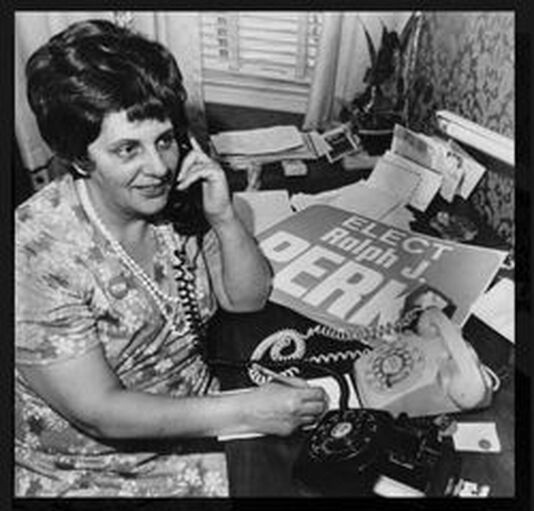
When I moved to Cleveland as a newlywed, I was immediately charmed by the story of Lucille Perk, who became a local legend when she declined an invitation to the Nixon White House because it conflicted with her bowling night.
For more than 20 years she knocked down pins with her pals on the Vic’s Floral team in the Southeast Ladies League, and she saw no reason to give up her fun just because she and her husband — who was Cleveland’s mayor — received an invitation to dine at 1600 Pennsylvania Avenue.
I love Lucille! You have to admire her priorities and her sticktoitiveness. I thought of her this week when I happened upon this lovely little story in a brewery newsletter.
“My dad and I have been bowling together every Monday night for ten years, and here’s the truth: We stink. Both of us. Sure, we have a good game or even a good week here and there, but those are few and far between. More often, we throw gutter balls and splits and fail to pick up our spares.
“But we keep going back to the bowling alley. Maybe it’s for the beer, the buffalo wings, or the vending-machine Snickers, or maybe it’s because once in a while we talk and laugh and start to understand each other a little better. Bowling is a tradition, anyway. And traditions are important.”
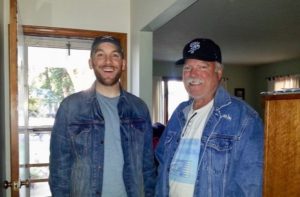
The author isn’t named in the newsletter, but he and his dad are shown here in their moment of glory as the 2017 Monday Night Bowling League Champs.
The author, his dad, and their teammates are outliers now, as the congenial tradition of group bowling is dwindling away. In Lucille’s day, nine million bowling leagues made the sport a cornerstone of our national social life; today we have around 10% that many. Americans still head to the lanes, but they go by themselves or with a friend, not a team. More often, they stay home in front of the TV.
“Instead of making friends, we started watching Friends,” says Robert Putnam, author of the landmark book Bowling Alone, which shook up the nation in 2000 with its meticulous chronicle of the collapse of American community. He inspired us to try again in the 2023 documentary Join or Die.
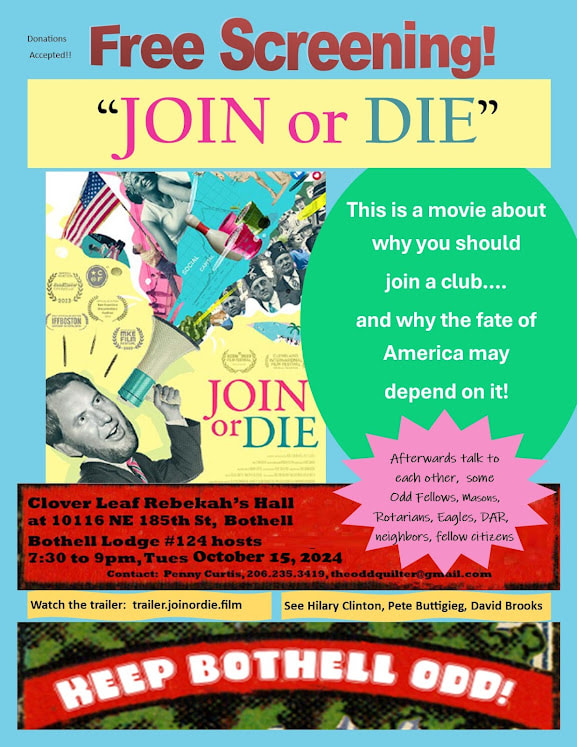
Since the film’s debut in 2023, towns all over America have been holding free screenings of this documentary, followed by discussions and the chance to meet leaders of local membership clubs.
Getting out there, meeting neighbors, and doing things together builds relationships — the kind that give us a sense of shared identity and trust, enabling us to cooperate as a community and take collective action. That kind of mutual support, vital to humanity’s survival for the last two million years, is known to scientists as social capital.
“Community connectedness is not just about warm fuzzy tales of civic triumph,” Putnam explains. “In measurable and well-documented ways, social capital makes an enormous difference in our lives. Social capital makes us smarter, healthier, safer, richer, and better able to govern a just and stable democracy.” And couldn’t we all use that about now?
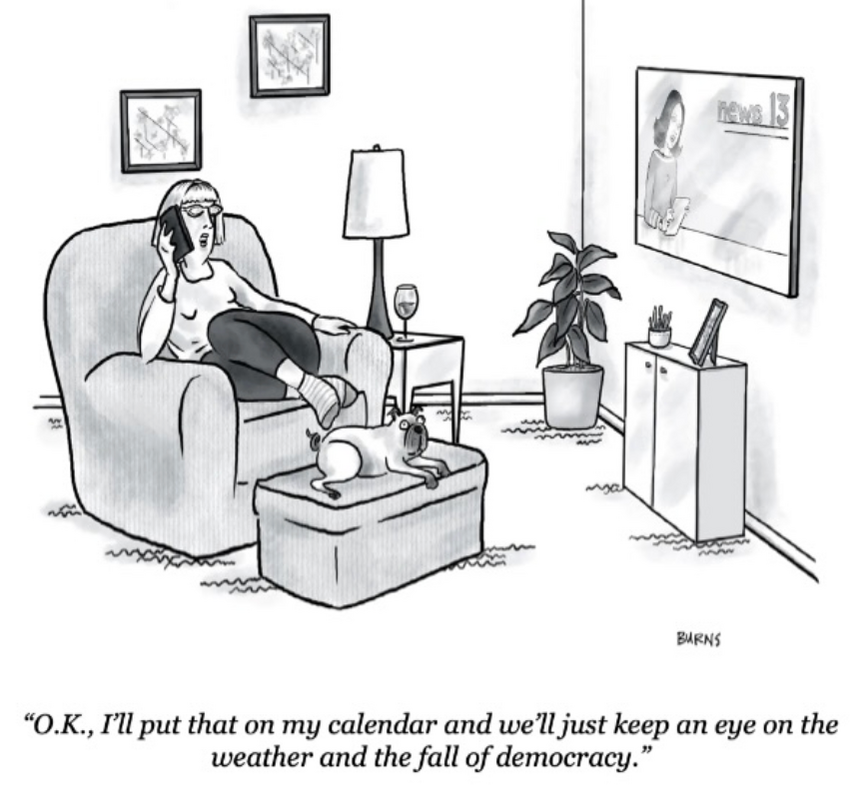
Let’s go back to the makes-you-healthier part for a second. Putnam is all about the statistics, and here’s one of his zingers: “Your chances of dying over the next year are cut in half by joining one group.”
If you and I were perched on a couple of bar stools right now, this is where you’d roll your eyes and say, “But I’m not a joiner.” Maybe not. But when the stakes are high enough (yes, WWII, I’m looking at you) everyone pitches in. Back in 1754, when the United States was a loose notion bandied about in taverns, Ben Franklin famously launched the slogan “Join or die!”
It’s as true now as it was then.
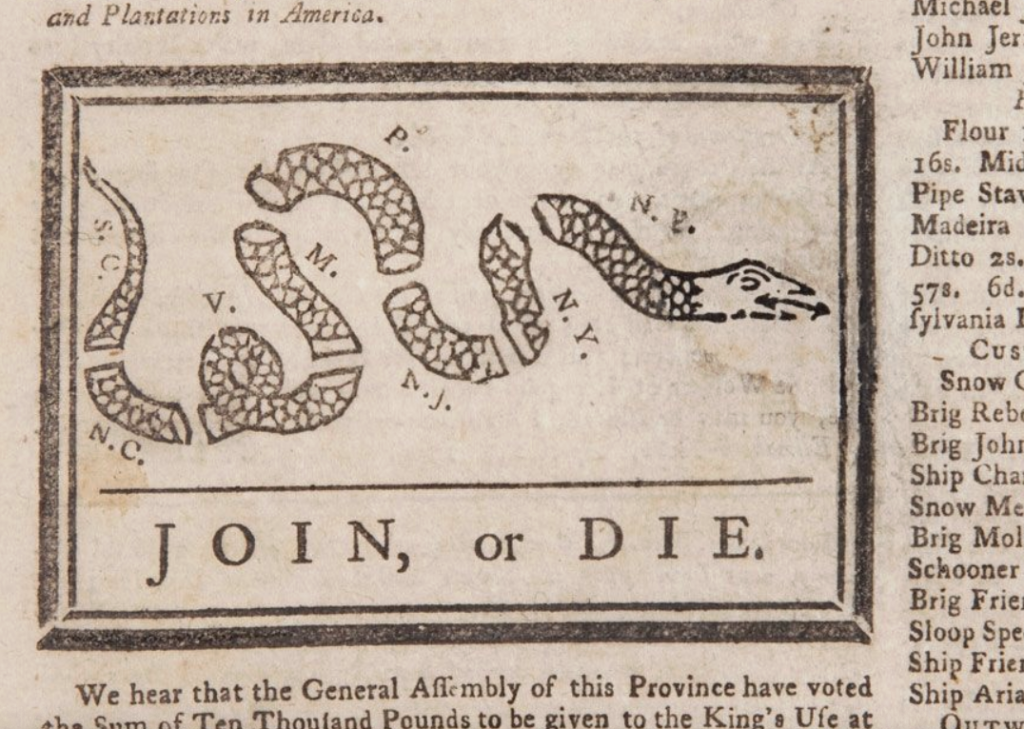
Ben Franklin’s cartoon of a divided snake, with segments marked for the different colonies, became famous as a call for unity.
In our bar stool conversation, about now you’d throw up your hands and mutter, “OK, fine. But how do I find a group I’d actually want to join?”
Good question. As part of my ongoing effort to get acquainted with chatbot culture, I decided to turn that one over to Claude. I told it I didn’t want to risk becoming isolated and asked what groups exist in my village of 12,645 souls.
“What a wonderful instinct,” it began, employing the fawning skills now embedded in most AI, part of the ongoing effort to reassure us there is nothing whatsoever to worry about; we’re buddies!
Claude then suggested I could run for public office (no thanks!), volunteer at the public library’s book shop (worth considering), help groom our public parks (Rich would love to), and assist with holiday events such as the Goblins’ Parade (now that could be fun!). It ended with more flattery: “The fact that you’re thinking proactively about this is a real strength.”
That’s when I realized where they got Claude’s personality: Eddie Haskell, the kid who was always kissing up to Leave-It-to-Beaver’s mom. I waited for Claude to add, “Gosh, that’s a lovely dress you’re wearing.” Incredibly, it managed to refrain; maybe next time.
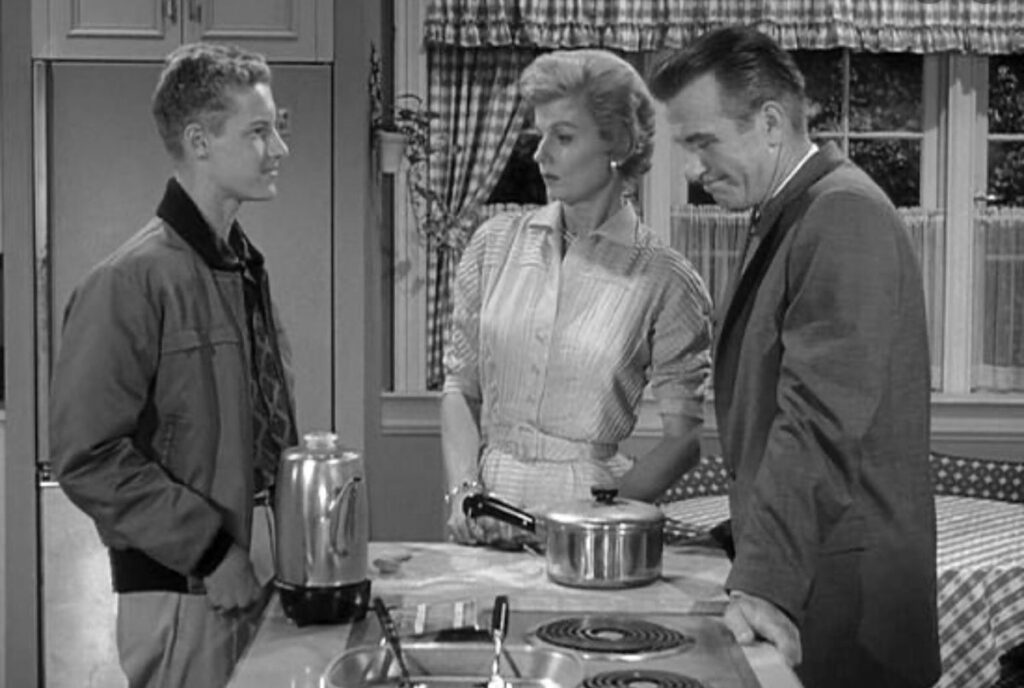
Eddie Haskell’s smarmy personality lives on in our fawning AI chatbots.
“You might be surprised how many groups are out there,” John Crowley told me last week. As the founder of the Joiners Movement in the nearby town of Petaluma, he urges everyone to sign up with one new local membership organization each year for five years.
“These are not online organizations,” he emphasizes, “but real-life communities — service clubs, choirs, faith groups, maker spaces, sports teams — places where friendships, purpose, and traditions grow.”
So far he’s signed up with the Herman Sons Hall, the Petaluma Sunrise Rotary, and the Petaluma Danish Soldiers Club. This last one struck me as a particularly odd choice, as he’s neither Danish nor a soldier. But that’s the whole point, he explained; it’s all about meeting neighbors who aren’t exactly like you, finding out what you might have in common, maybe even learning from each other.
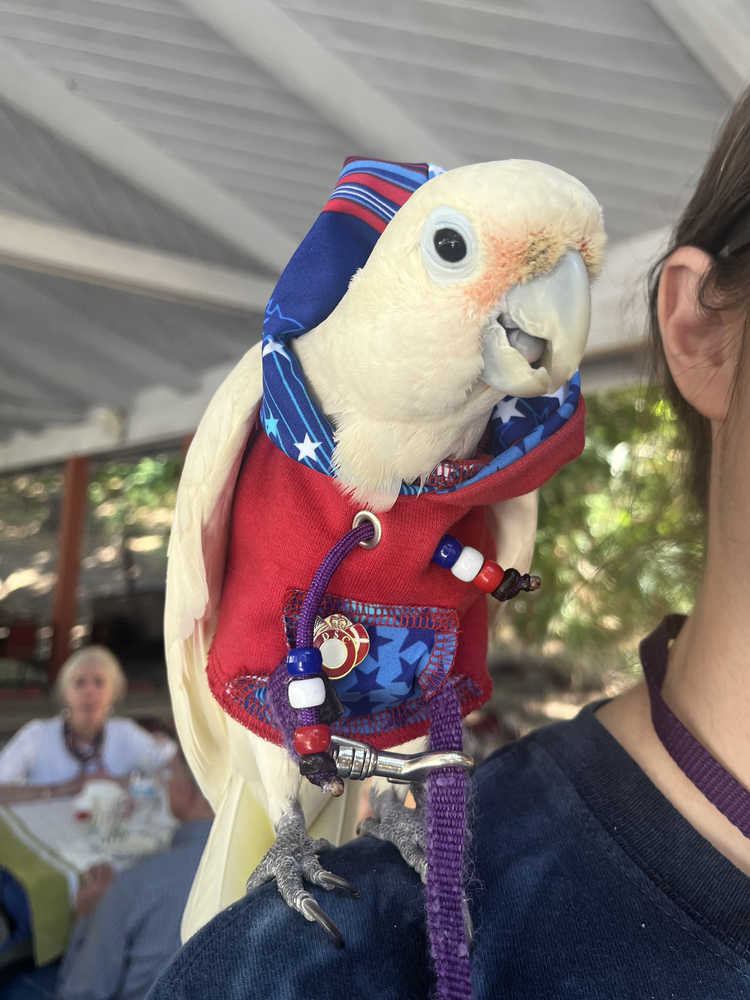
Snow parrot Nikki the Viking likes to dress up in full regalia for the monthly luncheon meetings of the Danish Soldiers of Petaluma.
Can’t find a congenial group? Why not start your own? How about an Ideas Club?
Readers from various countries have written asking me how to launch an Ideas Club in their town, so I’ve put together a free guide that includes all the essential materials we used in our most recent gathering, with notes about best practices. You can download it using the link below. If you do start an Ideas Club, be sure to tell me all about it — and send pictures!
IDEAS CLUB STARTER KIT / FREE DOWNLOAD
https://www.enjoylivingabroad.com/start-an-ideas-club.html
An Ideas Club requires just a few notebooks, pens, nametags, and envelopes for questions that each small group discusses. And a congenial place to meet, of course.
I don’t need to tell you that we live in jittery times. Joining clubs helps. Being glued to our electronic devices doesn’t. I was recently shocked to learn that our attention spans are about one-third as long as they were in 2004. That’s worrying because …. Wait, what was I saying?
Wondering where your attention span rates on the scale of goldfish-memory to an-elephant-never-forgets? Try the Psychology Today test. If younger family members are around, invite them to take it, too.
PSYCHOLOGY TODAY ATTENTION SPAN TEST
https://www.psychologytoday.com/us/tests/personality/attention-span-test
However you score, remember this: connecting with people is excellent exercise for your attention span, brain, heart, and soul.
One of the first things we learn when we arrive on this planet is that interacting with humankind is a messy, complicated business. It’s also how we live most deeply, embracing the full, astounding legacy of our human heritage.
Fortunately we don’t have to join an actual bowling league to achieve this; we just have to look up from our electronic devices long enough to engage with the people around us. Doing that ups our chances that we’ll end our days feeling satisfied, knowing that, as poet Walter Savage Landor put it, “I warm’d both hands before the fire of Life.”
Amen to that.
Leave a Reply