They say you never forget your first time. I was a newlywed, newly arrived in Ohio, and felt enormously flattered when a kind acquaintance invited me to join a prestigious book club that had been meeting for more than a century.
That month’s selection was Madame Bovary, in which a bored 19th century housewife has affairs with inappropriate men then makes a series of ever more staggeringly selfish and brainless decisions that destroy her family and the lives of others. Not, in my view, a very sympathetic character.
Re-reading the book before the meeting, I disliked the protagonist more than ever. Luckily my second-hand paperback edition included an introduction by a literary luminary, so I memorized a few phrases to toss around in case I needed to say something nice about the book. And sure enough, minutes after I walked through the door, a man in a blazer — was he actually wearing an ascot? Hard to remember now — asked what I loved most about Madame Bovary.
“Flaubert’s prose style,” I quoted from the introduction. “And how it redefined the novel as an art form.” He looked down his nose at me, as if that the most idiotic remark he’d ever heard, and drifted away.
Since that epic fail, I’ve found plenty of book clubs that were tremendous fun, a source of lasting friendships, and a wellspring of exciting ideas. It’s easy to see why people have enjoyed forming reading circles since Socrates and his pals first sat down to discuss The Illiad in 450 BC. It’s no surprise America now has 13 million book clubs.
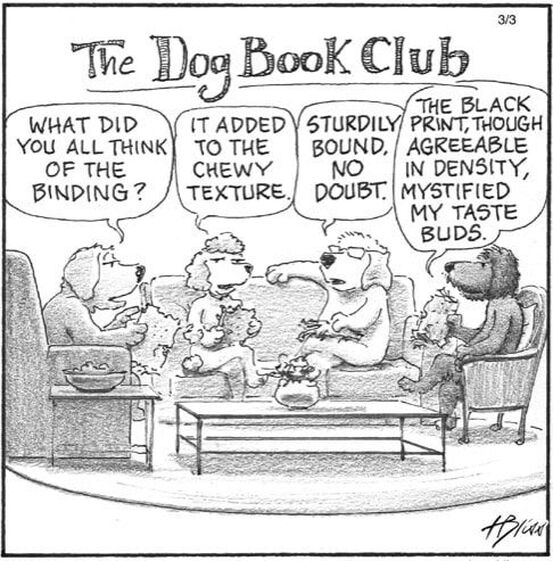
What’s trending? Themed gatherings such as the Wine Down Drink Up book club in San Francisco (note to self: give that one a try soon!), the online sci-fi Book Club at the End of the Universe, the Cozy Mystery Book Club for amateur sleuths, New York’s American LGBTQ+ Museum’s Lavender Literary Society, and the Green Ideas Book Club for fans of climate-theme fiction (aka “cli-fi”).
For introverts, there’s the Silent Book Club; you choose your own book and “gather to read together in quiet camaraderie.” At the end of the hour, you may exchange few gentle remarks … or not. No pressure.
My latest literary adventure is Outlaw Bookworms; we read and discuss banned books. Each month’s selection has managed to annoy self-appointed censors in schools and the court of public prejudice.
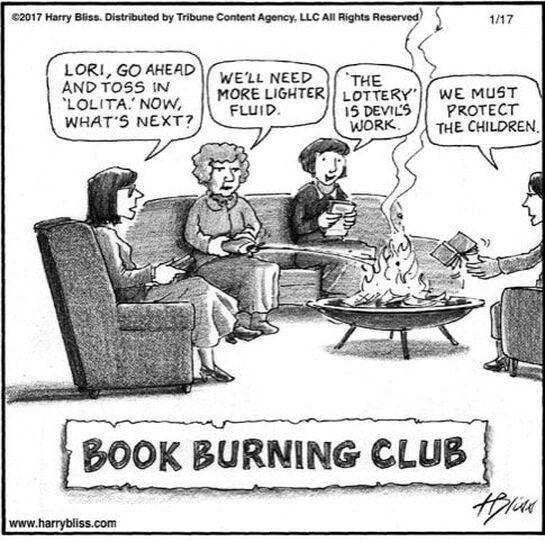
Why were our picks banned? To Kill a Mockingbird’s frankness about race relations in the 1930s “makes people uncomfortable.” The Great Gatsby refers to (gasp!) adultery. The Curious Incident of the Dog in the Nighttime includes irreverent remarks about religious organizations. This month’s The Perks of Being a Wallflower shows teens engaging in sex, drugs, and same-gender romantic relationships (which obviously never happen in real life, so why would kids need to know how to navigate this stuff?).
“Banning books,” said Stephen Chbosky, author of The Perks of Being a Wallflower, “gives us silence when we need speech. It closes our ears when we need to listen. It makes us blind when we need sight.”
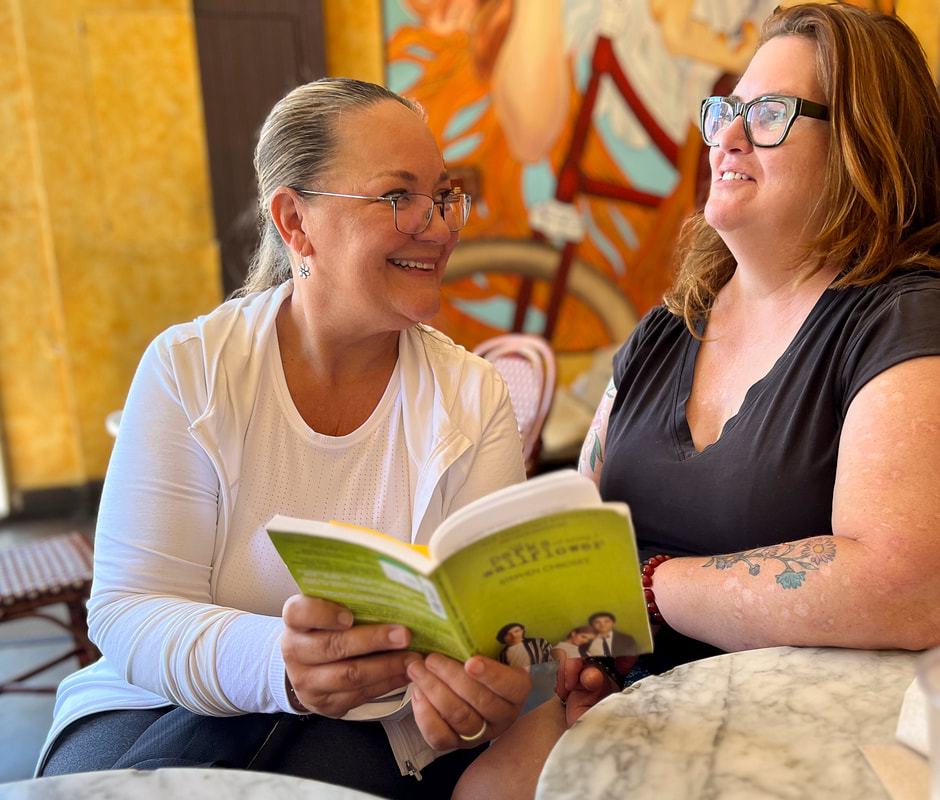
Outlaw Bookworms was launched this spring when long-time friends Rachel and Katie grew alarmed about the rise in censorship.
“There’s been an exponential increase in the number of books that are being banned,” said Katie, a former middle school English teacher, now a full-time writer. “And not only in schools, but in places for adults, like the Naval Academy.… I personally am uncomfortable having one group in our society, whether that’s a government or a religious group, dictating what they deem is appropriate for the rest of the public.”
For Rachel, a nanny and pet minder, access to books is a very personal issue.
“I love reading. I always had to do a lot of reading because I’m dyslexic. And I have dysgraphia [a neurological disorder that makes it physically difficult to write coherently]. I love books. They’ve saved me at every point in my life. Like, if I was feeling really political, I could find something that mirrored that in a book. Or if I was feeling desperately sad from a breakup, I could find that. Recently I was feeling really overwhelmed, like the rest of the country, and really dark. And so I wanted something that would bring community in.”
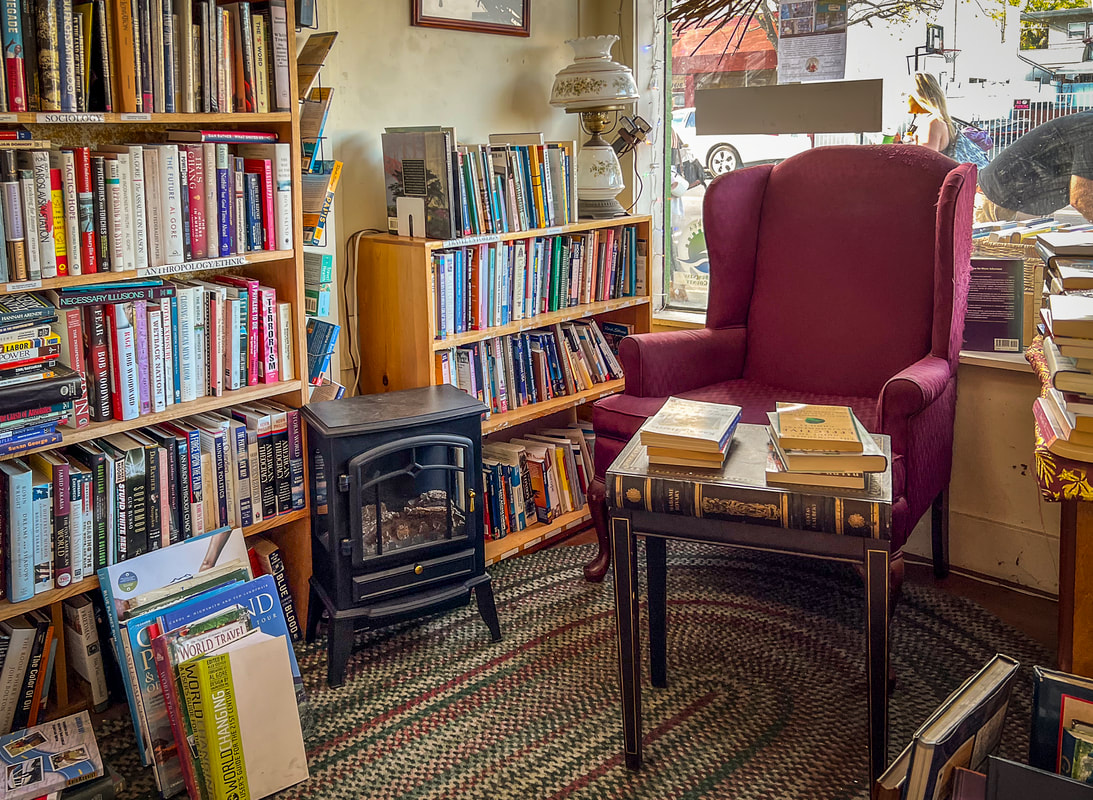
In April, Outlaw Bookworms began meeting in Rebound Bookstore, a cozy second-hand bookshop in nearby San Rafael. “It’s just so warm being literally surrounded by great books,” said Katie. “Here we’ve found connection, purpose, fun, and joy.”
Finding a connection with congenial souls is not only enjoyable, it can literally save our lives.
“Loneliness,” warned former US Surgeon General Vivek Murthy, “is far more than just a bad feeling — it harms both individual and societal health. It is associated with a greater risk of cardiovascular disease, dementia, stroke, depression, anxiety, and premature death. The mortality impact of being socially disconnected is similar to that caused by smoking up to 15 cigarettes a day.” Yikes!
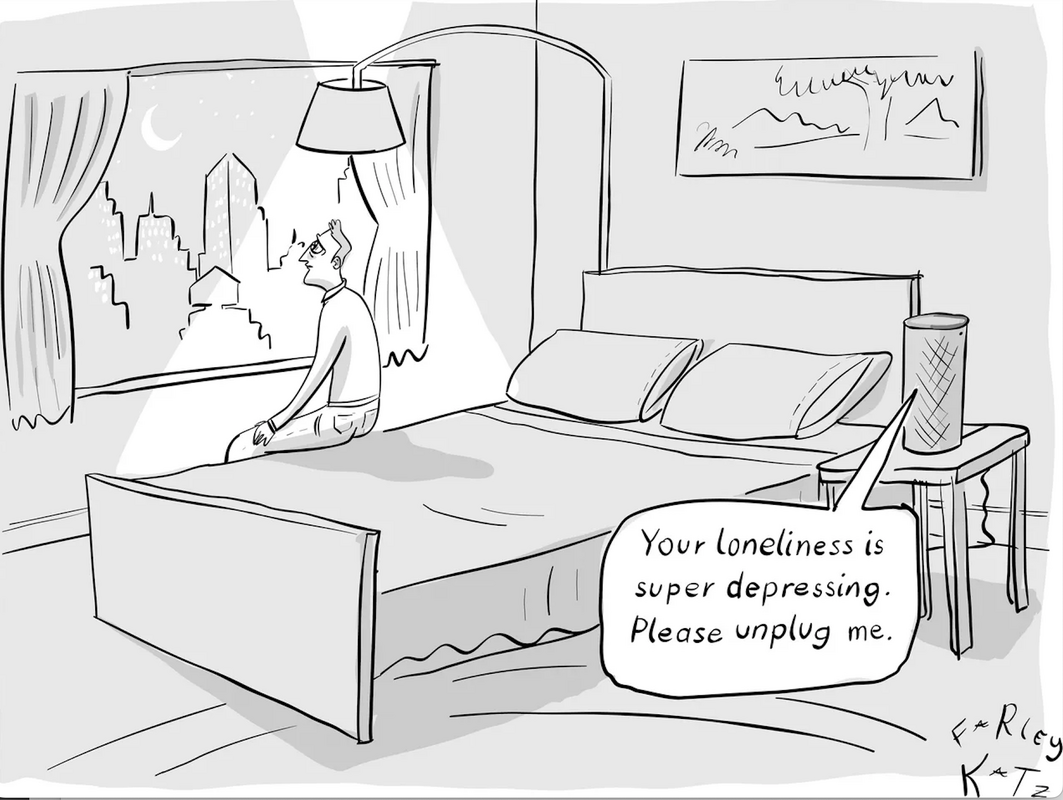
Human connection heals, sustains, and energizes us, inspiring us to engage in the world in new ways with newfound friends. Katie and Rachel have joined me on the Marin Banned Books Week Committee, and together we work to support other causes as well.
These kinds of community connections are surprisingly powerful; they form the cornerstone of civil resistance, which has successfully toppled authoritarian regimes all over the world. Just ask Harvard political scientist Erica Chenoweth, who did the landmark research.
“I collected data on all major non-violent and violent campaigns for the overthrow of a government or territorial liberation since 1900,” she said. “The results blew me away. From 1900 to 2006, nonviolent campaigns worldwide were twice as likely to succeed outright as violent insurgencies.”
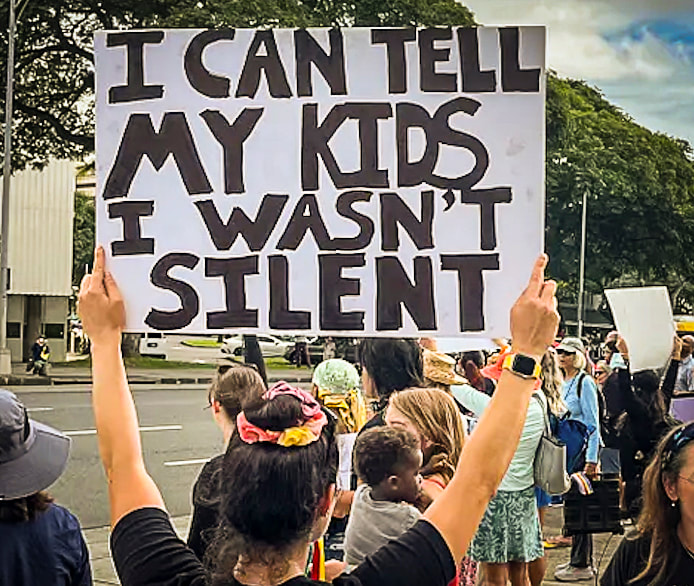
One reason civil resistance works is that unlike a violent uprising, it engages people from across the social spectrum: students, grandmothers, veterans, LGBTQ+ activists, knitting collectives, pickleball teams, street artists, everyone.
And the really stunning part? You only need to rally 3.5% of the population to make change happen. That’s slightly less than the number of Americans who believe lizard-people from outer space have taken over our government. (Yes, I realize that would explain a lot, but let it go, people! It’s genuine fake news!)
Why just 3.5%?
“No regime loyalists in any country live entirely isolated from the population itself,” Erica explained. “They have friends, they have family, and they have existing relationships that they have to live with in the long term, regardless of whether the leader stays or goes. In the Serbian case, once it became clear that hundreds of thousands of Serbs were descending on Belgrade to demand that Milosevic leave office, policemen ignored the order to shoot on demonstrators. When asked why he did so, one of them said: ‘I knew my kids were in the crowd.’”
I get why some people are afraid of books like Erica Chenoweth’s Why Civil Resistance Works. They open our minds to new possibilities, encourage us to take risks, offer hope in place of fear. Which is exactly why they matter. And why the conversations that start in our book clubs can inspire us to find ways to reshape our lives — and our collective future.
Leave a Reply