THE ORIGIN STORY
”After long years of intense study, a student bursts into Einstein’s office shouting, “Sir, sir, I finally get it. I understand your theory of relativity!”
Einstein rolls his eyes. “It’s about time.”
As this joke demonstrates, there are some ideas so huge we’ll all be talking about them forever — so we might as well have some fun with them.
Great ideas can arise anywhere. Tram rides inspired Einstein’s theories of relativity, the spacetime continuum, time distortion, and a lot of other stuff that’s way above my pay grade. Newton’s aha! moment came watching an apple. Paul Revere’s midnight ride, the Boston Tea Party, and many of the other liveliest moments of the American Revolution were plotted over tankards of ale in the Green Dragon Tavern in Boston’s North End.
Sadly, the Green Dragon was torn down in 1832 to make way for a warehouse, but the fine tradition of gathering in public places to exchange ideas with congenial companions lives on. Two weeks ago I wrote about John Crowley’s Aqus Café, where since 2006 people have met up to discuss everything from poetry to art to the future of the human race.
One of John’s most compelling projects isPetaluma Conversations, launched a couple of years ago to bring together citizens entrenched on opposing sides in the fierce online battle over the city’s hottest controversy: flying bathtubs.
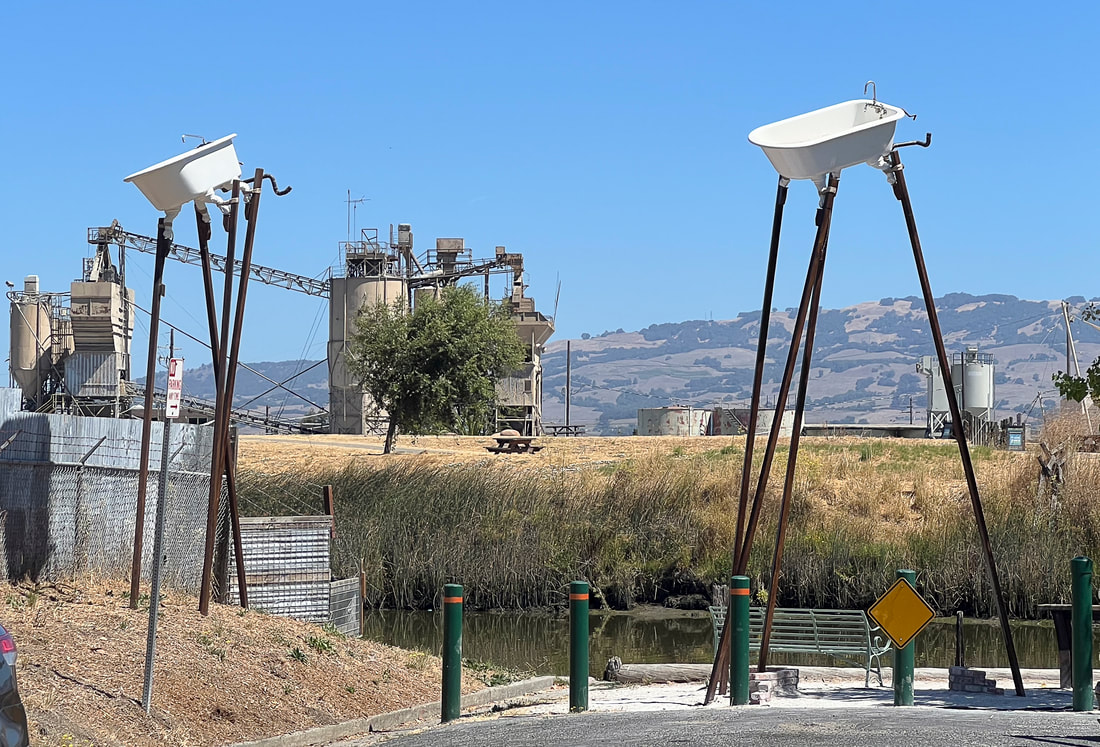
Fine Balance by Brian Goggin cost the citizens of Petaluma $150,000 and many hours of hotheaded debate about its merits.
The official name was “Fine Balance,” a reference to the precarious relationship between humans and nature. Some hailed it as a masterpiece, others considered it a load of pretentious nonsense. I got the impression that only compassion for the fish community prevented the naysayers from ripping the piece bodily out of the earth and tossing it into the nearby river.
Somehow John got ringleaders from both sides into a room, with strict rules of conduct and promises to listen. By the end of the night they were civil, some even cordial. And Petaluma Conversations was born.
That group’s format was a bit formal, according to Donna Benedetti’s way of thinking. Holding advanced degrees in philosophy, she’d taught at the university level and given lessons to kids in San Francisco’s notorious Tenderloin district. She’d also worked as administrator for street-savvy nonprofits. Donna wanted something more conversational and thought-provoking. With the help of a small steering committee of supportive friends, Donna created the Watershed Community.
John called it “an ideas club. It’s like a book club, only instead of books, you discuss ideas. They send out a few magazine articles to read, and you all get together and talk about them.”
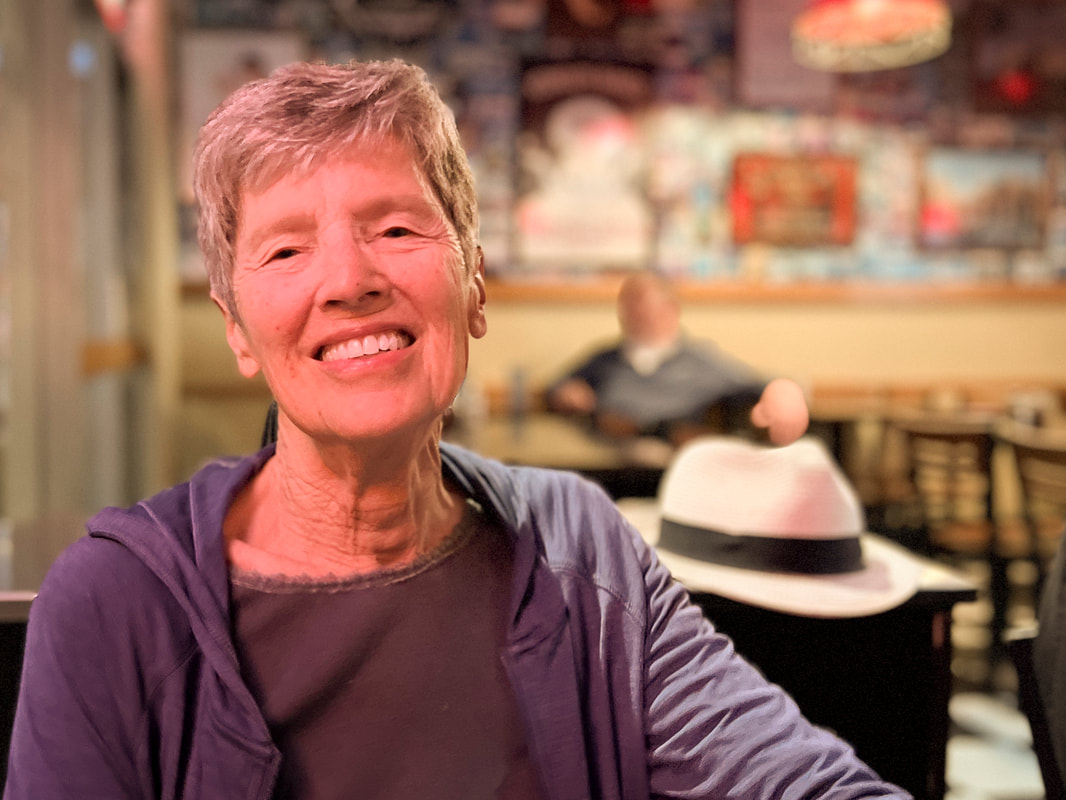
Donna Benedetti sends links to articles, podcasts, and videos to serve as a starting point for conversations.
Watershed Community sounded brilliant to me. In fact, I liked it so much that, as a service to my readers, I decided to attend the very next one, which took place last Saturday night.
Rich and I arrived at Aqus moments before Donna rushed in, a huge tote bag over each arm. Pretty soon I was helping her give nametags to the 18 people attending while Rich set reserved signs on small tables at one end of the café.
To my surprise, we didn’t shove all the tables together. “The first one, we were all at a long table,” Donna told me later. “But it was terrible.” With full proximity, everyone chatted with everyone else, making it impossible to have sustained conversations. Now she has four or five people gather at each small table, with a scribe to takes notes, and a member of the steering committee to provide conversational prompts if needed.
Donna opened the evening with a brief welcome then said, “Karen is a blogger who has been writing about hope and storytelling, the topics of our last two gatherings. I’ve asked her to say a few words about that.”
I stood up and told them that in normal times I’m a travel writer. But as we all know, these are not normal times. I have set aside my usual themes to spend the summer interviewing people who are doing kind, compassionate work in our community; it’s been a comforting reminder that there is still plenty of good in this world, and it is worth fighting for.
Then I confessed that I was there to steal Donna’s concept and start an Ideas Club in my own town of San Anselmo. That prompted a round of cheerful applause, and it seemed a good moment to sit down and stop talking.
The evening’s topic was immigration.
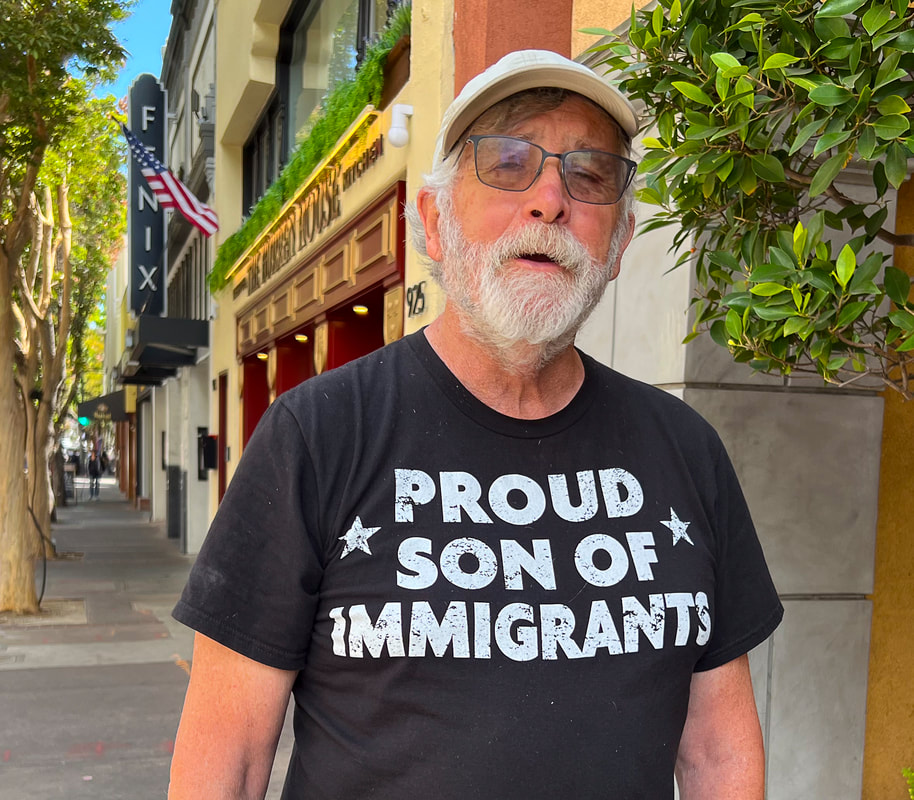
Discussion touched on the founding of this nation, the economics of migrant workers, the role of race in society, the power of the people, the need for a coherent immigration policy, and how every one of us came from immigrant families, who often had passed along to us their stories of struggle and finding their place in America.
It was a lively discussion, and Donna told me later that it was the best conversation to date, because it was a more substantive and timely topic. We galloped along, sharing information and perspectives, each new thought triggering another line of discussion. At the end, each table’s scribe stood and read their notes aloud.
I was impressed with the range and depth of the comments, the variety of the participants’ backgrounds, and the commitment to the community. It brought to mind a quick, casual conversation I’d had the day before with a neighbor who said she felt lucky to make the San Francisco Bay Area her home. Then as she headed off, she tossed over her shoulder, “Of course, we live in a bubble.”
She was gone before I could reply, but if she’d stuck around another minute, I would have told her this: I disagree. The Bay Area isn’t a bubble. It’s an incubator.
For nearly 200 years, people from all over the world have come here to embrace new lives. As Betty Reid Soskin — at 103 one of the last of the living Rosie the Riveters — told me, “It’s where visionaries come to find constituents for their wildest dreams.”
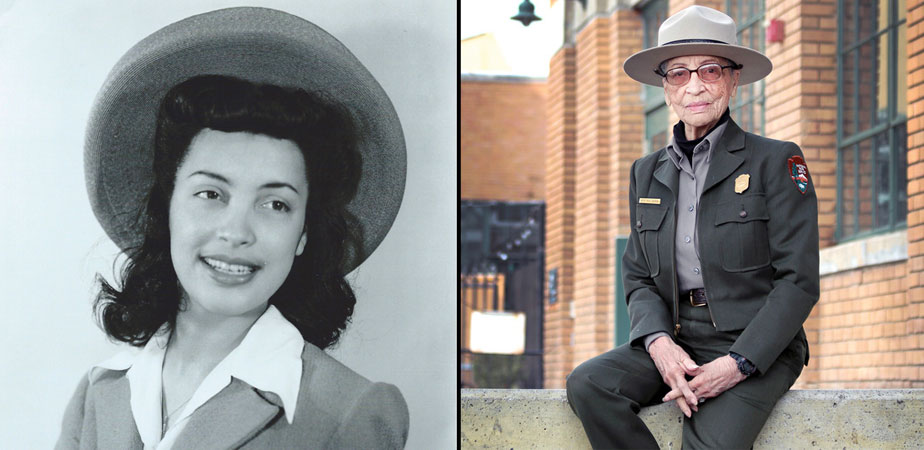
Betty Reid Soskin worked at the Liberty Shipyards during WWII and served as a docent at the Rosie the Riveter Naitonal Historic Park in Richmond, CA until she retired at the age of 101.
Betty talked about the African American and white workers who were thrown together in the local shipyards, cranking out Liberty Ships faster than the Nazis could sink them. “They helped to turn the course of the war around by out-producing the enemy. And in the process, they accelerated the rate of social change, so that to this day it still radiates out of the Bay Area into the rest of the nation.”
The Bay Area has always shaped American culture. We gave the world blue jeans, television, dot coms, the Murphy bed, jukeboxes, the LGBTQ+ movement, no-fault divorce, Airbnb, Uber, OpenAI, and driverless cars. Our ideas are still radiating across the nation.
So what’s everyone around me are thinking about now? I’d like to know. Which is why I’ll be starting The Ideas Club in my town of San Anselmo at the earliest opportunity.
Which will be next spring. My time in California is growing short; Rich and I head back to Spain next month. It’s hard to leave my friends, family, and work here, but my Spanish life is calling to me now. And as Einstein famously said, “Life is like riding a bicycle. To keep your balance, you must keep moving.”
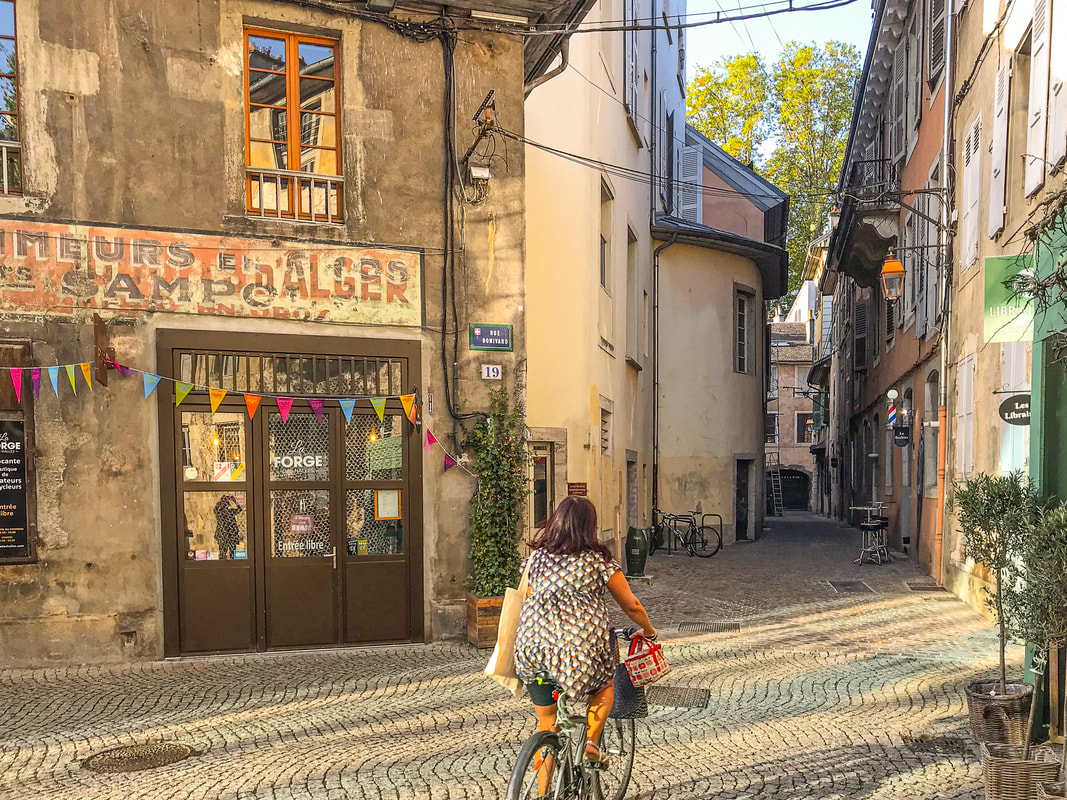
”Every time I see an adult on a bicycle, I no longer despair for the future of the human race,” said H.G. Wells, author of The Time Machine.
Leave a Reply