Are you finding the Universe particularly random these days? I certainly am. And so is a woman from Alicante, Spain, who made headlines this week for getting fired because (and I am not making this up) she came into work early.
The young woman repeatedly showed up for her delivery job at 6:45 or 7:00 am instead of the stipulated 7:30. I know, right? We can’t have that kind of maverick behavior! Managers warned her she was undermining the employee-employer relationship. (Translation: You’re making the rest of us look bad.) She refused to change her ways, got fired, and sued the company.
The court sided with her bosses, saying she was guilty of “disloyalty, breach of trust, and disobedience.” Wow, I didn’t see that coming.
But then, we rarely know when disaster is about to overtake us. “Some 66 million years ago,” wrote university professor Mark Robert Rank in his book The Random Factor, “an asteroid hit the Earth at precisely the right angle and location to annihilate the dinosaurs, paving the path for our ascendency. Had there been as little as a 10-mile difference in its path of entry, we would not be here today and the dinosaurs would still be roaming the land.”
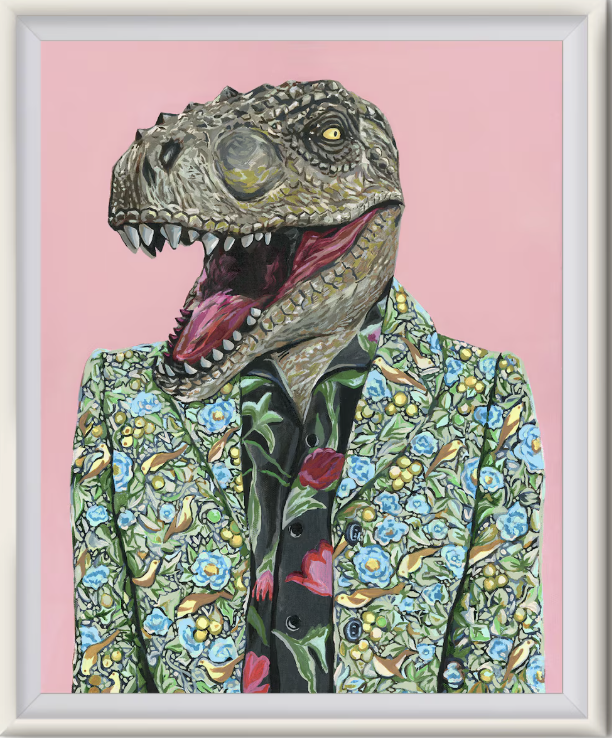
How T-Rex might look today if that asteroid had deviated a teeny, tiny bit from its trajectory. Image: Etsy
OK, so that one worked out in our favor — although obviously a bit less optimally for the dinosaur community. Looking back over history, we see how often the fate of humanity is determined by sheer chance. For instance, what if the Nina, the Pinta, and the Santa Maria had been lost at sea? Crossing 6000 miles of storm-tossed Atlantic in sailing ships just 50 to 60 feet in length, anything could have happened. Hurricanes. Shipwreck. Sea monsters. Dragons.
Had those ships disappeared, everyone back in Europe would have said, “Yep. Told you nothing would come of it. A fool’s errand!” The Caribbean’s indigenous populations would likely have been left in peace for at least a few decades. Portugal would have totally dominated the high seas. Eventually they would have sailed to the New World, where, with luck, they’d have focused on trade, as they’d done in India and China, rather than colonization. And we might all be speaking Portuguese right now.
It’s easy to get lost in these kinds of speculations — what philosophers like to call “counterfactuals” to make them sound more respectable than the wild fantasies they really are. This week I was indulging in all sorts of counterfactuals as I stood looking at the first known map of the New World.
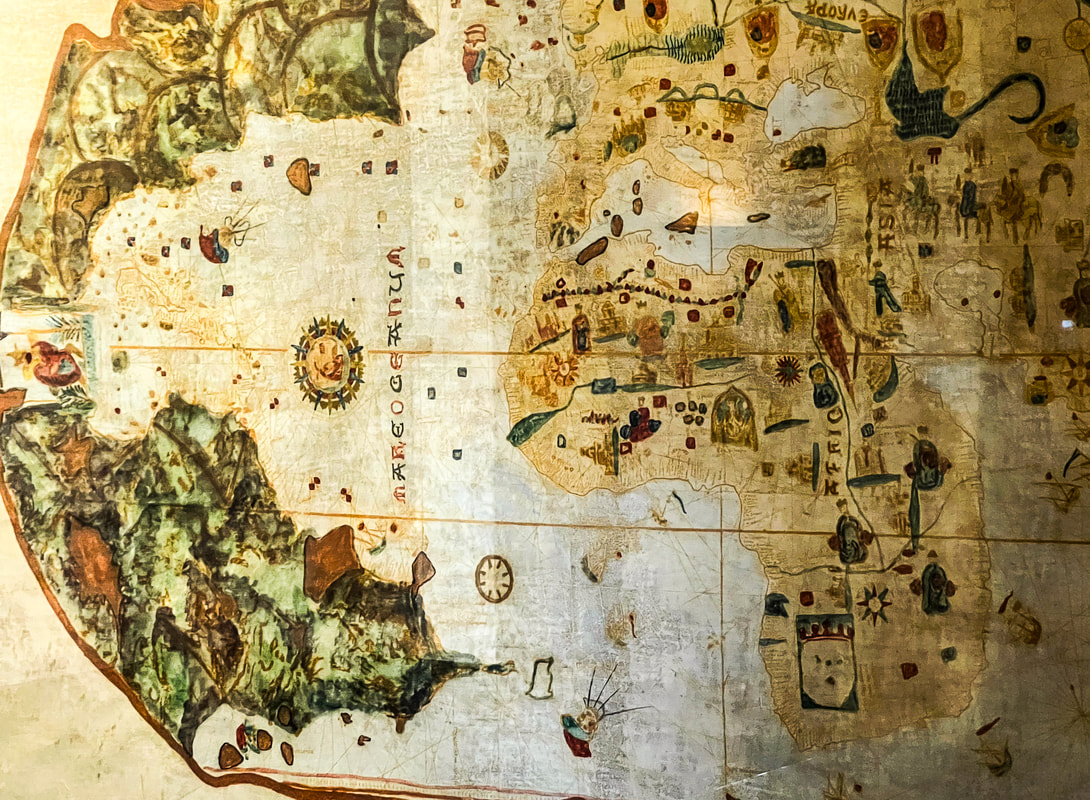
Juan de la Cosa’s famous mappa mundi, drawn in 1500.
Perfectly accurate? No. But you can pick out Africa, Spain, Italy, the Caribbean islands where they landed, and beyond them the Gulf of Whatever-It’s-Called-Now.
I happened across this map in the Spanish town where it was created: El Puerto de Santa Maria, known to its friends as El Puerto (the Port). There, in 1492, Columbus met the cartographer Juan de la Cosa, owner and master of the Santa Maria, who agreed to commit his ship, his navigational skills, and his reputation to the Italian’s mad enterprise.
De la Cosa would make seven voyages to the New World before he was killed by a poisoned arrow in a battle with indigenous peoples in what’s now Colombia. But early on, in the off-season of 1500, he sat down at his desk in El Puerto to lay out the limits of the Atlantic Ocean.
Fast forward to this week, when Rich and I made an impulsive day-trip to El Puerto and came upon the map in a dark corner of the Castle of San Marcos. The map was a reproduction, but it was a stunning sight nonetheless.
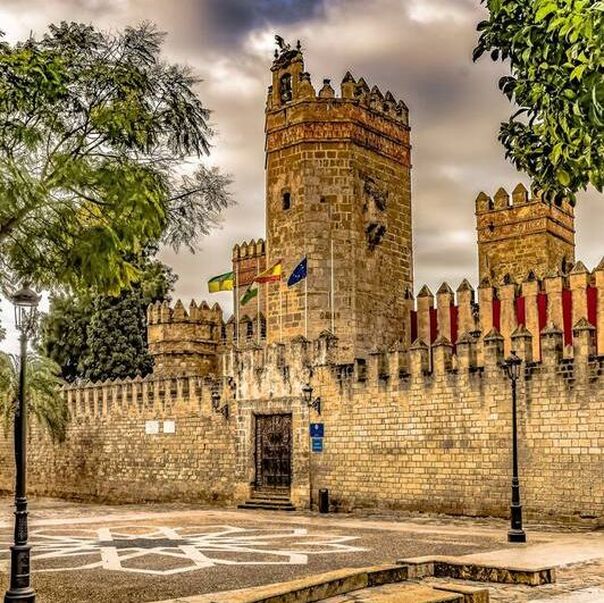
El Puerto’s Castillo de San Marco, parts of which date back 2000 years. Photo: Guia de Cádiz
This was the start of it all, the inspiration for the 100 million people who, over the next 525 years, would choose America as their Home 2.0. My own ancestors made this same Atlantic crossing on wooden sailing ships launched from Ireland, England, Germany, and who knows where else. Like that asteroid 66 million years ago, that massive migration spelled disaster for some and a safer future for others.
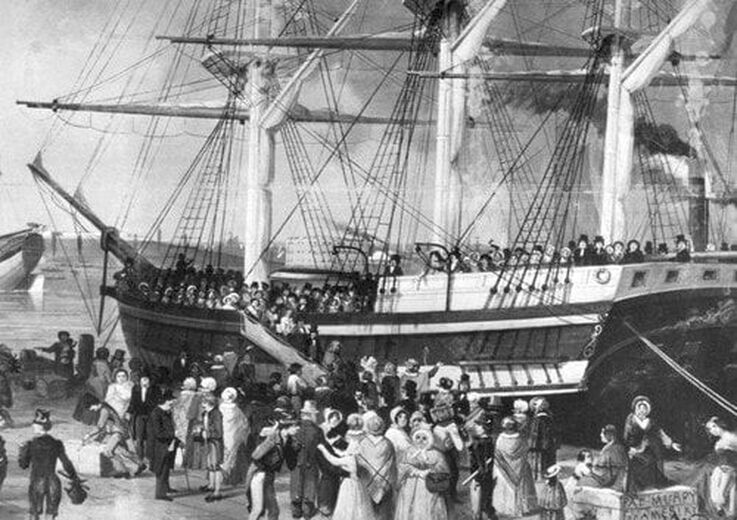
Irish immigrants arriving in New York in the mid-1800s. Like my people, they got there ahead of the Statue of Liberty and before Ellis Island was established.
The past seems very present in El Puerto. There, 3000 years ago, the Phoenicians took advantage of the ocean breezes and chalky soil to grow grapes for wine. When the Moors occupied the region in 711, they introduced the art of distillation, which led to fortified wines and the region’s famous sherries, viewed by Medieval Europe as the world’s finest vintages. Many bottles found their way onto the Santa Maria for her voyage into history.
Rich and I promised ourselves some El Puerto sherry later, but we began the outing with coffee in an old café near the downtown farmer’s market. The place was jammed with families and clusters of neighbors showing off their grandkids and leaning into chats with people they’d clearly known for the better part of a century.
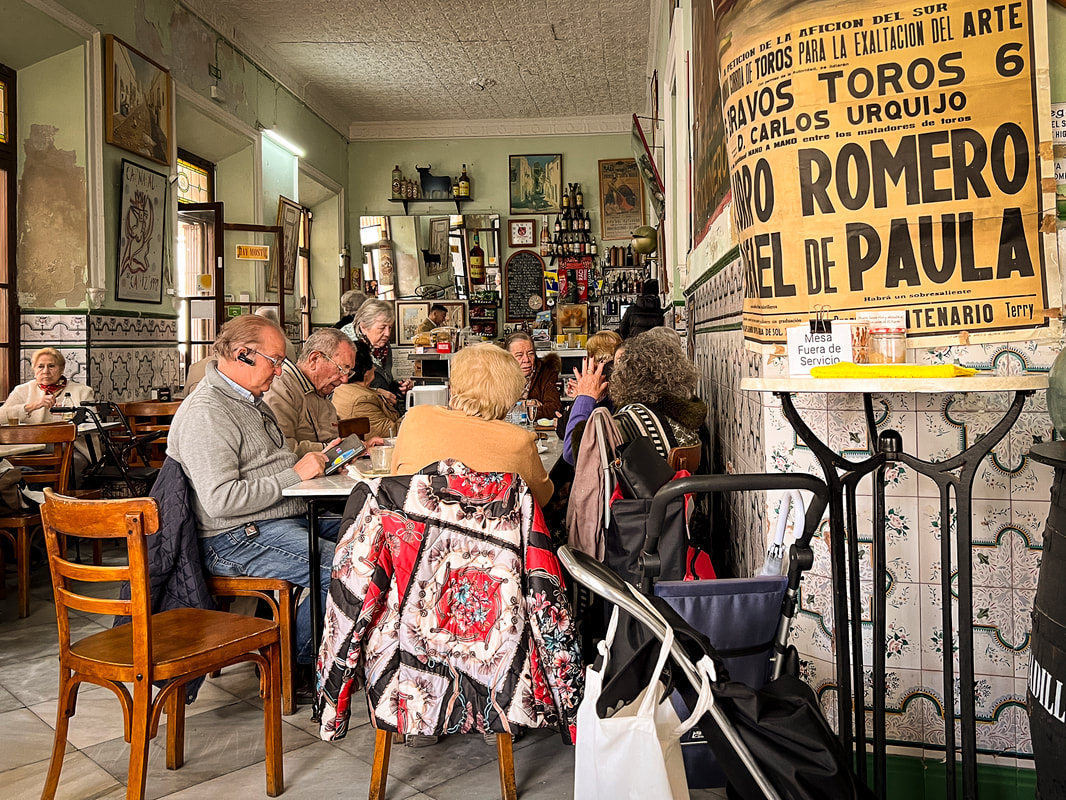
A café in downtown El Puerto de Santa Maria on a Friday morning
Rich leaned over and whispered, “It’s like a Fellini film.”
I knew what he meant. These were not bodies honed in a gymnasium, skin smoothed to perfection with lotions and Botox, hair shiny with this year’s trendiest tints. There was something of the baroque earthiness of Fellini’s characters and the faces of townspeople in medieval paintings.
Fortified by the cheery atmosphere and strong espresso, we spent hours exploring the market, city streets, the church of the Slaves of Sacred Heart, and the castle.
When we’d worked up sufficient appetite, we settled into a restaurant on Calle Misericordia (Mercy Street) for lunch. One of the highlights was a dish of migas, day-old bread crumbs sauteed in olive oil with slivers of chorizo, a holdover from post-Civil War scarcity, when stale bread was way too precious to consider throwing away.
Migas are less popular in these somewhat more prosperous times, but they are true comfort food. And they always remind me to count my blessings. Because as so many in the world are discovering these days, you never know when lean times will come again.
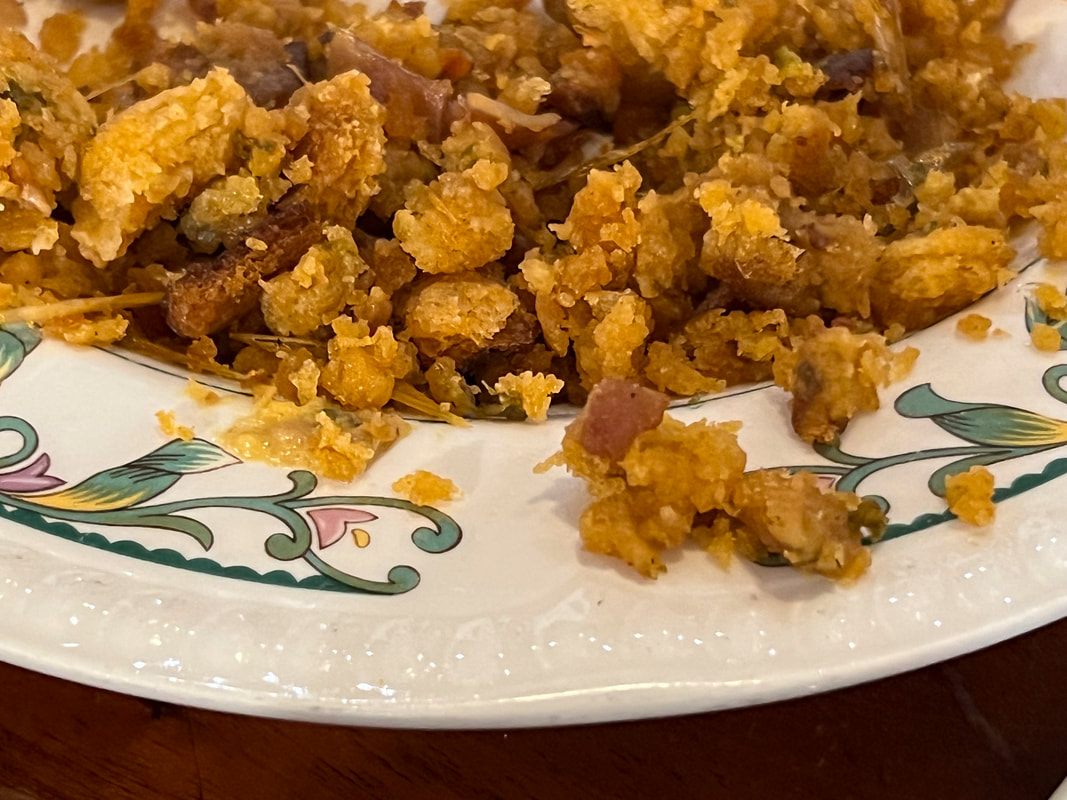
Migas were created by shepherds and are still often prepared over an open fire or hot coals.
As you’ve no doubt noticed, 2025 has been as random and chaotic as a stormy sea, and even the most savvy navigators are worried about whether or not they’ll land safely on the far shore.
“The lack of control that comes with random acts can be frightening, knowing that the ‘bell may toll for us’ next,” wrote author Bob McKinnon. “But it can also expand our gratitude for what we have and the good fortune that comes with just being alive and healthy.
“The recognition of randomness ensures that we do not take the good things in life for granted, and it allows us to understand the precarious nature of good fortune. Even for those currently less fortunate, it can be cause for appreciating the small things in life and hoping that the winds of chance may yet blow your way.”
How have the winds of chance treated you lately? Care to share any examples of luck in your life?
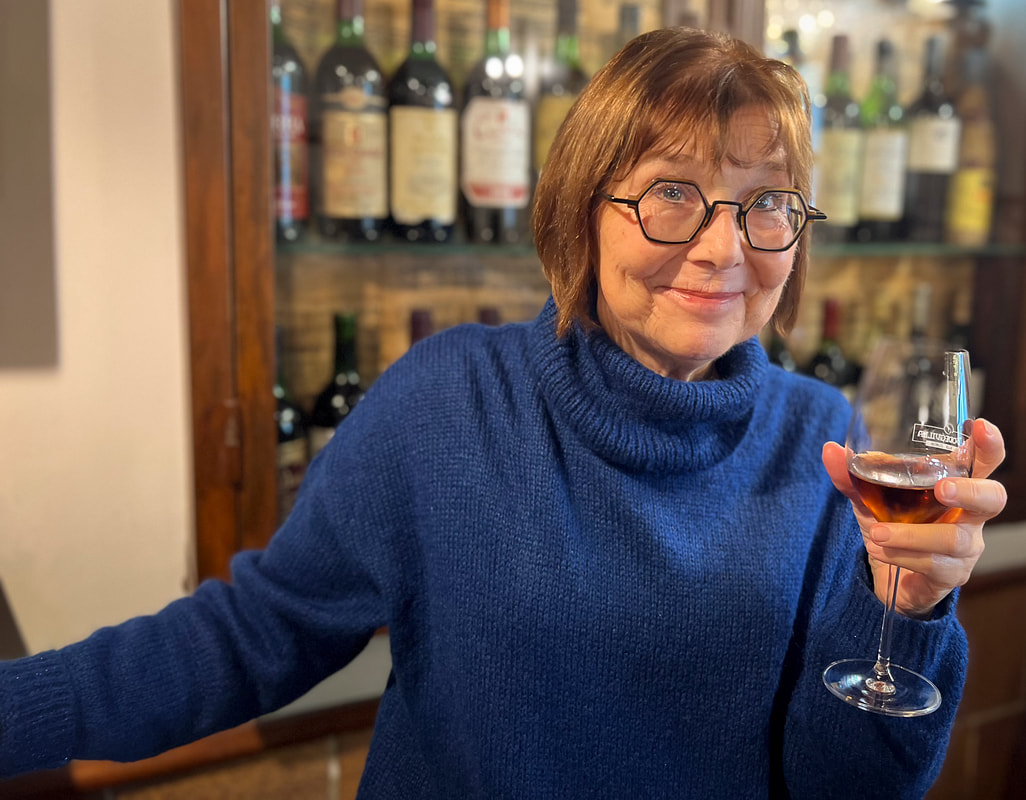
Here’s one example of my good luck: at the end of our day in El Puerto, I got to sample a local favorite, Osborne Bailén Oloroso Sherry. ¡Delicioso!

Leave a Reply