
Ever find yourself in a situation that seems completely out of whack, and no matter what you do it just keeps getting worse? No, I’m not talking about global events (you don’t want to get me started on that topic!). This is about small, everyday nightmares that can make the simplest act — such as picking up a rental car — feel like being mired in some impossible, slow-motion escape room. With all the doors nailed shut.
As my long-term readers know, Rich and I don’t keep a car in Seville. Having watched many a driver fall afoul of the Byzantine narrows of our neighborhood, we’re delighted to forego the nightmare of owning, parking, and above all navigating a vehicle in this city.
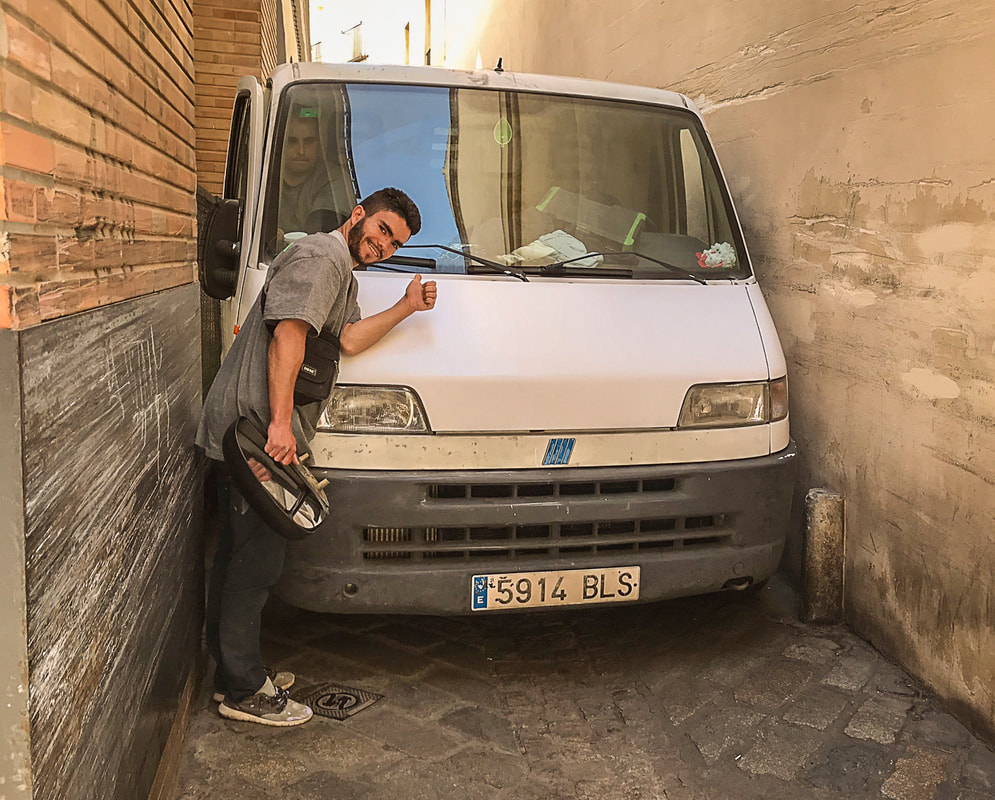
This spot, near my apartment, gives new meaning to the words “tourist trap.”
But this week Rich and I had an errand (more on that in a moment) requiring a car, and we decided to play it safe with a familiar brand: Hertz. Their current slogan is “Let’s go!” and apparently their staff took that to heart because they had disappeared without a trace.
The internet insisted Hertz was part of the transit hub that included the railway station and every other car rental agency in the city. But there the trail went cold. Nobody could even hazard a guess as to where we could look for them. Their location was the best kept secret since the whereabouts of Osama Bin Laden after 9/11.
Finally some maintenance workers scratched their heads and pointed north, toward a remote, half-empty parking lot. I wondered what you had to do to get yourself ostracized to that Siberia. Incredibly, the lot did contain a Hertz kiosk. Less surprisingly, it was locked and empty, with a small sign directing us to a building another quarter mile north.
On we trudged.
You can imagine our excitement when we spotted the yellow Hertz sign. Yes, that’s it, over there on the far left, partially hidden by that tree.
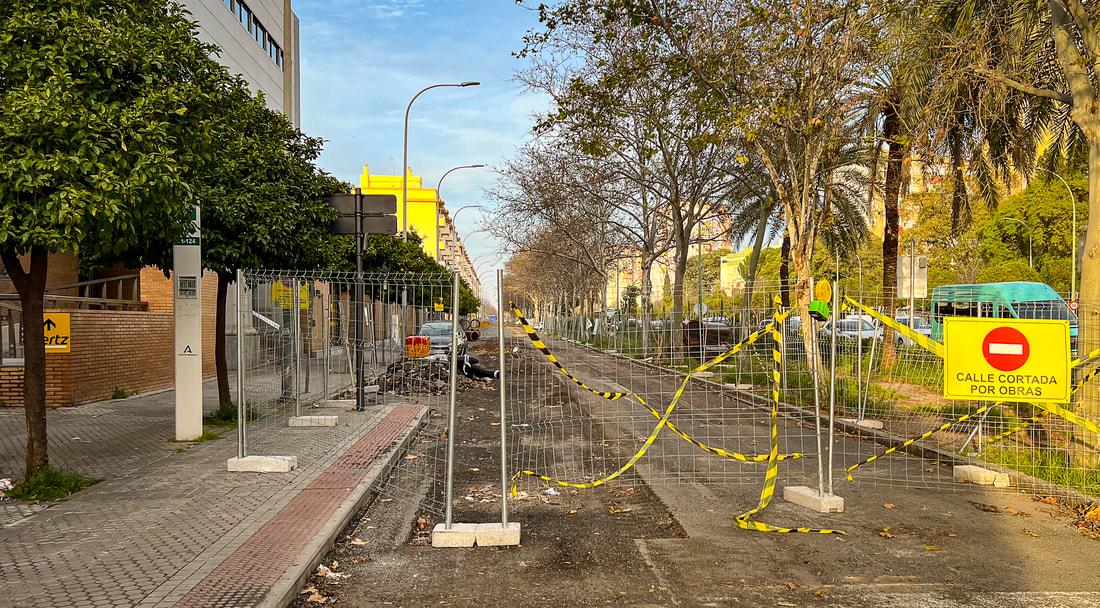
To our amazement, there was a Hertz office, and the paperwork went quickly; getting out, past the labyrinth of road closures and unmarked detours, did not. We hit the road more than an hour late. Which was ironic because our first stop was the Palace of Time.
One of Spain’s quirkier curiosities, the Palace of Time is a collection of clocks in a nineteenth century wine merchant’s mansion in Jerez de la Frontera. “Sounds boring, no?” said the ticket taker, pantomiming a yawn and grinning. “It’s not.” She was so right.
The 283 clocks, some dating back as far as 1641, were gorgeous, most lavishly decorated with exquisitely wrought gold. But the best part was the symphony of ticking from hundreds of clocks. It felt like being tickled by time itself.
Walking from room to ticking room, I could almost feel the seconds advancing crisply into minutes, hours, centuries. But as Einstein figured out, time does not march forward with measured steps but wobbles around like a drunken hooligan. Our image of it as a sort of cosmic metronome is an agreed-upon collective fantasy that helps us survive the present by giving us a framework for contemplating the past and imagining the future.
This framework, which has helped us know when to plant crops and take well-earned siestas for the last 12,000 years, “might not be the fundamental backbone of reality that we once thought,” says a NASA Space News video. “In his special theory of relativity, Einstein proposed that time is not a universal constant but is relative, varying with the observer’s state of motion… a phenomena known as time dilation.”
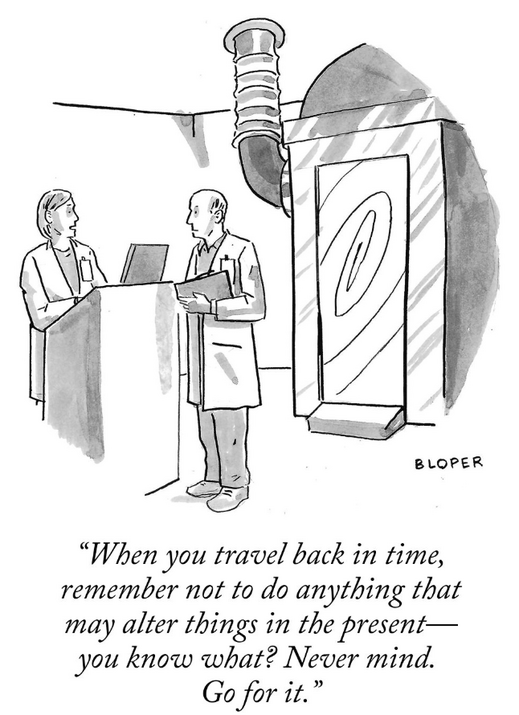
Some of those notoriously kookie quantum physicists insist time doesn’t exist at all. “There’s no universal ticking clock,” says another NASA video, “just a network of interactions.” I’m not going to get mired in a controversy so dizzyingly above my pay grade. For now, I remain solidly on Team Einstein. Because that very afternoon I had proof that relativity is real.
After our tour of the Palace of Time, Rich and I visited the US Navy base at Rota for Covid boosters (the primary inspiration for the road trip). Duly vaccinated, we popped into the commissary for pain killers, water, and — as it had been a very long time since breakfast — a nice, big chocolate chip cookie.
Back in the car, we each took the recommended one Tylenol and one Advil, then Rich pulled out of the parking lot. I called up Google maps for directions, propped the phone on my knee, opened the wrapper, and broke off a piece of the chocolate chip cookie.
The cookie exploded.
I entered an Einsteinian time dilation.
In a state of horror, I watched events unfold in slow motion. Dry crumbs and globs of gooey chocolate flew in all directions like the Big Bang. I was going to have some explaining to do when I got back to Hertz.
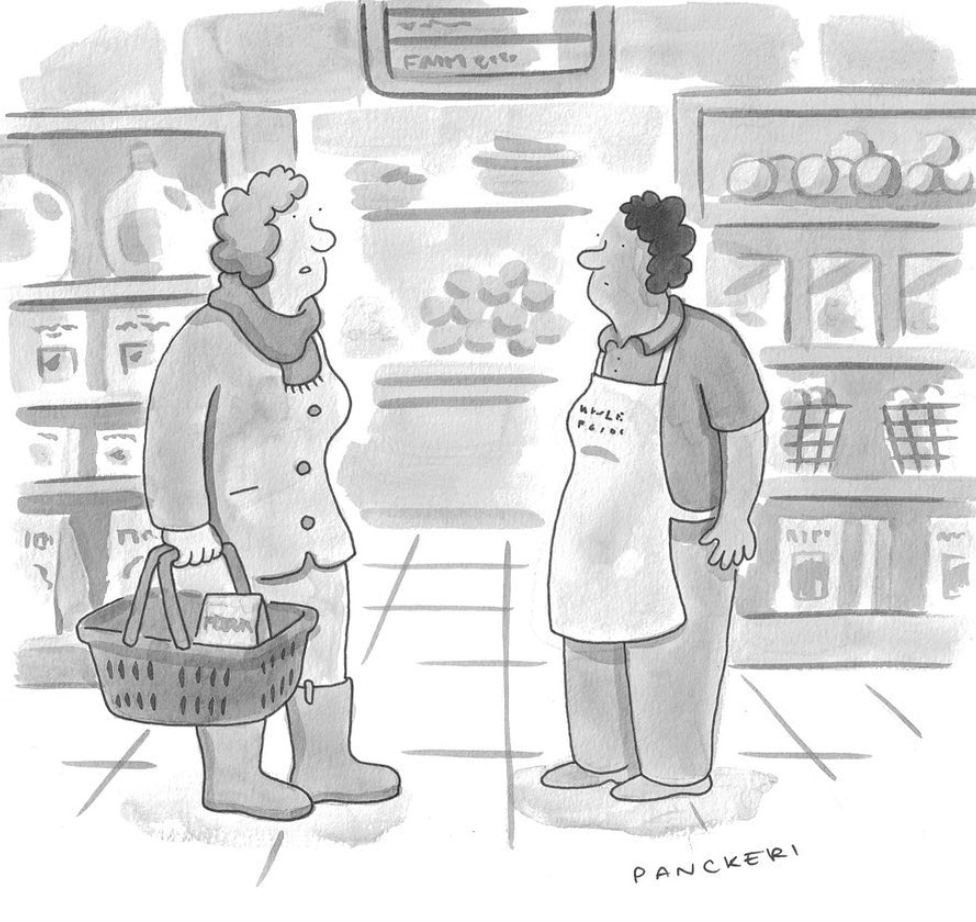
“Yes, I do need help. Can you show me where the chocolate chip cookies are and tell me everything’s going to be OK?”
What fresh hell was this? Were ancient trickster gods toying with me? Was St. Christopher still grumpy over being debunked by the Catholic church? Did I have a bit of wonky karma to work through? Something was clearly up with the Universe. Because the very next day there was another oddball transit incident.
We were back in Seville, our Home 2.0, and hanging about the bus station awaiting a couple of California friends who were due — overdue, actually — to come in from Madrid. When they finally arrived, our friends told a curious story about their driver — a stocky Spaniard who looked rather like Jackie Gleason.
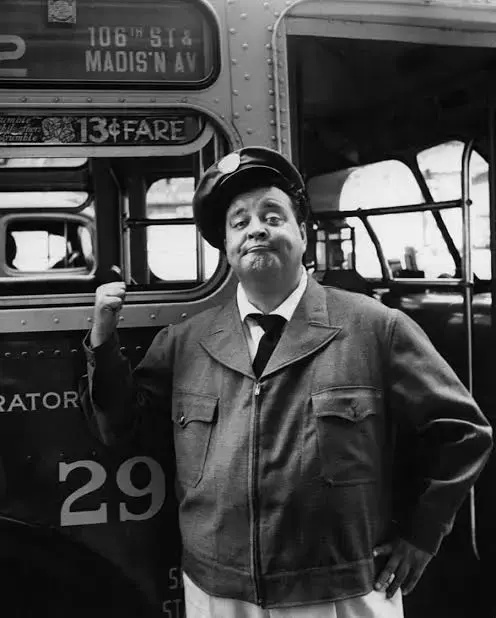
Jackie Gleason in his iconic role as NY bus driver Ralph Kramden.
“Three hours into the trip, we got this new driver,” my friend said. “He drives on a little then stops the bus. He walks back, checks the toilet, then returns to the front and switches on the loudspeaker. “Huele mal. Huele a caca.” It smells bad, it smells like feces. “If anyone has urgent circumstances, we can make accommodations.”
“Yikes,” I said. “I’ve never heard that one. Had you noticed the smell?”
“Some. I thought it was sewage or something,” said my friend. “Either from the bus restroom or a farm outside.”
Not surprisingly, nobody fessed up. Eventually the driver sat back down and restarted the engine. Then he stopped again, produced a can of air freshener, and walked up and down the aisle, spraying in all directions. Then he continued the journey. No doubt he was experiencing a disagreeable time dilation of his own.
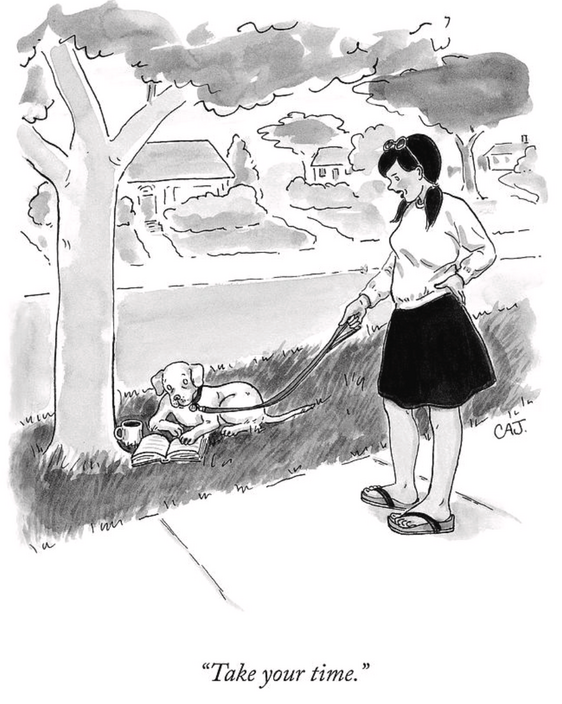
Shaking our heads over the incident, the four of us made our way out of the bus station in search of a taxi. Suddenly my friend exclaimed, “My tote bag! It’s still on the bus!” She blanched. “Our passports… credit cards…”
We raced back inside. The bus had departed, but the driver had not. He’d discovered the tote bag and was hanging around the station, keeping it safe for her. And just like that, he was transformed, as my friend’s husband put it, “from a schlub to an übermensch.”
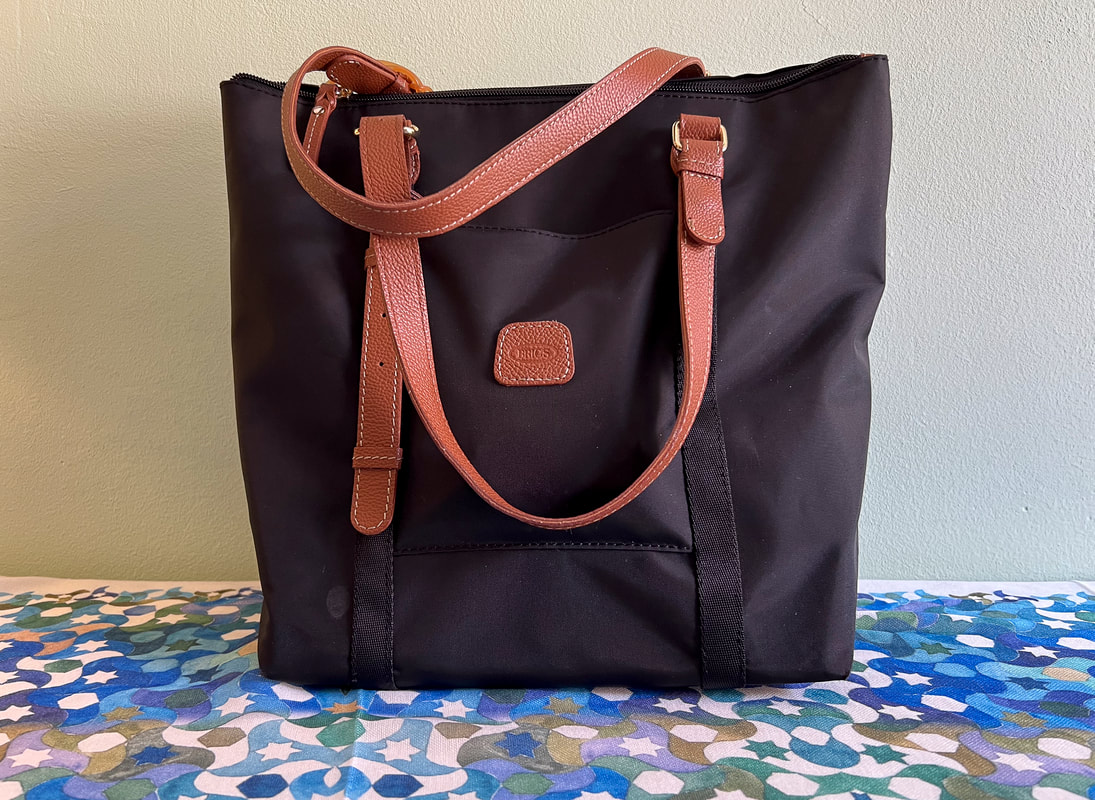
I once was lost but now am found. Hallelujah!
I love traveling in Spain, where anything can happen and usually does. I am frequently flabbergasted — yes, even now, in the midst of all the chaos and madness — by the kindness of strangers.
“We have one life,” says Wylie Overstreet in his film about mapping cosmic time. There’s a hint of tears in his voice. “We are alive for the briefest moment. But that time is a gift from the Universe. It’s a tiny moment. But what a moment!”
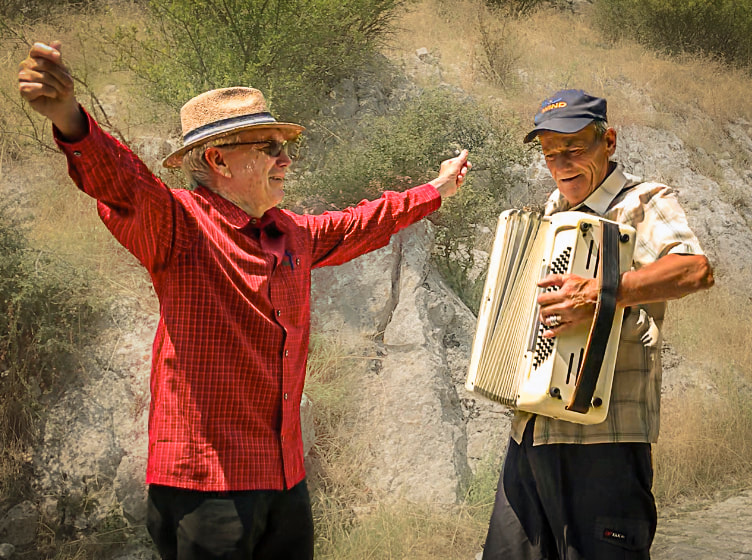
Rich dancing on a hillside in Albania in 2019
Leave a Reply