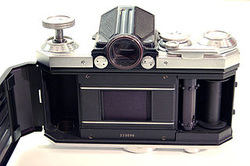



Kids, this is what cameras looked like in the 50s.
When I was little, my mother took some phenomenally bad photos because she never learned how to close one eye, which you had to do to see through the tiny viewfinders on pre-digital cameras. As a result, her pictures showed miles of background – often the asphalt of our driveway – while
we kids would be jammed into the lower left corner, with at least one of us and half the dog outside of the frame altogether
. Working in graphic design in my twenties and thirties, I learned the basics of lighting and composition from pros working with bulky, technically complex equipment. Nowadays, I feel wildly lucky to live in an era in which I can get high-quality results using a Nikon that fits in the back pocket of my jeans and a laptop that’s practically the size and weight of a magazine.
As an amateur, I’m always trying to learn from “real” photographers. Here’s what I’ve picked up so far.
Top shelf vs. bottom shelf TP in Sighișoara, Romania
1. Always have your camera handy
.
Ansel Adams
said,
“Sometimes I arrive just when God’s ready to have someone click the shutter.”
I figure if God’s ready to go, I should be too. Once, when I was writing about people wearing pajamas in pubic, I spotted a woman in an airport dressed in a blanket. I was racing for a plane and didn’t have time to dig my camera out of my luggage – and I’ve regretted it ever since.
2. Take lots and
lots
and LOTS of photos.
As
Henri Cartier-Bresson
, the father of modern photojournalism, put it, “
Your first 10,000 photographs are your worst.”
I always try to get multiple shots of each subject; I’ve found that sometimes even a subtle shift in the angle, composition, or the subject itself can change a shot from “uh” to “ahh.”
3. Remember the background.
Going out to shoot Seville’s spectacular annual processions, I’ve had countless photos spoiled because I didn’t notice the glaring Burger King logo or gaudy billboard behind the Virgin. That can make for a good irony shot, but really undercuts the mood if I’m going for somber majesty.
4. Study the light.
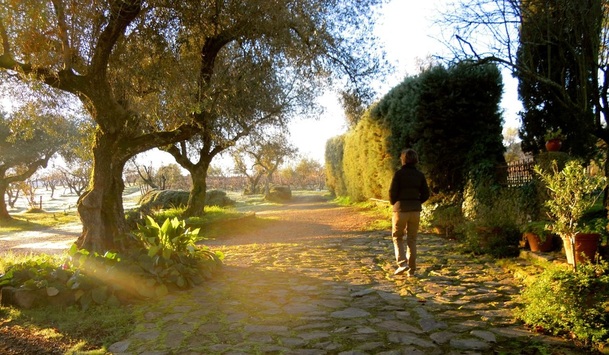
I love slanted light, because it adds so much dimension and radiance to a shot. It can turn a simple object, face, or outdoor scene into an image as gorgeous as a classical painting.
5. Show respect when photographing humans
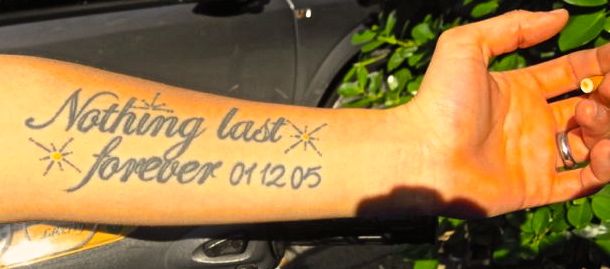
. I try to be careful not to treat anybody, no matter how exotic or peculiarly dressed, like a zoo exhibit. I do snap candids on the street if I can do it discreetly; when it feels comfortable, I ask permission to do a more carefully arranged shot. At a café in Napoli, I was entranced by the large, slightly misspelled tattoo on our waitress’s arm. When she took a cigarette break sitting on her motorcycle, she seemed pleased to let me photograph it.
6. Edit your photos.
No one, not even Ansel Adams, takes perfect shots every time. That’s why God gave us computers equipped with photo editing software. I run every shot through iPhoto, cropping, enhancing, straightening, boosting the yellow a smidge to warm up the light, sharpening the definition, bringing up detail in shadows and highlights, and so on. I often radically crop images, for instance, to create horizontal headers on Facebook and my website. That’s why I use a camera and not my iPhone; at least for now, my camera still gives me higher definition, so that even a detail can remain clear and sharp.
Why go through all that?
“When people look at my pictures, I want them to feel the way they do when they want to read a line of a poem twice,”
said photographer and film director
Robert Frank
, I’ll never be in Frank’s league, but I’m going to keep on trying to produce photos that (unlike my mom’s) include the subject, the whole subject, and nothing but the subject – and if possible, capture a glimpse of the delight I felt when I saw that subject for the first time.
To see more of my photos, please check out other pages of
this website
, especially the
best images from my recent train trip through Central and Eastern Europe
, and my
Facebook page
.
Leave a Reply