“You’re getting a
Christmas
tree
?” Spanish friends used to say, with such incredulity that I might as well have announced we were building an igloo in our living room. “A live tree? Really?”
“Where are you
getting
a tree?” expat friends would ask, eyeing us a trifle suspiciously, as if we had a direct line to Santa’s workshop and had been keeping it to ourselves.
That was a few years ago, when
árboles de Navidad
were a complete novelty here in Seville, known only from American movies and indulged in exclusively by a few foreigners who had
enchufe
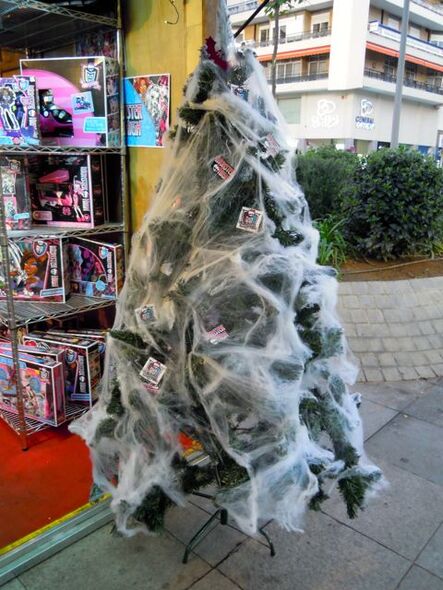
(pull) with the local florist or a friend with a farm and an axe. The only ornaments available were from discount bazaars, made of sturdy plastic and hand painted in such a slapdash manner that the angels often had expressions ranging from quizzical to downright satanic (rendering them doubly useful as Halloween decorations). Today, holiday trees are common in larger shops and a few avant-garde households. Even homeowners tend to decorate them like the ones in movie department stores, with matching, evenly spaced ornaments of a single color. So far I’ve never seen a Spanish tree with a lopsided ornament made by a kindergartener out of dry pasta and old bottle caps, and I think the trees are the poorer for that.
While holiday trees are slowly gaining traction here, buying a good one is still far from easy. Cheap artificial trees are readily available in discount stores, but Rich and I are partial to fresh firs like the ones we used to know as kids. A few local florists stock spindly three-foot trees — more like shrubs, really — that come with their roots in balls of dirt and their limbs so dry we can only assume they were dug up well ahead of time, say in June.
Even so, a couple of years ago we were thrilled to find one at the florist’s kiosk in our neighborhood and carried it home in triumph. Two nights later a windstorm swept through the city and, due to an open window, right through our apartment. In the morning we found our tree sprawled on the floor in a manner so corpselike, I looked for a chalk outline. When we stood it upright, the branches came but the needles —
all
of them — stayed on the floor, leaving us holding a bundle of dead sticks. We ran out and bought more garlands to wrap around the pitiful remnant, and with considerable effort and expense, we managed to create something that looked like a cockeyed, patchy artificial tree.
People kept remarking, “I thought you said you bought a
live
tree.”
While decent
á
rboles de Navidad
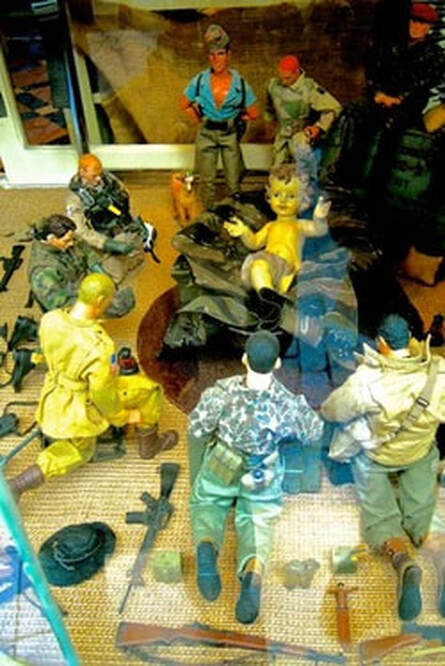
may be in short supply, Seville is blessed with an abundance of Nativity scenes. Here in Catholic Spain, they’re
de rigueur
in government buildings, banks, stores, and private homes as well as churches. The bigger scenes nearly always include, somewhere in the background, a tiny crouched
caganer
who is clearly, explicitly defecating; they say it’s to add a touch of earthy realism. If you’re thinking of adding one to your seasonal decorations, you can find
online vendors offering a wide selection of
caganer
figurines with well-known faces
including Bruce Springsteen, Kate Middleton, Albert Einstein, Rodin’s the Thinker, the Queen of Spain, Bart Simpson, Darth Vader, the Three Kings, Santa, and many, many more.
Holiday traditions provide reassurance that whatever madness is currently abroad in the world, some things will roll around every year with comforting predictability. In December, Rich and I will have a holiday tree, with or without needles. American kindergarteners will bring home lopsided ornaments made from a motley collection of incongruous objects. And in countless reverently staged Nativity scenes throughout Spain, little
caganer
figures will be crouched in the shadows behind the stable, adding an earthy touch to the awesome moment, reminding us that we don’t have to be perfect to be part of something wonderful.
Parts of this post were drawn from my book
Dancing in the Fountain: How to Enjoy Living Abroad
, which tells tales of our move to Seville. (This book makes a great gift for anyone who likes to travel, laugh, celebrate holidays, or dance in fountains. Just thought I’d mention it, because I heard you might be looking for ideas.)

Leave a Reply