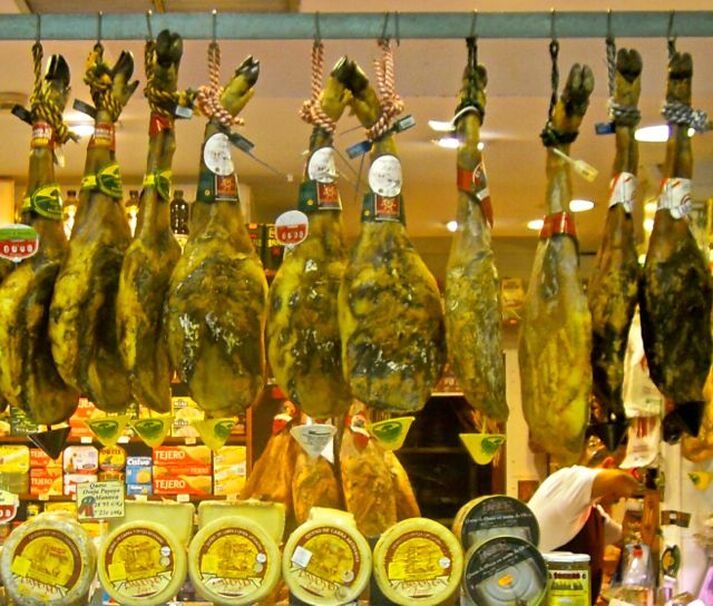
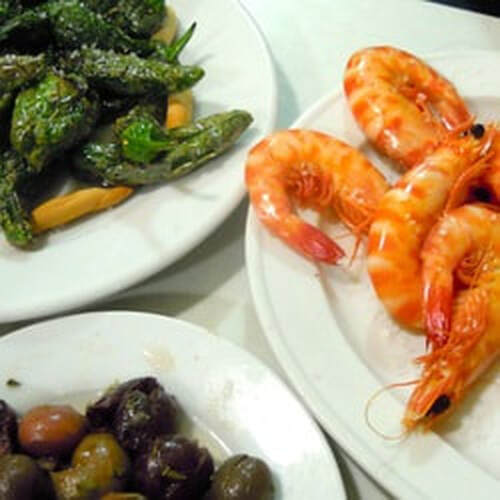
I’m often gobsmacked by the health advice I’m offered by Spanish health care professionals. High cholesterol? Consume more dark chocolate, red wine, and good Spanish ham. Taking cold medicine? No orange juice for you! Your prescription says avoid alcohol? Oh, go on, two or three beers won’t matter. Obviously, this kind of health advice is easy to follow, and to be honest, I’ve had pretty good results with it so far. My American doctor decided I didn’t need cholesterol medication after all, and I’ve found it is easier to survive a cold sipping the occasional beer instead of guzzling OJ.
So when I read recently that Spanish health care experts are recommending five meals a day to stay thin, I went to the kitchen, got a snack, and settled down to give the article proper attention.
MujerHoy magazine
explained that you need breakfast, mid-morning snack, lunch, mid-afternoon snack, and dinner to avoid overeating at any one meal. “To lose this traditional schedule,” the article warned, “is to throw open the doors to indiscriminate nibbling.” Yikes!
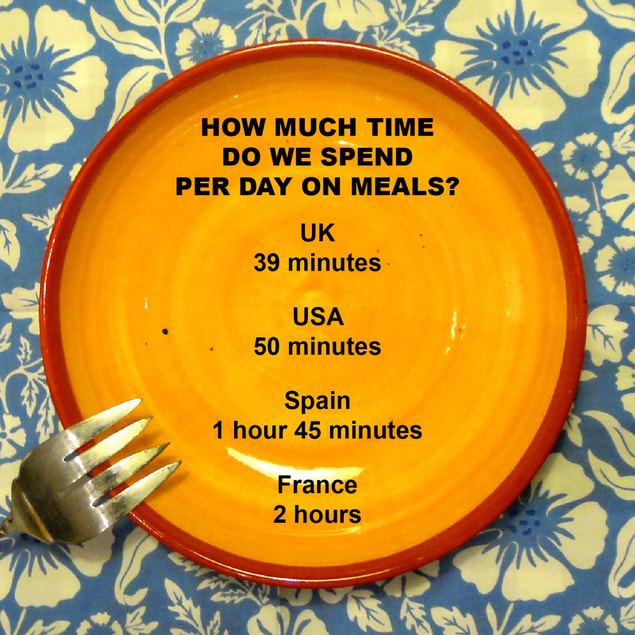
Our best bet, it seems, it to spend more time at table, eating slowly in a relaxed manner, so our brains and our bodies have time to appreciate the meal and realize that we’ve consumed enough nutrition to make it through the next few hours until it’s time to eat again. The article reported, in a tone verging on horror, that while the Spanish continue to spend a civilized 1 hour and 45 minutes a day at meals, those crazy Americans allot just 50 minutes daily to the pleasures of the table – which may not involve a table at all, but rather a car, a work station, or even (shudder) walking.
I was shocked to discover that Americans aren’t the worst offenders. According to the
Daily Mail
, in the UK mealtimes account for just 39 minutes and 9 seconds of the average day. Breakfast is a brisk 7 minutes and 20 seconds, “lunch hour” has now been whittled down to a measly 12 minutes and 49 seconds at your desk, and dinner is gulped in just 19 minutes. Not surprisingly, 78% of participants said they wished they could sit down and savor meals longer, and 90% said (rather wistfully, it seemed to me) that on the rare occasions they managed a proper dinner with the family, they enjoyed themselves and wished they could do it more often.
The headlong pace of modern living makes it difficult to fit in three meals a day, let alone five. But traveling lets you try all sorts of new things, including ways to fuel body and soul. So you might consider an experiment during your next vacation: try eating more and smaller meals, and lingering at the table as long as possible. When Rich and I were on
our recent three month train trip
, we generally had five meals a day, making sure we had sufficient morning and afternoon snacks to sustain us during many hours of walking. We sampled plenty of local fare but at other times we opted for simple salads or picnics rather than chowing down on big restaurant meals. We were never hungry and came home leaner than we left.
The Spanish aren’t the only ones who have developed the fine art of leisurely meals. The
Huffington Post
reported that the French spend two hours a day at the table. And according to Mireille Guiliano’s bestseller
French Women Don’t Get Fat,
they’re eating all the good stuff we’re told to deny ourselves when trying to slim down: chocolate, cheese, meat, bread, even (gasp!) butter. So why
don’t
they get fat? In large part because
les Français
take pleasure in three full, leisurely meals every day plus snacks. And they treat food as a friend, rather than an enemy. “French women,” says Guiliano, “think about good things to eat; American women typically worry about bad things to eat.”
When I asked a French friend about this over coffee today, she said, “It’s true. We look forward to eating with the same pleasure that we look forward to meeting a good friend.” And that, my friends, seems like something worth doing as often as possible.
Bon appétit!

Leave a Reply