
At a party in Bucharest last fall, I met a stocky, middle-aged Austrian who hinted broadly that he’d had sex with all the best women in the city. Not for the first time, I reflected that one of the enormous advantages of getting older was not having to worry that he would attempt to add me to his collection, requiring all sorts of tedious defensive maneuvers on my part. There wasn’t nearly enough left of my drink for me to waste any of it on his face.
This small incident got me thinking about other advantages of growing older. Friends no longer recruit you to help them move a sofa up four flights of stairs. Yoga teachers aren’t as demanding and you have less to prove, making classes far more relaxing. And it’s a
lot
easier to sneak into places. When shopping in downtown Seville, I often walk confidently into one of the private clubs to use their ladies’ room; I’ve done it for so many years now that I’m pretty sure the staff is under the mistaken impression that I’m a member, and are probably worrying about why they never see me at the annual dinner.
Of course, to me the greatest single advantage of this phase of life is our freedom to travel. Some of my retired friends brag, “I have six Saturdays and a Sunday every week. I never do anything!” But for many of us, this age brings the long-awaited opportunity to go places
— whether that’s fishing at a favorite lake or a jaunt to another country — without worrying about having to show up at the office on Monday morning in good working condition.
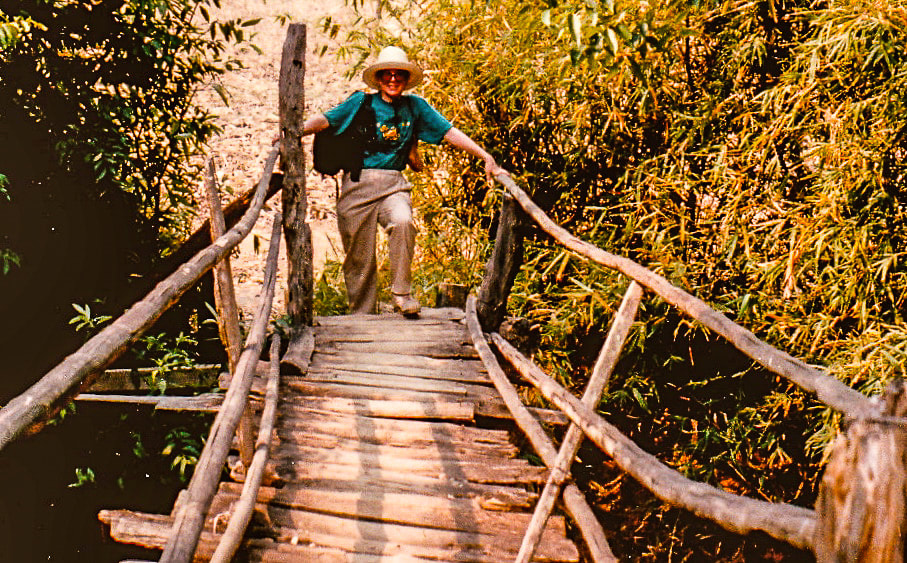
During our careers in Cleveland, Rich and I chose vacations that would get us “
out there
” – that is, off the tourist track, past the boundaries of common routes, to the cultural equivalent of places where, in ancient times, the maps would be marked, “Here there be dragons.” Last year, when we were planning
our three-month train trip through Central and Eastern Europe
, I realized with something of a shock that activities I’d undertaken without hesitation in my twenties, even my forties, raised new questions now. Rich and I were both active and reasonably healthy, but there was no getting around the fact that we were in our sixties (or, as Rich likes to put it, sexagenarians) and had lost our taste for traveling rough. But we hadn’t lost our desire to get far enough
out there
to feel the spine-tingling zing of being truly alive.
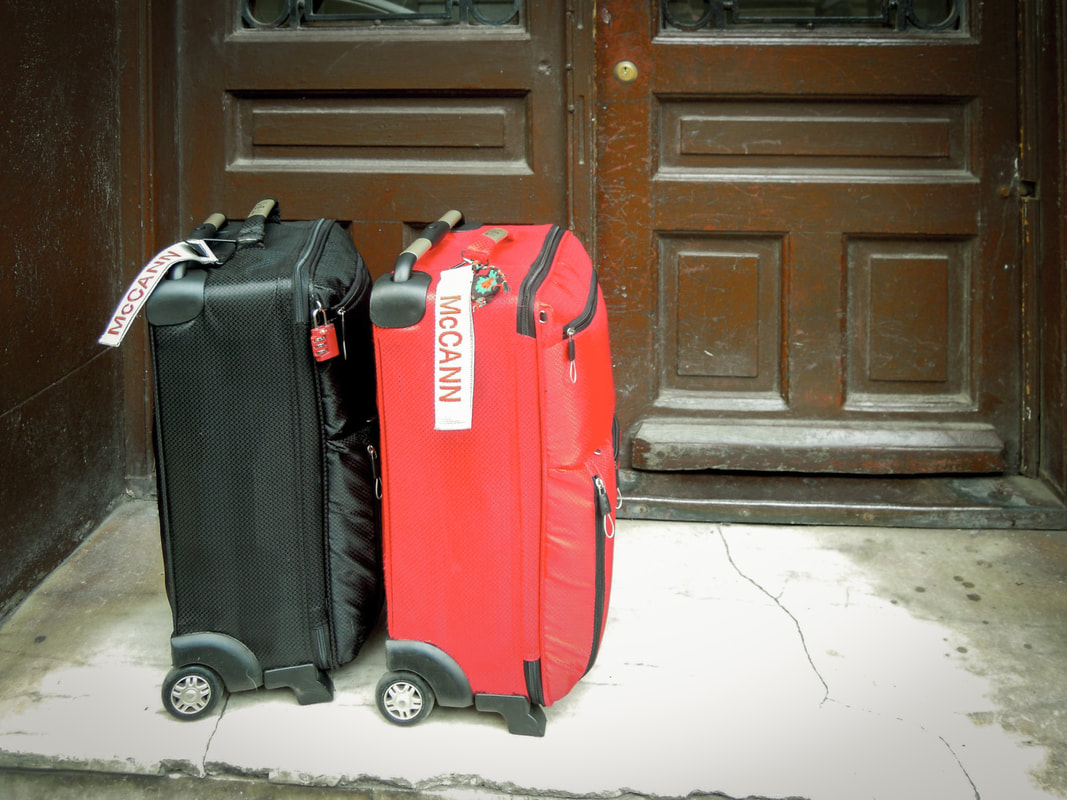
We started referring to the train trip as The Experiment, a test to see how a couple of sexagenarians might survive several months on the road. The rules were simple. We would walk out our door in Seville, stroll to the train station, and simply go, with just a rough itinerary and no fixed schedule or advance reservations. Our accommodations would mostly be Airbnb apartments and hostels.
We’d pack very light
. And if at any time it got to be too much, we’d give in gracefully and fly home.
The trip covered 4627 miles (7446 kilometers). We
had
a few scary moments
, encountered
some pretty dodgy lodgings
, and used a number of unspeakably ghastly public rest rooms. But mostly
we had fun, made friends, and learned a lot about how and why we all travel
. Rich and I consider The Experiment a success, as we proved to ourselves that being retirement age had not dimmed our ability to have grand adventures.
The Spanish word for retired is
jubilado
, from the Latin word
jubilant
, which means “shout for joy.” I love this attitude. Hitting retirement age
is
something to celebrate. After all, as recently as 1900, the life expectancy in the US and in Britain was just 47 years. I consider every year after that to be a gift.
What will you do with yours?
Leave a Reply