
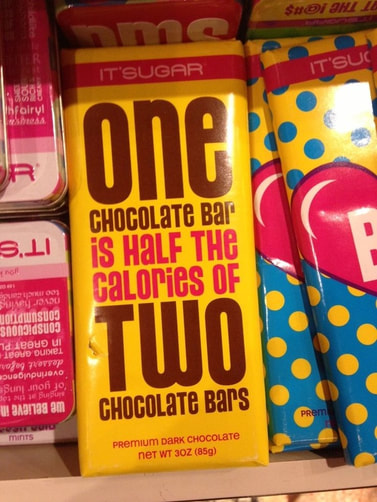




When I say the words “chocolate cake” do you immediately think “guilt”? Most Americans do, according to Michael Pollan’s
In Defense of Food: An Eater’s Manifesto
.
The French, on the other hand, go right to the idea of “celebration!” I have no official knowledge about the Spanish response, but I can tell you this: every year they construct a room-sized chocolate Nativity scene in Seville, which suggests to me that their word would be “heavenly,” if not outright “divine.”
Chocolate is one of the most misunderstood and maligned edible substances on the planet. It’s a plant-based food – yes, technically a vegetable! – that can help
lower your cholesterol, improve and protect your skin, boost circulation, regulate blood pressure, and provide you with antioxidants
, fiber, minerals, and other building blocks of life. It can enhance your mood, even your love life. Back in the day, Aztec rulers used to quaff a cup of cocoa before heading into the harem,
launching chocolate’s reputation as an aphrodisiac
. Does chocolate really work as well as Viagra? I’ll let you do your own experiments on that one.
Humanitarian scientists and platoons of selfless volunteers have been working diligently to test the effects of chocolate on the human brain. And the results are very sweet indeed. For instance, a study at the University of Nottingham suggests that flavonols, the antioxidants found in dark chocolate, increase blood flow to the brain, flooding it with oxygen for two to three hours. This
makes us more alert, enables us to focus on tasks, and reanimates our brain power when it’s slowed by fatigue, sleep deprivation, even aging
. Flavenols can also be effective in treating such as vascular impairments as dementia and strokes.
If you invented a pharmaceutical like that, the photo of you picking up your Nobel Prize would be going viral this very minute. Yet chocolate is still considered a guilty pleasure rather than a valuable health resource. That’s because confectioners often strip the flavenols out during processing (such as roasting, fermenting, and alkalizing) and load up the treats with huge amounts of fat and calories, especially when they add in yummy caramel, nuts, and candied cherries. American manufacturers are especially prone to throwing in extras such as guar gum,
partially hydrogenated oils (the infamous trans fats associated with a host of ghastly diseases
), artificial flavors, artificial perfumes, and other questionable ingredients, all of which will, at the very least, dilute the amount of actual cocoa you’re consuming.
Your best bet is to
look for dark chocolate that’s at least 70 to 85% cocoa
, preferably raw and/or organic. How much should you eat? Doctors at the prestigious Cleveland Clinic suggest that
an ounce or so a few times a week won’t hurt
you, although they hasten to add that blueberries, cranberries, apples, and onions should be considered as alternative flavenol sources. Hmm, chocolate vs. onions… I’ll have to get back to you on that. Happily, they also note that red wine is also flavenol-rich, conjuring up images of leisurely after-dinner samplings to determine
the right zinfandel to pair with dark chocolate
.
The bottom line is that chocolate – good, relatively pure dark chocolate, at any rate – should no longer be stigmatized as an occasion of sin but celebrated for its healing powers and divine taste. As the Spanish saying goes,
Las cosas claras y el chocolate espeso
(clear thoughts and thick chocolate). Amen to that.
YOU MIGHT ALSO ENJOY
“EAT MORE OFTEN SO YOU DON’T GET FAT,” SPANISH ADVISE
ABROAD FOR THE HOLIDAYS
WHEN YOUR HOUSEGUESTS REFUSE TO LEAVE
A YEAR OF TRAVEL. WOULD YOU DO IT?

Leave a Reply