Normally when I meet a friend for drinks after work, I don’t need to go through two security checkpoints, have my picture taken, and sign a non-disclosure agreement. But this was
one of the Bay Area’s hottest high-tech superstars
and it was just a wee bit twitchy about its privacy.
“Don’t even
think
about taking a photograph or writing anything about this visit,” my friend told me.
“What will they do, set the dogs on me?”
“Worse. Lawyers.”
The campus-which-shall-not-be-named was gorgeously designed in nerd chic
, which is to say sleekly modern, ultra practical, and distinctly whimsical, with in-jokes about sci-fi characters scrawled on giant whiteboards next to flow charts and algorithms. Twenty-somethings sat at a sea of worktables, tapping furiously on their keyboards.
“What are they all doing?” I asked my friend.
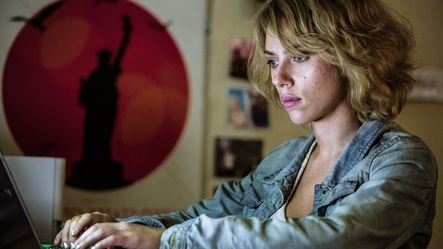
In the movie Lucy, Scarlett Johansson takes the world to the next level. This photo was NOT shot at the high-tech-superstar campus I visited.
“Changing the world,” she said.
Yeah, right,
I thought.
Boy, she has really drunk the Kool-Aid
. But then I got to thinking about it and realized she was right.
The high-tech revolution that began in Steve Jobs’ garage is shifting the balance of power on the planet
, one keystroke at a time. While politicians continue to bicker about the redistribution of wealth, high-tech companies are busy shifting the
real
wealth – information, the data that organizes our lives – out of corporate hands and into the laptops and cellphones of individuals.
Just look at the catchphrases of modern travel.
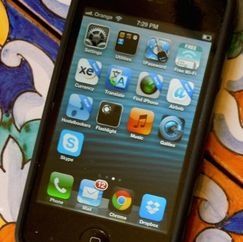
“I’ll Google that with my iPhone.”
Personal computers and smart phones make it easy for us to plan and organize our trips, often on the fly. A year ago,
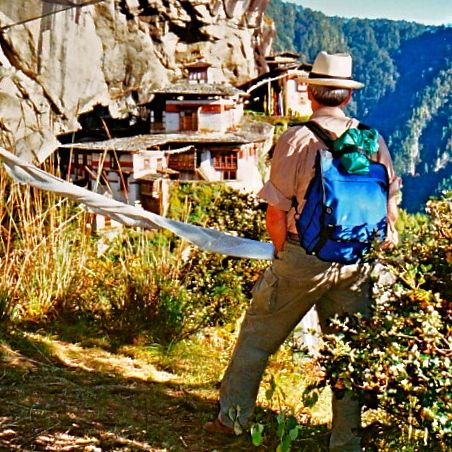
Rich and I spent three months on the road
, with no fixed itinerary or advance reservations, using electronic devices and
travel apps
to navigate. Even our hostel on a Bulgarian mountaintop had wifi.
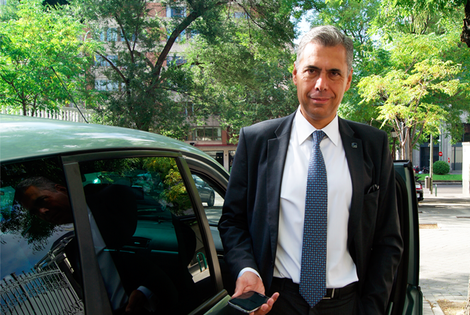
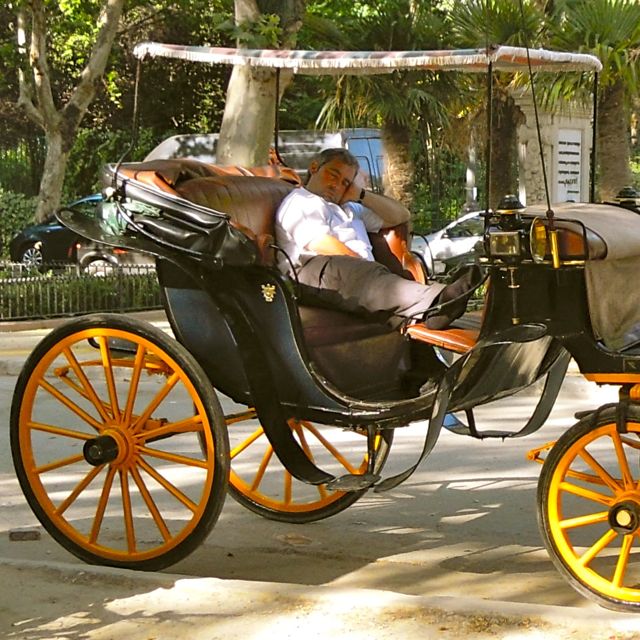
Madrid’s first Uber ride went to IE professor and blogger Enrique Dans on Sept. 23. 2014.
“Let’s Uber to the airport.”
Uber
connects individual drivers and people needing a ride; it’s a faster, hipper, often cheaper alternative to taxis. You just tap your iPhone to summon the nearest private car; the all-inclusive fare is automatically paid by credit card, so you don’t have to fuss about correct change or tipping. This six-year-old start-up has already spread to 45 countries, is valued at $17 billion, and has seen its name enter our language as a verb. Haven’t used it yet? You will.
“I’m staying at an AirBnB.”
AirBnB
connects individual travelers with hosts who have private lodgings for rent – anything from a room to an entire apartment or house. I’ve stayed in plenty of them, and loved most; of course, since they offer more than 500,000 listings in 33,000 cities, it’s going to take me a while to test them all.
Today, private enterprise isn’t just changing the world, it’s changing the universe – or at least our little corner of the solar system.
Netherland-based Mars One is planning the first manned Mars mission, financing it via crowdfunding, merchandising, and sponsorships that include reality TV
. The show begins with the astronaut selection process, winnowing the 2,700+ applicants down to the four who will spend seven months in space and the rest of their lives on the Red Planet. The plan calls for sending up additional colonists every two years – assuming the project is popular enough to keep attracting advertising revenues. From there, it’s obviously just a short step to becoming
the
hot new tourist destination. I can’t wait to hear people say,
“I Googled it on my iPhone, and I’m Ubering to an AirBnB on Mars this weekend.”
See you there!
YOU MIGHT ALSO ENJOY
TOP 10 APPS FOR MORE CIVILIZED TRAVEL
“
THE STINKER,” AN AIRBNB DISASTER STORY
ROCKET SCIENTISTS DISCOVER THE SIESTA
A YEAR OF TRAVEL. WOULD YOU DO IT?
Leave a Reply