“Wherever you travel, travel with curiosity.” — Rick Steves
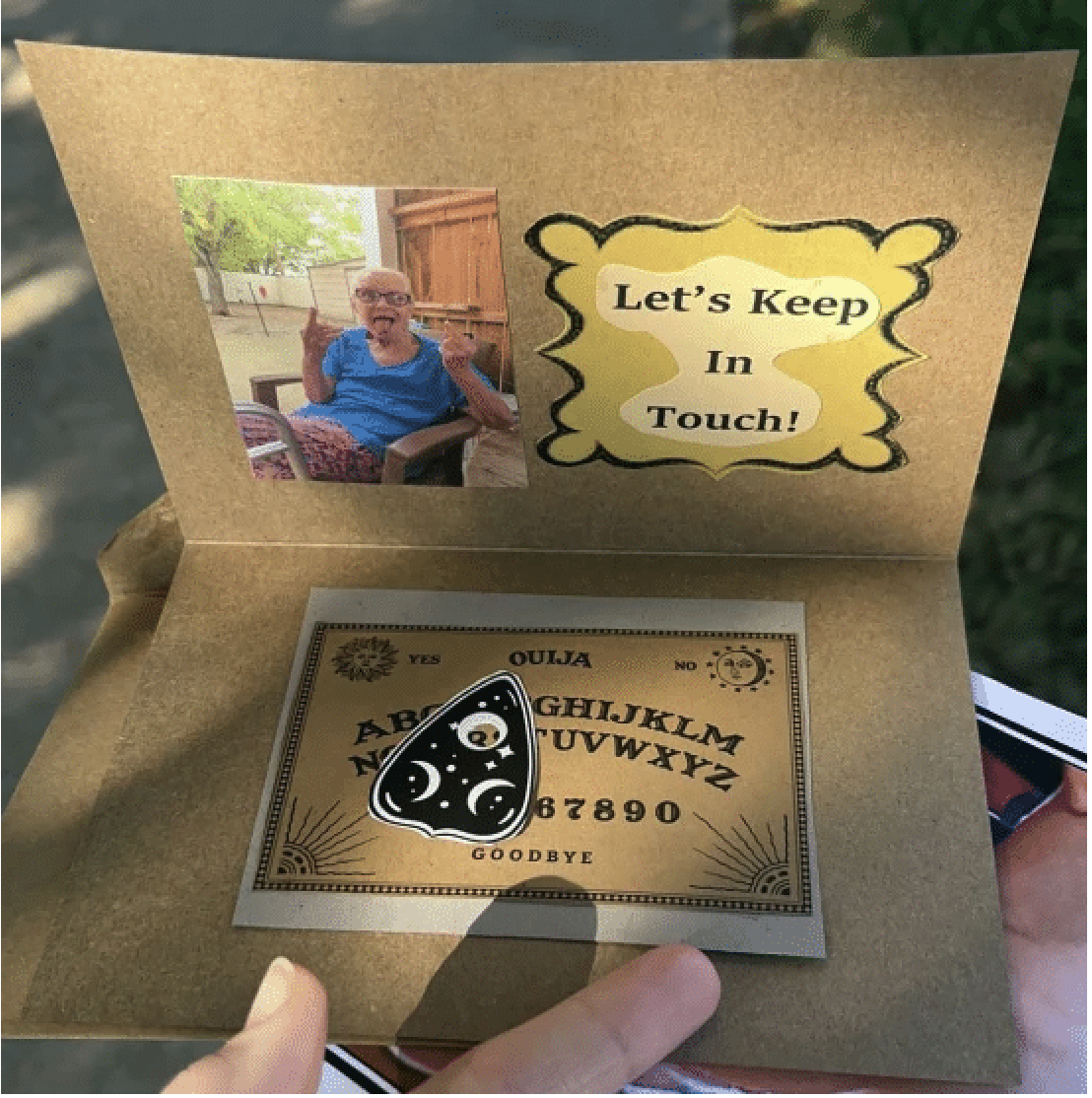
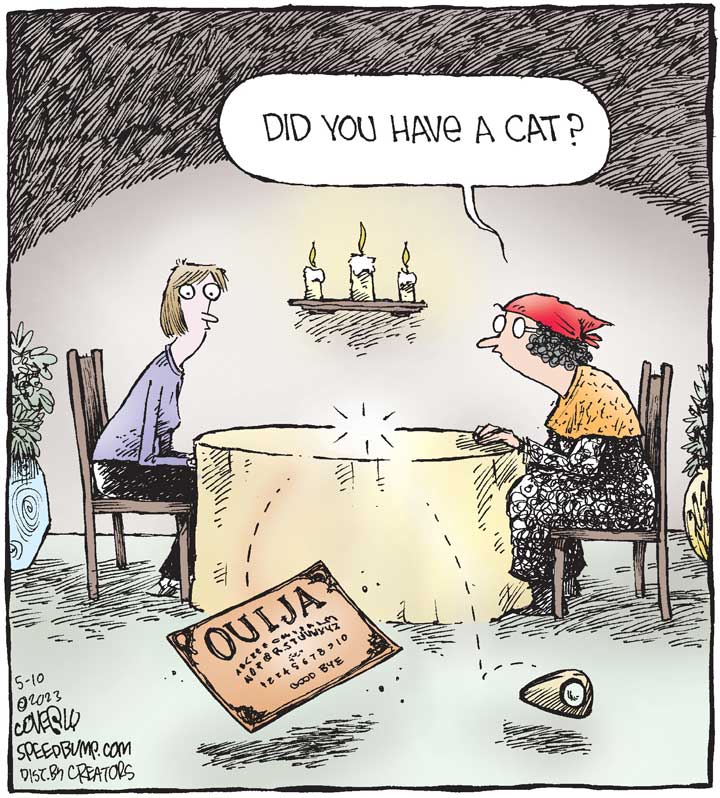
If you’re like most Americans, you spend upwards of 72 hours a year planning vacations, but you rarely think about your ultimate bon voyage party. Some flamboyant souls have departed this world with true panache — notably the Vikings, the Egyptian pharaohs, and the empress entombed in the Taj Majal. Aretha Franklin was escorted to her final resting place by an entourage of 100 pink Cadillacs. The ashes of James Doohan, who played Scotty on Star Trek, were smuggled aboard the International Space Station. Wacky Texas granny Jodie Perryman arranged to give everyone at her funeral a card showing a Ouija board and the inscription, “Let’s keep in touch!”
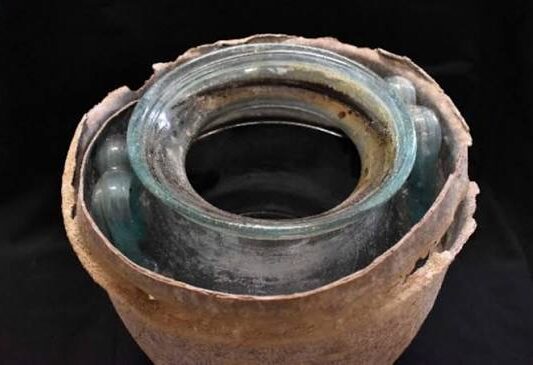
Starting to re-think your own farewell festivities? Here’s another option: I’ve just learned that in Carmona, a city 20 miles from Seville, cremated human remains were found in a 2000-year-old vat of wine — the oldest wine on the planet that’s still in liquid form.
Apparently a Roman called Senicio (which means “old man,” so possibly not his real name) believed eternity would be more congenial if spent bathing in five liters of a crisp sherry-like white. Cheers, Senicio! Sealed in glass, encased in lead, and enshrined in a mausoleum, vino and hombre lay undisturbed from the first century until they were unearthed during a 2019 home renovation.
Having just arrived back in Seville after a six-month absence, I’ve been catching up on the local news, reading choice snippets aloud to Rich. “The world’s oldest liquid wine is now on display in the Carmona City Museum,” I told him. “Don’t get too excited; I doubt they’ll let us sample it. But still, it’s a curiosity worth visiting. Shall we?”
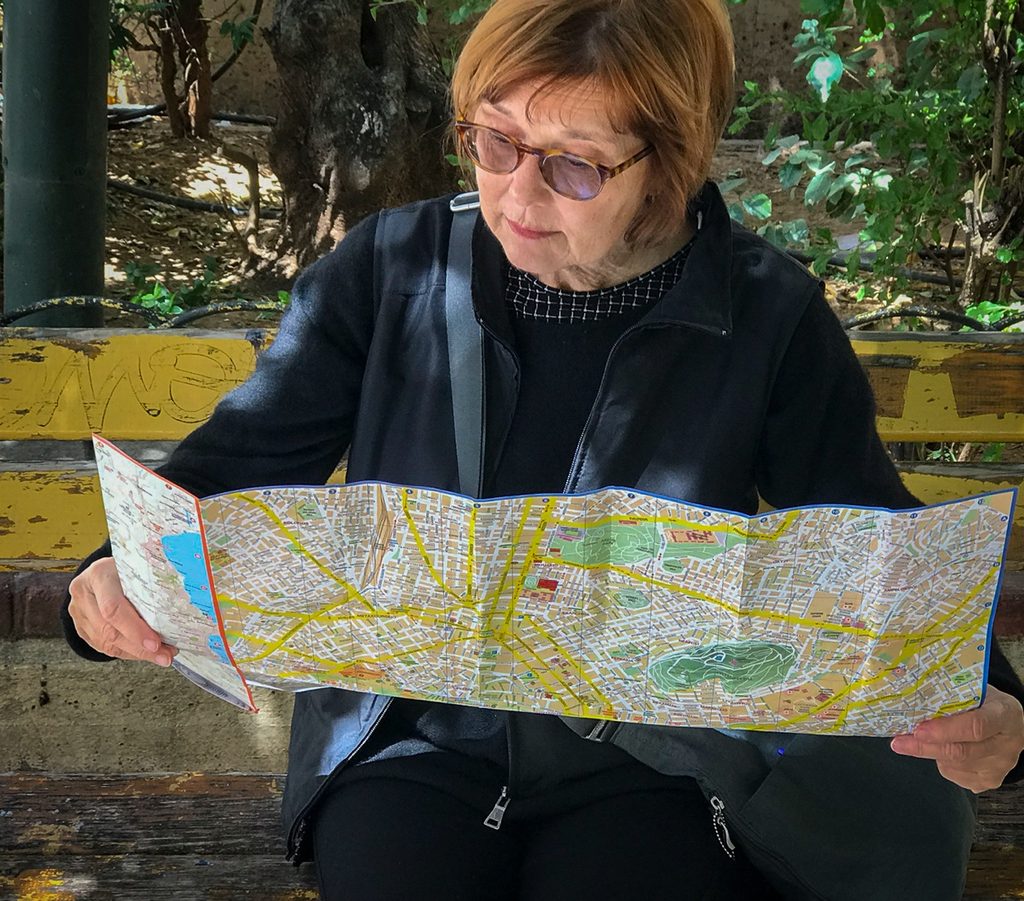
Rich and I have decided to spend this year cultivating curiosity, which recent studies show keeps the brain sharp and agile. And here’s the really good news: researchers found inquisitiveness tends to increase after age 60, just when we need it most. So I figured spending more time on the road, indulging our natural nosiness about the world, would not only be good for us but should provide a cheerful counterpoint to today’s dizzying headlines.
“Travel connects us face to face with reality,” says travel guru Rick Steves. “It’s not virtual… it’s not through a viewfinder. Travel is candid, honest… being in the moment… Traveling, we realize the challenges of our future will be blind to borders and best overcome not by conflict and walls, but by community and bridges. There’s so much fear these days… The flip side of fear? It’s understanding. And we gain understanding when we travel.”
This makes good sense to me. When I’m on the road, the word “unknown” becomes intriguing rather than threatening. I grow curiouser and curiouser about the people who passed this way before me. Right now I’m in Europe, where my ancient ancestors arrived a million years ago, around the time fire was trending as the hot new technology. How’s it been going since then? On the plus side, we developed language, civilization, and pizza. On the downside, we’ve screwed up often and in pretty terrible ways.

Is our checkered past the prologue to an equally bumpy tomorrow? “History cannot give us a program for the future,” said the poet Robert Penn Warren, “but it can give us a fuller understanding of ourselves, and of our common humanity, so that we can better face the future.”
What can those who went before us teach us about ourselves? Smart people have worked hard for thousands of years to leave us clues. Could there be anything in their legacy that can help us face whatever lies ahead with more resourcefulness and better solutions? That’s what I’m curious about.
Carmona was the perfect place to start asking these questions, as it’s one of the oldest cities in Europe. Sitting atop a broad, easily defended plateau with ample rivers, it’s been viewed as solid-gold real estate ever since rock-chipping protohuman nomads first wandered through 500,000+ years ago.
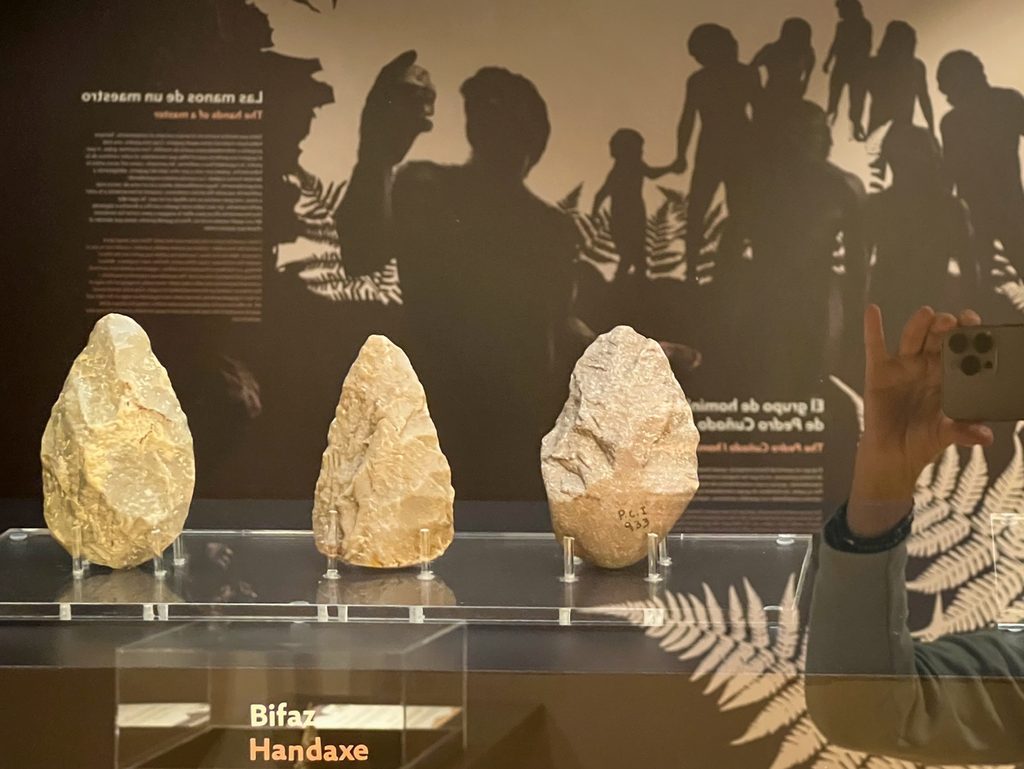
The Carmona City Museum’s archaeology section was an eye-opener. For every advance, there was a worrying downside. Take agriculture, for instance. A brilliant idea, right? We learned how to stockpile food so nobody had to go hungry in the lean times. But in Carmona as elsewhere, when agriculture showed up 5000 years ago, social equality went right out the (newly invented) window. Now alpha citizens controlled food distribution, and those with lower status worked to produce it. Pretty soon, slavery was invented.
A thousand years later the Canaanites arrived — yes, those guys from the Bible, now savvy international traders operating out of what would become Lebanon. They introduced Carmona to such newfangled ideas as the alphabet, metallurgy, glassmaking, the potter’s wheel, wine, and the royal purple dye favored by kings and known as phoinikes — which is why they were nicknamed the Phoenicians.
Who got to wear the royal purple in Carmona? The answer changed with head-spinning frequency. Early on it was homegrown farmers including the Tartessains, Iberians, and Turdetians. After that came foreign invaders: Carthaginians and Romans from Italy, then German-based Christian Visigoths, followed by the Islamic Moors from Africa, and finally, the Spanish Christians who have held power since 1247.
“So what have we learned?” Rich asked, as we stood gazing at a fragment of a Roman floor mosaic showing an anxious-looking image of Summer.
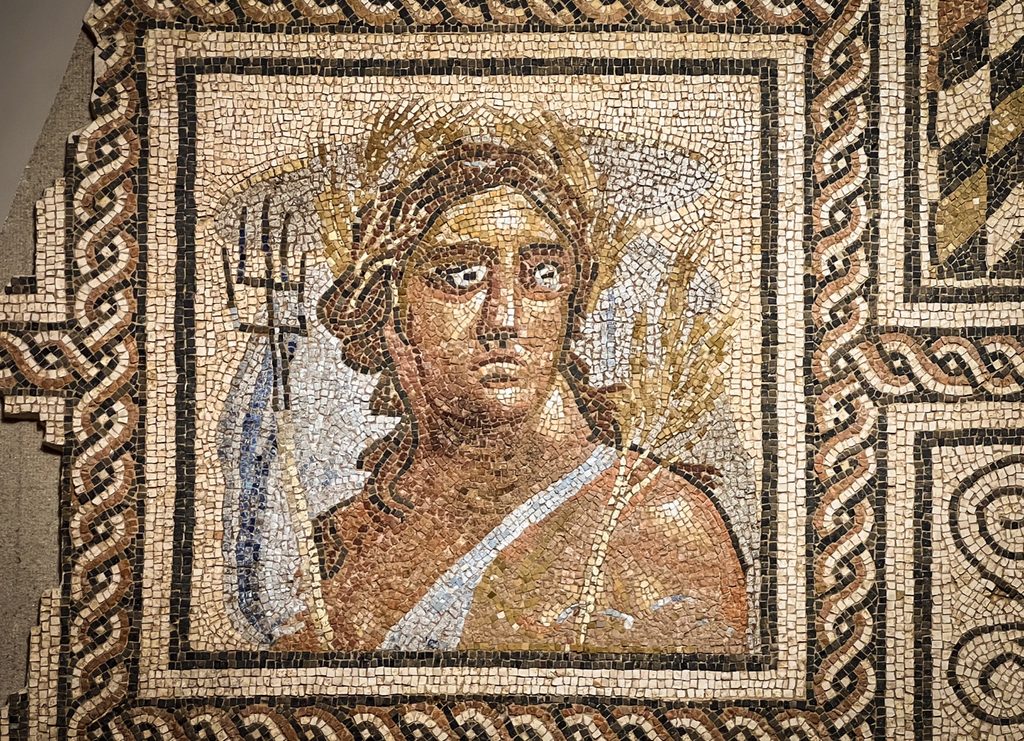
“Change is constant,” I said. This sounds so obvious when you say it but can be a hard lesson to absorb, especially for those of us who grew up in the post WWII era. We were raised to view peace, stability, and democracy as our birthright, hard-won and preserved forever, with the thanks of a grateful nation. “The Romans ruled here for 500 years. The Carthaginians? Thirty-one. You never know when your world will be upended. Look at the face of Summer here. You think she’s hearing the sound of Visigoth boots marching her way?”
It wasn’t until we got to the Renaissance display that I suddenly realized we hadn’t seen the glass urn with the world’s oldest liquid wine. Doubling back we covered every inch of the Roman exhibit but couldn’t find the urn, or a docent. The woman mopping the floor told us they’d taken it away somewhere to do something to it. Sample the vino, perhaps? I’ll never know.
But no matter. We had a grand time in Carmona. The city’s turbulent past resulted in a lively cultural mix and an easygoing acceptance of strangers in their midst.
Our last stop was the famous Roman Necropolis, where I gazed in awe at burial complexes fitted out with pools, dining areas, kitchens, and gardens. And why not? A life well lived is worth celebrating in grand style. When my time comes, I may not get a Roman feast, 100 pink Cadillacs, or even a vat of wine, but I’m hoping to leave my loved ones with a few stories to tell, and perhaps a Ouija board so everyone can keep in touch.
For more about Carmona, see my previous post, Ancient Carmona Knows How to Charm You.
A Quick Heads-Up
I’ll be traveling next week and won’t have time to write a post, but look for me the week after, when I’ll have a bunch of new road stories to share.
Leave a Reply