

A TRAVEL SKILL YOU MAY NEED SOMEDAY?
Runaway camels. UFO abductions. Leeches. The world is full of catastrophes waiting to strike, and the sensible traveler is prepared to encounter pretty much anything. On my own journeys, I’ve dealt with tornados, snakes, earthquakes, inebriated Americans in Japanese karaoke bars, and
broken bones when camping in deep jungle
, to name but a few. My fellow travel writers are quick to offer excellent advice about how to survive the most appalling situations; the solutions are often so harrowing that I’m convinced they hire Stephen King as a ghostwriter. Seriously, it’s the most logical explanation for such titles as
How to Escape from Quicksand, Wrestle an Alligator, and Land a Plane
(although to be fair, I don’t think they meant all at the same time);
Surviving Nuclear Radiation Fallout
; and
Blades don’t need reloading
(explaining why you want a machete, not a gun, when battling zombies).The list of possible disasters is endless and the advice may vary, but there is one thing all the survival guides agree on: the first thing you need to do is stay calm.
OK, I’ll do my best. But then what?
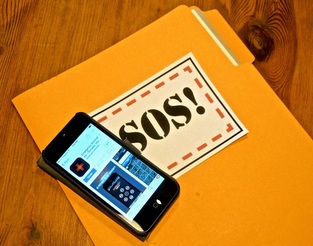
Rich and I recently whiled away a long drive discussing potential travel emergencies, and we agreed that while we wouldn’t rule out the utility of knowing how to defuse a bomb or jump onto a moving train, the catastrophe most likely to overtake us on the road would be a medical crisis. And in that case, the first survival skill we’d need would be knowing when and how to summon help. That’s when we came up with the idea of creating the SOS
file (named, of course, for the international Morse code distress signal).
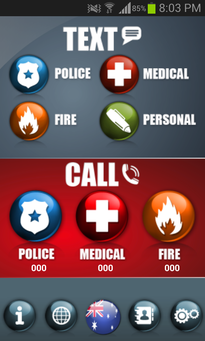
TRAVEL SAFE APP
Here’s what our SOS file will include:
1.
A personal safety app.
Right now we’re leaning toward
Travel Safe
, an award-winning app that uses the GPS in your phone to instantly transmit your location and type of emergency to first responders and a designated personal contact. It’s fluent in 27 languages – which is about 25 more than I speak – and covers you in 200 countries.
2.
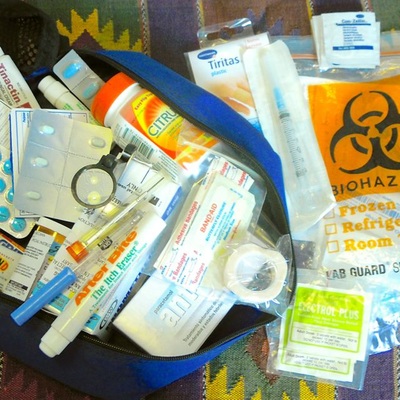
A first-aid app
. This will tell you what to do while waiting for medical professionals to arrive on the scene. The best-known app in my country is
First Aid by American Red Cross
; their sister organizations in the UK, Australia, and elsewhere have their own versions as well.
3.
A list of family and friends to contact for help.
While considering worst-case situations, I imagined one of us hospitalized in a remote location (say, Moldova or Latvia) for something rather worrying. What friends or relatives might be willing/able to jump on a plane and come all that way to provide logistical and moral support? We’re working on the short list now; I’ll let you know if your name comes up.
4. Basic medical information.
We plan to note health conditions, medications, allergies, blood type, eyeglass prescriptions, and anything else we can think of that the professionals should know before deciding on treatment. No point in risking, for instance, unfortunate drug interactions on top of whatever other calamity is in progress. And we’ll make a note about where to find our advance directives and power of attorney for health care, should those ever be needed.
5. Insurance information.
We have lots of insurance: Spanish, American, Medicare (which does
not
cover travelers overseas), and, depending on the journey, sometimes emergency evacuation and trip cancellation policies as well. Would I know exactly where to find the details in Rich’s meticulous files? Let’s just say it’s a wise precaution to note numbers and coverage data here.
Our SOS file won’t be nearly as thrilling to read as
The Worst-Case Scenario Survival Handbook
,
Come Back Alive
, or
The Alien Invasion Survival Handbook: A Defense Manual for the Coming Extraterrestrial Apocalypse
. But it’s far more likely to prove an actual lifesaver. And if assembling it turns out to be an utter waste of our time? That’s the best-case scenario.
Unlike some of my better-organized and more practical blogger friends, I don’t accept sponsorships of any kind. The products and books mentioned in this post are here because I thought you might find them interesting. I haven’t tried every one of them, and I welcome your input and feedback.
YOU MIGHT ALSO ENJOY
COPING WITH ILLNESS WHEN YOU TRAVEL
THREE SHOCKING TRUTHS ABOUT AIR TRAVEL
HOW TO LOSE A BET IN 10 SECONDS
VACATION ALERT!
I’m taking the next two weeks off to enjoy friends and family in California. I won’t be completely out of touch, but don’t expect another blog post until somewhere around August 21. Didn’t want you all wondering if some travel catastrophe had overtaken me!
Leave a Reply