“We have to get out of here,” I hissed to Rich.
“As fast as possible,” he agreed and began chugging his Heineken.
“Leave it,” I urged.
“Are you kidding? These beers cost nine dollars apiece!”
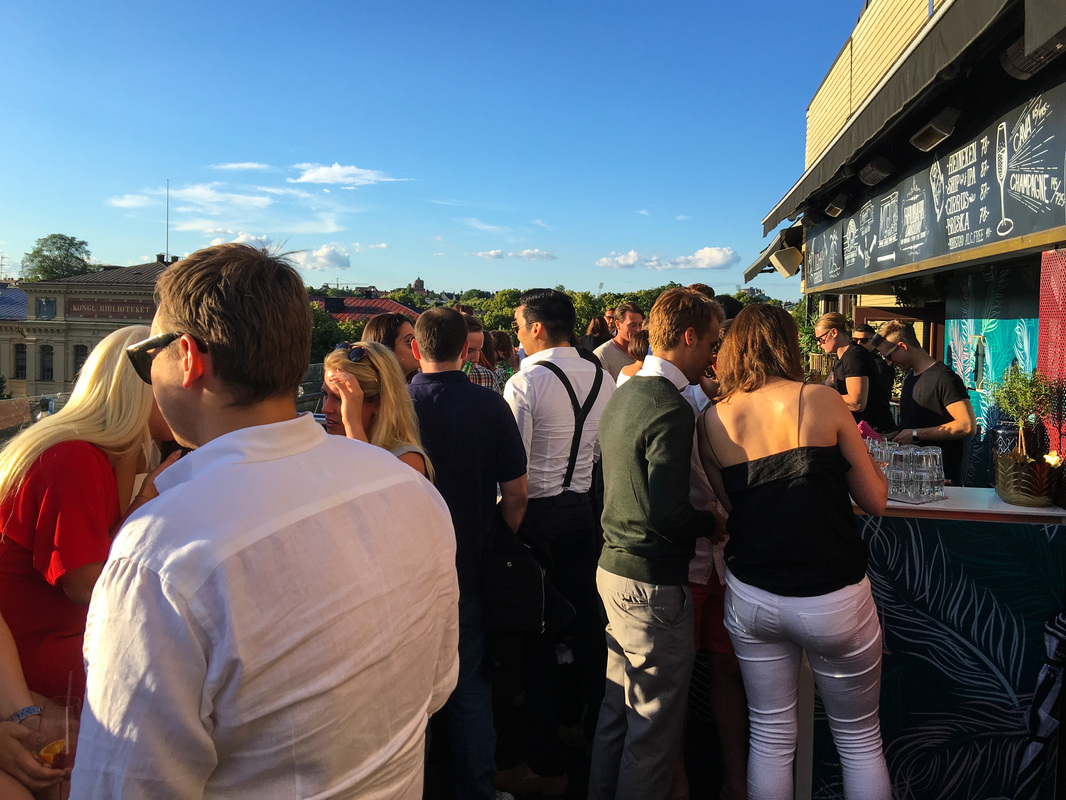
We were standing on the terrace of an upscale Stockholm hotel, surrounded by beautifully groomed people who were talking, laughing, and — as soon as they noticed us — staring and glaring in our direction. Clearly our very presence was sucking all the trendiness out of the occasion.
We were at an event organized by
InterNations
, the expat social network that holds casual gatherings in 390 cities around the world. Rich and I are long-term members of the Seville branch and sign up to attend in other cities when we’re passing through. I’d come to expect a welcoming smile, a sticker with my name and nationality printed on it, and interesting conversations with expats and locals. Now, standing on the overcrowded terrace with music blaring and everyone looking daggers at me, it was all I could do not to drop to my belly and crawl to the elevator.
It turned out that in our excitement at discovering that an InterNations event coincided with our visit to Stockholm, we had overlooked one tiny detail: this was not an event for the main group but a young singles night.
Hoppsan!
(That’s Swedish for
oops!
) Rich and I guzzled our drinks and fled.
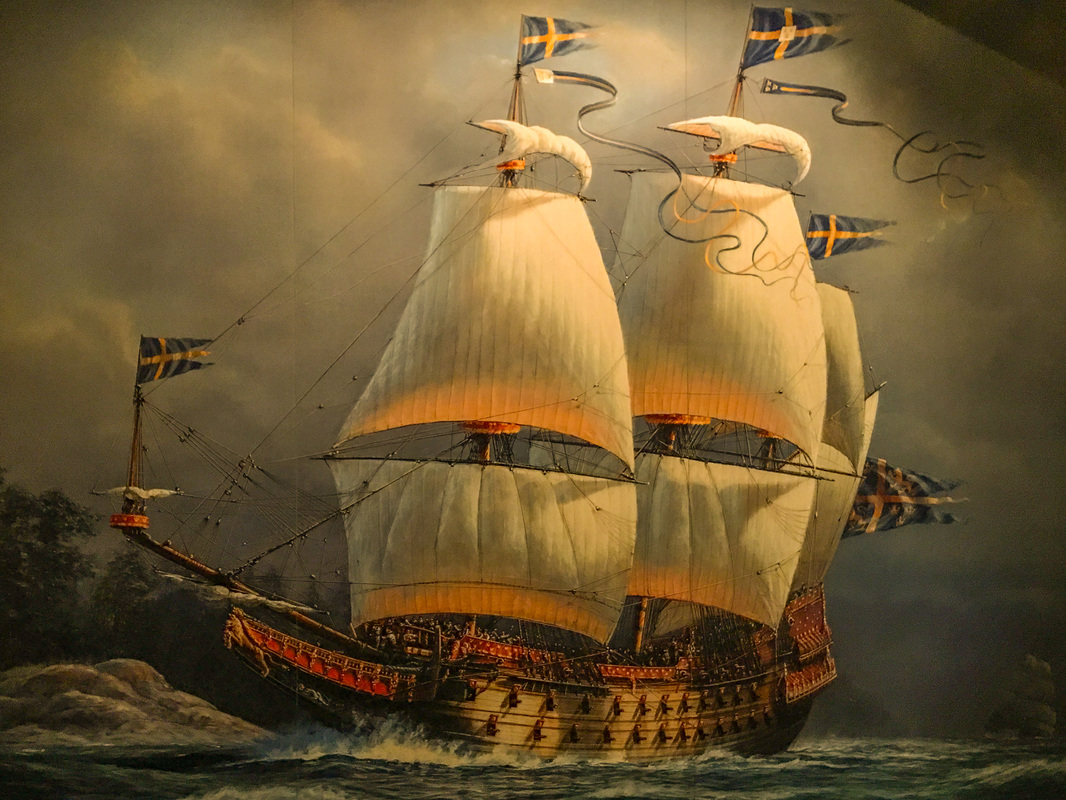
As disasters go, I’ve seen far worse. And so, of course, has Stockholm. One of its most spectacular catastrophes of all time was the launch of the warship Vasa in 1627.
Back then Sweden was in its
stormaktstiden
,
age of glory, and King Gustavus Adolphus, the Lion of the North, wanted his navy’s new flagship to be the biggest, baddest warship on the high seas. When the Vasa was finished, she measured a massive 69 meters long and 50 meters high. Everyone turned out to watch the gigantic ship embark on her maiden voyage.
The Vasa sailed boldly for a grand total of 1300 meters — and then she sank.
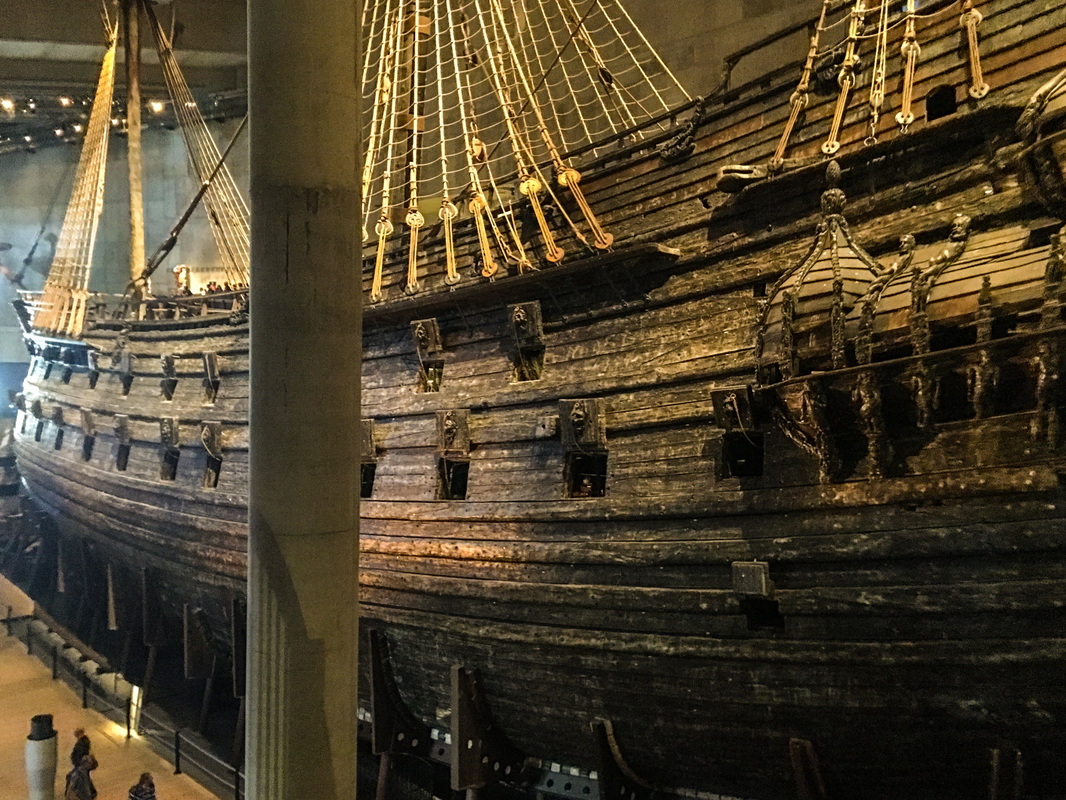
It seems someone had forgotten to close the gun ports, and when a little squall tipped the top-heavy craft to one side, water rushed in and filled the lower part of the ship. Fifty people and the grandest ship ever built were lost in minutes as the horrified crowd watched from shore.
The ship lay on the harbor floor for 333 years, and then in 1961 a salvage project raised the hull, which was surprisingly well-preserved by the brackish water. The ship, still undergoing restoration, is now on display in her very own
Vasa Museum
and has become one of Stockholm’s most popular tourist attractions.
Skimming the Internet for details, I found one writer who seemed thrilled by the Vasa because she was “a real Viking ship!” Well, no. The Vikings (as I learned at Stockholm’s
Swedish History Museum
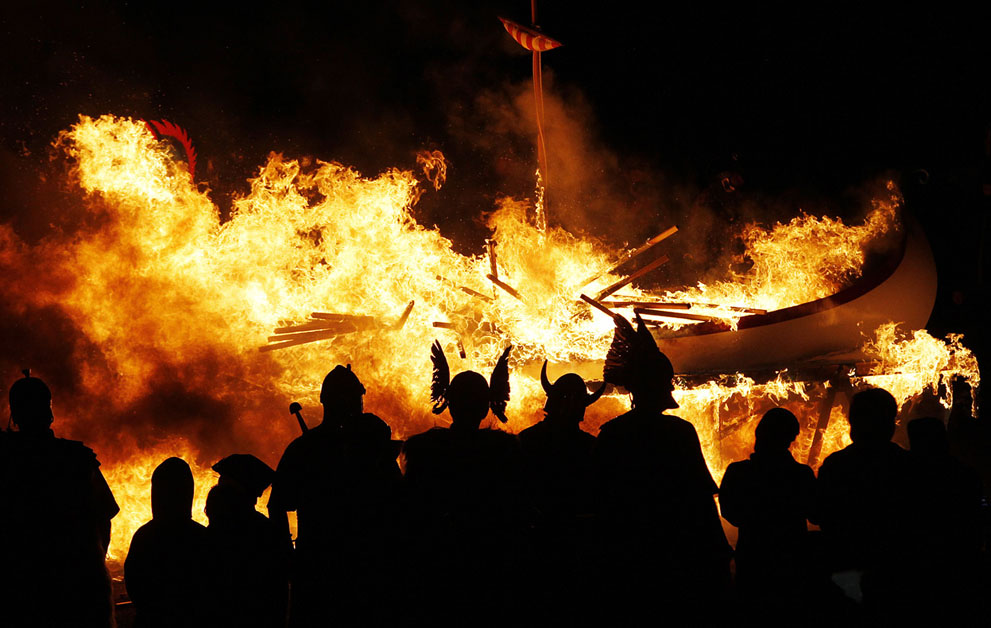
) started their legendary raiding and pillaging in 793 and by 1066 were fading from the scene, six centuries before the Vasa disaster. I was disappointed to discover that the Vikings didn’t actually wear horned helmets; those were dreamed up in the 19th century for a theatrical production of a Wagner opera. Worse, I found out Viking funerals didn’t involve placing the dear departed in a longboat and setting it ablaze with a flaming arrow; that was a Hollywood invention.
“The Vikings,” said our docent earnestly, “were more farmers than fighters.”
What?
“But weren’t they famous for their aggressive warfare?” I asked. How many ways had I been wrong about the Vikings?
The docent lowered her voice. “They don’t like us to talk about that any more.” Behind her, a movie was showing a vivid reenactment of the infamous Viking
raid on Lindisfarne
, an island off the coast of what would become Northern England, in 793. Perhaps they were farmers in the off season, but the men in the film made short work of burning down the monastery and killing the monks in violent and gruesome ways. Like the Vasa, the Vikings’ reputation may be subject to ongoing refurbishing, but I, for one, was having a very hard time buying the kinder, gentler image the docent was selling.
Whatever the truth is about the Vikings, I found it comforting to know that Rich and I could travel across the Baltic Sea without having to worry about running into any of their raiding parties. After booking our accommodations on the overnight ferry to Finland, Rich glanced at his emails and said, “Hey, there’s an InterNations event in Helsinki while we’re there.”
“What kind of event?” I asked suspiciously.
“Let’s see … Hmmm, it appears to be a gathering in a sauna.”
And that’s when I realized just how much worse our InterNations fiasco could have been. For one ghastly moment, I contemplated what it would have been like coping with that bunch of hostile strangers if the social situation had called for being
naked
…
Now that would be a situation calling for a
“Hoppsan!”
And a very speedy exit indeed.
Somewhere on the Baltic Sea
THE TRIP SO FAR. Our three-month train trip began when we landed in Paris on June 28 and immediately hopped on a train to Lille, France. Two days later we visited friends in
Amsterdam
, then continued by rail to Germany. After a brief stopover in Osnabruck, we arrived in
Lübeck
, on the edge of the Baltic Sea. After some culinary adventures there, we took a ferry north to Sweden, landing in Malmö and continuing on to Stockholm. After the Stockholm disaster, we moved on to Helsinki, Finland. To follow our adventures as they unfold,
subscribe to this blog
, like
my Facebook page
, and find our current location on the
Where are we now?
page of this website.

Leave a Reply