The Baltic States: Estonia, Latvia, and Lithuania
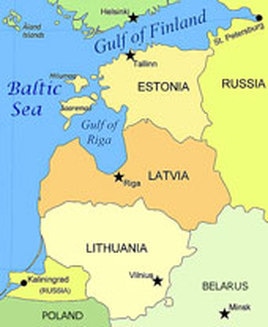
Watching resistance movements growing around the globe, I’ve started thinking of places I’ve visited where oppressed people have won their freedom against seemingly impossible odds. Last year Rich and I traveled through the Baltic States, where much of the last century involved occupation by the Russian Empire, the Nazis, and the Soviets; citizens lived in perpetual lockdown, all rights and freedoms suspended for the duration.
“They kept telling us how great everything was,” an Estonian guide said to me. She had the deadpan irony often found in former Soviet citizens, who have a knack for conveying an eye roll and a mental shrug without any perceptible change of tone or expression. “They were schizophrenic times.”
So how
did
the Estonians finally win their freedom?
They called it
the Singing Revolution
. The Soviets had outlawed Estonia’s patriotic songs, but by 1987, with the USSR struggling to hold itself together, people began singing the old tunes at ever-larger public gatherings. As one Estonian said, “If twenty thousand people start to sing one song, then you can’t shut them up, it’s just not possible.” In 1988, nearly 300,000 people — more than a quarter of the population — came together at a festival, waving flags they’d kept hidden for generations. On that day, Estonia’s political leaders began talking seriously and publicly about the road to freedom.
Then, on August 23, 1989, two million people— one quarter of the populations of Estonia, Latvia, and Lithuania — joined hands in a 420-mile human chain running from
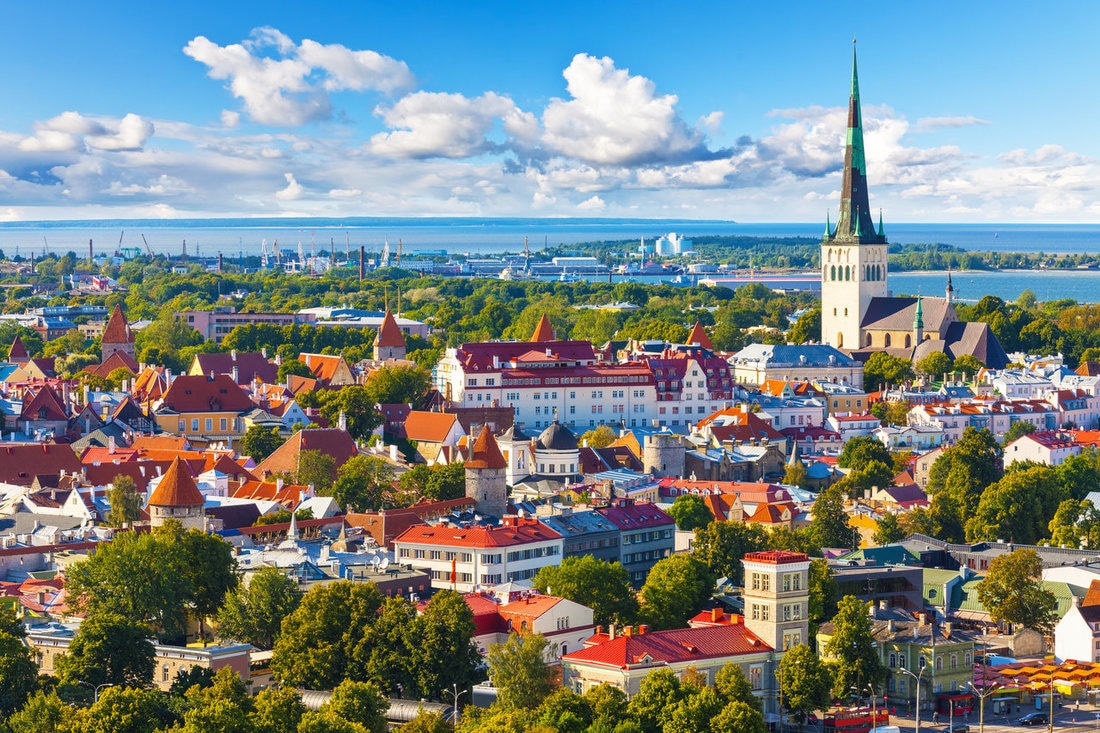
Tallinn, Estonia
through
Riga, Latvia
to
V
ilnius, Lithuania
. The Baltic countries were protesting Soviet occupation, which had recently been revealed as the illegal result of secret protocols in the
Molotov–Ribbentrop Pact
between the Nazis and Stalin. This revelation provided legal justification for dismantling Soviet authority in the region and inspired two million protestors to take a stand demanding freedom. By 1991 they had it.
Never doubt that peaceful protest can be powerful. And as it turns out, you don’t need to muster a quarter of the population to make it happen.
It takes just 3.5%
, as Erica Chenoweth’s research demonstrates.
Before doing her research, Erica was convinced “that power flows from the barrel of a gun” and that non-violent protest was, at best, “well-intentioned but dangerously naïve.” Then activist Maria Stephan challenged her to prove it.
“So for the next two years,” Erica says, “I collected data on
all major nonviolent and violent campaigns
for the overthrow of a government or territorial liberation since 1900. The data cover the entire world and include every known campaign that consists of at least a thousand observed participants, which constitutes hundreds of cases. Then I analyzed the data, and the results blew me away. From 1900 to 2006, nonviolent campaigns worldwide were
twice as likely to succeed
outright as violent insurgencies.”
One reason non-violent campaigns work is that they engage people from across the social spectrum: men, women, students, grandmothers, disabled veterans, LGBT activists, knitting collectives, artists,
everyone
. “No regime loyalists in any country live entirely isolated from the population itself,” Erica notes. “They have friends, they have family, and they have existing relationships that they have to live with in the long term, regardless of whether the leader stays or goes. In the Serbian case, once it became clear that hundreds of thousands of Serbs were descending on Belgrade to demand that
Milosevic
leave office, policemen ignored the order to shoot on demonstrators. When asked why he did so, one of them said: ‘I knew my kids were in the crowd.’”
“Over the last few decades,
the world has witnessed the proliferation of a new type of revolution
,” writes Daniel Ritter in the Washington Post. “These revolutions largely eschew violent tactics and have become a distinguishing feature of contemporary international politics. Since Mohammad Reza Pahlavi, the last shah of Iran, was toppled in January 1979 as the result of unrelenting protests and strikes, authoritarian leaders and regimes in the Philippines, Chile, Czechoslovakia, East Germany, Indonesia, Serbia, Ukraine, Georgia, Tunisia and Egypt — to mention a few — have met their political ends in similar fashion.”
After the dust settles, Erica found, “nonviolent campaigns were far more likely to usher in
democratic institutions
than violent insurgencies. And countries where people waged nonviolent struggle were
15% less likely to relapse into civil war
.”
No one can predict the outcome of the rising tide of resistance around the world, any more than
Rosa Parks
could have foreseen, when she refused to give up her seat in the “colored section” of the bus in 1955, that she would help launch America’s Civil Rights Movement. Students protesting in Prague in 1989 didn’t know that by standing their ground against government troops they would spark the
Velvet Revolution
, a non-violent transition from communism to a free democracy. “Faith,” said
Martin Luther King, Jr.
, “is taking the first step even when you don’t see the whole staircase.” And the only reason we take those first, difficult steps is because we have a pretty good idea what will happen if we don’t.
THE DAWNING OF THE AGE OF ESTONIA?
WHERE TO MEET UP? LATVIA, OBVIOUSLY!
LITHUANIA: THE ELEMENT OF SURPRISE
Subscribe to my blog here
Buy my books on Amazon
Leave a Reply