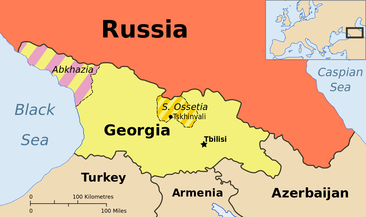


საქართველოს რესპუბლიკის (Republic of Georgia)
“დილა და როგორ გრძნობ თავს?” inquired our host, when Rich and I stumbled out of bed and down the stairs.
We were in a farmhouse in the Republic of Georgia on the morning after a very long night involving wine, food, wine, dancing, wine, and more wine. Even if our host had been speaking English, I’m sure it would have sounded like “დილა და როგორ გრძნობ თავს?” to my befuddled ears. Assuming he was asking how we were feeling, I managed a sickly smile.
Our “translator” used dramatic gestures and his eight words of English to convey that we’d feel much better after the traditional Georgian pick-me-up breakfast. This, I was aghast to discover, involved bowls of garlicy broth overflowing with entrails and various unspeakable animal parts. Cooked, thank heavens, but still . . . Luckily the grandfather was entitled to the choicest bits, so his was the portion with the whole cow’s hoof. When asked if I would like a glass of vodka with breakfast, I said “დიახ!” (Yes!”).
These warmly hospitable Georgians were clients of ours in the 1990s, when Rich and I undertook a couple of three-month volunteer assignments to help develop much-needed strategies for revitalizing deteriorating hospitals and clinics.
The transition from socialized medicine to private pay had turned out to be (surprise!) complicated.
In those post-Soviet years, civil war, massive corruption, and economic crisis had left the infrastructure hanging by a frayed thread. Once-fine hospitals had no heat, food, or medicine; patients’ families provided all meals, blankets, and drugs — mostly outdated, black-market pharmaceuticals sold in booths near the hospital. I went there to buy capsules for a cold, but my clients advised instead a folk remedy made from quince fruit; it cured me in 24 hours.
Home remedies come in all forms and degrees of efficacy, but when you’re seriously ill or injured, let’s face it, you want modern doctors and reliable pharmaceuticals. Which is why it’s so dismaying to learn that if the American Health Care Act (aka “Republicare”) manages to pass this month,
next year 14 million Americans will be without healthcare coverage, and by 2026 that number will increase to 24 million
. Ouch!
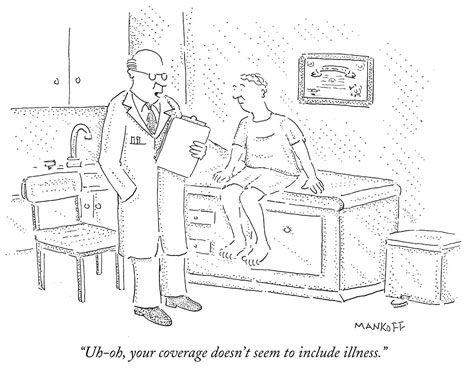
“I don’t know how you could live, knowing that a single serious illness or injury could cost you everything you own,” a Spanish friend said to me. “I would be terrified.”
Many of us are.
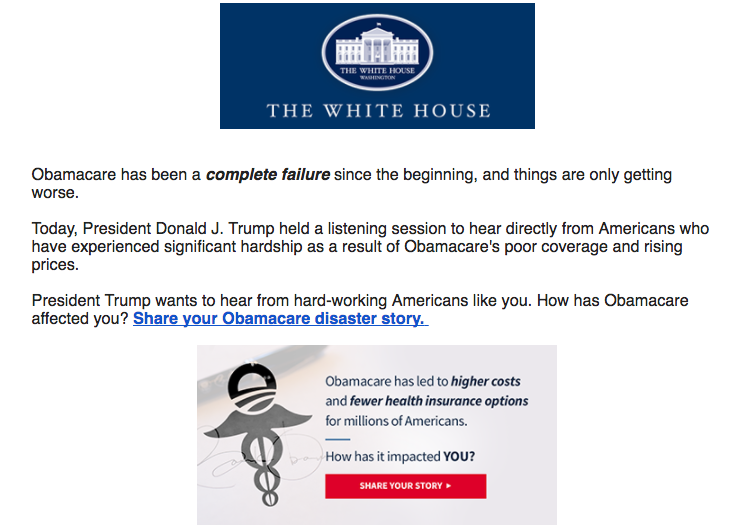
The Affordable Care Act is far from perfect, but it’s a first step toward providing American citizens with health coverage that every other developed nation already considers a basic right of citizenship, like paved roads and police protection. This week the White House, seeking to drum up support for its new plan by throwing Obamacare even further under the bus, sent this email to millions of Americans:
So I decided to tell the White House my Obamacare story. I wrote that I love the Affordable Care Act because it provided low-cost coverage for my brother Steve — a working man, a fine musician, and one of the kindest, funniest people I ever knew — during the final phases of his terminal cancer. No one in the family had to sell their house or take a second job to cover his six-figure medical bills. I know, that’s not a very dramatic story. But living through it really taught me what’s at stake.
All UN member countries have agreed to try to achieve universal health coverage
by the year 2030. If Republicare passes, the USA will once again be
the only one of Earth’s thirty-three developed nations without it
.
At the heart of the proposed bill are flat tax credits that would leave most people — to use comedian
John Oliver’s metaphor — as horrifically under-covered as a middle-aged man in an ill-fitting thong
. (And no, I am NOT going to share his favorite graphic for this; you’ll just have to use your imagination.)
The only clear winners in the plan are the wealthiest Americans, who would see tax breaks of between $33,000 and $197,000. I’m sure we all find it comforting to know that under this plan at least something in America would be healthier: the wallets of billionaires.
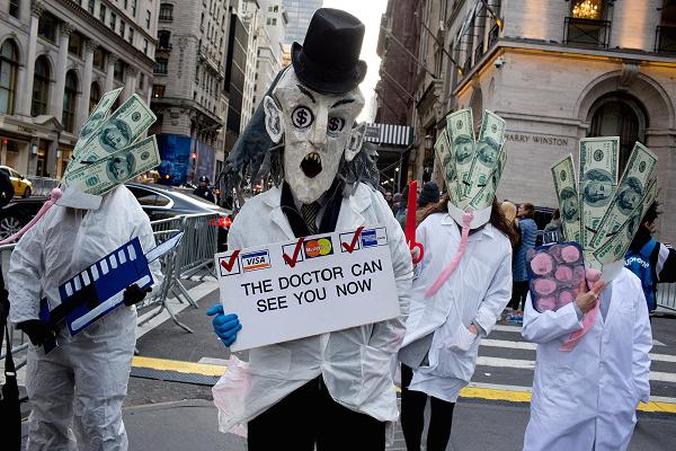
I doubt that the White House is going to read or appreciate my response to their request for Obamacare disaster stories. But writing it made me pause and reflect on whether healthcare is a right or a privilege. Should medical treatment be reserved for those who can pay for it — a sort of Darwinian, survival-of-the-economic-fittest?
I saw what happened in the Republic of Georgia in the 1990s; money allocated to hospitals wound up in the pockets of the rich and powerful, and bribing a doctor to ensure better treatment was routine. Is that what America is becoming? Or do we define healthcare as part of the community’s social contract, like roads, firefighters, and schools? The UN and thirty-two of the world’s thirty-three developed nations say one thing; the new Republican plan says another. If Republicare is put into effect, that truly would be a healthcare disaster story.
Several people have written lately to ask if it’s OK to share my posts on social media. Yes, absolutely! In fact, I’ve added buttons at the upper left to make this easier. Share away.
YOU MIGHT ALSO ENJOY
HEALTHCARE FOR TRAVELERS
WHY PEACEFUL PROTEST WORKS
SELFIES: THE UNIVERSAL LANGUAGE
Subscribe to my blog here
Buy my books on Amazon

Leave a Reply