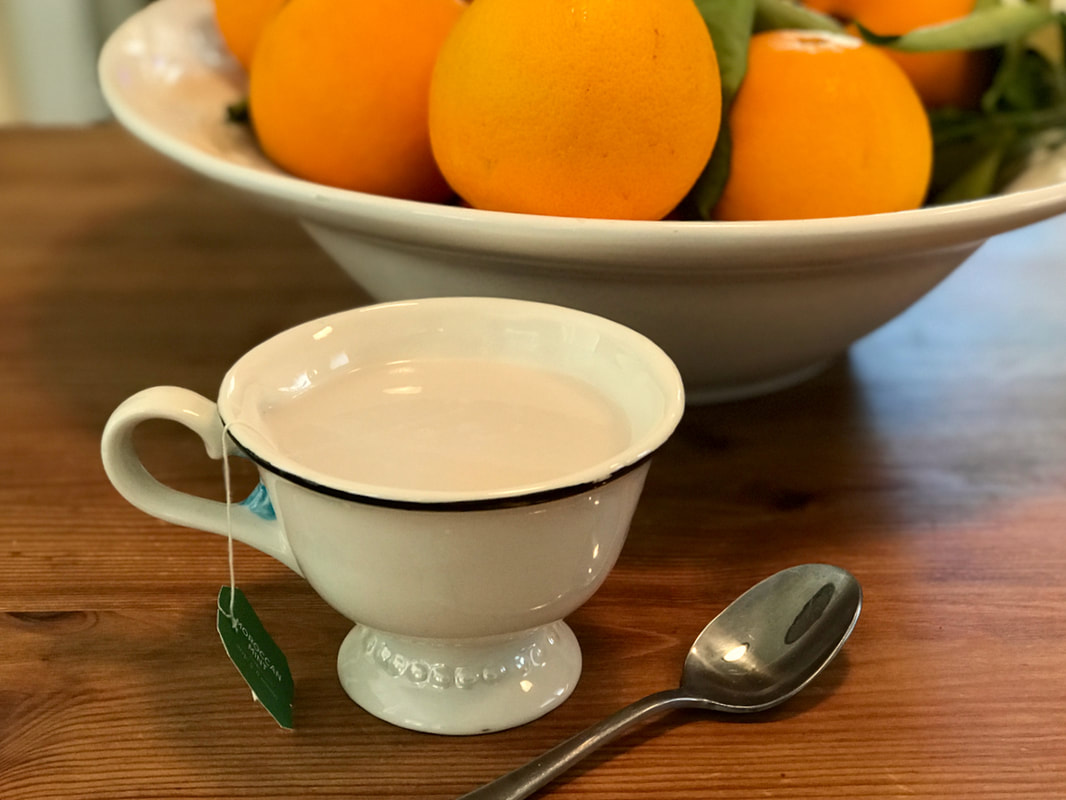
“Oh my God, I can’t drink that!” a British friend exclaimed recently, peering aghast into a cup she’d just fetched from the bar.
She’d made the rookie mistake of ordering with a literal translation:
té con leche
(tea with milk). When I first arrived in Seville in 2001, I learned the hard way that such a request will be greeted with stunned incomprehension as no one in the city (apart from a few mad foreigners) drinks tea that way. Attempting to give
la loca
(the madwoman) what she wants, the barkeep will stick a teabag in a cup of steamed milk, which — as my friend observed — is an undrinkable abomination.
In my early days, as I mastered new vocabulary, I tried ordering
té con leche aparte
(tea with milk apart, or on the side). Invariably they would bring me a tea bag in hot water but no milk. Apparently by “apart,” they assume you mean in another room, on someone else’s table, or during a later course such as dessert.
“You have to be very specific,” I told my friend. “Ask for
té hecho con agua, con un poco de leche aparte para añadir.”
(Tea made with water, with a little milk on the side to add in.) As she strode back to the bar repeating the phrase under her breath, I reflected on how valuable a visit to one of Seville’s café-bars can be for expanding your Spanish vocabulary.
Simply to order your morning coffee, you must navigate such options as
café con leche
(half espresso, half milk),
café solo
(a straight shot of espresso and quite an eye-opener),
leche manchada
(literally “stained milk,” a half inch of espresso in steamed milk),
café americano
(weak black coffee),
descafeinado
(instant decaf Nescafé), or
descafeinado de máquina
(freshly ground decaf espresso). Don’t bother memorizing the Spanish for 2% or skim; milk is nearly always full fat. A few places catering to foreigners have started offering alternatives, but you won’t get anywhere asking for
leche de soya
(soy milk). Everyone knows soy beans are not mammals and therefore do not produce milk; they will be dumbfounded at your ignorance. Ask for
bebida de soya
(soy drink) instead.
While you’re sipping your morning
té
or
café
, you may notice an old man or two standing at the bar with a tiny glass of clear liquid. This is
anís seco
,
very dry aniseed liqueur that tastes like paint thinner. A Spanish friend explained that when men must get up very early (and in Seville, this means anything before 10:00 am) for a job, they require something to
reanimarse (
reanimate themselves). Apparently drinking alcohol-based paint thinner does the trick.
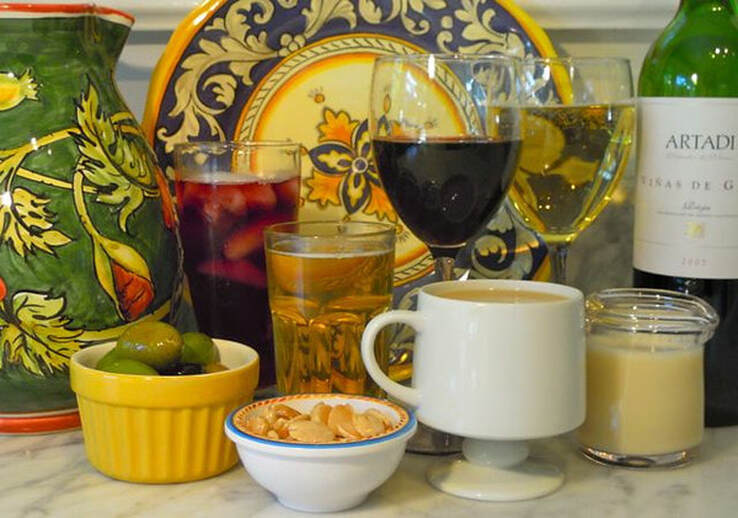
Wine purists will be horrified to learn that one of the most popular drinks in Spain is red wine over ice mixed with a fizzy soda much like 7Up, a concoction known as
tinto de verano
(summer red wine). Other regional favorites include the dense, sweet
vino de naranja
(orange wine) which involves adding orange rinds while making white wine, and
sangría,
which is offered by the
copa
or
jarra
(glass or pitcher) and generally includes a hefty dose of hard liquor, such as brandy or rum, as well as wine and fruit. Proceed with caution.
Spaniards rarely get specific about brands or vintages of
vino
; you’ll never hear them discussing undercurrents of raspberries or smoked chocolate, or debating the rival merits of the 2014 vs. the 2016. They ask for
vino tinto
(red wine) or
vino blanco
(white wine), possibly specifying a region such as Rioja or Ribera del Duero. It’s hard to go wrong with Spanish reds, but whites are considerably trickier. Some taste like the ghastly cheap stuff served in American dive bars where you’re wiser to order the Budweiser. Spanish bartenders ask if you want wine that’s
dulce
(sweet), or
seco
(dry); my efforts to obtain a full-bodied, buttery white with a long finish have been spectacularly unsuccessful. Now I ask for a
Rueda verdejo (Roo-AY-dah vare-DAY-ho)
, as I’ve learned the verdejo grape has a pleasing richness and complexity.
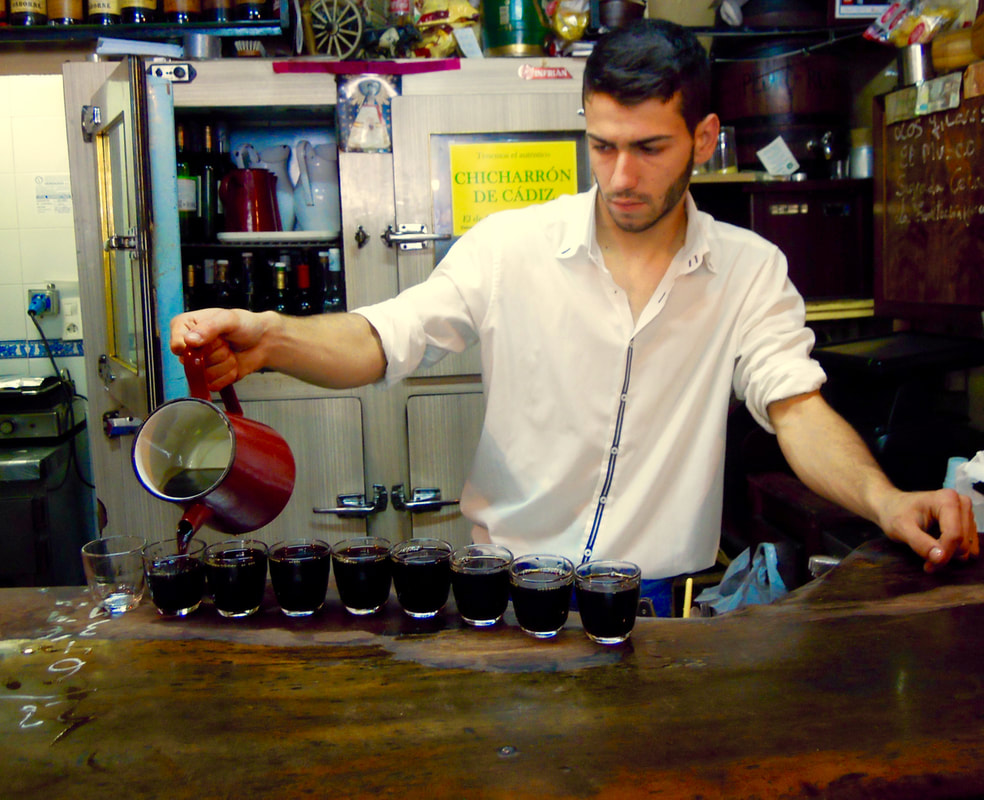
At the end of a long dinner, you’ll often be served complementary
chupitos
(tiny shot glasses) of some sort of liqueur such as
Orujo
, which aids the digestion and has an alcohol content somewhere above 50%. The idea is to send you out into the night with a smile on your lips, and it usually works. You can see why some folks need a little reanimating the morning after.
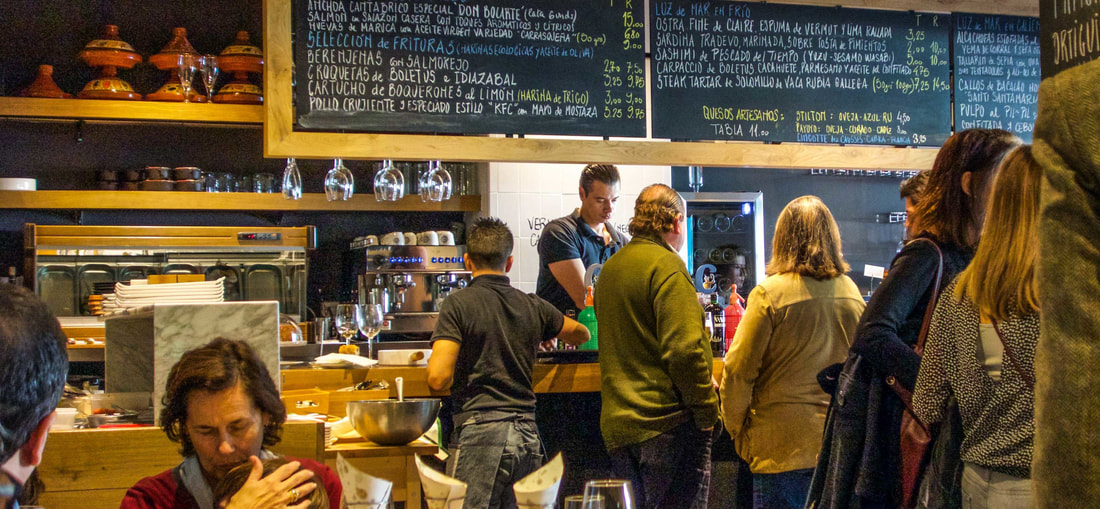
Sevillanos say there are 3000 café-bars in the city, ranging from old-school to ultra-trendy. You will never have time to try them all, but at least with these handy phrases, you’ll have some idea of how to reply when the bartender asks, “
Qué le pongo?”
(What’s yours?)
Have you tried ordering drinks in a Spanish café-bar? I’d love to hear about your experiences in the comments below.
Subscribe to this travel blog
WANT THE INSIDE STORY ABOUT LIFE IN SEVILLE?
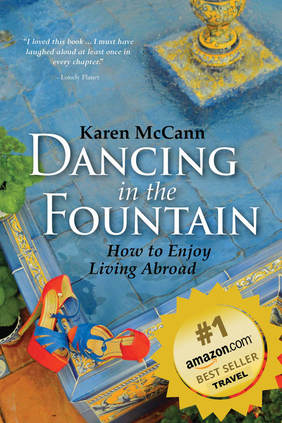
When Rich, our dog, and I moved to Seville from Cleveland more than a dozen years ago, we had no idea what we were getting ourselves into. It’s been quite a ride. For an insider’s view of the city — with all its ancient traditions, lively street life, dive bars, and outlandish festivals — check out my bestselling memoir
Dancing in the Fountain: How to Enjoy Living Abroad.
“I loved this book,” wrote
Lonely Planet.
“
I must have laughed aloud at least once in every chapter
…
The advice in the book is terrific.”
See “Dancing in the Fountain” on Amazon

Leave a Reply