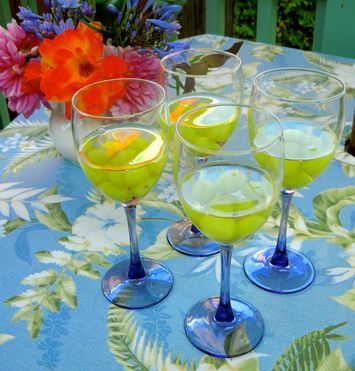
For summer paella parties, I like frozen grapes to keep the white wine cold without risking the dilution that can come with ice.
One of the things I like best about paella is that it’s nearly always made by men. In Spain, it’s generally the centerpiece of a leisurely Sunday lunch, and I have been reliably informed that the role of women in the preparation of this meal is to lounge about in the garden sipping wine or beer while their male companions labor on. At such moments I frequently hear women murmuring, “I could get used to this!” as they top up each other’s glasses. I have to agree.
Rich’s first foray into paella-making came at a Spanish friend’s home, but his efforts to come to grips with the process was frustrated by Javier’s casual insistence that you just put in “as much as is needed” of each ingredient. Traditionally, Spaniards use the pan itself (known as a
paellera
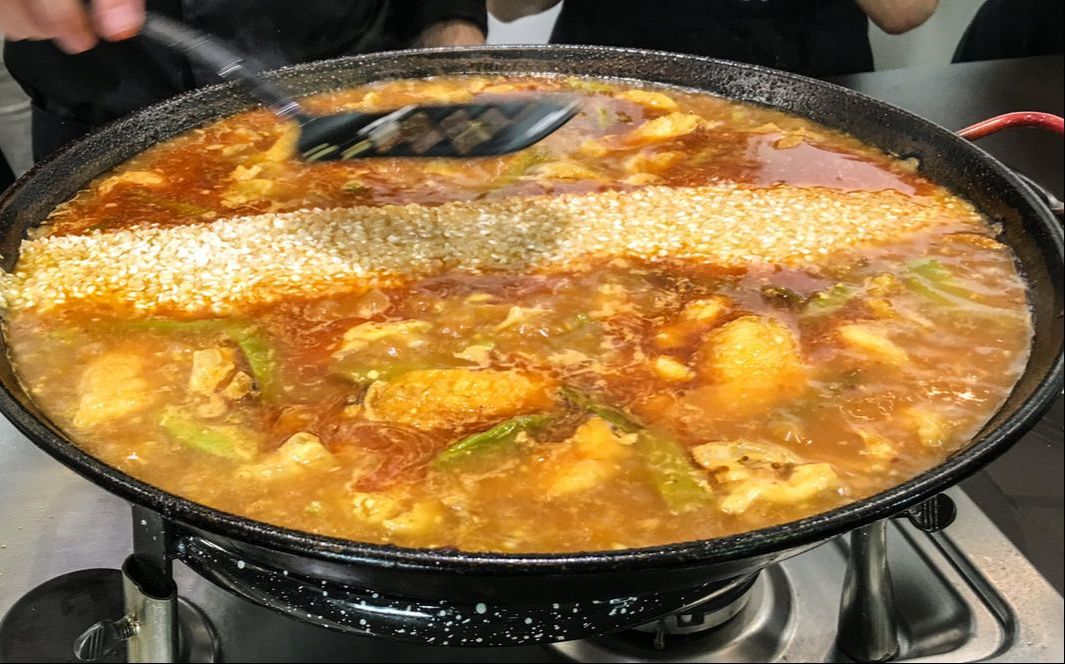
) as a measuring device, pouring a river of dry rice down the middle. “The width of the rice is the same as the distance between the rivets on the handle,” Javier pointed out. “And the depth should match the height of the rivets on the pan.” When Rich asked about the rice-to-broth ratio, Javier’s answer was, of course, “as much as is needed.”
Since then Rich has taken paella-making classes with
Victor
, a local chef who told us that paella originated in the rice-growing region around Valencia as a casual meal assembled by men out in the fields. When lunchtime approached, they’d capture their protein live and toss it in the pan — generally this meant rabbit, chicken, and snails. This, Victor maintains, is the only true paella recipe. You’ll be astonished to hear that snails, and even rabbits, have largely been abandoned in favor of more mainstream ingredients such as shellfish and chorizo. Go figure.
Today, making paella is a bit like assembling a salad; the only rule is that there are no rules. Paella chefs feel free to choose their own ingredients and assemble them in any order they wish. Nearly a dozen years ago, Rich was given
a great paella recipe
(with precise measurements) which he’s followed loosely over the years, adapting it to his whim and the available ingredients. His skill with paella has grown over the years and made him extremely popular at pot-luck meals in both Seville and California; by now he’s able to produce perfect paella every time. Here’s how he does it.
Rich favors inexpensive short-grained rice over the fancy, pricey “paella rice” sold in specialty stores. And he strongly recommends buying an authentic
paellera
rather than using some other pan you already have at home; you really do need a very broad, shallow pan to make the recipe work. As for the heat source, your best bet is to invest in a gas-powered burner ring that matches the size of your pan, because it’s the only way you’re going to achieve the slightly crusty, caramelized bottom layer of rice that many consider the best part of the dish. However, you can get quite good results using an ordinary gas stove (the five-burner models make it easier to maintain even heat) or a barbeque if that’s what’s handy.
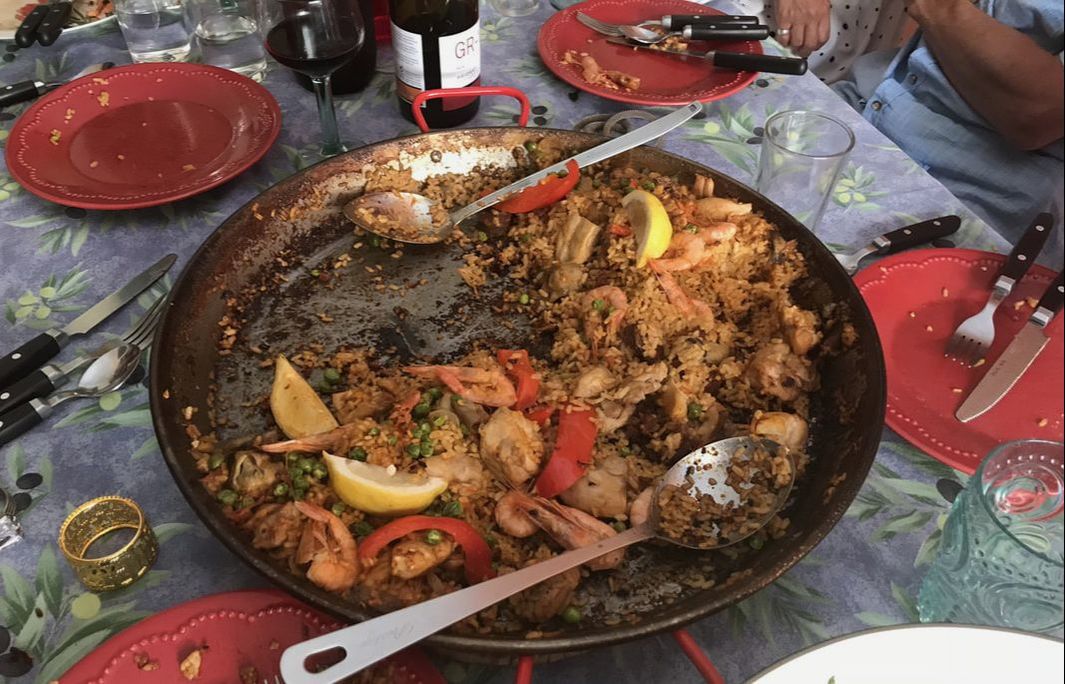
“The best thing about paella,” Rich says, “is that it brings people together communally.” It’s true; everyone loves to come into the kitchen or out onto the deck to check on the progress of the meal and offer unsolicited advice that’s completely ignored. When the paella’s ready to eat, you set it on the table right in the pan, and everyone helps themselves, creating the kind of cheerful pandemonium that for me is the hallmark of a good party. The pan stays put so people can scoop out seconds and often thirds and fourths. I never serve anything with paella except a light salad to refresh the palate, and by the end of the meal, everyone’s ready to stagger home for a siesta.
As Rich’s experience shows, you don’t have to be Spanish to make paella, and of course, in these egalitarian times, plenty of women are cooking it for themselves. You no longer need to travel to Spain in order to buy a proper pan, nor do you need to wheedle the recipe from a Valencian chef. But you will want to follow the ancient tradition of gathering a group to enjoy the feast. We’ve all seen those movies where European friends and relatives come together for a long, leisurely afternoon meal in the garden, with kids underfoot and lots of wine and laughter. If you’re like me and think that’s a great way to live, you might want to start by learning how to make paella. If it turns out perfectly, you can all celebrate with a lovely communal meal together. If it’s an utter disaster, you’ll have a great story to tell, and the motivation to try again.
Good luck! If you do start making paella, Rich and I are standing by to hear your stories. Tell us all and send photos to
[email protected]
.
Sign up for tips, updates & free stuff
YOU MIGHT ALSO ENJOY
HOT NEWS! OLIVE OIL DOESN’T MAKE YOU FAT
THE ART OF BREAKFAST IN SEVILLE
DIVE BARS OF THE WORLD
Leave a Reply