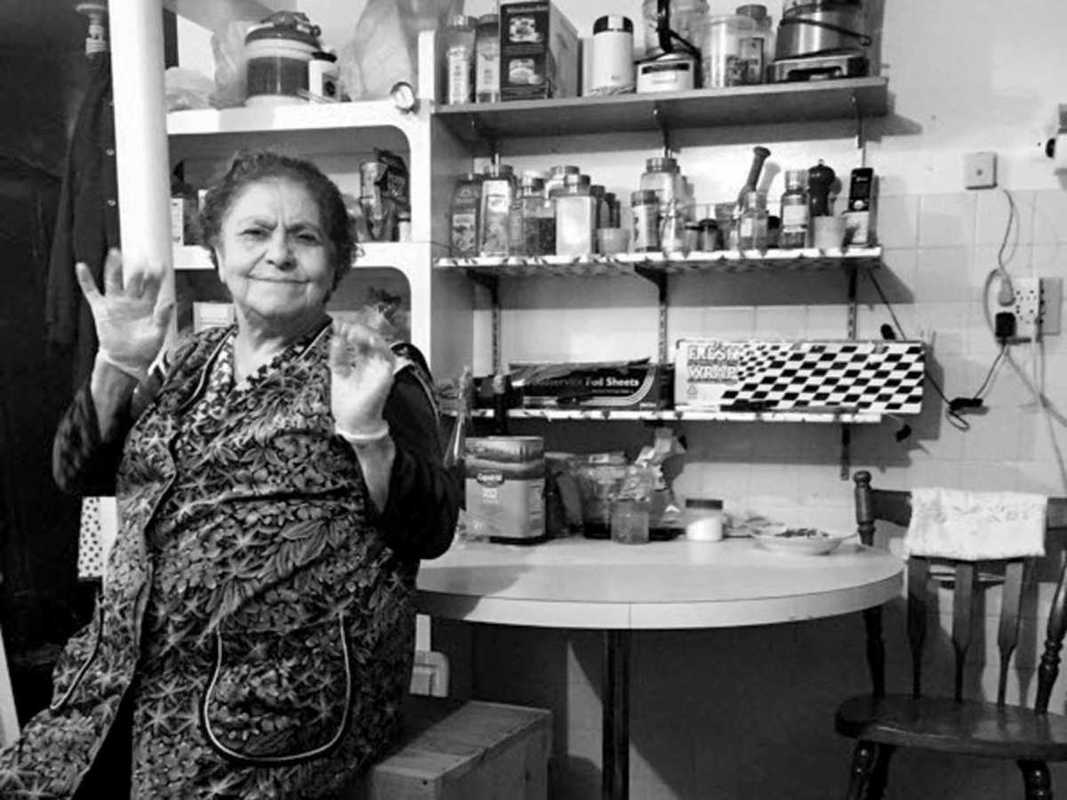

Sicilian grandmothers are known for their warm hearts, steel spines, and pasta to die for. Don’t ever cross one.
“My Nana,” wrote a
Sicilian now living in New York
, “is an extremely powerful figure in my family. At five-foot-nothing, she towers over everyone else. My Papa knows to keep his mouth shut, or he’s in a world of hurt. Don’t get me wrong; she’s sweet as sugar. But she’s also tough as nails … The other day, she told my oldest brother that she would blow off his big toe if he didn’t pay her the money he owed her. As I laughed, she whispered to me, “I really wouldn’t, I’d just break it.”
When Sicilians speak of their
nana
(or
nonna
, as it’s more commonly spelled), it’s often with this mixture of terror and fondness, and always with deep respect for the strength of their love and the quality of their pasta sauce. Luckily for those of us who didn’t grow up with a traditional
nonna
in our lives, these women have been generous in sharing their culinary secrets. And today it’s possible to learn their techniques for making utterly fantastic traditional pasta sauce even if you’re neither Sicilian nor a grandmother.
I first learned of Sicilian pesto from my friend Kathryn, who lives in California and travels the world taking cooking classes from talented local chefs — including two in Sicily. Kathryn and I were chatting recently about how my travel writing is focusing more and more on food as the gateway to understanding various small corners of world culture, and the next morning she sent me a recipe that made my mouth water. I was familiar with green pesto from Genoa — a mix of basil, garlic, pine nuts, Parmesan cheese, and olive oil —but had no idea the Sicilians had created their own version. I should have suspected it; Sicilians have their own way of doing
everything
. They have a saying: “Make your promises and confessions while you’re drinking wine and eating mozzarella.” No, I don’t actually understand what that means, but I have a feeling it’s very wise — at least from a culinary standpoint.
Sicily’s population earned its wisdom the hard way; thanks to the island’s position in the center of the Mediterranean, the capital, Palermo, has earned the dubious distinction of being the most conquered city in the world. Tough times for the residents, but one small silver lining was that when the fighting stopped, exchanging recipes began, making the island’s cuisine some of the richest and most diverse in the Western world. A century or two ago, the
nonnas
in Sicily’s port city of Trapani took a hard look at Genoa’s pesto and realized it could be adapted to favor local ingredients. They added tomatoes from their gardens, replaced hard-to-get pine nuts with almonds, and threw in a pinch of pepperoncino (hot chili pepper) for zest. I knew I had to try it, and I cleverly hit upon a plan to have Kathryn prepare pesto Trapanese so I could videotape it for the blog — and of course, help her eat it afterwards.
We began with a visit to Kathryn’s garden. As she picked a basket of perfectly ripened tomatoes, she talked about Mediterranean comfort food being “in the moment,” centered around ingredients that are picked at their peak and used immediately. The spontaneous quality of this cuisine makes it endlessly adaptable, and Kathryn decided to add the juice of a lemon to the ingredients specified in her favorite recipe (
Lidia’s Pesto Trapanese from Epicurious
). “I find lemon juice adds bounce to just about any dish,” she told me.
Like so many contemporary pesto recipes, this one called for mixing the ingredients in a food processor rather than going old school and mashing it by hand. (The name “pesto” is derived from the same Latin root as the word “pestle” which means masher.) I’m all for tradition, but I had to admit I appreciated the convenience of mechanized mashing over a mortar and pestle, especially as I might be expected to pitch in.
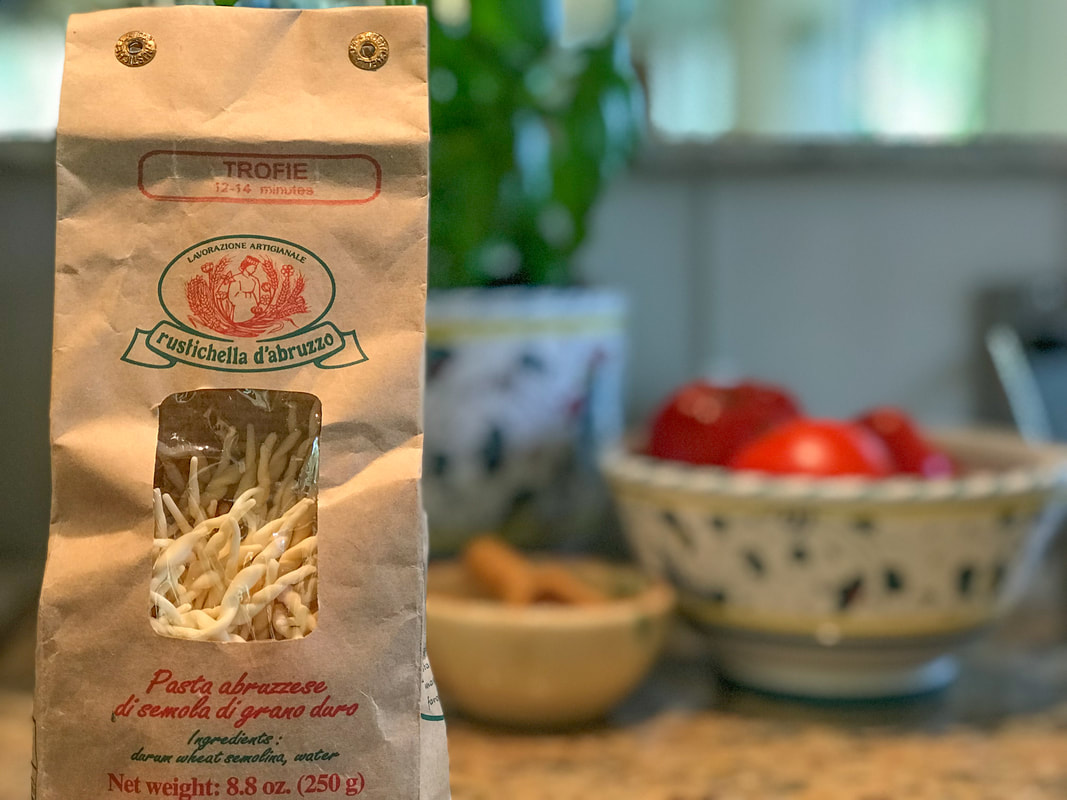
Instead of serving the Trapanese pesto over the recommended spaghetti, Kathryn suggested a type of pasta I’d never heard of:
Trofie
, which hails from Northern Italy’s Genoa region, along the coast that locals call
Golfo Paradiso
(the Gulf of Paradise). There, generations of grandmothers have taught youngsters how make this distinctive pasta by rolling it out on a tabletop with their palm, then curling it with a backward swipe of their little finger. Until the mid-twentieth century, when commercial production began, it was always made at home, and each woman had her own subtly distinctive style; locals could tell at a glance who had made any particular batch.
Kathryn and I opted for the simplicity of purchasing the Trofie pasta, and once the ingredients were all assembled, preparing the pesto sauce took mere minutes. The results? A brilliant burst of flavor in every bite, supported by the pleasant, slightly unusual texture of rolled pasta.
The world owes a tremendous debt to the grandmothers of Sicily and Northern Italy for sharing their wisdom — culinary and familial. They have earned our respect — and they’re going to make sure they get it. “There are many stories involving my Nana,” wrote that Sicilian New Yorker. “Like the time I told her that her teeth were fake and she bit me (turned out they were real).” Make no mistake; to cross one of these grandmothers is to take your life in your hands. When I lived in Cleveland, I often heard a Sicilian friend say, “Revenge is too important to be left to chance.” No doubt he picked up the saying from his grandmother, and I suspect that right now his kids are passing it down to the next generation — along with recipes for pasta sauce that nobody could refuse.
Have you learned how to make any amazing pasta sauces? We want to hear about them! Tell me
everything
in the comments below.
YOU MIGHT ALSO ENJOY
TROFIE: THE STORY OF A PASTA
THE HEALTH BENEFITS OF OLIVE OIL
MY TRAVELS THROUGH ITALY & ELSEWHERE

Leave a Reply