
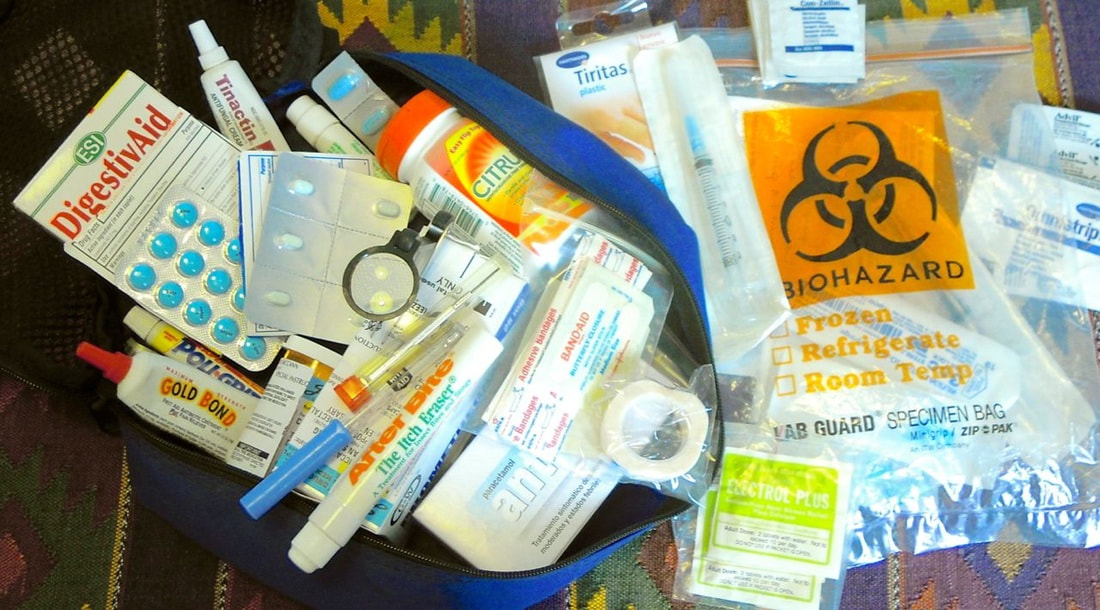





Shortly after I broke my finger in the Peruvian Amazon
Some years ago in Peru, Rich and I were paddling canoes in an obscure subsidiary of the Amazon (the river, of course, not the online retailer) when I broke my finger. I’d like to tell you I sustained the injury wresting with an alligator, fending off a piranha, or messing about with one of the electric eels that lived under the dock in our camp. But the boring truth is that I was simply careless, holding on to the edge of our boat when it smacked up against another, with my finger in between. Ouch! That’s one piece of foolishness I’ll not repeat.
We were days downriver from the nearest medical facility, a small-town clinic of extremely dubious reputation. Our guide offered to take me there, or to the local shaman, Jesus, who a few days earlier had sold me a blowgun; somehow neither alternative appealed. Next our guide mentioned old stories about a tree that had thick sap that, when dried, would harden into a protective shell; he’d always wanted to try it on somebody, if I was game. Before I could say, “Isn’t LifeFlight an option?” Rich said, “I have something in my first aid kit that might help.”
In no time Rich had fashioned a dandy splint from the plastic casing that had held a syringe. (We used to carry them on remoter journeys, as we’d heard horror stories of people needing an emergency injection from a village doctor who’d run out of clean needles.) The splint was comfortable, offered excellent protection, and even had a piece of gauze taped over the end to keep out mosquitoes. A week later when I got back to the US, an ER doctor insisted on fitting me with a “real” splint that was far more uncomfortable and unwieldy; I immediately threw it away and went back to wearing Rich’s.
Up until now, that improvised splint has stood as my benchmark for ingenious solutions to medical issues on the road, but recently a challenger has emerged. I was looking up something on YouTube when I stumbled across “
23 Smart Life Hacks for Every Occasion
.” This fast-paced video includes, along with a jumble of other topics (replacing a lost earring back with the tip of a pencil eraser, etc.) various creative ways to deal with small health issues that might arise on the road. Most use simple materials you’re likely to have with you, find in a hotel room, or buy cheaply at a local store. To help you zero in on the ones mentioned, I’ve identified the time they appear on the video.
For instance, if a migraine strikes while you’re away from home, the video suggests putting your feet in warm water (the hotel sink will work nicely) and placing something cold (send your travel companion out for a bag of frozen peas) on the back of your neck
(0.40)
. This can help the blood drain down from your head, offering relief. Apparently this one’s been around a while. “Every time I see that image, I cringe,” wrote therapist
Tammy Rome on Migraine.com
. “The comments alone drive me crazy. Too many people take the image literally and make comments about their inability to perch on the edge of the sink. I want to scream, ‘That’s not the freaking point!’ but truthfully, no one is listening.” Tammy goes on to say the remedy can bring relief, suggesting that those worried about falling off the bathroom counter can use a simpler approach involving a heating pad and an ice pack.
The video has other clever ideas, such as cutting the sticky ends of band-aids into strips and overlapping them at an angle so they adhere firmly to fingertips (1:27). Another section shows an old folk remedy for fending off mosquitoes with a cut lemon studded with cloves (5:21). I tried it last night and woke this morning unbitten. Having sustained three bites earlier in the week, I am cautiously optimistic but feel a bit more testing is required before classifying the experiment as solid scientific proof of efficacy.
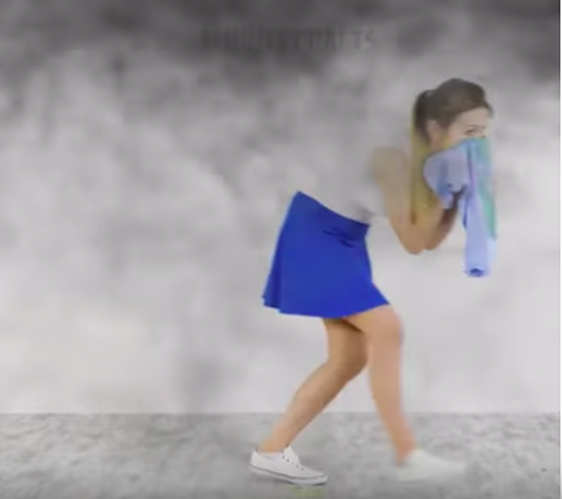
Some of the other ideas seem a bit more questionable. If you’re at risk of being overwhelmed by smoke, the video suggests, you should breathe through wet cloth (7:13). So far, so good. Then they show a woman taking off her t-shirt and — no other fluid being readily available — urinating on it. She then holds the shirt over her nose and mouth to run out of the building into the street. Yikes! Would I be able to manage this in a crisis? Would I even want to?
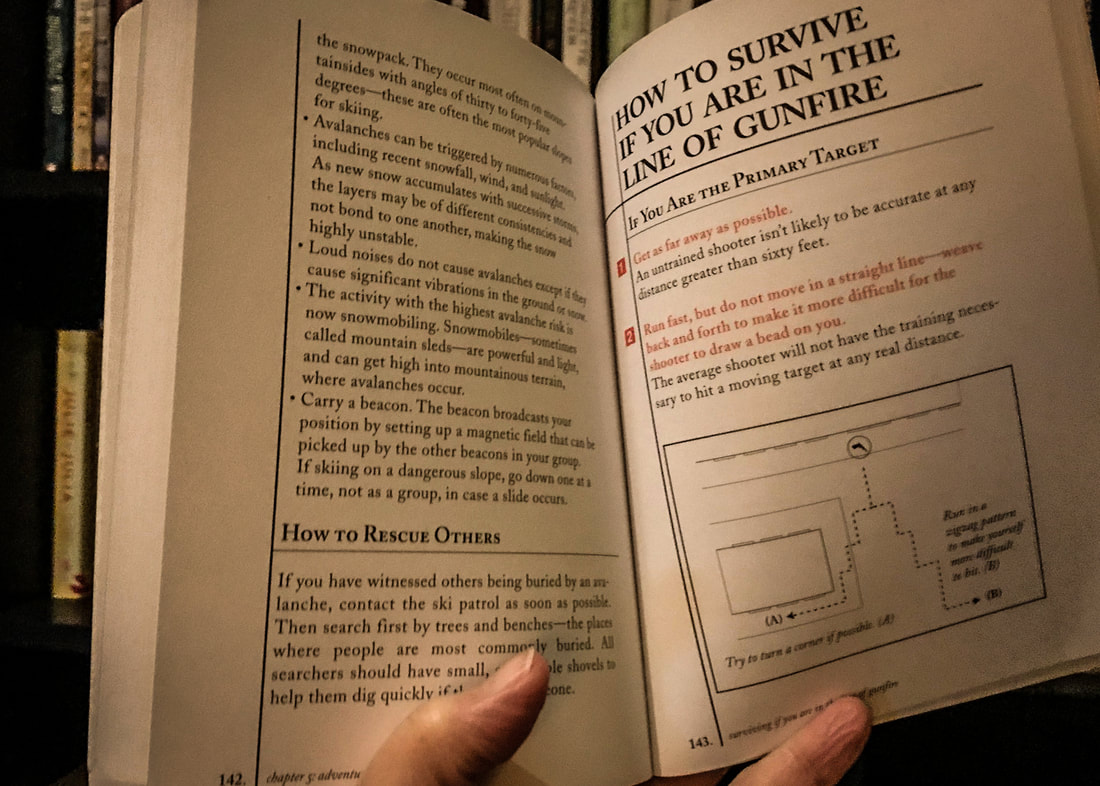
Back in 1999, when
The Worst-Case Scenario Survival Handbook
was published, I gave a copy to Rich and we chuckled over it in the happy confidence we would never be called upon to do anything as outlandish as deliver a baby in a taxi or perform a tracheotomy with a Swiss army knife and a ball point pen. The book went missing long ago, but for my birthday in September, Rich gave me another copy. And such is the nature of these uncertain times that I am re-reading many sections with fresh interest. How to Survive an Earthquake, for instance, and How to Identify a Bomb, should one happen to arrive in the morning mail. Much of the advice about How to Survive if You Are in the Line of Gunfire — spoiler alert, it involves running away and hiding behind a solid object — may seem obvious, but it’s a sad fact of life that we now need to know this stuff. And remembering the finer points, such as running in a zig-zag pattern instead of a straight line, just might save my life someday.
I used to think the need for such crazy emergency measures would never arise outside of adventurous expeditions deep into the world’s wildest regions. But today, even while traveling to the most civilized places — Paris, London, California’s wine country — we all need to be prepared to cope with events that would once have been unthinkable. So I’m collecting all the advice I can find that may help me deal with emergencies on the road. Let me know if you have any handy home remedies, survival tips, or escape techniques you’re willing to share! In particular I’m seeking alternatives to the video’s urinate-on-your-shirt plan, because hey, there simply has to be a better way.
YOU MIGHT ALSO ENJOY
THREE WAYS COFFEE CAN SAVE YOUR LIFE
PACKING FOR CALIFORNIA’S DANGER ZONE
COMFORT FOOD FROM THE CHAOS OF NAPOLI

Leave a Reply