“How can there be no taxis?” I demanded. “This is North Macedonia’s second largest city. Wikipedia called Bitola the transportation hub of the region. What gives?”
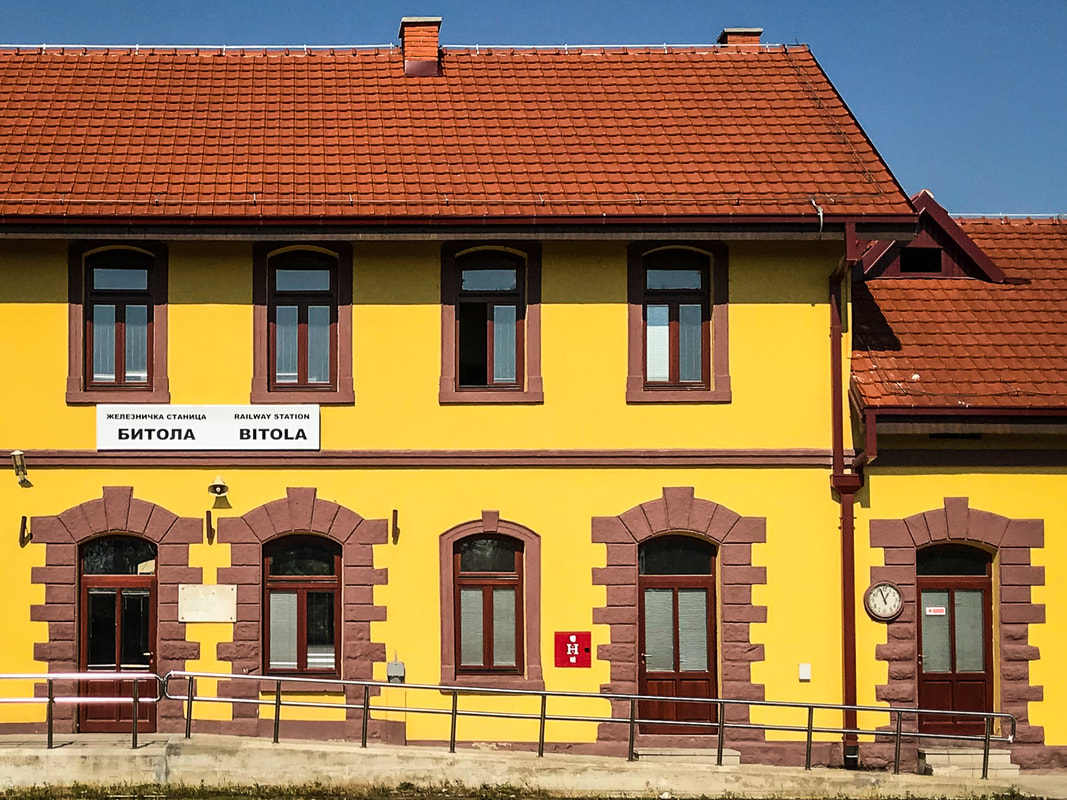
“To be fair, there is a taxi. There’s just nobody in it.” Rich and I gazed at the empty yellow cab at the curb, the silent train station, and the handful of men quietly sipping Turkish coffee at the station café.
As usual in such situations, I felt decisive action was called for, so I departed in search of the ladies’ room. I eventually located it at the far end of the station, and by the time I returned, Rich was standing beside our bags with a stranger and a bemused expression.
“This guy will drive us out there,” he said.
“Is he a taxi driver?”
“I don’t know. He was walking by, and I thought he might belong to the yellow cab, so I said, ‘Taxi?’ And he said, ‘OK.’ Apparently he has a car and is willing to provide transport. He seems like a nice guy.”
“Famous last words.”
The stranger grabbed my suitcase and took off down the parking lot to a battered blue car. He wrestled with the latch on the car’s trunk, muttered what I assumed were a few choice Macedonian cuss words, gave up, and tossed the bags into the back seat. I climbed in after them, saying a quick prayer to St. Christopher, patron saint of travelers who are about to do foolish things.
We were (I hoped) on our way to
Vila Dihovo
, a rural guest house in a tiny village just fifteen minutes outside the city of Bitola in the foothills of Baba Mountain in scenic Pelister National Park. The guest house was family run, served homegrown produce and homemade beer and wine, and let you pay whatever you thought was right for lodging and meals. The driver — what are the odds? — delivered us safely to Vila Dihovo’s front gate for a modest fee.
Our host Petar hurried out to greet us and grabbed our bags. We followed him into a stone building and up a set of wooden stairs festooned with a colorful little runner that had come loose from its moorings and was now a tumble of rucked-up fabric and scattered iron rods. I picked my way carefully along the bare wooden edges, wondering how many guests per week broke ankles here. Our small room was entirely filled with three massive wooden beds. “Are we sharing with another family?” I whispered to Rich. A modern shower stall, unable to squeeze into the minuscule bathroom, had inserted itself into the corner beside the largest bed, which was festively attired in purple seersucker sheets and a yellow canopy.
We were just in time to join our fellow guests for dinner on a porch overlooking the garden. Meals, we soon learned, were one of the true perks of the place. Not only was the food delicious, but the conversations with our well-traveled fellow guests — British, Dutch, German, and American — were interesting and convivial. After breakfast, the others took themselves off on serious mountain hikes while Rich and I ambled about the village, admiring the old stone houses and making friends with the local dogs. I kept wondering how people survived without so much as a corner store or café, even if there was a city just fifteen minutes away by car.
After a couple of days in the village, I was ready to embrace the more cosmopolitan pleasures of downtown Bitola. Settled during the Bronze Age, home to the ancient Greco-Roman metropolis
Heraclea Lyncestis
, serving as an international diplomatic hub under Ottoman rule (1382 to 1912), occupied in WWII by the Germans and Bulgarians … in short, Bitola has been at the crossroads of history ever since they invented history. While much of this was exceedingly uncomfortable at the time, today Bitola enjoys a rich legacy of architecture, archeological sites, and of course, cuisine.
Which is why I was so dismayed to discover, on a first pass through town, that nearly every eatery’s sign included the word “pizza.” I asked our Airbnb hostess, Victoria, if she could recommend anyplace for traditional fare.
“Most of the old dishes are only made at home,” she explained. “When people go out, they want something different.”
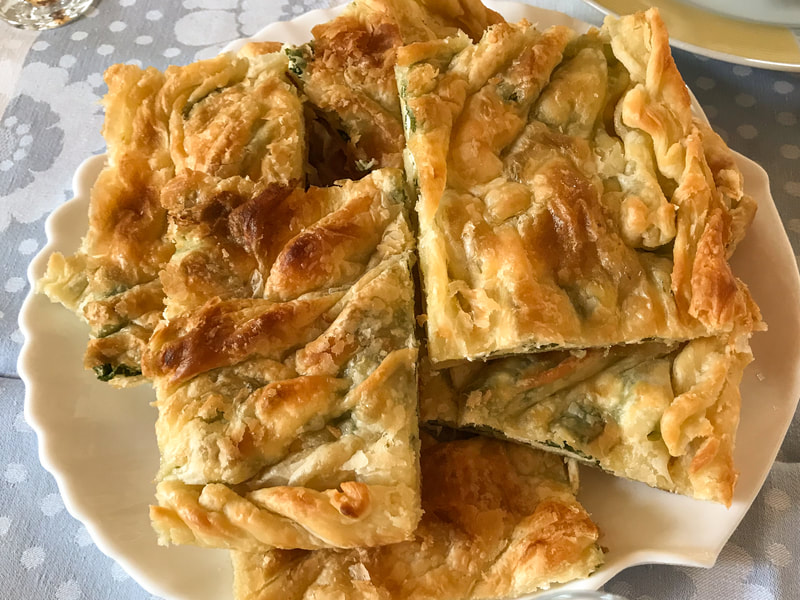
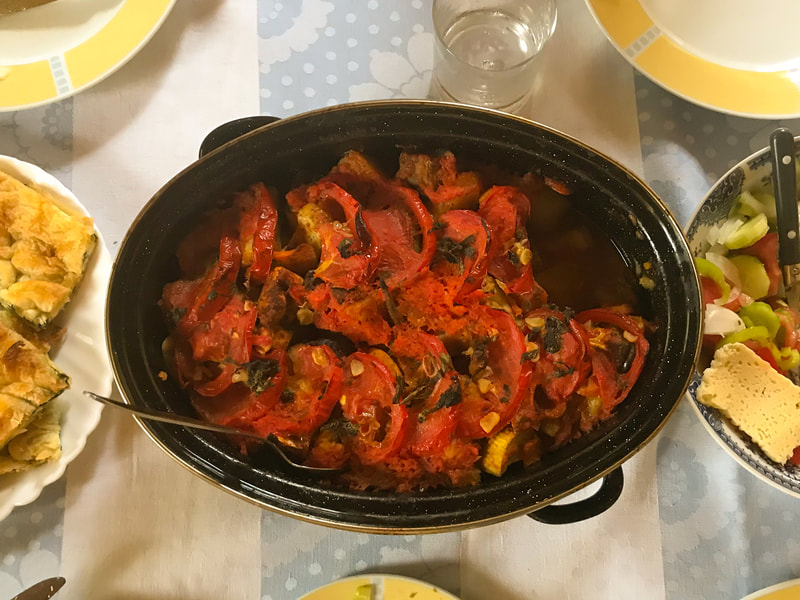
She did recommend a couple of restaurants, but the next day, she and her husband, Mladen, invited us to come for lunch on Monday so I could see how she made two classic Macedonian dishes: zelnik (spinach pie) and turli tava (vegetable stew with chicken). As you can imagine, we accepted with delight.
Monday morning, I joined Victoria in her kitchen as she began the pie dough. Unsatisfied with the texture, she repeatedly whacked the dough against the countertop to force out excess air. Note to self: this is the recipe I want to make when I’m having a very bad day.
While the dough rested up after its ordeal, Rich and I accompanied Mladen on an expedition to fetch the spinach. We detoured into a tiny storefront serving what Mladen declared to be Bitola’s best burek (pie stuffed with cheese, meat, or other fillings). Rich and I felt we owed it to our readers to do a taste test and returned at the earliest opportunity.
Mladen threaded his way through the old bazaar, a warren of small shops selling everything from clothes to kitchenware, and into the tarp-covered produce market. He explained that while a few things, such as bananas, were imported, most were locally grown and only sold in season. Lettuce was reaching the end of its time and would soon become tasteless. Cherries were just coming into their own, a bit expensive now, but delicious. Spinach didn’t seem to be available, so we would substitute blitva (a local green that’s like kale’s more delicate cousin).
Returning with the blitva, I rejoined Victoria in her kitchen as she completed the zelnik. The filling of egg, cheese, and fresh greens was simple. Making the special rippled crust was more of a challenge and good fun to watch.
Following local tradition, we began the meal with salad and rakia (fruit brandy), which we were assured was the best way to prepare the stomach for the pleasures that lay ahead. And I don’t think it was just the rakia talking when we all agreed that the zelnik was absolutely marvelous, the rich filling perfectly complemented by the delicate, rippling crust. The conversation flowed, turli tava emerged from the oven, and a bottle of wine went around. Eventually Victoria brought out her signature cake made with cherries from the tree shading the path to the door.
At last Rich and I rose, groaning, from the table, said our farewells and stumbled upstairs to our apartment for a much-needed siesta. As I closed my eyes, I remembered Victoria beating the dough against the countertop to get the air out, at which point I said to her, “As I always remind my readers, perfection is not a requirement.” She laughed and set the dough down with a gentle pat. No, I thought drowsily as I dropped toward sleep, perfection isn’t a requirement. In fact, it’s never really possible. But some days, like this one, come very, very close.
VICTORIA’S ZELNIK RECIPE
VICTORIA’S TURLI TAVA RECIPE
MORE COMFORT FOOD RECIPES
THE MEDITERRANEAN COMFORT FOOD TOUR
MOVING TO SEVILLE
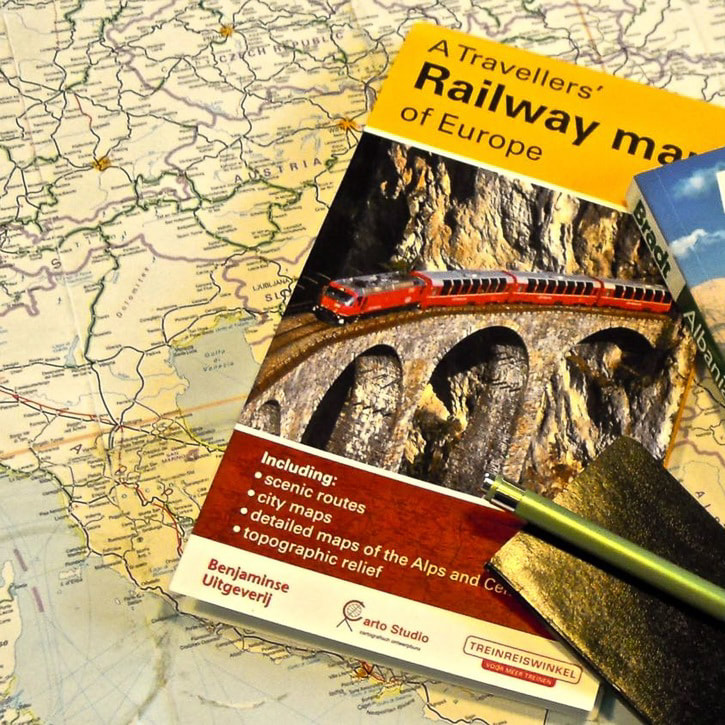
OUR RAILWAY ADVENTURES IN EASTERN EUROPE
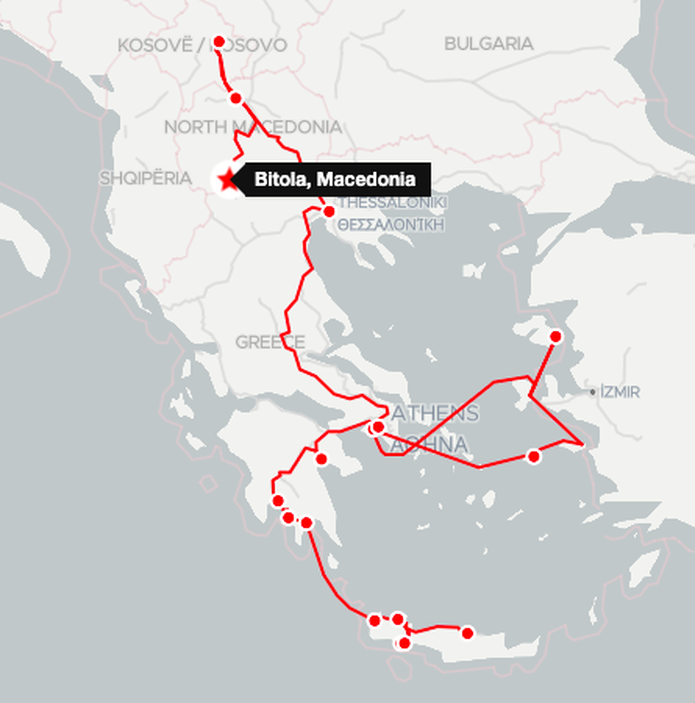
We’ve been on the road 68 days and are currently in Bitola, North Macedonia.
We plan to cross over into Albania tomorrow morning. This is where we expect things to get seriously offbeat.
If you haven’t already subscribed, sign up here so you don’t miss a single loony adventure or the next mouthwatering recipe.
YES, SEND ME UPDATES!
Thanks for joining us on the journey.
Leave a Reply