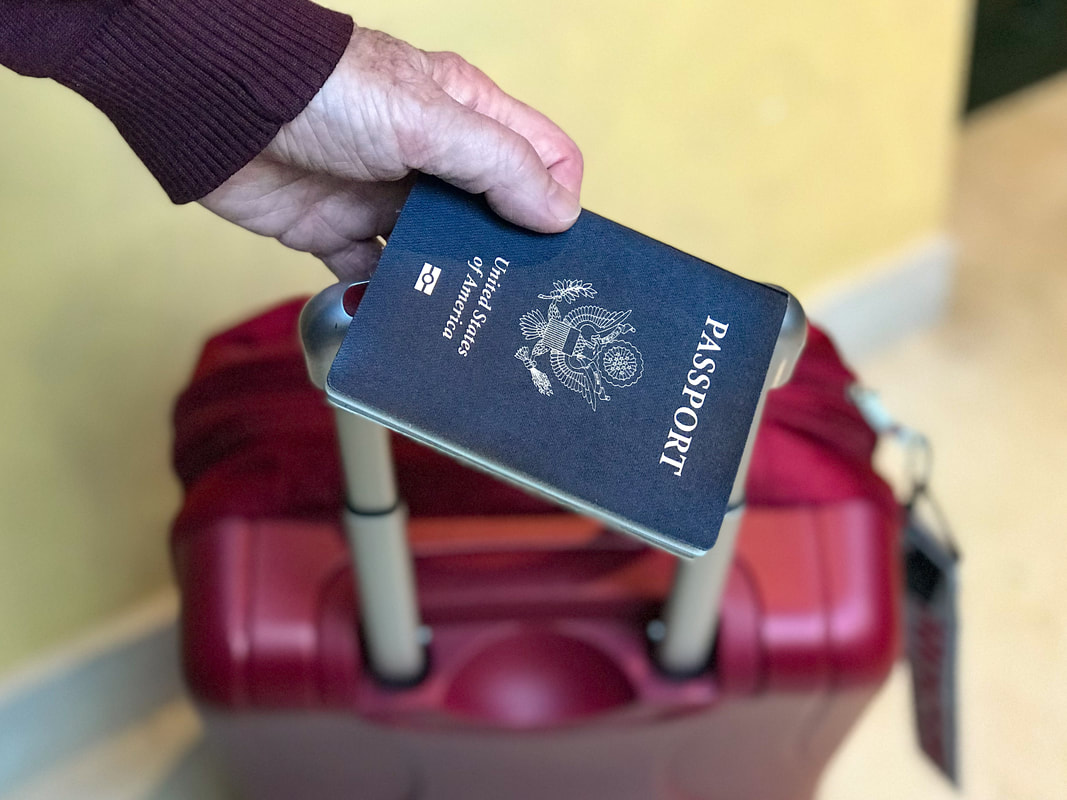

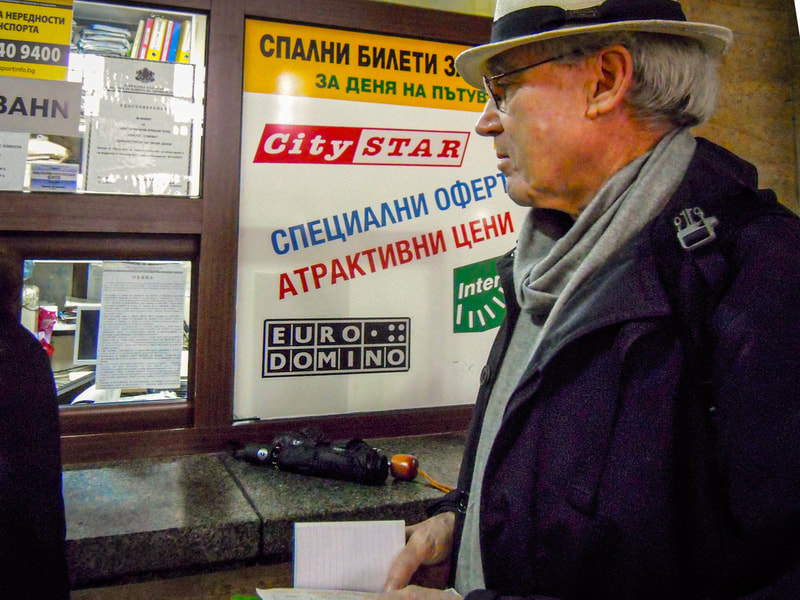
Of all the phrases you don’t want to utter, “Wait, stop, I didn’t get my passport back!” is fairly high on the list. Not quite up there with “OK, I’ll throw myself on the grenade” but well above “The next round’s on me.” The realization that this essential travel document has disappeared is especially unwelcome when you’re jammed in a sweltering bus in the no-man’s-land between the border-control stations of Albania and Montenegro, and you’re fairly sure the guy who collected the passports doesn’t speak English.
Selfishly, I could rejoice in the fact that the missing passport wasn’t mine or Rich’s, but I couldn’t help worrying for the young Dutch student who’d lost it. We’d been chatting with him and his girlfriend since our departure from
Shkodër
, Albania
, swapping travel tales, learning about their studies in Amsterdam, explaining we were currently halfway through our
Mediterranean Comfort Food Tour
. As on other border crossings in the Balkans, the bus attendant collected all the passports and disappeared into the guard station while we waited on the bus. He eventually reappeared, handing the stack to the nearest passenger, who was supposed extract their own and pass the others along. As the Dutch couple, Rich, and I were sitting in the very back row, I was only too aware this provided ample opportunity for anyone on the bus to thumb through our personal travel information and/or pocket one of our passports.
When the last of the passports had been claimed and our seatmate’s wasn’t anywhere to be found, he alerted the bus attendant in a voice that was surprising free from hysteria and calmly ambled forward to sort out the problem. His insouciance became all the more remarkable when I learned later, after the passport had been found in the Albanian border station, that this would have been the third time he’d lost one. He told us that according to Dutch law, three lost passports means you won’t be issued another for five years — a life-changing possibility that he just shrugged off with a grin. “Didn’t happen. Why should I worry?”
“This is what I love about traveling with young people,” Rich said as we waved goodbye to the Dutch couple in Podgorica. “They’re so adaptable.” Over dinner that night he returned to the subject. “You know, when you get older, you don’t always think as fast, so it’s natural to try and make your life as predictable as possible. You want to control everything around you. And you can’t. In fact, you can’t really control much of anything. The Buddhists know that, and so do most young people. Somehow we forget that truth as we age.”
The subject of age came up a lot during the five months of our Mediterranean Comfort Food Tour. Six weeks into the trip Rich turned 75, and my 68th birthday came around the day after we returned home to Seville. We’ve finally accepted the fact we’re no longer spring or even summer chickens; we’re winter chickens. It’s a sobering thought, and one that seems easier to accept gracefully when we’re on the road.
Life has a beautiful simplicity when you’re traveling. The fuss and clamor of everyday activities subsides. You don’t have to worry about going to meetings or fixing that leak in the roof or getting your cholesterol checked. The concerns and projects that propel our days go into hibernation for the duration. “Nothing behind me, everything ahead of me,” wrote Jack Kerouak, “as is ever so on the road.”
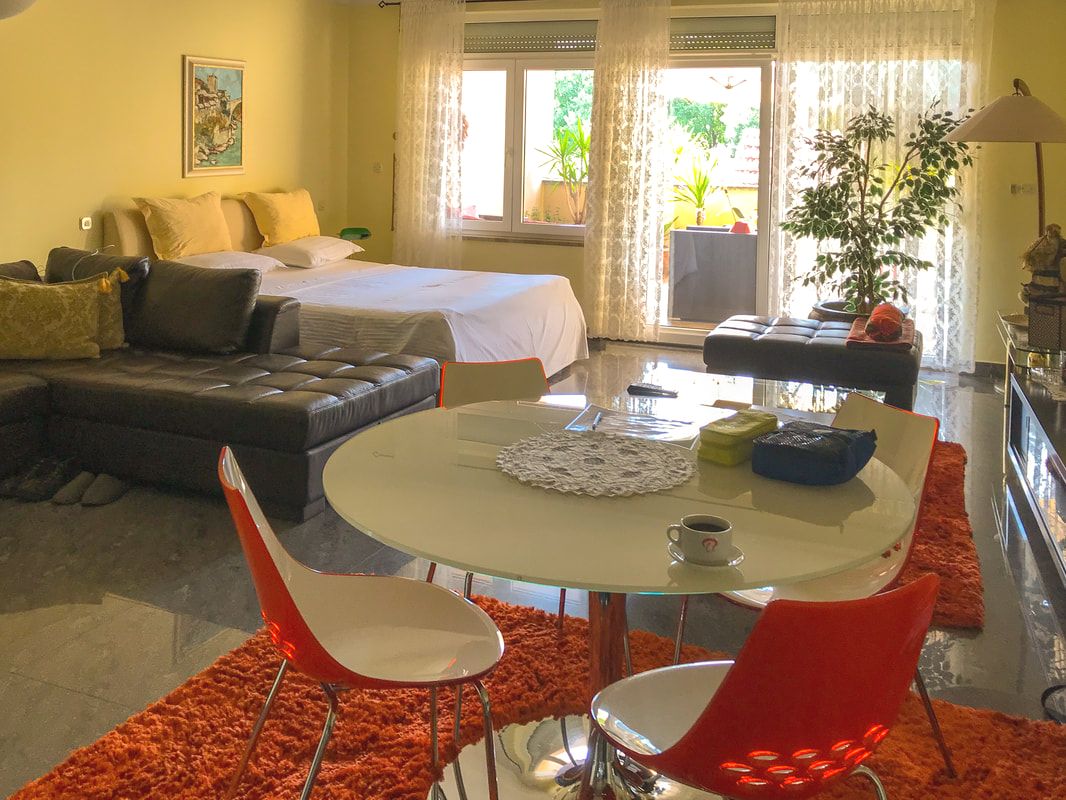
Of course, journeys bring their own challenges, including the kind of mind-stretching problem-solving exercises that keep our synapses firing. Forget Sudoku and Lumosity. Try figuring out the controls of a Greek washing machine, that streamlined Italian shower, or the Turkish coffee maker. Wrap your brain around the Cyrillic азбука (alphabet) or grapple with the fact your bus to Montenegro is marked Mali i Zi, the Albanian name for that country. Even the relatively simple task of fitting your life into a new Airbnb apartment gives your brain a brisk workout.
Every time your brain does these kinds of mental push-ups, it strengthens some of its synapses, those 100 trillion minuscule gaps across which chemical messengers travel, enabling the brain to function. “In the last twenty years,” wrote John B. Arden in
Rewire Your Brain
, “there has been an overwhelming amount of evidence that the synapses are not hardwired but are changing all the time.” This characteristic, known as neuroplasticity, means that “the brain changes its synapses when you remember something new.” That’s right, you’re boosting your brain power every time you recall how to get from your hotel to that great little bar around the corner and then root around in your memory for clues about whether the local word for beer is
birrë, cerveza
, or
pivo
.
We don’t have to go out of our way to find mental challenges on the road. Even if the Albanian customs officials don’t manage to misplace our passports, there are endless small hitches, glitches, and hiccoughs to contend with and a constant stream of new information to absorb. The good news is that every time you do remember route details, historical tidbits, or where you left the car keys in the new Airbnb, you can congratulate yourself on making your brain a little stronger and more youthful.
My brain will never again be as flexible as those of the twentysomethings from Amsterdam we met on that bus, but my memory … wait, what was I saying? Just kidding. My memory is at its best when I travel, when I think and write about my journeys, and as I plan future trips. I can only assume that’s because I’m doing something right by my 100 trillion synapses. I am counting on them to do right by me in return.
YOU MIGHT ALSO ENJOY
IS YOUR PASSPORT VALID? ARE YOU SURE?
ALBANIA: YOUR NEXT VACATION DESTNIATION?
THE JOY OF SEXAGENARIANS
Check out highlights of our
Mediterranean Comfort Food Tour
in my new video!
Don’t miss a single loony adventure, travel tip, video, or recipe. Send me your email and I’ll keep you updated.
YES! SEND ME UPDATES
Leave a Reply