“And whatever you do,” said the
technico
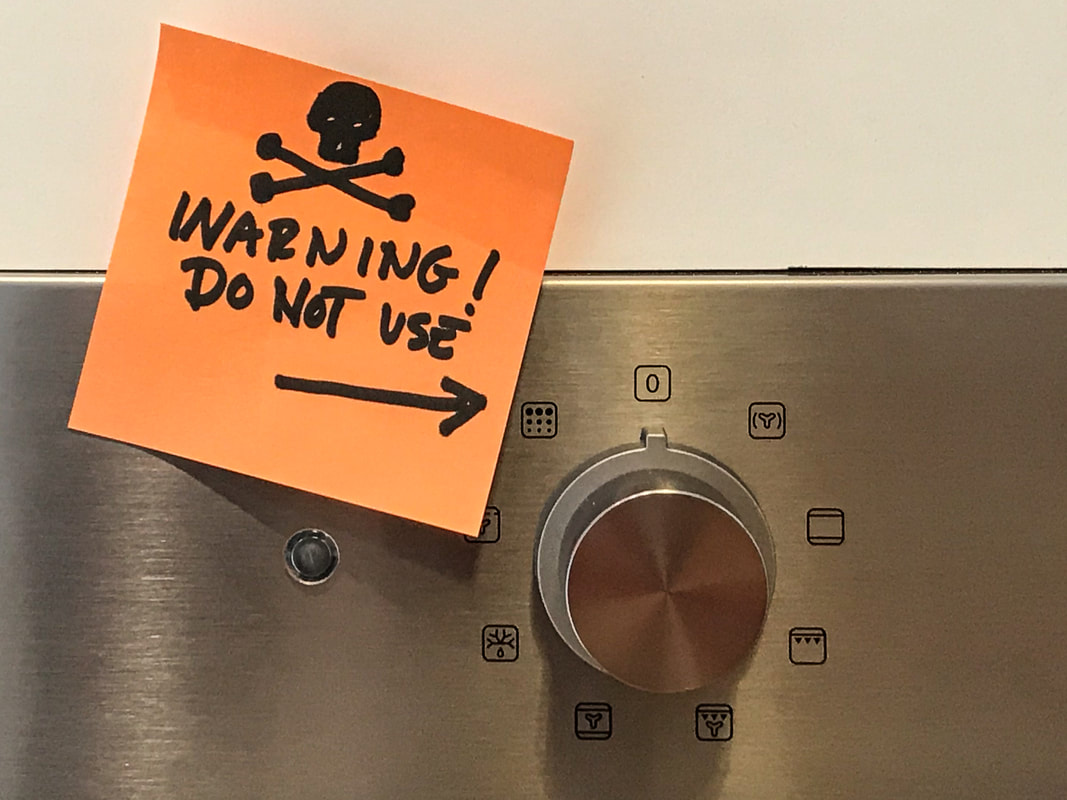
who had just installed my gleaming new self-cleaning oven, “don’t use the self-cleaning feature.”
“What? Why?”
“It raises the oven temperature to 6000 degrees, to convert grease to ash. I had to really jam the stove under your countertop — which is narrower than standard, by the way — so the plug is right up against the oven. You use the self-cleaning feature, you melt the plug. And then…”
He didn’t need to go on. My fantasies of maintaining a spotless oven had just gone up in smoke.
I started to laugh because it was such a supremely Spanish moment. In making an effort to upgrade, I’d moved two steps forward (a slightly roomier and much less temperamental oven) and taken one giant leap toward burning down the entire apartment building.
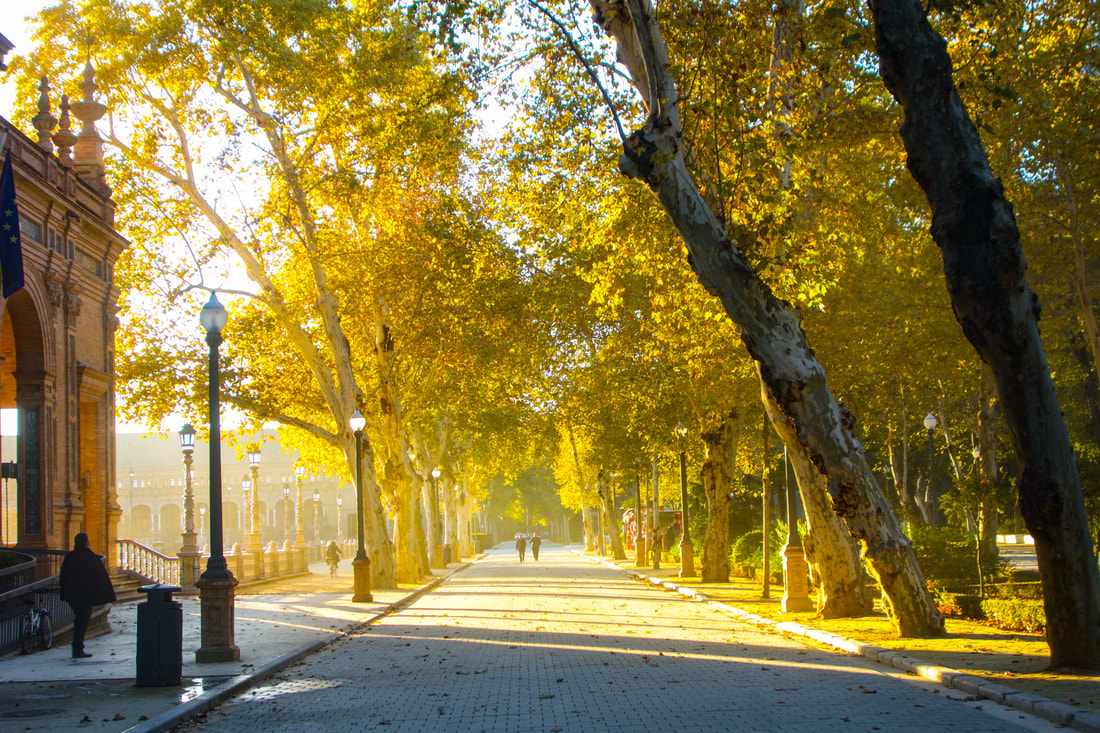
In its own weird way, it was rather comforting. Seville has changed so much lately, it was good to know the city hadn’t lost its quirky, unpredictable character, its innate ability to infuse even the most ordinary act with mystery and high drama.
I’ll admit that I’ve been experiencing a bit of post-trip culture-lag following my five month Mediterranean Food Tour. Returning to a city you love after a long absence is always difficult; the tiny, incremental changes that took place over time hit you all at once. Just when you long to wrap a familiar place around you like a favorite old coat, it feels alien, awkward, and ill-fitting, as if it had shrunk several sizes, grown an extra sleeve, and lost all its buttons.
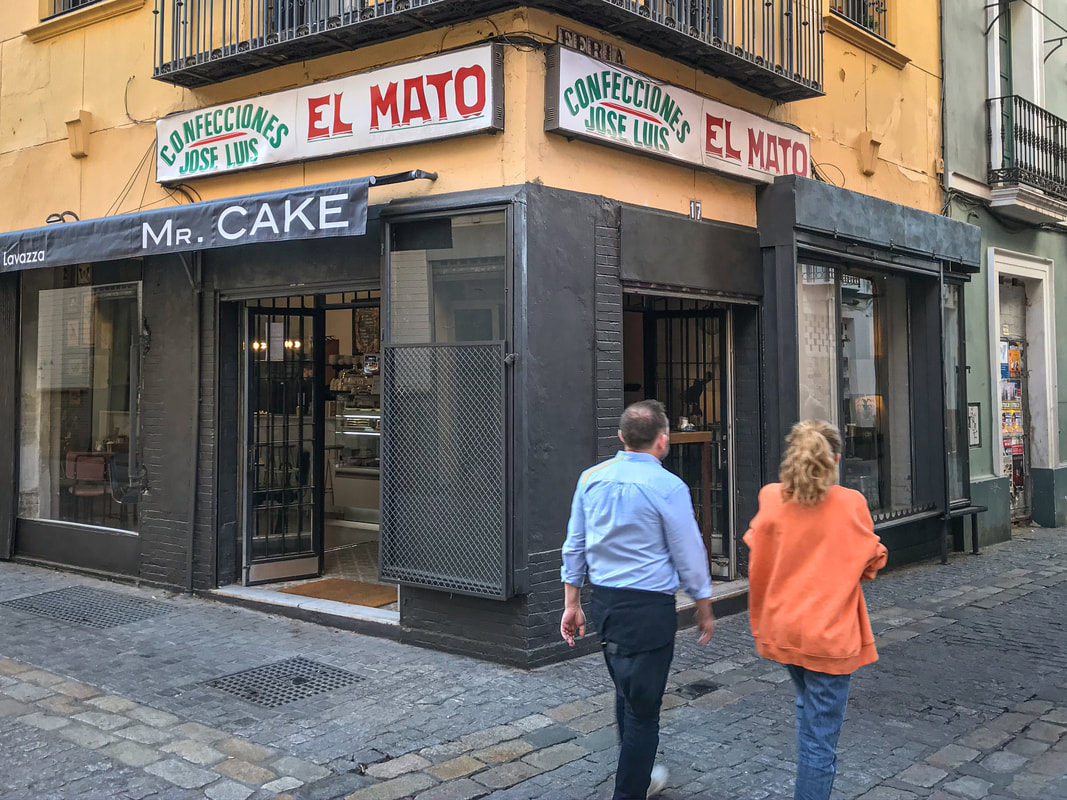
Speaking of ill-fitting clothes, the city just lost one of its emblematic old shops that had provided generations of Sevillanos with cheap house dresses and men’s shirts. It was called El Mato, and the clothes were so inexpensive it gave rise to the saying, “Tan barato como El Mato,” as cheap as El Mato. This would crop up in exchanges like, “How was your hotel in Morocco?” “Not very nice, but I will say it was as cheap as El Mato.” Rich once bought a short-sleeved collared shirt there, and it was actually fairly decent except that the short sleeves were extremely short, no doubt to save on fabric costs. He wore it for years, and I assured him it didn’t look odd at all. I’m sorry to report that El Mato closed its doors last month and the site is now a bright, modern Mr. Cake bakery.
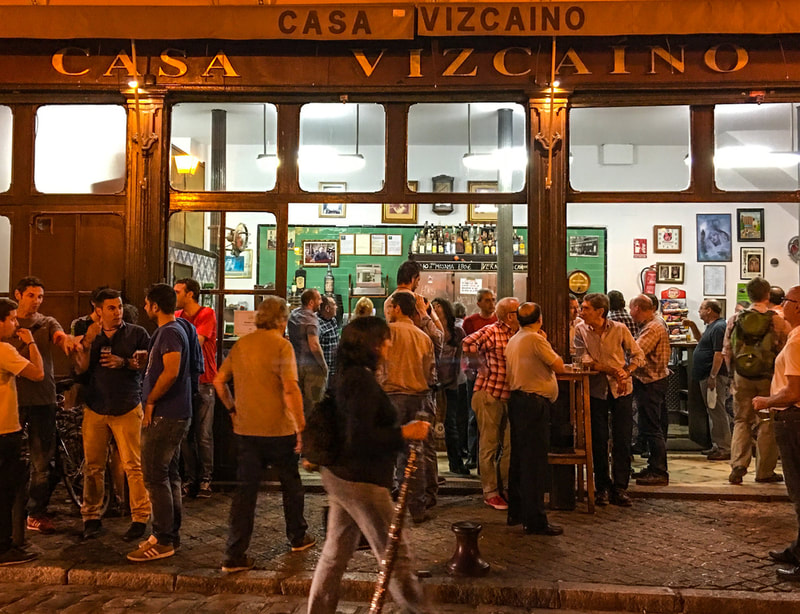
It’s a bit sad to lose an old-fashioned shop like El Mato (and the dozens of others that have disappeared lately), but the real challenge is adapting to the tourist boom that’s rocking the city. Arriving back in late September, I found crowds jamming the downtown streets like something out of a dystopian movie (the teaming hoards in
Soylent Green
and the zombie stampede in
World War Z
come to mind). From 2014 to 2018 (the year Lonely Planet declared Seville the world’s top destination) tourism rose almost 35%, and when the 2019 statistics come out, I’m guessing it will prove to be another record-breaking year. I’ve heard 32 hotels are being built in the city, and new restaurants seem to pop up every day. Some are wonderful, but all too many are cookie-cutter corporate chains offering burgers, pizza, and chicken Caesar salads. Bars now sell drinks with umbrellas and pineapple in them, to underscore the theme:
you are on vacation does it really matter where?
“It’s all your fault,” a friend told me. “If you’d just stop saying nice things about the city on your blog, we might have a chance of stemming the tide.”
I don’t actually believe that I’m the prime mover here, but I felt I should meet him halfway. “How about I start a rumor that the Great Plague is back?”
In the middle of the seventeenth century, this grisly disease claimed the lives of a quarter of the population the city, when the national average was 5%. Why? Because the Sevillanos of the day — those old scofflaws — ignored, evaded, and refused to enforce the efforts to maintain quarantine.
“The Great Plague?” he said. “Yes, that should do nicely.”
I promised to mention it on my blog at the earliest opportunity, and now I have. Feel free to help me spread the rumor far and wide.
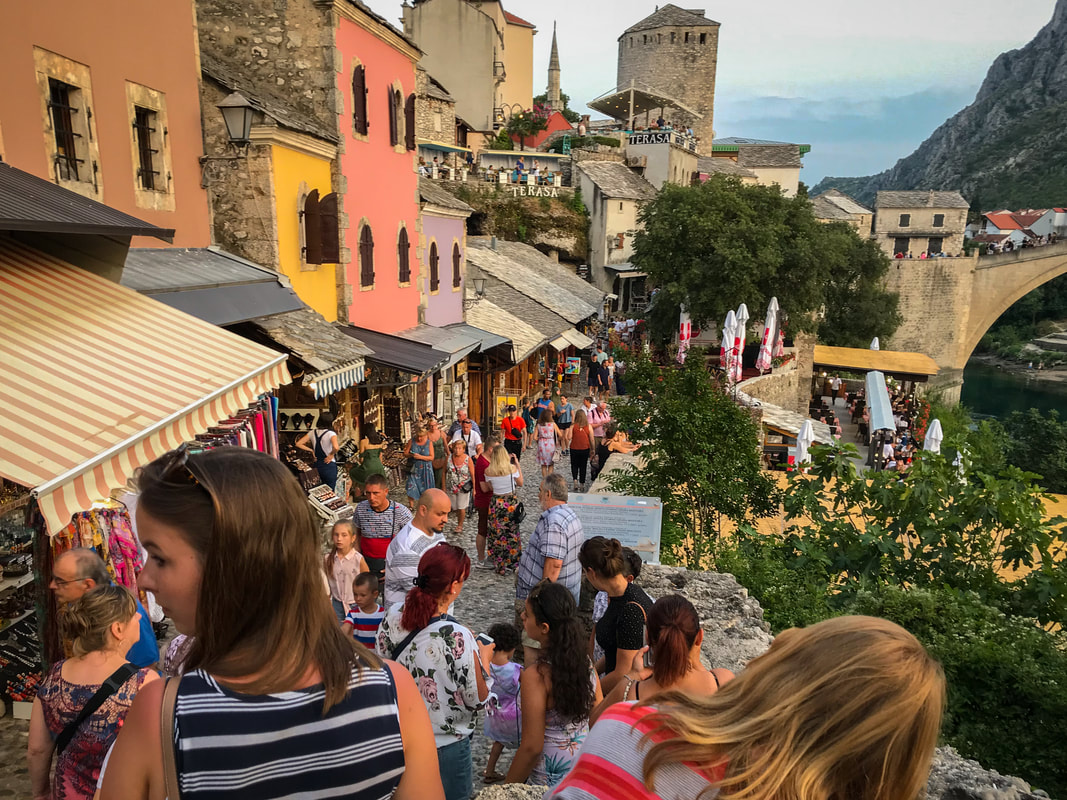
But for the most part, I’m trying to adapt to the new reality, not fight it. As Rich keeps pointing out, all cities change constantly; it’s what keeps them vital and alive. I’ve occasionally visited towns —
Mostar in Bosnia and Herzegovina
, for instance, or Český Krumlov in the Czech Republic — where they’ve worked so hard to preserve the town as it was during a single moment in its history that the place has become a theme park, a plasticized, Disneyland version of itself.
I strongly doubt that will be Seville’s fate. This city is too quirky and unruly ever to line up behind any single idea, even one with such obvious benefits as fighting the Great Plague. Twenty years ago, I was gobsmacked to discover that the many city maps of Seville were all drawn differently — some, for instance, enlarged alleys that were useful shortcuts, while others fudged the angles of streets to suggest they all converged on an important landmark. I finally realized each cartographer was being helpful, drawing attention to navigational elements that might be overlooked on a more accurate rendering.
That attitude certainly hasn’t changed. Does a self-cleaning oven really heat up to 6000 degrees? Of course not. The maximum is 471 Celsius (880 Fharenheit). Our
technico
was merely exercising his God-given right to convey information with sufficient drama to ensure we’d be too terrified ever to consider using the self-cleaning feature. He wasn’t just installing an oven, he was saving our lives. And he was serving as a timely reminder that in the midst of constant upheaval, Seville’s kind heart and quirky spirit remain as strong as ever.
YOU MIGHT ALSO ENJOY
PACKING FOOD & COMFORT: LESSONS FROM THE ROAD
WHAT YOU WON’T FIND IN SEVILLE’S WINTER WONDERLAND
DIVE BARS OF SEVILLE
Leave a Reply