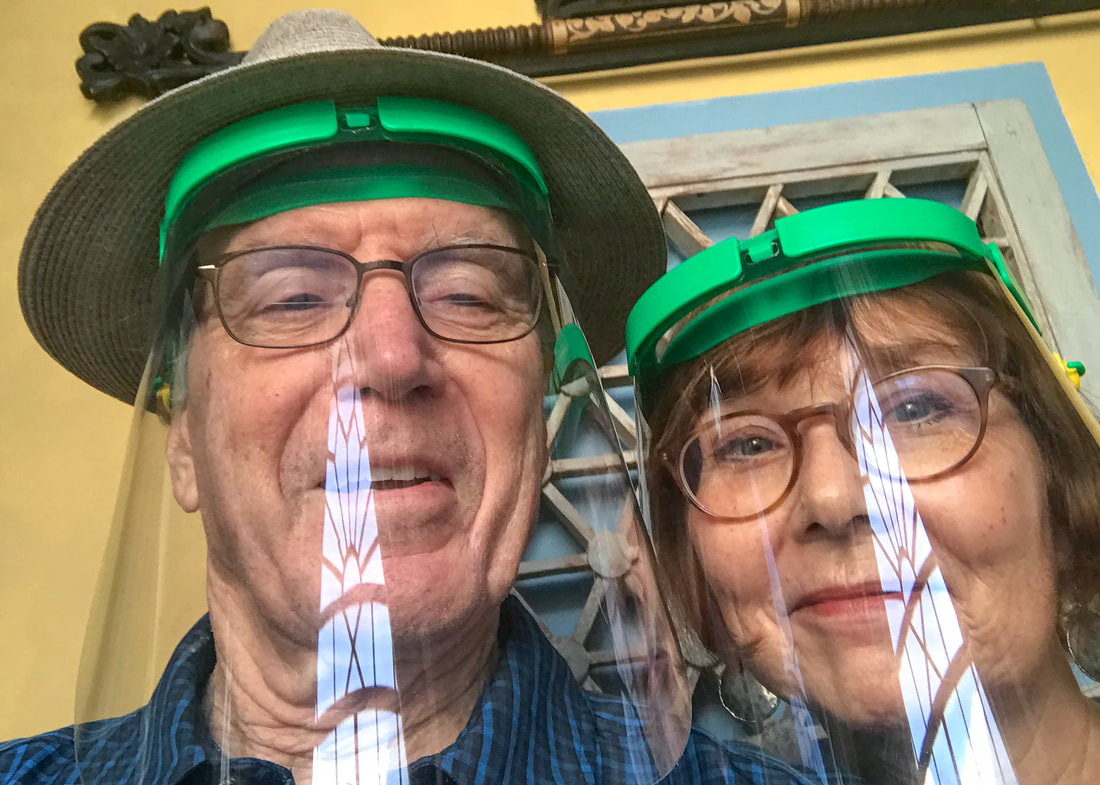
Right now our front hall looks like a field hospital, cluttered with masks, gloves, hand sanitizer, and our new, most prized possessions: face shields. When we wear them, Rich and I feel like astronauts in a very, very low-budget horror movie, suiting up to leave the mothership. But the fact we can go out for walks together, for the first time in nearly two months, is worth all the effort it takes to ignore how ridiculous we appear.
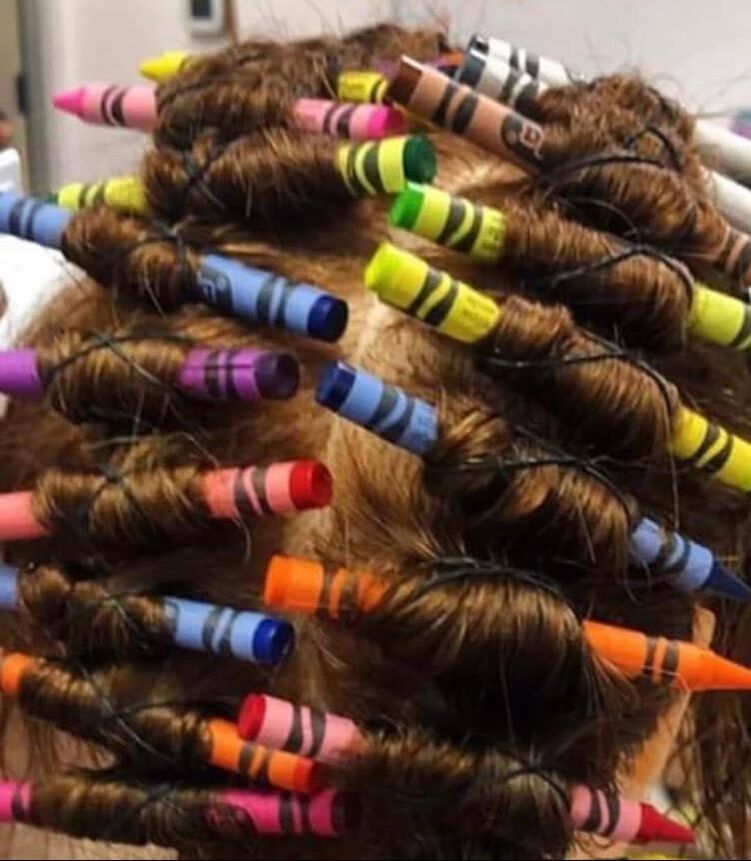
Here in Spain, we’re cautiously “de-escalating the State of Alarm,” as the government likes to put it. We haven’t even entered Phase One yet, but so far Phase Zero has been pretty thrilling, with new freedoms and many stores and services (including hairdressers!) open at last. A friend returning from an appointment at my favorite salon described the atmosphere as “weird,” with staff and clients swathed in plastic, wearing masks and gloves, and trying not to breathe any more than strictly necessary. Frankly, it sounds hideous and I’m not rushing down there any time soon. I flatter (or delude) myself that for now, I’m doing a decent enough job of home hair maintenance.
As we inch our way out of quarantine, I find myself looking back on the extraordinary experiences of the past two months as a sort of bizarro world, parallel universe version of adventure travel. Looking up definitions online, I saw adventure travel involves “stepping outside your comfort zone,” “experiencing culture shock,” and “some degree of risk or physical danger.” Yep, we can check off those boxes. It’s also about the narrative that shapes our experience, and the stories, jokes, photos, and videos that define the journey and show us what it’s taught us about the world, our times, and ourselves.
Like heading off to, say, the Albanian mountains or rural Greece, being overtaken by the pandemic has thrown us all into culture shock as the world we know disappears in the rear view mirror. We’re cut off from friends, colleagues, habitual haunts, and daily activities, while spending an unprecedented amount of time with our closest companion(s). Every day we absorb new language (
contact tracing, index case, herd immunity
) and new customs (
20-second hand washing, elbow sneezing, evening clapping
). Every headline and meme boosts our hyperawareness of the physical risks of our situation (including occasional impulses to hurl ourselves or our companion(s) into the trash compactor).
Some of my fellow travel writers are still producing jaunty little articles about the six best tiki bars on Maui, but I don’t see much point in praising the delights of going abroad when international borders are closed, those tiki bars are locked up tight, and anyone with any sense is sheltering in place. Old-school travel articles feel tone deaf, irrelevant, and downright cruel to anyone frustrated over being trapped at home, especially those with fussy toddlers, angst-ridden teens, or a fed-up spouse.
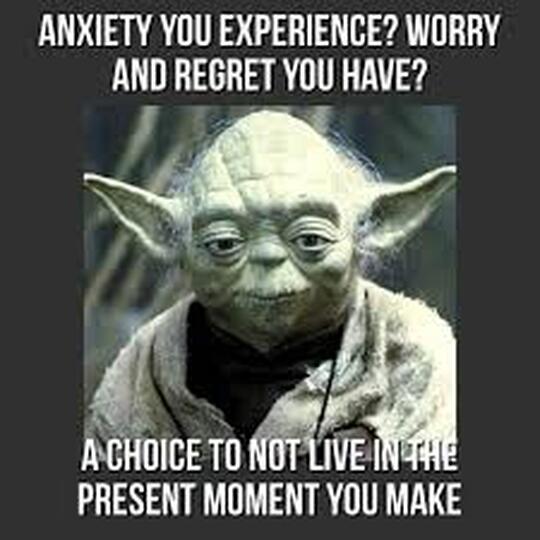
Everybody’s speculating about what the post-pandemic world will look like, with timelines ranging from next month to never, but the truth is no one can guess how this thing is going to play out. “The dogmas of the quiet past are inadequate to the stormy present,” Abraham Lincoln once said. “The occasion is piled high with difficulty, and we must rise with the occasion. As our case is new, so we must think anew and act anew.” With the past increasingly less pertinent and the future a mystery, we have little choice but to live — as the Buddhists have been advising for years — in the present moment.
For me, the present moment is all about emerging from seclusion into the larger world. And that’s a journey as challenging and exhilarating as hiking in the Himalayas or canoeing on the Amazon river. I’m doing my best to comply with Spain’s four-phase plan, a classic piece of government bureaucracy that’s enormously complex yet surprisingly vague, subject to constant revisions, and hedged about with warnings that we’d better not run amok and cause the numbers to spike. Which apparently is government-speak for “Yes, we will arrest you for infractions of the rules, as soon as we figure out what we say they are.”
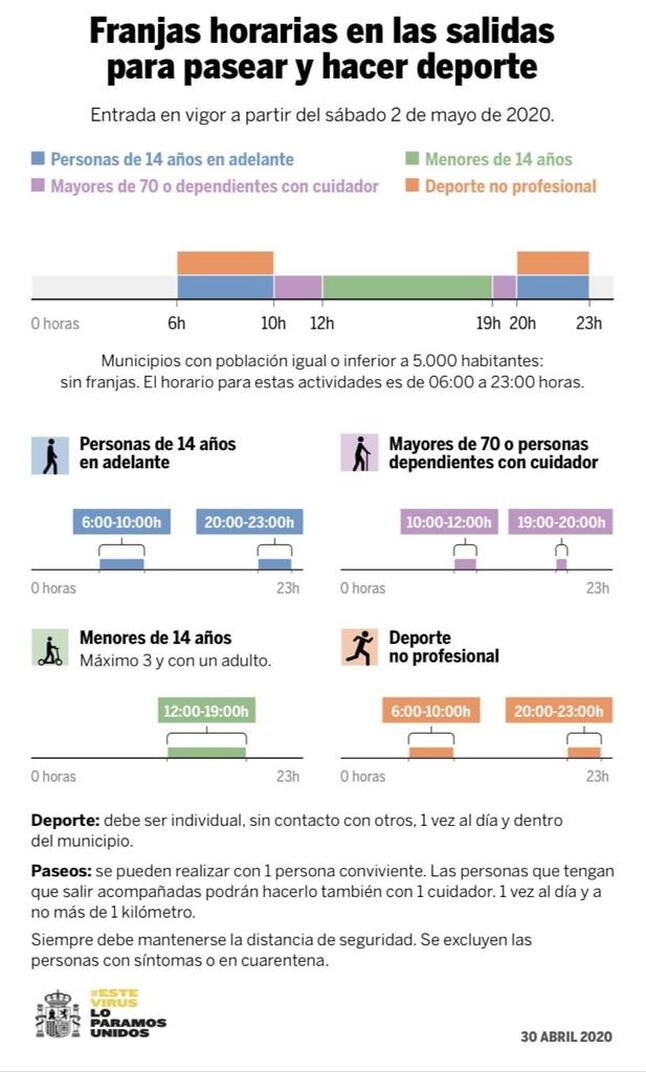
As this chart shows, we’re now allowed out for walks and exercise by age group. Being 68, I can take a
paseo
(stroll) during the blue period (anyone over 14), to accompany my husband during the purple period (those over 70), or for exercise during the orange period (individual sports). No doubt if I put my mind to it I could also come up with a reason to be out during the only other time slot, the green period designated for kids under 14, but at this stage I’d just as soon avoid the darling little disease vectors as much as possible, so the question doesn’t really arise. The amount of time (one hour or two) and the distance we can travel (one kilometer from our home or anywhere in the municipality) are equally confusing, but luckily nobody’s paying much attention to those restrictions anyway.
I’m grateful for the chance to go out, but already I’m faintly nostalgic for the cocoon of safety represented by weeks of being comfortably ensconced in my apartment. It’s a scary world out there. The virus curve may have flattened, but we still don’t have a vaccine to protect us if/when this thing comes roaring back in the fall. Other 2020 catastrophes-in-the-making include the world economy, US election, and our new friends, the gigantic carnivorous insects known affectionately as “murder hornets.” What’s next? Flesh-eating zombies? Oh right, something worse: climate change.
With all that to look forward to, I suspect that in the months ahead, many of us will come to view the quarantine era as the calm before the hurricane. Life may echo Lincoln’s words: “I pass my life in preventing the storm from blowing down the tent, and I drive in the pegs as fast as they are pulled up.”
via GIPHY
But this is where a lifetime of reading about travel adventures pays off. One of my favorites is
Andrew Forstheofel’s 4000-mile walk
from Philadelphia to New Orleans and then California. At 23, jobless, homeless, and single, he set off on foot with the vague idea of talking to people along the way and asking what advice they would give their 23-year-old selves if they could go back in time. The stories he recorded are marvelous, and in the end, most of the advice people would give their younger selves boiled down to this comment from a Maryland woman: “I wouldn’t worry so much. I used to worry myself to death. And then now I realize the things you worry about, how many of them come true? Very seldom.”
She’s right; even in these unnerving times, we don’t have to live in a permanent State of Alarm. As I ease into the neo-normal, I am trying to stay present to the moment, bake more bread, worry less, avoid binging on the news, and spend more time dancing with my husband. That’s my survival strategy and I’m sticking with it. I’ll let you know how it works out.
What advice would you give your 23-year-old self, if you could go back in time? What do you think some of these people might have said to their younger selves? Let me know in the comments section below.
SIGN UP HERE FOR UPDATES
More Pandemic Perspectives & Humor
Scofflaws, Naysayers & Coronavirus Myths
In the Pandemic: Desperate Situations, Ingenious Solutions
Why We All Feel Hopelessly Unproductive in Quarantine
Quarantined? Take Mini-Vacations. For Betty White’s Sake
Months of Quarantine? OK, If That’s What It Takes
Yes, You CAN Stay (Relatively) Sane During Lockdown
Stranded” in Seville’s Pandemic Lockdown
Leave a Reply