In sci-fi movies, it usually takes an hour and fifteen minutes for the loony but brilliant scientist to look up from the microscope, shout “
Aha!
,” and announce the breakthrough that will save the human race. In real life, after six months of feverish activity by practically every PhD on the planet, the mystery just keeps deepening.
We have managed to figure out a few things
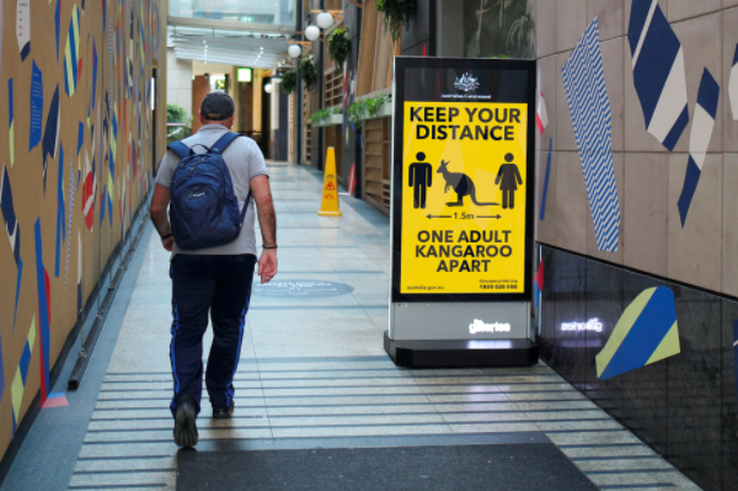
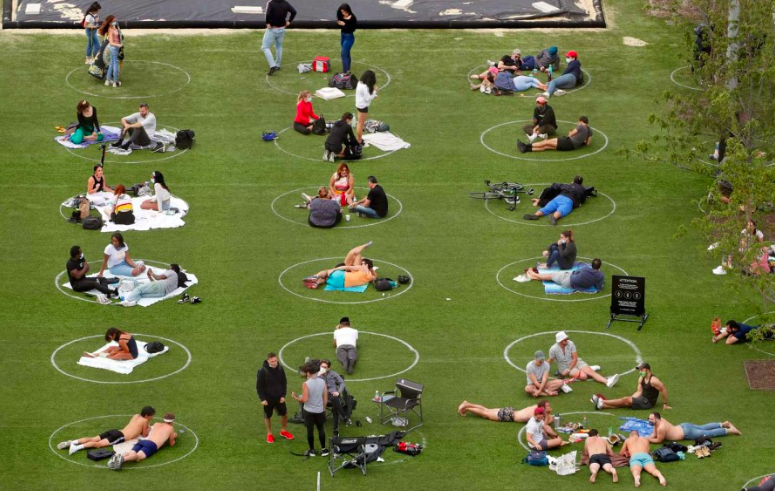
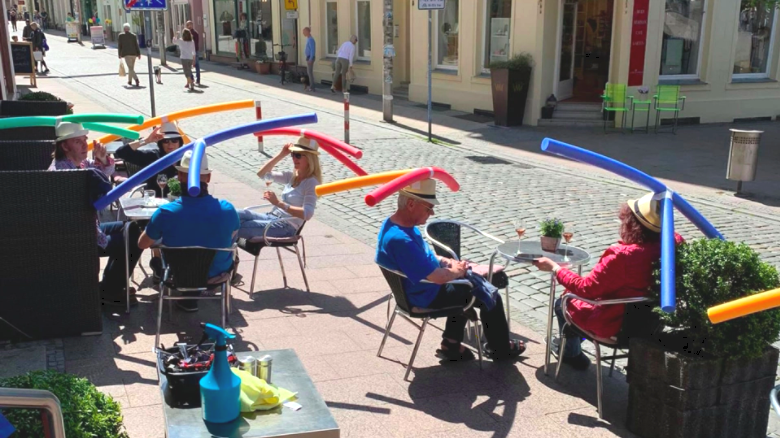
, among them that our best lines of defense are (stop me if you’ve heard this already) hand washing, face covering, and social distancing. The first two are simple enough. Social distancing, however, gets more complicated every day.
“As the pandemic presses on and restrictions ease,
I’ve been conflicted about what social events to attend, if any,
” Jenna Jonaitis wrote in the
Washington Post
this week. “Denying my parents opportunities to see my son, let alone hug and kiss him, weighs on my heart, and there’s an emptiness in not seeing my sister and her kids. But because so many questions about the virus persist, my family, like many other Americans, is trying to figure out how to socialize going forward.”
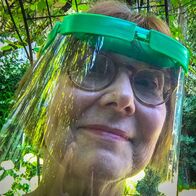
I hear you, Jenna. Now that I’m in California and out of quarantine, I’m getting invited out by my nearest and dearest, and while my heart rejoices, my nerve endings are fraying with anxiety. Am I ready to share a table with pals at a restaurant, even outdoors with tables six feet from other diners? Frankly, I break out in a cold sweat just thinking of removing my face shield and sitting bare faced, nose to nose, over a leisurely meal. Maybe it’s just me. My protection parameters were forged in Spain, which had the strictest lockdown in Europe. Are my standards unrealistic? Prudent? The bare minimum to ensure survival?
Who knows? And that’s my whole point.
I understand why others feel it’s safe to socialize more intimately. Here in Marin County, cases have plummeted to nearly nothing. My friends probably are virus-free; a few even have test results to prove it. And I’m feeling pretty good myself. But there’s no guarantee one or another of us won’t pick up the coronavirus five minutes from now, due to someone sneezing all over Starbucks or chatting at a neighborhood barbecue, especially with the influx of summer visitors from all over.
I’ve been asking around, and almost nobody here knows anyone with coronavirus, so I suspect the danger may not seem quite real. For me, it’s only too vivid. One friend in her forties has been battling a particularly vicious case for nearly three months, getting briefly better only to suffer yet another, even more hideous relapse. It’s the stuff of nightmares — and a powerful incentive to be very, very careful not to risk getting it.
Unfortunately, it’s not always clear just how to avoid that risk. Information about COVID-19 remains so sketchy that we all have to devise homemade defense plans. I have friends who have been housebound in near-total isolation since mid-March. Others are constantly out and about, sporadically wearing masks. They invite me over, assuring me their bodies and homes are germ free, even as they mention that the grandkids are visiting from another state, and no, they didn’t quarantine before arrival; for heaven’s sake, they’re
family
.
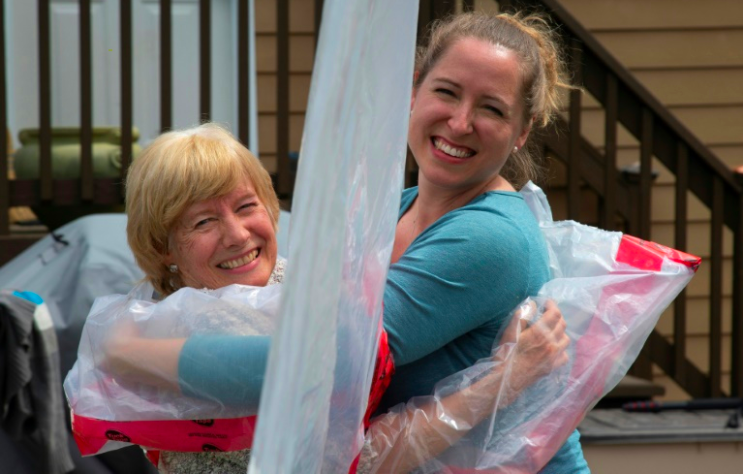
Staying completely apart is obviously safest but carries a tremendous emotional burden. People I know living in residential care are totally isolated and starved for human contact. A friend visiting her 97-year-old mother last week discovered there was now a “hugging machine,” a plastic barrier equipped with two pairs of shoulder-length gloves, allowing them to reach through the barrier and wrap their arms around one another. As they kissed through the plastic, her mother began to cry for joy.
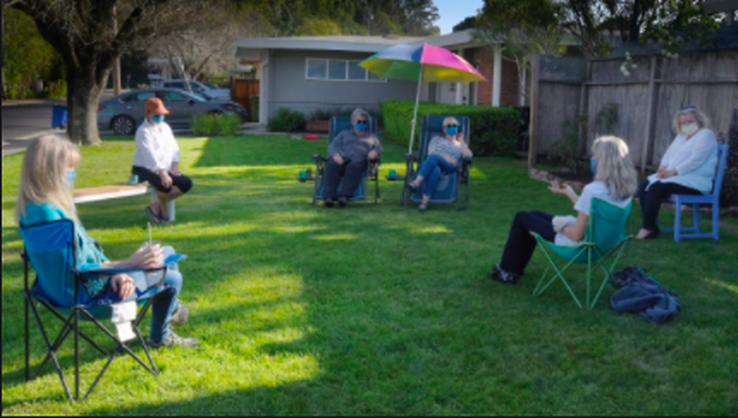
So what is the right balance of socializing and safety? My anecdotal, unscientific research led me to The California Happy Hour. “Each person brings their own wine and snacks,” my sister Kate explained, “and we all sit far apart and talk for an hour or so. At first it felt weird not to offer guests a meal or even drinks, but it’s not about food, it’s about fellowship.”
The California Happy Hour
All gatherings take place outdoors.
Everyone sits six feet apart if wearing masks; twelve feet apart if eating and drinking.
Each individual or couple brings their own wine and snacks.
Gatherings last no more than an hour or so.
Nobody goes inside anyone else’s home.
After due deliberation, Rich and I have adopted this plan. If people think I’m silly for insisting on it, they’ve been too kind to say anything. So that’s family and friends sorted. Getting the larger world to honor my boundaries is trickier. Especially now, when I’m participating in peaceful protests over the killing of George Floyd and others.
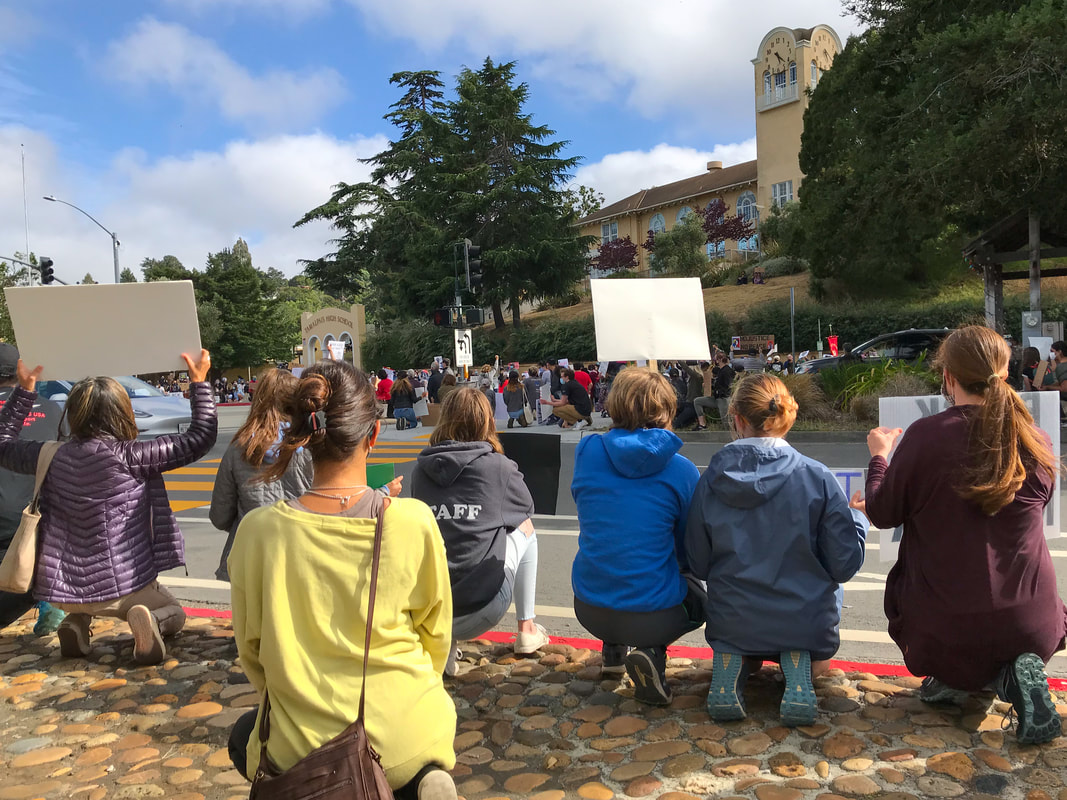
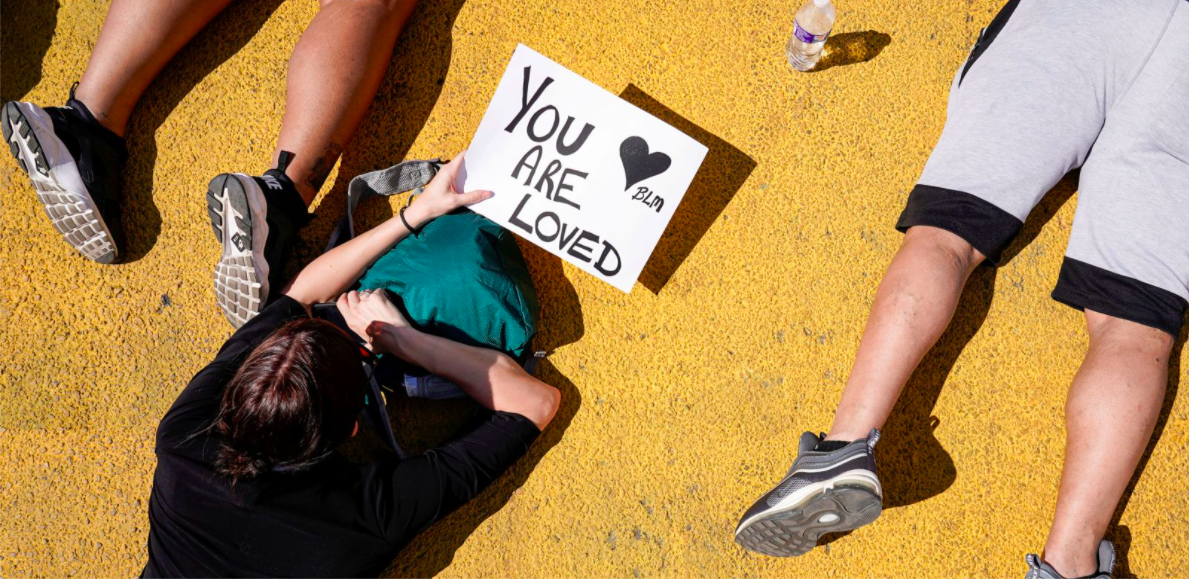
Last Thursday I joined 1000 neighbors at a busy intersection during rush hour; protesters waved signs, cars honked in solidarity. The crowd, mostly young people, wore masks and often stood close together. Rich and I wore both face shields and masks, letting folks know we were A) a bit odd, and B) serious about distancing; people gave us a wide berth, and we had no trouble maintaining our distance. We all knelt for eight minutes and forty-six seconds, the amount of time Officer Chauvin kept his knee on Floyd’s neck. It felt like a very long time indeed.
On Sunday Rich and I joined a protest in which cars, decorated with posters, drove through our town and several others. Approaching the starting point, the long lineup of cars looked like the final scene in
Field of Dreams
. Once underway, we were cheered on by bystanders waving their own
Black Lives Matter
posters. Passing a young family out for a bike ride, I heard the dad saying, “You see, there was this man named George Floyd…” And I remembered my parents saying to me when I was a kid, “You see, there was this woman named Rosa Parks…” And I thought: some of these young people will remember this moment their whole lives.
There’s no perfect formula for keeping safe while staying engaged. We cherish our sense of belonging but don’t want to sacrifice our health, possibly our lives, by getting careless now. Speaking to another generation in challenging times, Churchill said, “This is not the end. It is not even the beginning of the end. But it is, perhaps, the end of the beginning.” That’s about where we are today. The first wave of the pandemic has changed our world forever. And it’s far from over.
Coronavirus cases have jumped sharply
since Memorial Day in many states, including California. And we’ve all heard the warnings of a possible resurgence in the fall.
Obviously I’m hoping one day soon some loony, brilliant scientist will shout “Eureka!” and start victory-dancing around the lab in celebration of finding a cure. But for now, defining the future is up to us. So we have to ask ourselves: What kind of people — what kind of a country — do we want to be?
YOU MIGHT ALSO ENJOY
BIZARRE AND INEXPLICABLE: THE WORLD OF KAREN
CAN WE STILL RELY ON THE KINDNESS OF STRANGERS?
ARE WE ALL LOSING OUR MARBLES?
Stay tuned and sign up to get an alert when new posts appear.
YES! SEND ME UPDATES
Leave a Reply