


Of all the bonehead ideas floated in the 1950s — the
curved-barrel machine gun for firing around corners, the vest-pocket ashtray, and bird diapers
come to mind — the
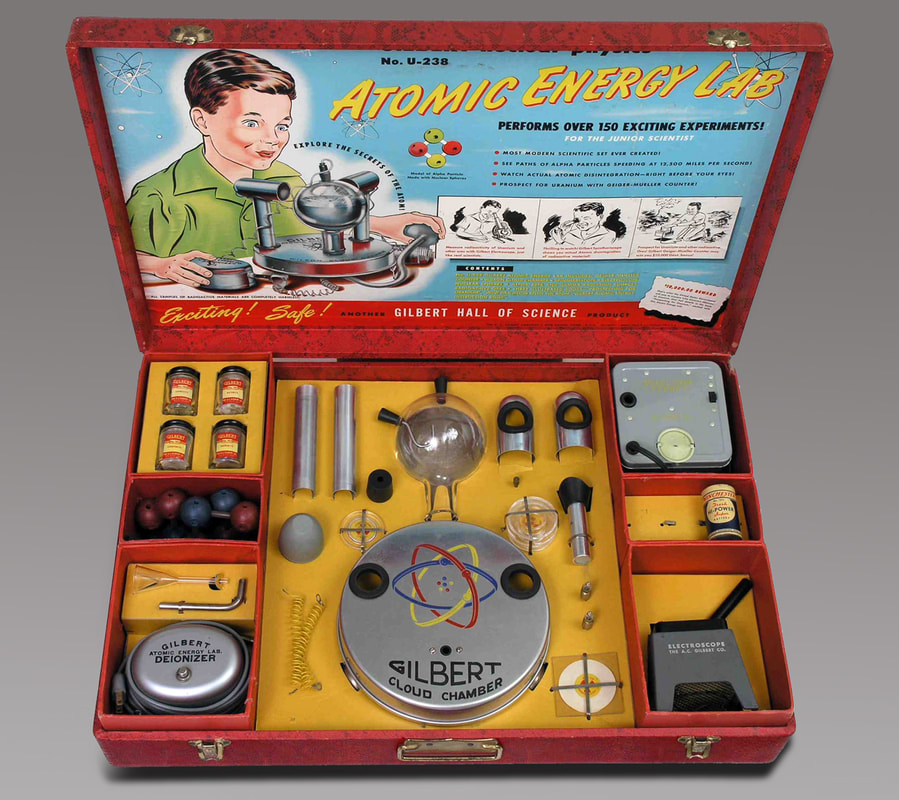
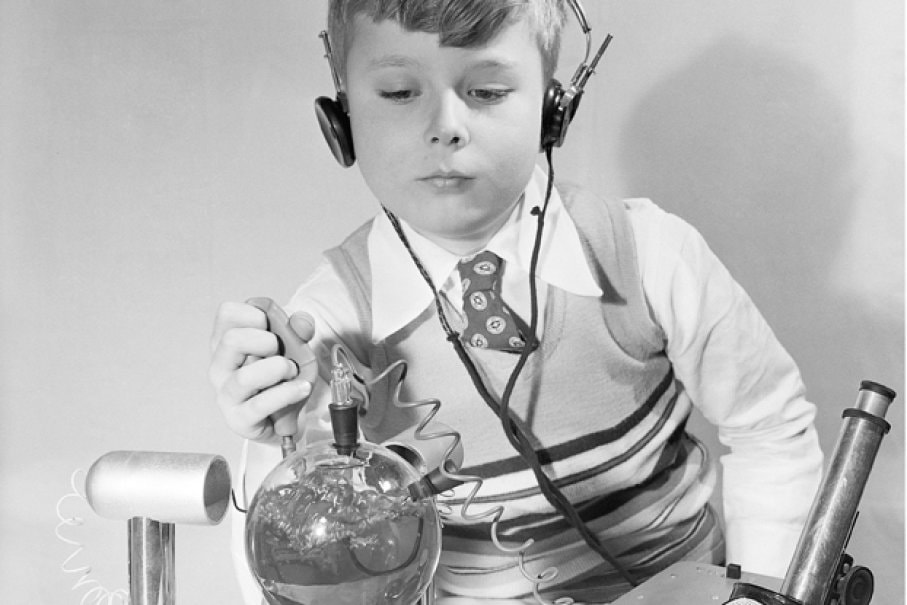
Gilbert U-238 Atomic Energy Lab
for children is a hot contender for top prize. Giving a kid a box of radioactive uranium ore to play with at home — what could possibly go wrong? Incredibly, it was marketed as a safer alternative to the American Basic Science Club’s Atomic Energy Lab kit, which let youngsters experiment with both uranium and the far more radioactive radium. Frankly, it’s a miracle anyone from that generation survived to adulthood.
Brushing up on fun yet terrifying facts about the 1950s was part of my prep for a recent date night — one of the strategies Rich and I use to keep things fresh after 33 years of marriage and five months of pandemic togetherness. The evening’s 1950s theme was inspired by our acquisition of an icon from the era: a metal porch glider. Durable, cheap, and surprisingly comfortable due to their springy construction and smooth rocking motion, gliders became the darling of post-WWII America, and when Rich and I ran across one at a bargain price in a second-hand store, we couldn’t resist its retro charm.
Going old-school on the date night menu, I served
onion dip
and chips, meatloaf, and corn on the cob. Updating them just enough to keep our arteries from hardening completely, I used yogurt instead of sour cream in the dip, and dug out my
Unbelievably Moist Turkey Meatloaf
recipe. After those virtuous substitutions, we felt free to slather the corn with butter and sprinkle on plenty of salt.
For entertainment, we listened to Elvis, Billie Holliday, and the Rat Pack as we played the
Welcome Back to the 1950s Trivia Quiz
, with questions like these:
What was the subject of Nixon’s “Checkers” speech?
A. Cocker Spaniel dog
B.The game of politics
C. A favorite pastime
What did the 1954 law Brown v. Board of Education prohibit?
A. School segregation
B. School sports
C. Affirmative action
[Way before your time? Find the answers below.]
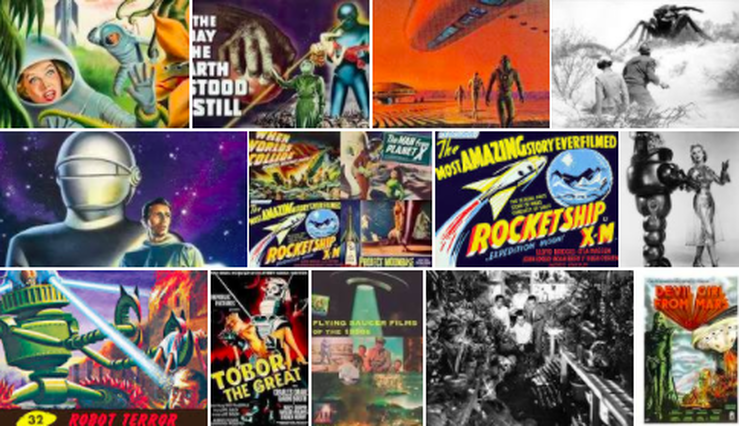
Nothing says the fifties quite like low-budget sci-fi flicks with mutants covered in jelly, aliens in aluminum foil suits, and flying saucers crafted from actual saucers. I invited Rich to choose one of these classics B movies to watch.
The Blob
Creature from the Black Lagoon
The War of the Worlds
The Day the Earth Stood Still
Godzilla
He picked
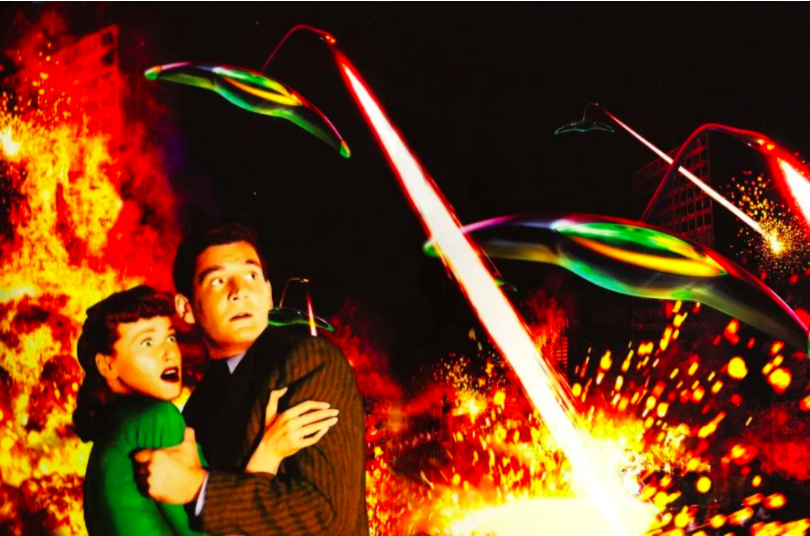
The War of the Worlds
, whose special effects — laughably cheesy by modern standards — won an Oscar in 1953 and helped launch the modern sci-fi movie industry. The timing was perfect. The American public, having witnessed Nazism, Fascism, and our own pilots dropping atomic bombs on Japan, were already braced for global catastrophe. A “
soul-chilling, hackle-raising
” movie about Martians invading Earth resonated with the apocalyptic paranoia of their times — and our own.
“We’re living in a dystopian movie,” my brother Mike remarked the other day during a discussion of (what else?) the pandemic. “The question is: are we victims or heroes?”
I suspect most of us feel like a bit of both these days, wanting to cower under the covers until all this is over, then forcing ourselves to climb out of bed every morning and do what we can to look after ourselves and one another.
Mike’s question made me stop and consider what makes someone a hero. Hollywood likes to represent them as winner-takes-all champions, but in real life, heroism is mostly about showing up. Like the
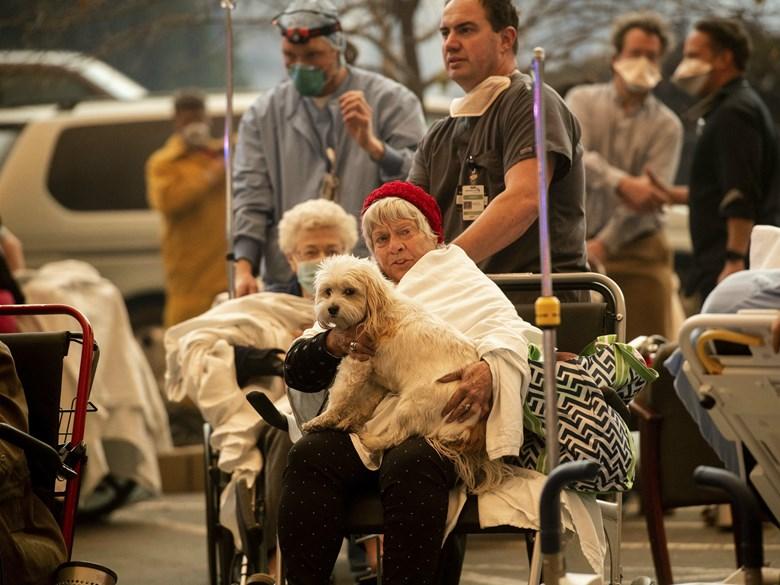
New York nurses who volunteered to go to Houston
and are there now, running coronavirus testing clinics. Among them is Kristine Chan, who lost her grandfather to COVID-19. “July 17th was supposed to be my wedding in Cancun, Mexico,” she said. “But here I am in Texas.”
Grocery store workers are heroes, too, for keeping us all supplied with wine, food, toilet paper, and did I mention wine? And now they have to watch out for whackos like George Falcone of New Jersey. Annoyed when a supermarket employee reminded him to maintain social distance, he (allegedly) moved closer,
coughed on her, and said he had coronavirus
; he then spent 40 minutes harassing and threatening the staff. Yes, he’s facing charges now. But that doesn’t make it any easier for workers to go to their jobs, knowing the next whacko might actually have COVID-19.
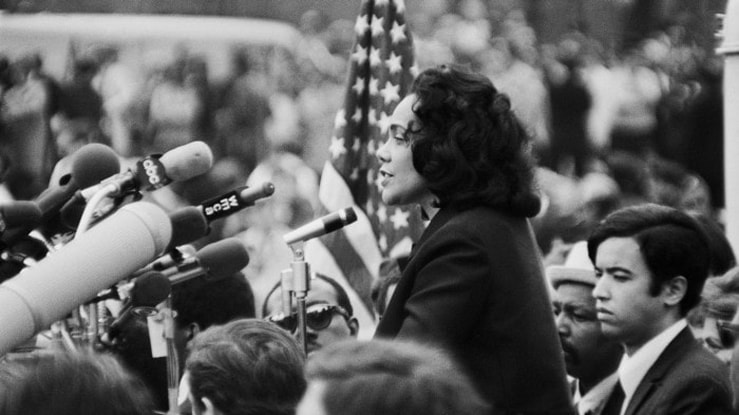
Among our modern-day heroes, I count everyone who is out peacefully protesting against systemic racism and police brutality. My mother raised me to speak out against injustice, and like most people, I haven’t done it as often as I should, but I am doing it now. Mom once worked on a committee with one of her heroes, Coretta Scott King, who said, “It doesn’t matter how strong your opinions are. If you don’t use your power for positive change, you are, indeed, part of the problem.” Or as a popular meme puts it, “If you ever wondered what you would have done during the Holocaust, slavery, or the Civil Rights movement, just look at what you’re doing now.”
Real-life heroes rarely score an easy, comprehensive victory or stand tall in the last scene being cheered by thousands. Most quietly work for the common good, providing others with food, medical care, or the simple comfort of a lighthearted remark that brightens hearts on a dark day.
I have to admit I dozed off halfway through
The War of the Worlds
, but I woke up in time to see my fellow earthlings trembling in terror as the Martians rampaged across Earth zapping everything to dust with their death rays, unstoppable even by atomic bombs. Then at the eleventh hour (you’ll appreciate the irony of this!) the Martians were destroyed by a virus. The alien anatomy had no defense against our infectious germs. The film’s protagonists were heroes not because they defeated the Martians, but because they helped hold humanity together until our luck turned.
Science fiction teaches us how to live in a nightmare world, where forces beyond our control are running amok and there’s no guarantee that we will win the day. Not everybody can lead a team of scientists cracking the code that will make the world safe for humanity. But we can all make everyday choices based on our better nature and common sense — for instance keeping our kids safer by wearing masks and not giving them radioactive atomic toy sets to play with.
“We are, in many ways, a hopeful species,” said sci-fi author
Josh Vogt
. “Hope gives us strength, and fantasy and science fiction … represent endless possibility and the belief that there is always something wild and wonderful yet to be discovered. Even if there’s danger or even death along the way, we have the ability to be brave and persevere in the hope of reaching a better existence.” So hang in there, everybody. Be brave, persevere, and when all else fails, watch cheesy sci-fi movies to learn how others managed to survive in scenarios even more hair-raising than our own.
[Quiz Answers: A. Accused of corruption, Nixon said the only gift he accepted was the dog Checkers. Also A. The court said, “Separate educational facilities are inherently unequal.”]
YOU MIGHT ALSO ENJOY
WHERE WERE ALL THE GOOD GERMANS?
COMFORT FOOD TO GET US THROUGH THE PANDEMIC
AN OPTIMIST’S GUIDE TO WORST CASE SCENARIOS
Don’t miss a single survival tip, comfort food recipe, or loony anecdote. Click on the button below to join my mailing list and find out what happens next.
YES, I Want to Know What Happens Next
Leave a Reply