
I come from a family of light sleepers, and my ability to snooze for eight solid hours — a slippery goal at best — has not improved during the jittery pandemic months. Has anyone’s? Sleep experts talk of “a second pandemic of insomnia” and “coronasomnia.” But I’m resting a bit easier now that I’ve learned this truth:
there is absolutely nothing unhealthy about waking up in the middle of the night
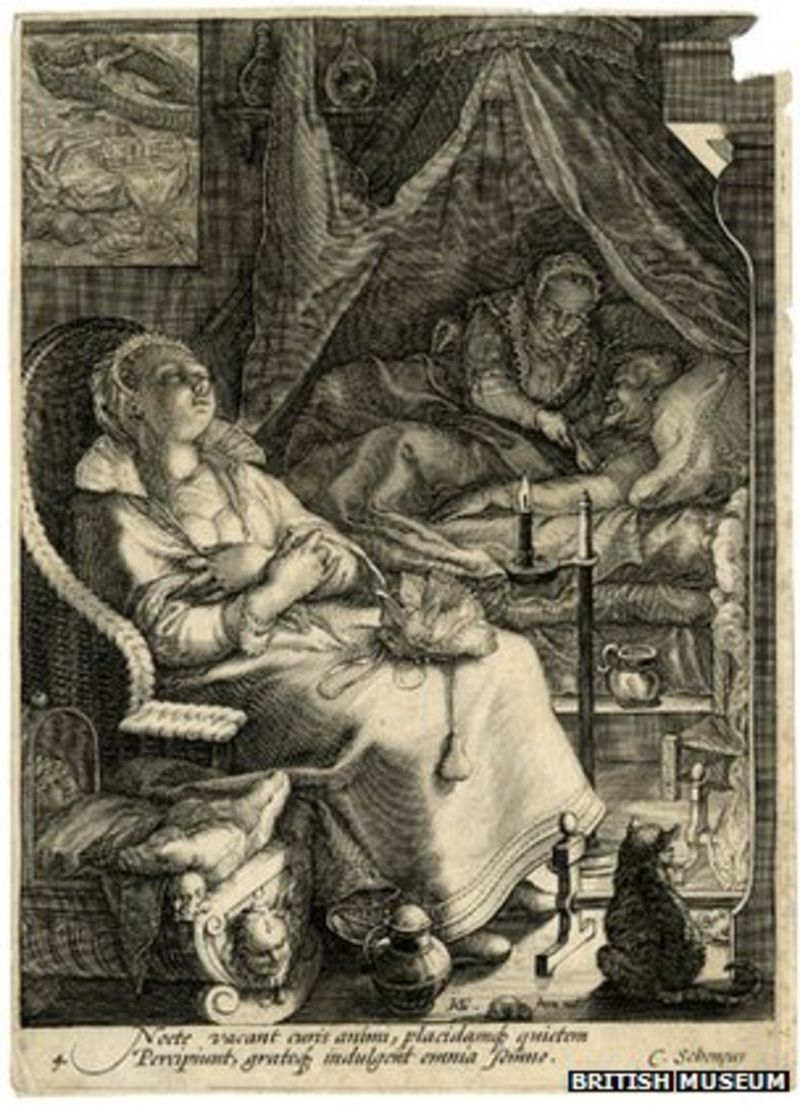
. In fact, for nearly all of human history, our nighttime hours were divided into first sleep and second sleep, with an intermission of one to three hours for various activities (yes, including lots of sex).
“During this waking period people were quite active,” according to the BBC’s
The myth of the eight-hour sleep
. “They often got up, went to the toilet or smoked tobacco and some even visited neighbours. Most people stayed in bed, read, wrote and often prayed. Countless prayer manuals from the late 15th Century offered special prayers for the hours in between sleeps. And these hours weren’t entirely solitary — people often chatted to bed-fellows or had sex. A doctor’s manual from 16th Century France even advised couples that the best time to conceive was not at the end of a long day’s labour but ‘after the first sleep,’ when ‘they have more enjoyment’ and ‘do it better.’”
This natural two-part sleep pattern seems to have worked well for perhaps ten thousand years. Then in the late 16th century, street lighting was introduced, and for the first time ever, it was safe and socially acceptable to venture out after dark. Until then, the night was considered the domain of thieves, prostitutes, and predators. “The assumption that
nothing good could go on at night
,” reported the History Channel, “was so widespread that until the arrival of artificial lighting, citizens often freely emptied their ‘piss-pots’ out of windows after dark.” A practice that would be frowned on today.
When the industrial revolution upped the ante on productivity in the 18th century, those unstructured nocturnal hours suddenly seemed slothful and old-fashioned. Unstinting efforts to achieve solid eight-hour blocks of shut-eye soon made sleep deprivation the norm.
Now our slumber patterns are changing again, thanks to the pandemic. With millions unemployed, millions more going part time, and 42% of employed Americans working from home — often while homeschooling kids — everyone’s timetable is upended. One of the casualties of this chaos is the quality of our sleep.
Nobody knows how many of us lie awake worrying about Covid-19 — my guess would be everyone. And that’s entirely appropriate. We are in serious, planet-wide trouble; of course we’re upset and anxious. “Living with those uncomfortable feelings,” Buddhist mystic
Pema Chödrön said recently
, “is a natural part of the human experience. It doesn’t mean that we are doing something wrong.” We don’t have to add to our distress by criticizing ourselves for the “failure” or “weakness” of being awake in the middle of the night. Having quiet time to process our emotions may be more valuable than catching forty winks. Letting go of stressing about unscheduled periods of wakefulness can be the first step to improving the way we relate to sleep.
What else might help?
Find structure.
I relax more and sleep better when my time is anchored in routine. “Isolation, monotony, and chronic stress are serving to destroy our sense of time,” reports the
SF Chronicle
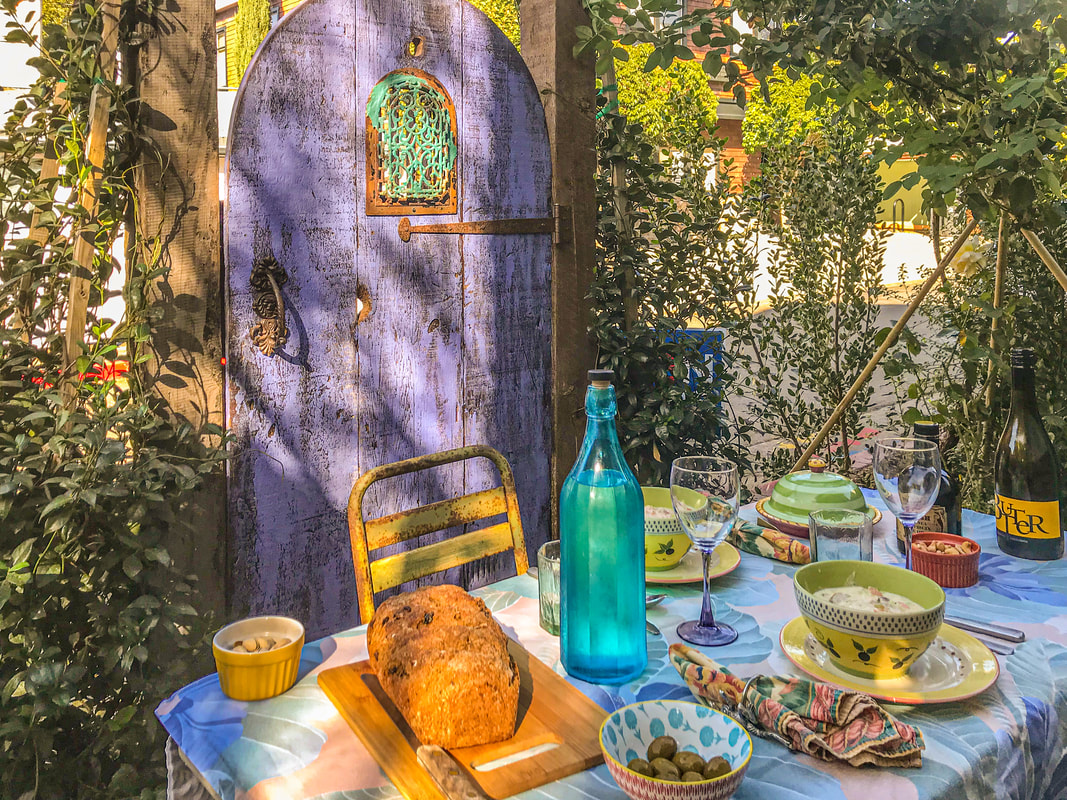
. “Without the usual work mixers, far-flung vacations or casual dinners that typically mark and divide the calendar, the brain has a harder time processing and cataloging memories, psychologists say, and the stress of the year itself can shift how our brains experience time.” It helps me to know that Mondays and Thursdays are my domestic goddess days, when I shop, bake, do laundry, and reorganize particularly catastrophic closets and drawers. Tuesdays and Wednesdays are devoted to this blog, while Fridays and Saturdays are set aside for painting. At the end of every week, Rich and I enjoy a leisurely European-style Sunday lunch, in the garden if possible, usually with a glass (or two) of wine, followed by a siesta.
Take siestas.
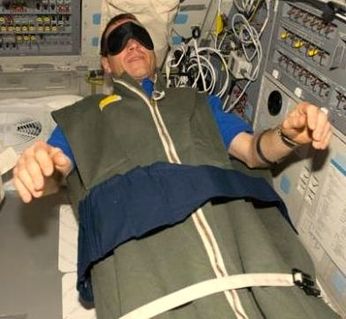
I love the way siestas shape the rhythm of my day; it’s like having 14 mornings a week. And they’re good for us. NASA found a 20-minute snooze improved astronauts’ efficiency 34%. Siestas also offer a
37% reduction in the chance of a fatal heart attack
(for instance, from reading news headlines) and can reverse information overload and burnout. Think you’re too busy to squeeze in a snooze? Churchill napped each afternoon (changing into pajamas every time) while going toe-to-toe with Hitler in WWII. He and I agree: siestas help us navigate challenging days and sleep better at night.
Eat well.
And by “well” I mean
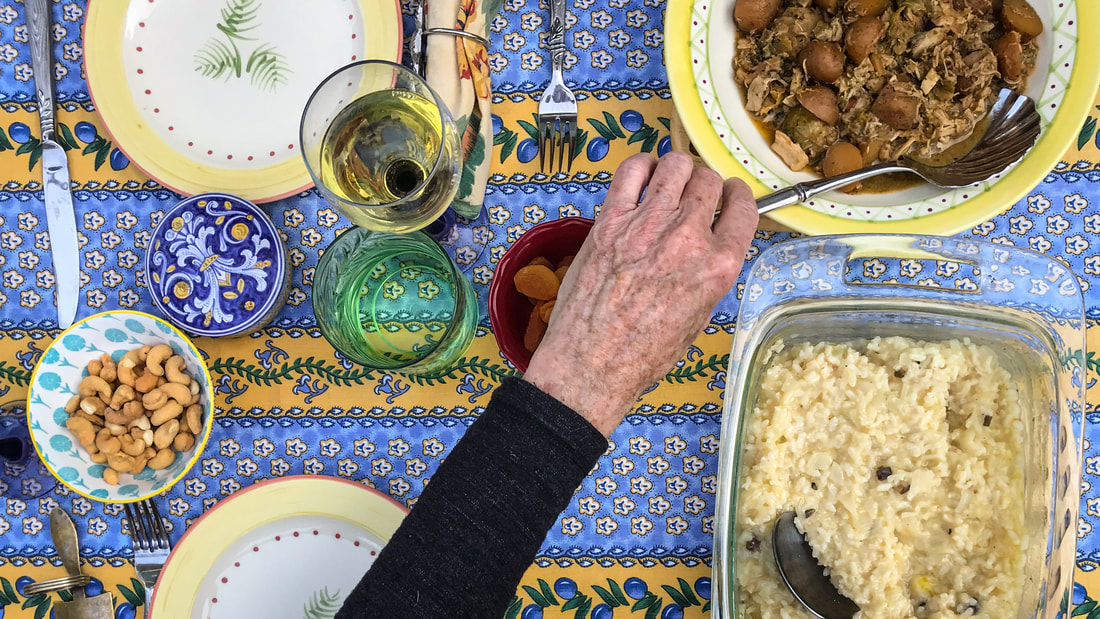
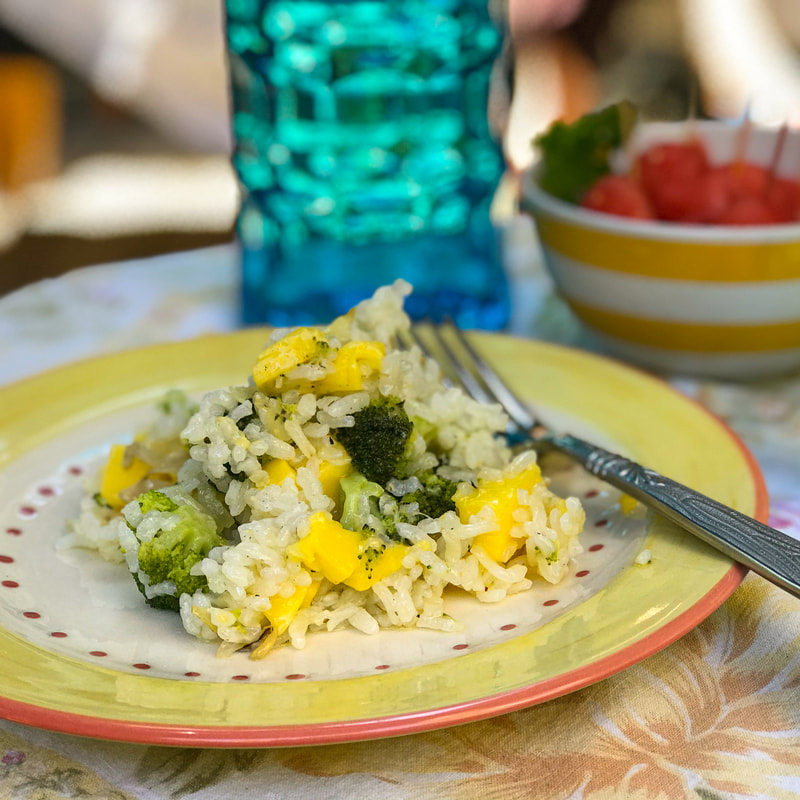
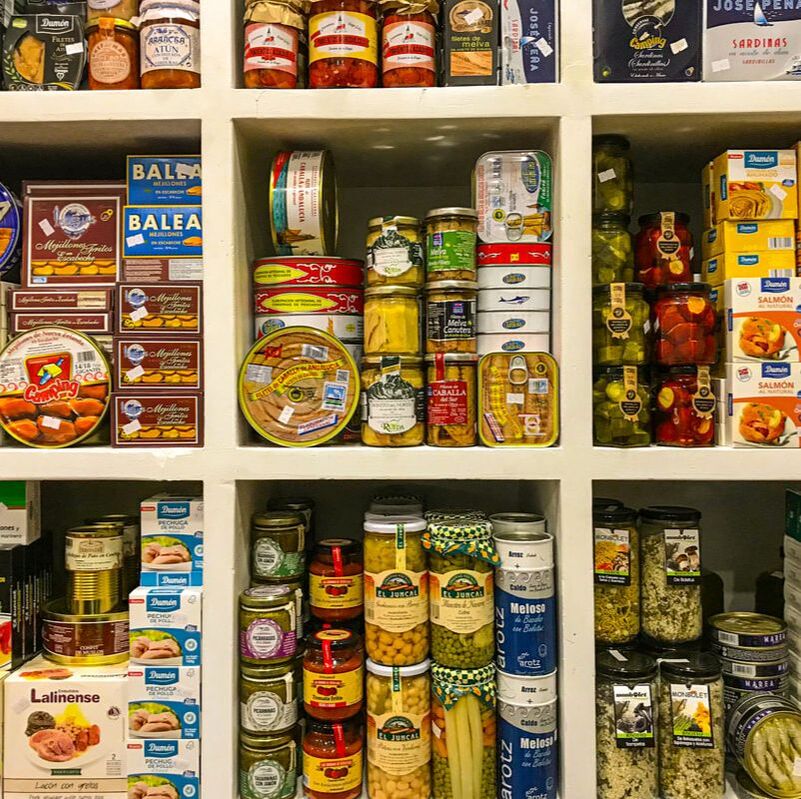
simple, yummy comfort food
that’s reasonably healthy. “Data shows that eating less fiber, more saturated fat, and more sugar throughout the day is
linked with lighter, less restorative sleep
,” notes Ana Krieger, MD, MPH, Medical Director of the Center for Sleep Medicine. Obviously nobody expects us to get through this challenging time without chocolate, but a steady diet of junk food makes the road to dreamland a bit bumpier.
Exercise.
To work off my stress, I take long rambles around the neighborhood and use my trusty little stair-stepper when the outside air gets chilly or becomes unbreathable from wildfire smoke. Free online yoga videos help keep mind and body flexible, and on really agitated days, it’s nice to know I can relax before bed with wind-down routines from
Adriene
,
Tim
, or other YouTube yogis.
Make bedtime conducive to sleep.
Lower the lights, leave your phone and laptop in another room, and don’t discuss anything scary or contentious with your partner. This is not the moment to debate home improvements or mention another friend is hospitalized with Covid-19. Do things you find calming, such as breathing exercises, a warm bath, or light reading. Avoid thrillers like Stephen King’s pandemic horror story
The Stand
if you hope to close your eyes any time in the near future.
If you can’t sleep, get up.
Otherwise you begin to associate your bed with restlessness and anxiety instead of repose. Sometimes I go into another room and listen to one of
YouTube’s free audiobooks
. I choose one with a tranquil voice and familiar plot, so if I doze off I don’t mind a bit.
“Not being able to sleep is terrible,” says cartoonist Lynn Johnston. “You have the misery of having partied all night…without the satisfaction.” The fact is, nobody ever manages a perfect snoozing schedule. As playwright Wilson Mizner put it, “The amount of sleep required by the average person is five minutes more.” Our best chance of satisfying sleep is to stop worrying so much about it — and to be kind to ourselves if we don’t precisely hit some arbitrary slumber benchmark from the 18th century. Our sleep patterns are as imperfect as we are, as challenging as this crazy world we live in, and on a good night, as restorative as a week-long vacation with someone we love. Sweet dreams!
How are you sleeping these days? Any suggestions for fighting insomnia? Do you have comfort food recipes to share? Let me know in the comments below.
This post is part of my ongoing series of articles on surviving the pandemic, holding on to some shreds of our sanity and sense of humor, and remembering to enjoy life’s small comforts.
Sign up HERE to get free stories in your inbox each week.
YOU MIGHT ALSO ENJOY
MOOD FOODS: CAN THEY KEEP US SANE & CHIPPER?
ROCKET SCIENTISTS DISCOVER THE SIESTA
MY SHOPPING LIST FOR APOCALYPSE CHOW
Leave a Reply