

Rich never bursts through the door when I’m taking my sister’s online yoga class, so I knew something was up even before he said, “I thought you should know I’ve just gotten an emergency alert. Town officials are telling us to lock our doors and windows and shelter in place. Something’s going down.”
Instantly my mind flooded with hideous possibilities: terrorist attack, chemical spill, kidnapping, sniper, some vicious new Covid variant soon to be known as the San Anselmo Plague… “OK,” I said, continuing my cat-cow backbends and trying not to hyperventilate. “Let me know if you hear more.”
Half an hour later, all was revealed:
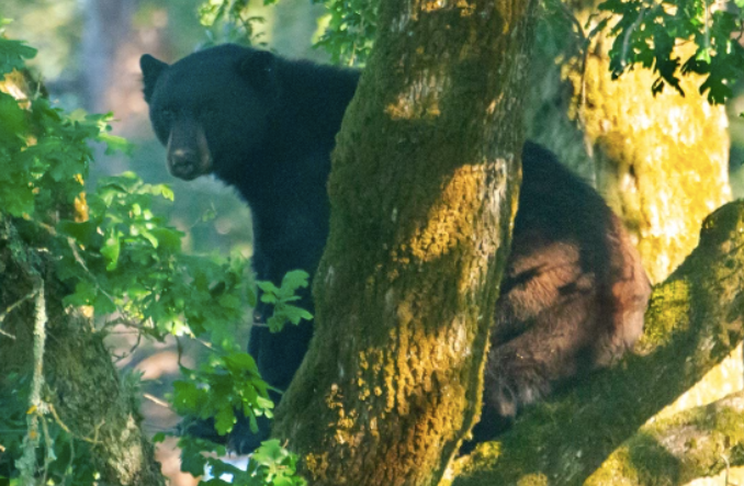
A 250-pound black bear was up a tree in our ne
ighbor’s yard
.
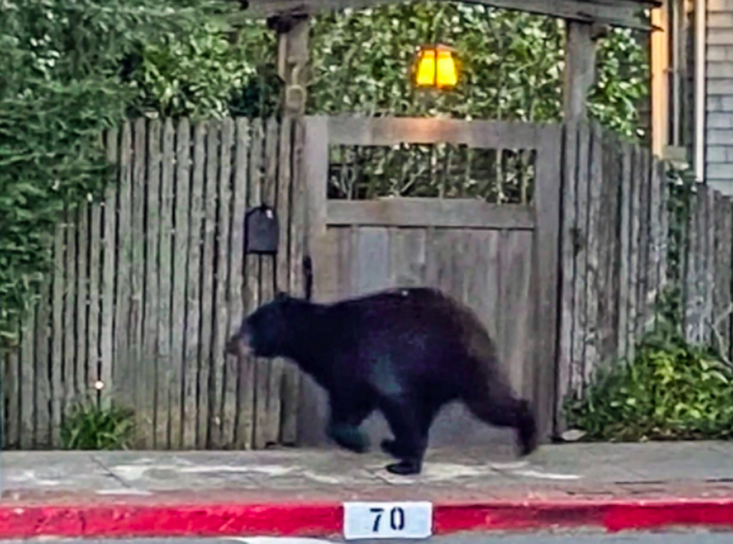
As you can imagine, every game warden, cop, firefighter, and public official within twenty miles rushed to the scene; nobody wanted to miss out on the hottest happening around here since the Great Flood of 2005. The bear soon gave up all hope of a quiet siesta, climbed down the tree, ambled back through the neighborhood, and disappeared into the woods.
Town officials texted residents to say it was safe to emerge from our shelters, then immediately addressed everyone’s most pressing concern: “The bear is fine.”
The next morning officials sent out an advisory about bear-proofing our homes. “It says we should keep our trash bins in the garage and our pets indoors at night,” I told Rich at breakfast. Not having a garage, or any pets, we agreed to ignore this advice. “It also says that if the bear gets into our house, we should not engage with it. What do they think we’re going to do, ask it what it’s watching on Netflix these days? They also suggest leaving immediately. Good to have a professional opinion on that! Hmmm, do you think we should distribute jars of honey around the house, in case we have to distract the bear while we make our escape?”
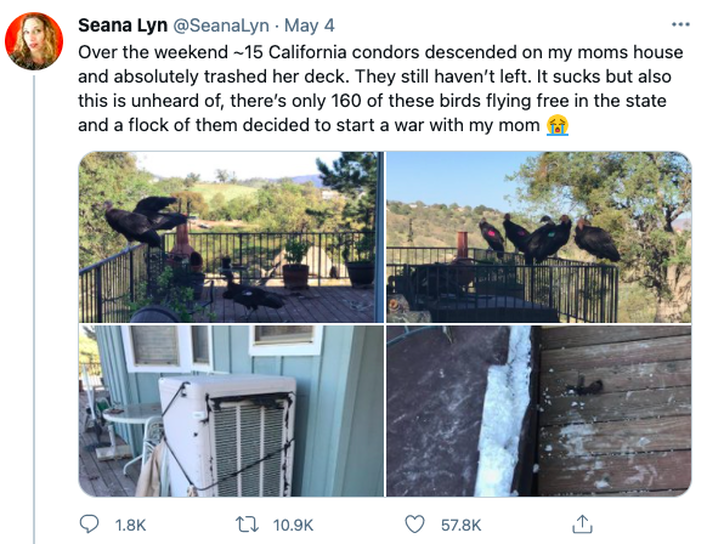
In an ordinary year, I’d scoff at the idea that the bear, now named Archie, would return to our neighborhood, let alone invade our kitchen. But these days it’s hard to predict what wildlife will do. Their habits and habitats are so thoroughly disrupted by climate change, drought, wildfires, and human routines upended by the pandemic that you might wake up any morning to find coyotes, bobcats, wild turkeys, even peacocks foraging in your backyard. Last month in Tehachapi, Carol Mickols returned from a weekend getaway to find more than a dozen
giant condors
, an endangered species with nearly 10-foot wingspans, living on her porch — and willing to fight for their right to remain.
The condors eventually took off, but encounters between humans and wildlife continue to make headlines. On Memorial Day, Bradbury teenager Hailey Morinico saw a bear threatening her dogs and instinctively ran forward to
shove the bear over a wall
. The only reason she survived the encounter is because her actions were so insanely foolhardy the bear was too flabbergasted to respond.
Strange wildlife visitations lend
post-apocalyptic
drama to the landscape, but they’re the least of my householder worries right now. Two weeks ago, after the driest winter in 140 years, county supervisors declared a drought emergency and asked residents to reduce water consumption by 40%.
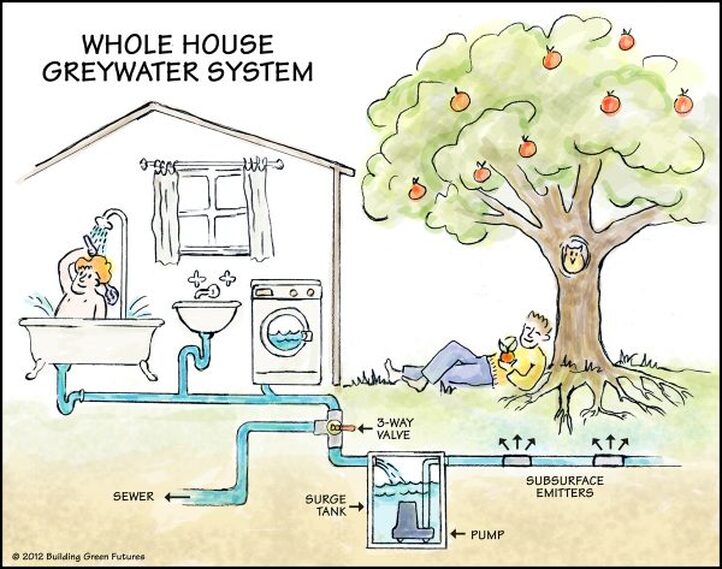
Rich sprang into action researching how to use greywater — the relatively clean runoff from sinks, showers, and washing machines — to protect his beloved garden and our trees, some of which are already dropping leaves at an alarming rate. He spent weeks calculating usage (shower: 17 gallons; washing machine: 19 gallons; dishwasher: 3 gallons) and working out how to collect the runoff using a network of pipes and a large rain barrel. Meanwhile we have a bucket in the shower to capture the water while it heats (2.5 gallons) and another bucket in the sink for non-soapy rinse water.
Our first setback was realizing the plants receiving kitchen water looked increasingly morose. We naturally blamed soap contamination but eventually discovered it was stray cooking oil; apparently greasy water is more detrimental to plants than a little mild detergent. Who knew?
But the big blow? Turns out it’s illegal to collect greywater in barrels due to smells and worrying bacteria. You have to release greywater directly into the soil via a vast network of underground perforated PVC pipes, which would require tearing out our entire garden, our little brick patio, and who knows what else. Ballpark cost: $3000. Loss of Rich’s sanity watching 15 years gardening effort destroyed: incalculable. So we’re sticking with the buckets for now.
Officials are also encouraging us to conserve electricity in hopes of keeping those pesky blackouts to a minimum this summer. “Maybe this is the year we install solar panels on the roof to power the house — and that electric car we keep talking about,” said Rich.
After weeks of research, he reported, “Looks like installing solar will mean replacing the electrical panel. That requires tearing out all the knob-and-tube wiring, so we’d have to pull off sections of the bead-board walls throughout the house, and then replace and repaint. We’d also have to buy new electrical appliances: furnace, stove, oven, and hot-water-on-demand system. Given how little energy we use now, we probably wouldn’t save anything on utility bills. But we would have enough energy to recharge an electric car if we decide to go ahead and get one.”
“How much would all that cost?”
“I’m not sure I can count that high without getting a nosebleed.”
“What happens if we just use the township’s electric vehicle recharging station?” I asked. “It can’t be more than 150 feet from the house. If we ever had to, we could push the car over there.”
“Then we don’t have to do any of this.” So that’s where that stands.
These days I feel like I’m living on the edge, always preparing for the next catastrophe, and the next, and the one after that. I’ve got a constant, low-grade case of the collywobbles — an old-fashioned expression for anxiety, often accompanied by queasiness. Perhaps that’s our natural state. Back in the 1950s they told us America had made the world safe, and I somehow expected the feeling to last. But looking back over human history, it’s clear the only time we haven’t been on the edge of a catastrophe is when we’ve been in the middle of one.
And that goes double for our animal cousins. Most bears are solitary animals, always struggling to find their next meal, hunted since prehistoric times for their meat and fur. When winter hibernation is over, the safest they’re likely to feel is resting in the arms of a sheltering tree. I can imagine Archie’s sentiments when he woke from his siesta to discover he was surrounded by first responders, many with tasers, guns, animal tranquilizers, and itchy trigger fingers. I picture him afterwards, texting that teenager’s bear: “You’re right, humans are nuts! But hey, any one you can walk away from.”
YOU MIGHT ALSO ENJOY
SONGS THAT GOT US THROUGH THE PANDEMIC
ADVICE YOU’D GIVE YOUR YOUNGER SELF
KINDNESS, COMPASSION & ANIMAL HEROES
HOW’S YOUR SUMMER SHAPING UP? STAY IN TOUCH!
CLICK HERE
to get my weekly travel tips, catastrophe updates & comfort food recipes.
Feel free to copy this link and share this article with family, friends, and anyone living in a danger zone.
https://www.enjoylivingabroad.com/my-blog/bear-proofing-our-house-other-reasons-ive-got-the-collywobbles
Leave a Reply