


“Everybody complains about the weather, but nobody
does
anything about it.”
Charles Dudley Warner (often misattributed to his friend, Mark Twain)
Seville made worldwide headlines this week by announcing our city officials will be the
first to name and categorize heat waves
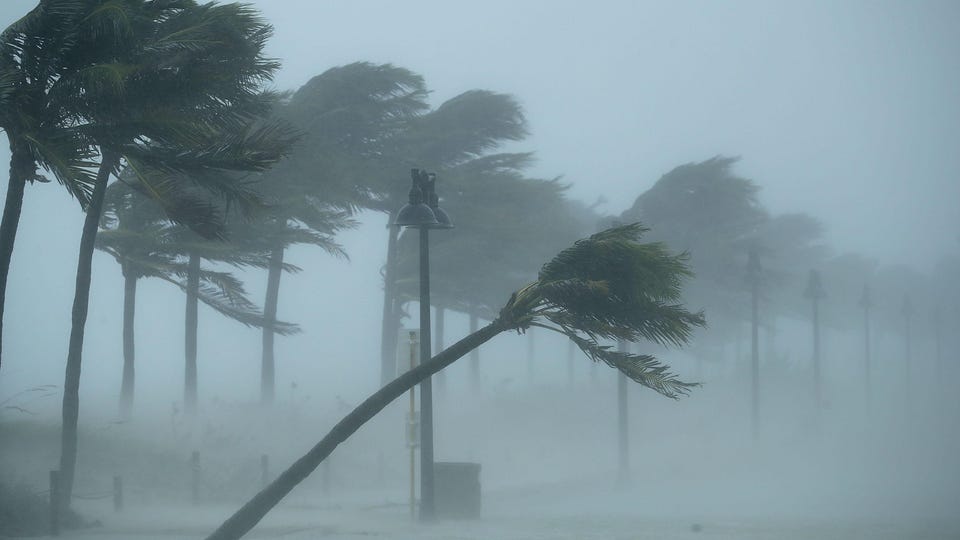
. Of course, I realize those of you who are reading this huddled in heavy sweaters by the fireplace with sleet lashing the window may have difficulty mustering much weather sympathy for southern Spain. But 100,000 people die of heat in Europe every summer, and Seville, the warmest city in continental Europe, has declared they’re hot as hell and they’re not going to take it anymore. Starting in 2022, officials will rank the severity of extreme heat waves and assign them names, like hurricanes and tropical storms.
Naturally we’re all agog to learn what they’ll be called. Naming weather patterns goes back to ancient times when everyone tried to figure out what god to appease or saint to invoke. In the 19th century, a British meteorologist in Australia,
Clement Wragge
, kicked off modern storm naming by
calling particularly nasty cyclones after government officials
he disliked. Will our mayor do the same?
Maybe the mayor will choose women’s names, in the tradition launched by the US Air Force Hurricane Office in Miami back in the 1940s. I suspect those guys were settling a few scores of their own, although they claimed they just wanted to avoid confusion with the military’s masculine Alpha Bravo Charlie phonetic alphabet. By the 1970s, political pressure persuaded everyone to agree to divide the names equally between male and female.
Unfortunately the response is far from equal. “Researchers find that
female-named hurricanes kill about twice as many people
as similar male-named hurricanes because some people underestimate them,” reported
The
NY Times
. “Americans expect male hurricanes to be violent and deadly, but they mistake female hurricanes as dainty or wimpish and don’t take adequate precautions.” Obviously they’re picking the wrong female names. Calling storms after the power-mad women in
Game of Thrones
or the wickeder Disney villainesses could add some much-needed badass to the warnings that monikers like Wendy or Sally just don’t convey.
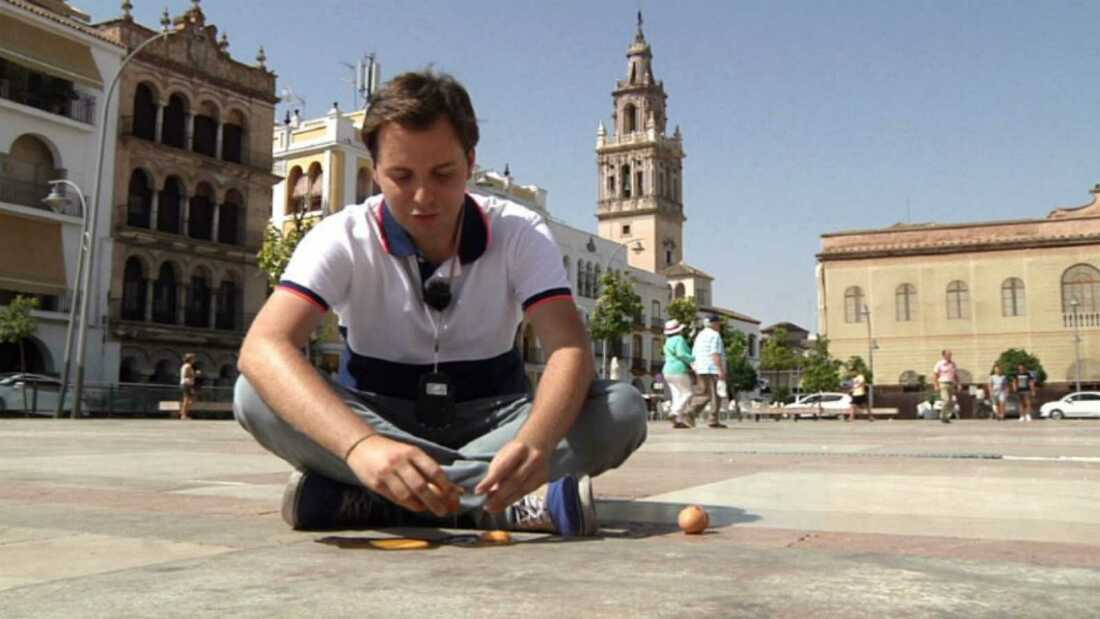
Just how scary might Heat Wave Cruella be? Andalucía (as southern Spain is called) is subject to intense zones of high pressure known as “heat domes.” August’s heat dome caused temperatures in the town of Montoro, 110 miles east of here, to reach 117.3 F (47.38 C) — a national record. Experts say that kind of heat can make you weak and sick, drive you crazy, spark violence, and lead to an early grave, especially if you’re under the age of four or over sixty-five. Yikes!
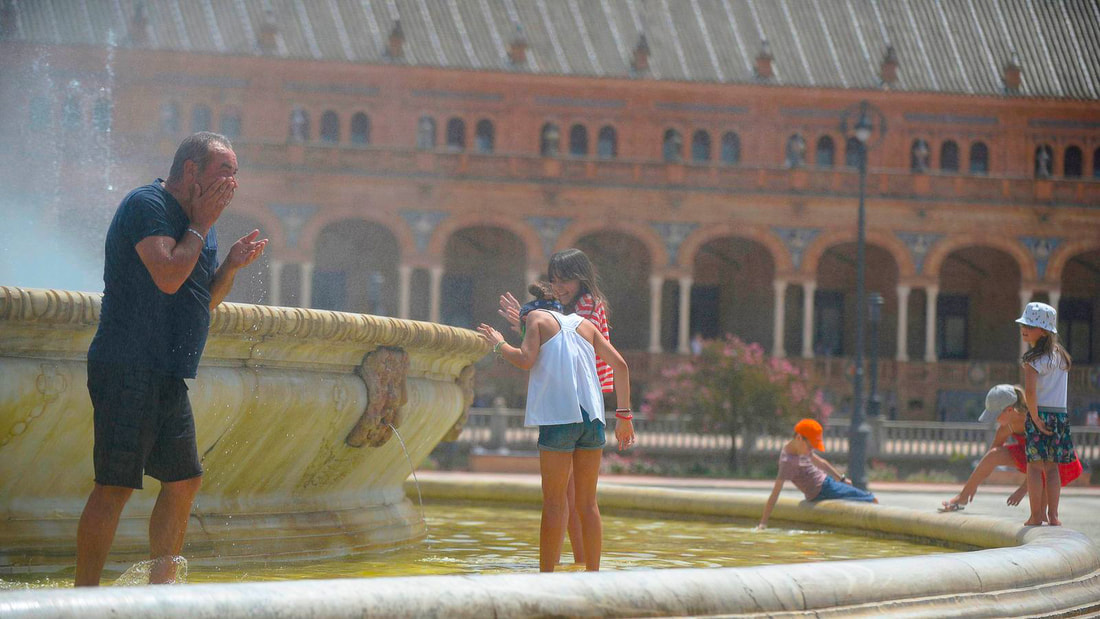
Of course, scorching summers are nothing new in Andalucía. In the olden days, people protected themselves by giving their houses three-foot-thick walls, high ceilings, and tile floors. On seriously sweltering nights, families would bring bedding down to the riverbank for the marginally cooler air; if they still couldn’t sleep, they’d while away wakeful hours chatting with neighbors. Nowadays most people have air conditioning, and everyone has fans, but folks still seek water to cool down.
In summer, people siesta during the afternoon heat and emerge at dark, ready to eat, drink, and make merry. The city comes alive at night with outdoor concerts and movies, bars that stay open until dawn, and playgrounds full of children. Friends from the US protest, aghast, at seeing little kids on swings at midnight, but hey, they need to exercise at hours when they won’t risk heatstroke.
I like early morning strolls, often through María Luisa Park. Friends and I stopped for coffee there one long ago summer, the year café owners began installing water sprayers on the underside of awnings to cool overheated customers with a gentle mist. It was a crisp morning but the staff couldn’t resist showing off their new toy, and suddenly freezing water was raining down on our heads. They seemed stunned by our cries to turn the thing off before hypothermia set in. Two hours later we’d have loved an impromptu shower in the rising heat. At the time, not so much.
Hydration is, of course, essential in hot weather but at times this might prove trickier than you’d imagine. Some tavern keepers have a natural reluctance to give anything away for free, so if you ask for
agua del grifo
(tap water) it may take ages and multiple requests before it materializes. You may be told the city water is undrinkable and they’re legally required to sell you bottled water as a matter of public safety. Utter hogwash! Everyone drinks city water. I consulted an expat physician friend who has researched the subject, and he confirmed there is nothing whatsoever wrong with Seville’s
agua del grifo
.
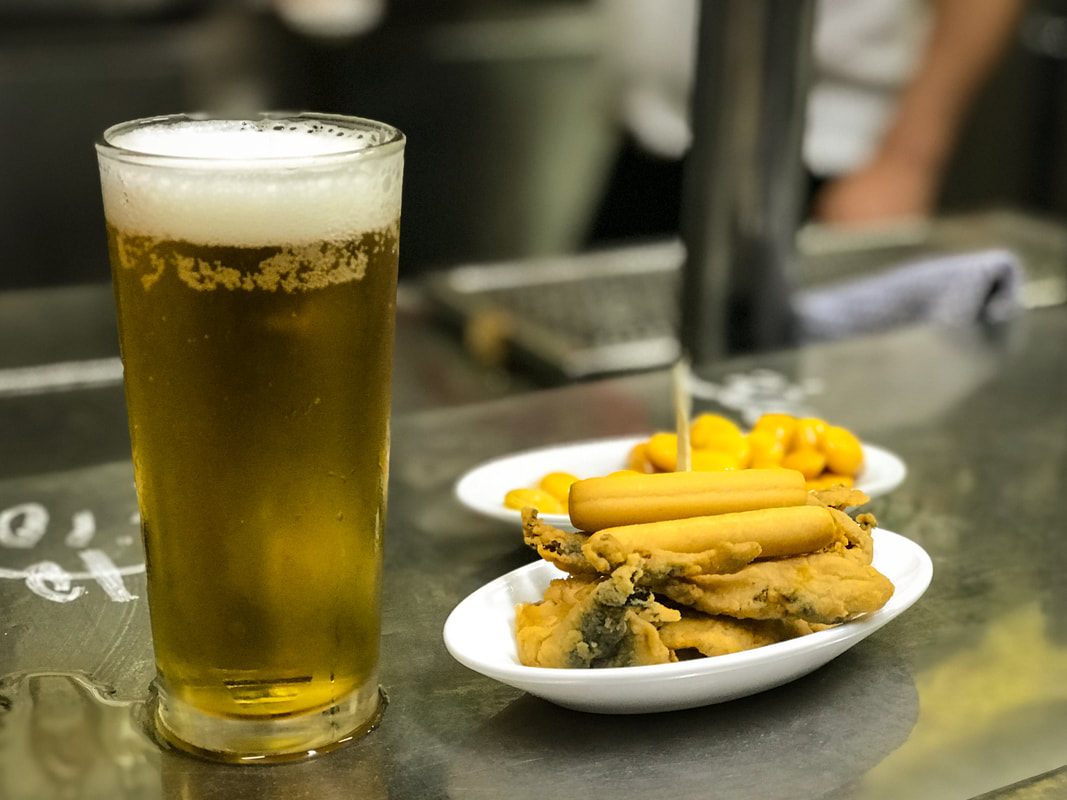
I’ve been known to walk out of restaurants over this issue, because I’m opposed both to single-use plastics and to being conned. But I often find it simpler to order a small beer (
una cerveza
) or more specifically the beer on tap (
una caña
), which is usually about 8 ounces of liquid costing 1.20€ ($1.40). This will arrive instantaneously, icy cold, and (according to a study at Spain’s University of Granada )
more rehydrating than water.
Apparently the undergrads in the study downed a brewski after working out in triple digit temperatures and found it more refreshing than H2O. The surprising part? Medical testing backed them up. Obviously more research is needed; I doubt they’ll have any difficulty getting volunteers. Fun fact: After I order a small beer, servers are usually quite willing to bring me tap water. I can only assume they’ve read the Granada study and want to make sure I have a viable rehydration protocol.
Will Seville city officials soon rate the severity of our heat waves by the number of
cervezas
it will take to stay hydrated? I can imagine future meteorologist around the world saying things like “Yep, this Cersei Lannister heat dome is a real ripsnorter, folks, at least 15
cañas
!”
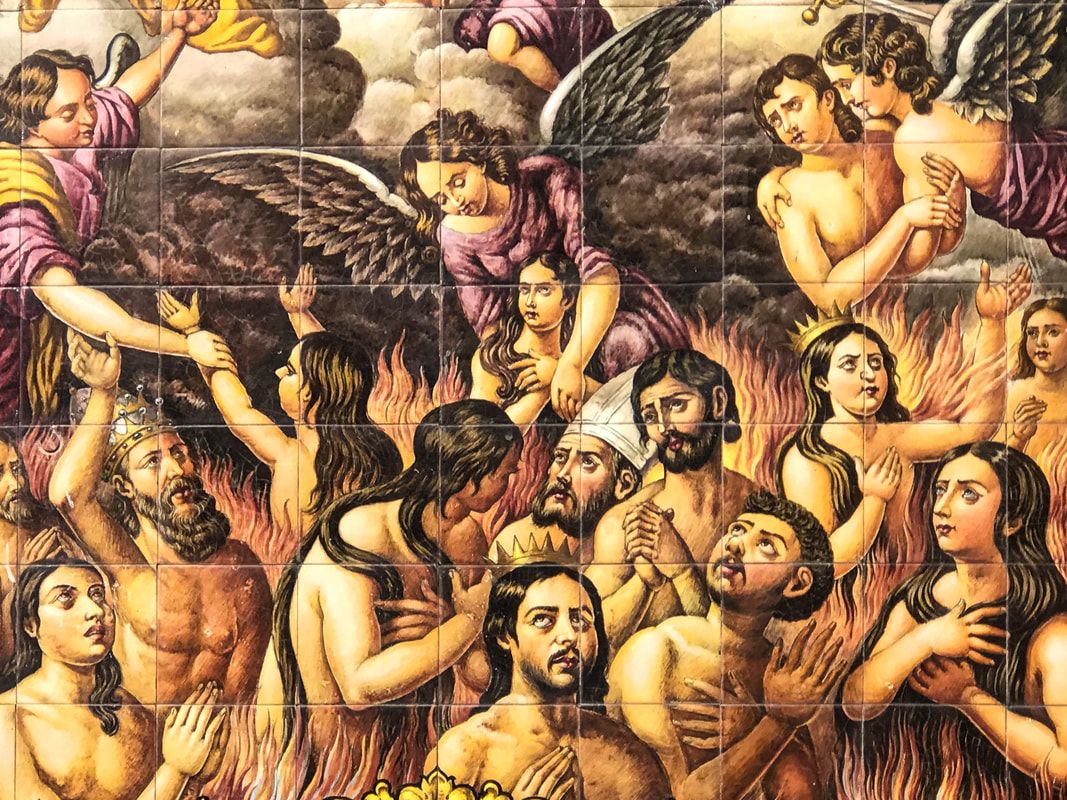
The UN warns temperatures will keep rising, but I can lay to rest any concerns that Seville is literally hot as Hell. The Book of Revelations 21:8 refers to “a fiery lake of burning sulfur,” so scientists researched the burning point of sulfur and announced
Hell’s temperature is 444.6 C (832.3 F)
. I’m pretty sure Seville isn’t hitting that high any time soon. Whew!
In the nineteenth century, Charles Dudley Warner’s joke about nobody doing anything about the weather always raised a chuckle. Today that chuckle has a dark edge to it. We realize that we are collectively doing a lot that affects the weather — unfortunately, mostly making it worse. Seville officials will start naming and ranking heat waves to call attention to the dangers of our ever-hotter habitat in hopes we’ll adapt appropriately. I am confident Sevillanos will find a way. I’ve discovered they’re as resilient and resourceful as the desert dwellers in the movie
Dune
. No doubt they’ll teach me plenty of useful survival tips, and yes, of course, I’ll pass them right along to you.
CLICK HERE TO SIGN UP FOR FREE UPDATES
on Seville, travel to Europe, and where to find good eats and survival comforts.
YOU MIGHT ALSO ENJOY
QUIRKY, ODDBALL PLACES TO VISIT IN SEVILLE
COLD SOUP FOR THE HOT ZONE
WHAT YOU WON’T FIND IN SEVILLE’S WINTER WONDERLAND
Leave a Reply