When I read that a Catholic priest was using a
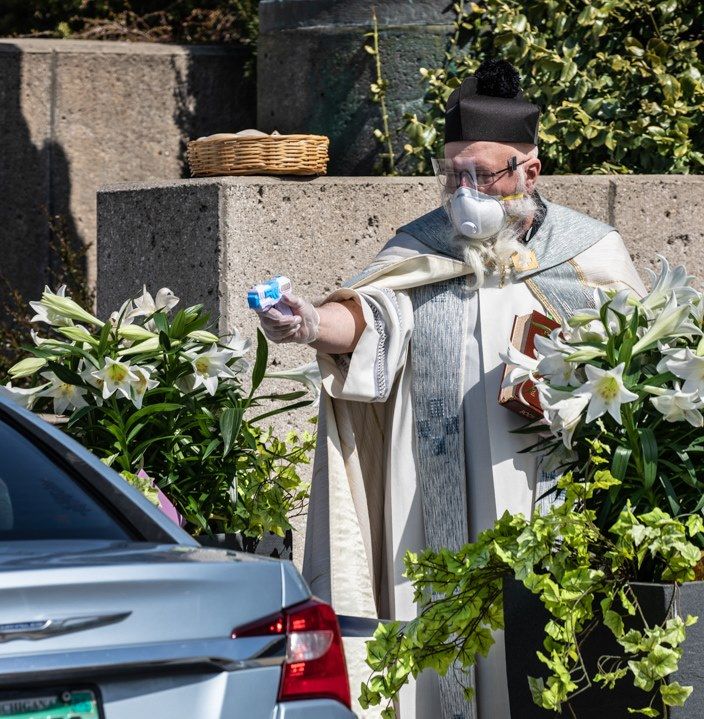
squirt gun full of holy water
to bless his parishioners’ Easter baskets while social distancing, I realized it was time to embrace the wacky side of the new dystopian order. This was in a suburb of Detroit back in April of 2020, and when Father Tim stood outside San Ambrose, armed and sanctifying, I like to imagine his flock found it as heartwarming and chucklesome as I did. Looking for the lighter side of these dark times has helped me hold onto some shreds of sanity. And since Father Tim’s squirt gun hit the news (and the Easter baskets), I’ve discovered countless stories about just how oddball things can get when people have high anxiety, a relaxed hold on common sense, and way too much time on their hands.
For instance, an international group of scientists, who obviously have never seen a horror movie, recently created the
first human-monkey embryo
. Press releases describe the scientific breakthrough in which hybrids, known as chimera formations, are made with human stem cells implanted into monkeys. “Of course,” notes the online magazine
Nerdist
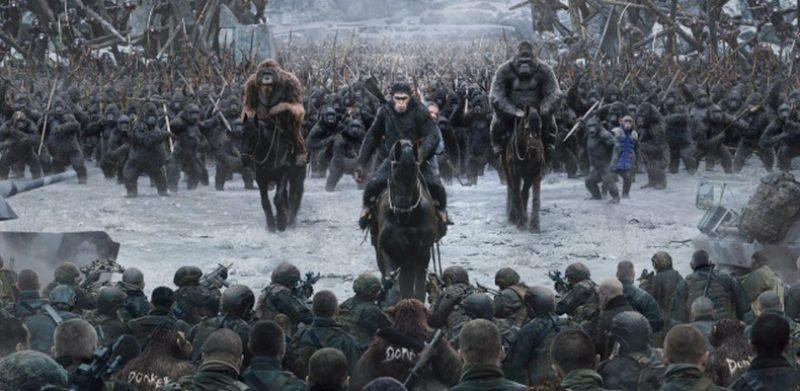
, “that doesn’t answer the most obvious questions we have. Like, ‘Why?’ Followed by, ‘No, seriously, WHY?’ And of course, ‘Is this a plot to destroy mankind with an army of monkey-human hybrids?’”
Until recently, there were strict legal limits to growing human cells in animal embryos, and all experimental chimeras had to be destroyed after two weeks. Then Spanish scientists created
a human-monkey chimera in a secret lab in China
(I am not making this up), and soon after that
Japan relaxed its laws
, allowing such embryos to be brought to term; other countries are following suit. Teams at the University of Tokyo and Stanford University are busy doing experiments they hope will lead to growing animals with organs that can be transplanted into humans. Yes, what could possibly go wrong?
On the plus side, thinking about an army of monkey-human hybrids taking over the planet probably cleared your mind of worries about the pandemic, if only momentarily. Suddenly our present reality doesn’t seem quite so terrifying, does it? Turns out our definition of catastrophe largely depends on what else we have to worry about. It’s easy to stop fretting over an awkward Zoom call if the house catches on fire. “I suppose,” says the narrator in H.G. Wells’ science-run-amok classic
The Island of Doctor Moreau
, “everything in existence takes its colour from the average hue of our surroundings.”
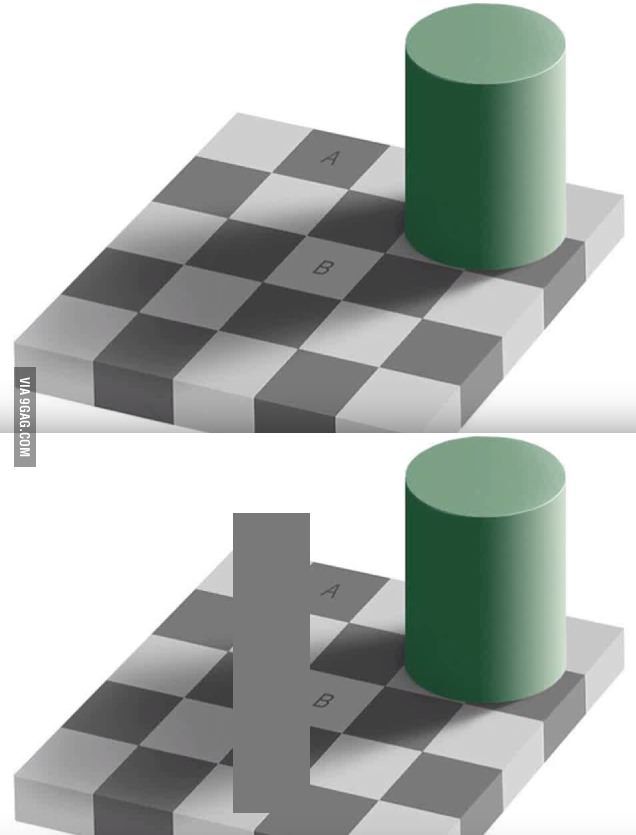
The literal truth of this has been demonstrated by generations of art teachers using the famous Checker Shadow Illusion image shown below. The checkerboard squares marked A and B are exactly the same shade of gray. Yes, they are.
And it’s the same in real life. Our perceptions are only approximations, deeply influenced by the context in which we view them.
For instance — and you may find this happens to you, too — some days the world feels particularly topsy-turvy and I lose my psychological footing, falling into a pit of free-floating anxiety. For no obvious reason (except of course the pandemic, climate change, the economy, the fact I’m not getting any younger, and a few other pesky issues) my usual optimism wobbles, and I become enveloped by nameless, nagging worry.
At such times, I take comfort from the words of one of my spiritual teachers, Buddhist monk Thich Nhat Hanh, who passed away this week at the age of 95. “Fear,” he said, “keeps us focused on the past or worried about the future. If we can acknowledge our fear, we can realize that right now we are okay. Right now, today, we are still alive.” As Americans, we are raised with the idea that anything less than perpetual happiness feels wrong and vaguely unpatriotic, as if we’re not living up to the “pursuit of happiness” clause in the Declaration of Independence. T
hich Nhat Hanh
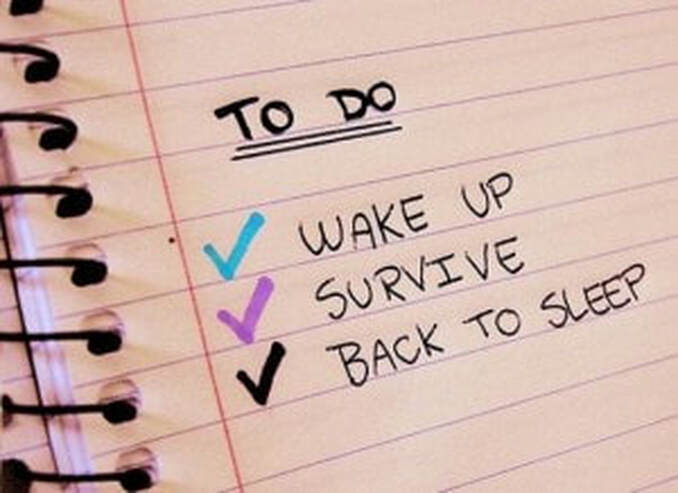
reminds us that it’s enough just to be alive. To wake up every morning, still breathing, with eyes to see the world and ears to hear our loved one’s voices. Sometimes just putting one foot in front of the other is a victory worth celebrating.
Life will always fall somewhere on the spectrum between bliss and misery. Luis Gallardo, president of the World Happiness Foundation, says the overarching cause of our personal and global problems is feeling disconnected — from ourselves, from our communities, and from nature. While we may perceive ourselves as being disconnected, physicists and spiritual leaders insist we’re really not. “Everything is connected,” observes Albert Einstein. “We are here to awaken from our illusion of separateness,” says
Thich Nat Hanh.
Or as humorist Wavy Gravy puts it, “We are all the same person trying to shake hands with our self.”
If we’ve learned anything about the global pandemic, it’s that it affects us all. Yes, even those who deny Covid exists, exhort us to bypass the vaccines in favor of horse de-wormer, and insist it’s all a plot of the reptilian aliens who have infiltrated the Deep State. Each one of us is shaping the course of events in this global emergency. As my friend Maer says, “It’s like traffic. You aren’t stuck in traffic, you
are
the traffic.” For better or worse, we have met the pandemic response team and it is us.
There is room for optimism. WHO Europe Director Hans Kluge said Monday, “
It’s plausible that the region is moving towards a kind of pandemic endgame
.” The fact that many expect 60% of Europeans to be infected by Omicron in the next two months is both good and bad news, an area as gray as the A and B squares in the Checker Shadow Illusion. Yes, we’re still in for a rough time and many (way too many) sad losses. But as the Omicron surge subsides, Kluge says, “We anticipate that there will be a period of quiet before Covid-19 may come back towards the end of the year, but not necessarily the pandemic coming back … I am hopeful we can end the emergency phase in 2022.”
Of course, as anyone who’s ever watched a horror movie knows, making a statement like that is taunting fate to jump roaring out of the closet to prove you wrong. Yes, the numbers are coming down in Spain, some other areas of Europe, and parts the US. But a lifetime of movie-going has taught me not to count my chickens before the final credits roll. Covid is as tricky as a brain-enhanced monkey, and no doubt is planning to spring more surprises on us. I suspect it won’t go quietly. Life as we know it will change, over and over again. So what can we do? Perhaps philosopher Alan Watts says it best: “The only way to make sense out of change is to plunge into it, move with it, and join the dance.”
A Note to My Readers
Over the next few weeks, I’ll be updating my book,
Seville’s New Normal
, to keep up with evolving circumstances. I hope to keep posting on the blog, but bear with me if the schedule varies a bit.
If you have any suggestions for topics that should be addressed in the book, or if you found typos that should be corrected, please let me know in the comments section below.
YOU MIGHT ALSO ENJOY
TIPS FOR DATE NIGHTS AT HOME
TIPS FOR MOVING TO SEVILLE
TIPS FOR VISITING SEVILLE
If you’re not already on my mailing list,
sign up today and get a
free copy of my book
Seville’s New Normal
in Microsoft Word.
YES! SEND ME THE FREE BOOK & WEEKLY UPDATES
Leave a Reply