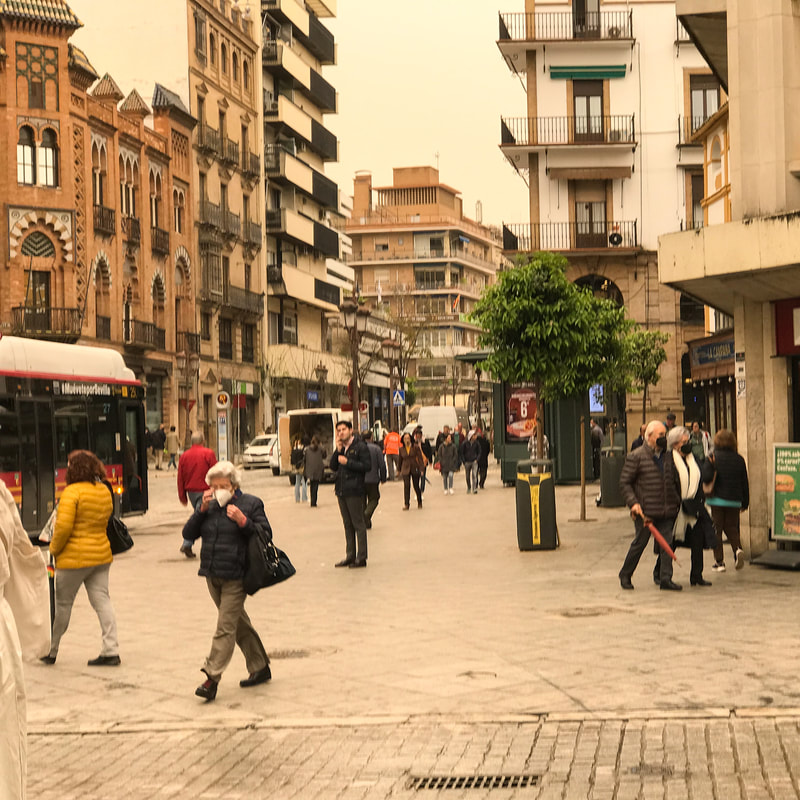


Just before leaving Seville, I awoke to find the sky yellow and the city coated with muddy sand blowing up from the Sahara desert. Spain was in the grip of a sirocco, the gritty wind that can last weeks and is said to make everyone irritable and drive some to madness and mayhem. In olden times, if you murdered someone during a sirocco, you’d plead for a lesser sentence due to extenuating circumstances. So far I hadn’t noticed any homicidal impulses in Rich or myself but made a mental note to be on the alert. Online, the air quality was listed as
HORRIBLE
in bold red caps, followed by hair-raising warnings about dangers to your nose and lungs. I made another mental note to avoid breathing, especially outdoors.
Not to keep you in suspense, Rich and I managed to finish packing, walk to the train station, and arrive in Madrid without killing each other or anyone else. Whew! I didn’t even feel unusually irritated, although the same cannot be said of my respiratory system; I spent the entire flight from Madrid to JFK sneezing, coughing, and blowing my nose. As you can imagine, this was delightful for our fellow passengers and the crew, and I think it’s a tremendous credit to all of them that I wasn’t fitted with a parachute and shoved out over the Atlantic.
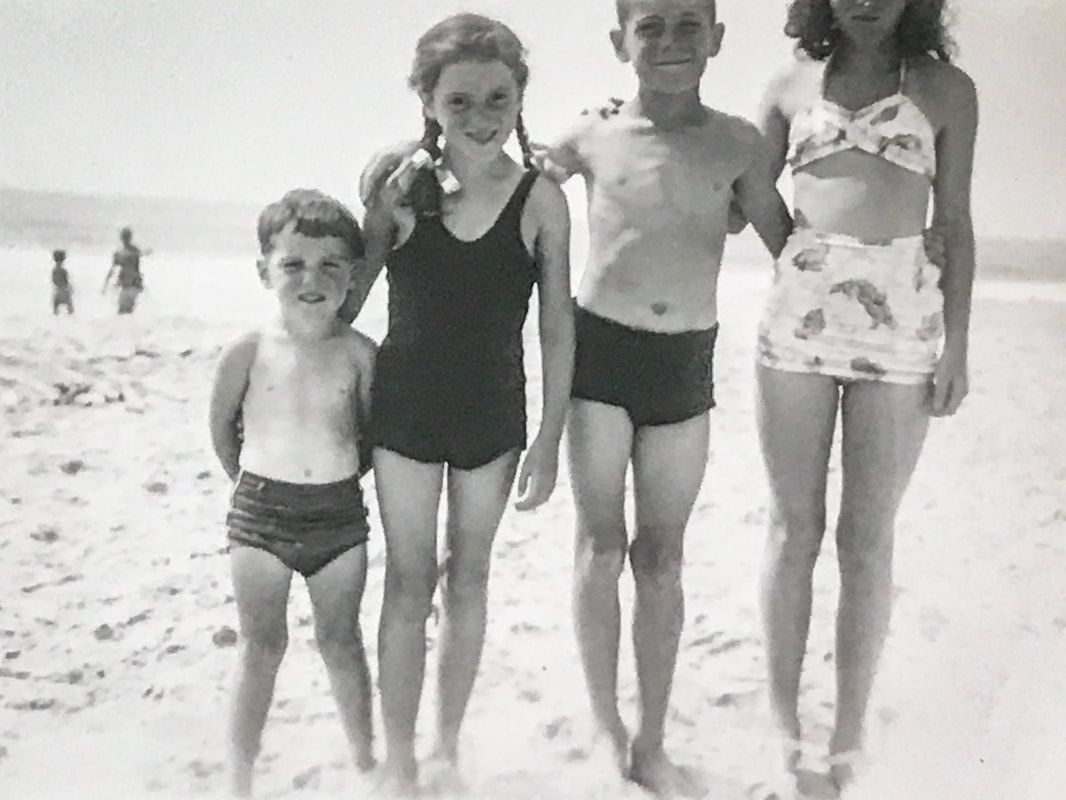
We spent the next few days with Rich’s family in New Jersey and Connecticut, mostly telling old stories. Like the one about Rich’s sister Jane, who somewhere around third grade made an ill-advised foray into forgery. Apparently she’d gotten a poor mark on an assignment, and the teacher told her to take it home and get a parent’s signature to prove they’d seen it. Instead, Jane craftily signed it herself — only she signed it “Mother.” In crayon. Her crime was instantly detected, and after the ensuing uproar, the story became enshrined in family lore.
The nostalgia train rolled on into my first-ever visit to Rich’s hometown: Maywood, New Jersey. To my absolute astonishment, it was exactly as I’d pictured it. Built just after WWII, the modest homes were within easy walking distance of the school, the shops, and the railway station where Rich’s father caught a commuter train into New York City seven miles away. When that train line was discontinued in the 1970s, the awkwardness of the commute kept Maywood isolated and preserved as if in a time warp.
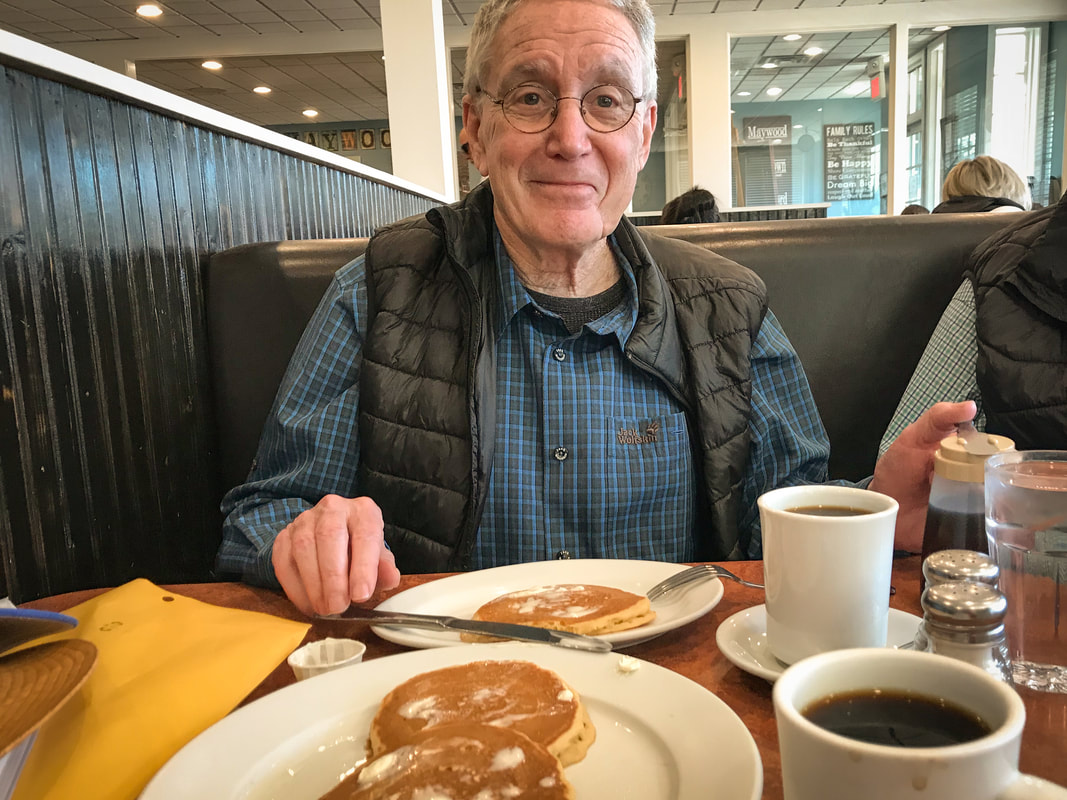
Over breakfast at Maywood’s Pancake House, his brother gave Rich a fat envelope. Inside we found family photos, a lock of Rich’s baby hair, and a letter Rich sent home while serving in Vietnam, the kind you write just in case. That letter took my breath away and made me count my blessings.
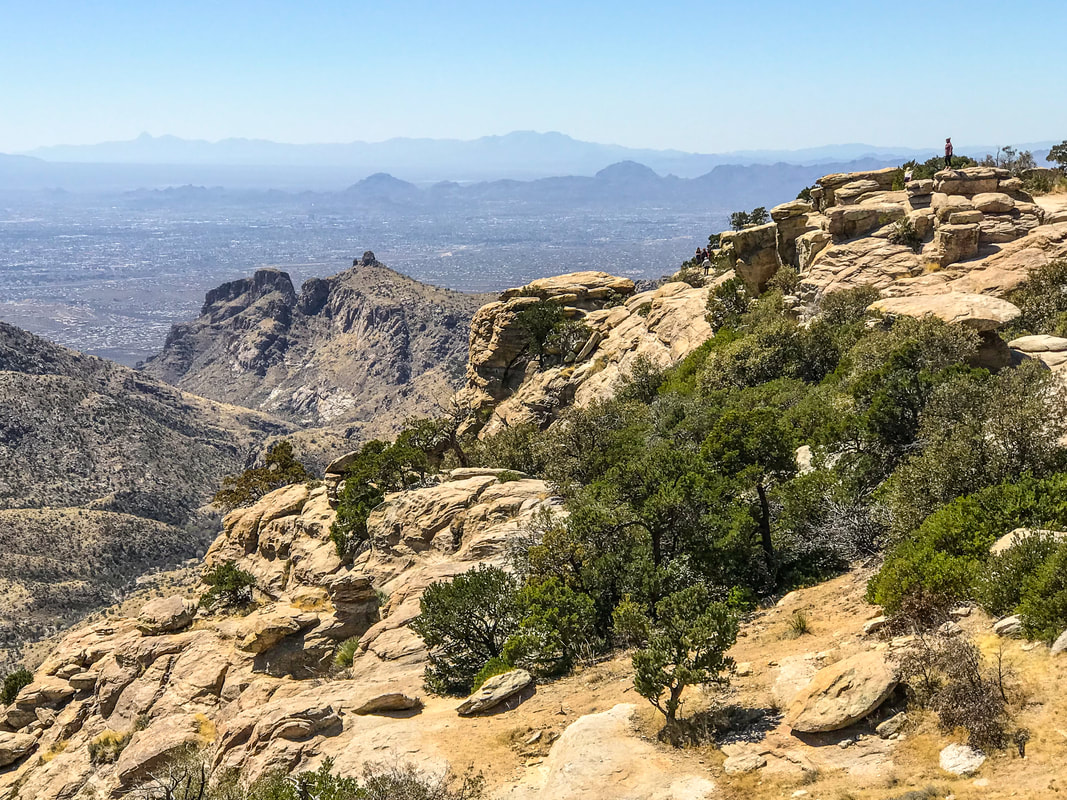
Speaking of near-death experiences, a few days later we were in Tucson, Arizona having a close encounter with a snake. We’d been hiking in the Sonoran desert for over an hour, and despite signs warning us to watch for rattlers, Gila monsters, and other wildlife, so far all we’d seen was a small gecko. Then a six-foot snake slid across the path right in front of us, so close Rich would have stepped on it if I hadn’t grabbed his arm.
“Saved your life,” I told him. “Possibly the snake’s, too.”
“Wasn’t that just a big gartersnake?” he said skeptically.
Later, one of the friends we were visiting asked, “What color was it?”
“Black with a yellow stripe.”
“There’s a saying about the snakes around here: ‘Black and yellow is a dangerous fellow.’ It was probably quite poisonous.”
Yikes! Maybe I really had saved Rich’s life. On the other hand, looking at online photos later, I noticed the one most resembling ours had a caption reading, “Gartersnake. Harmless.” So who knows?
As we got ready to leave Arizona, temperatures were soaring towards the 90s, scorching the landscape. Our friends had rented a condo in a gated community for retirees, hundreds of identical, low, adobe-style bungalows the color of sand: as near invisible as housing can get. My theory is the residents figure this way when their time’s up, the Angel of Death won’t be able to find them.
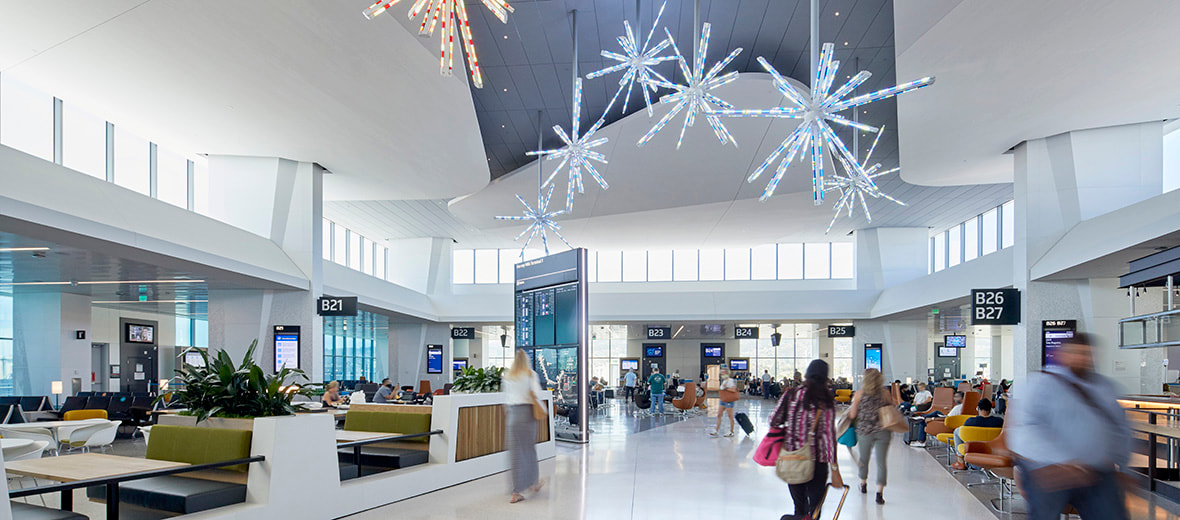
I realize I’m not the first to say this, but arriving in San Francisco was like landing on a different planet. We walked off the plane into the colorful new terminal named for Harvey Milk, the first openly gay elected official in California.
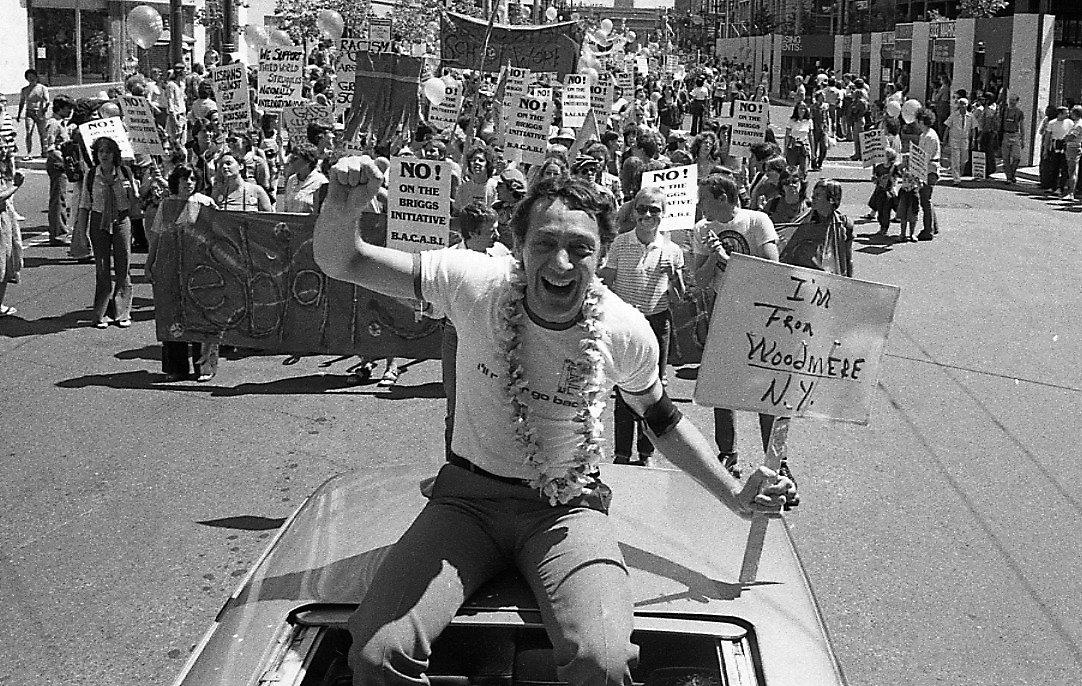
Back when Milk moved from New York to San Francisco in 1972, LGBTQ sex was criminalized in most of the country and under attack from anti-gay-rights activists. “If homosexuals are allowed their civil rights, then so would prostitutes or thieves or anyone else,” said Anita Bryant.
A smart, funny guy with a genius for organization, Milk mobilized his Castro Street neighbors, then Americans everywhere. “If you are not personally free to be yourself in that most important of all human activities… the expression of love… then life itself loses its meaning,” he said. “All men are created equal. No matter how hard they try, they can never erase those words. That is what America is about.”
Ten months after being elected city supervisor, Milk was assassinated by disgruntled ex-supervisor Dan White. As the city mourned, White claimed diminished capacity due to depression involving binging on sugary junk food, famously known as the “
Twinkie defense.
”
Milk remains a national hero. In 2009 he was awarded the Presidential Medal of Freedom, and today his name appears on public buildings, schools, parks, a US Navy ship, and now an airport terminal.
Time
called him one of the “100 most important people of the 20th century.”
Would Milk have achieved as much elsewhere? “The great thing about the Bay Area is that
people don’t accept the status quo here
,” says
SF Chronicle
editor John Diaz.
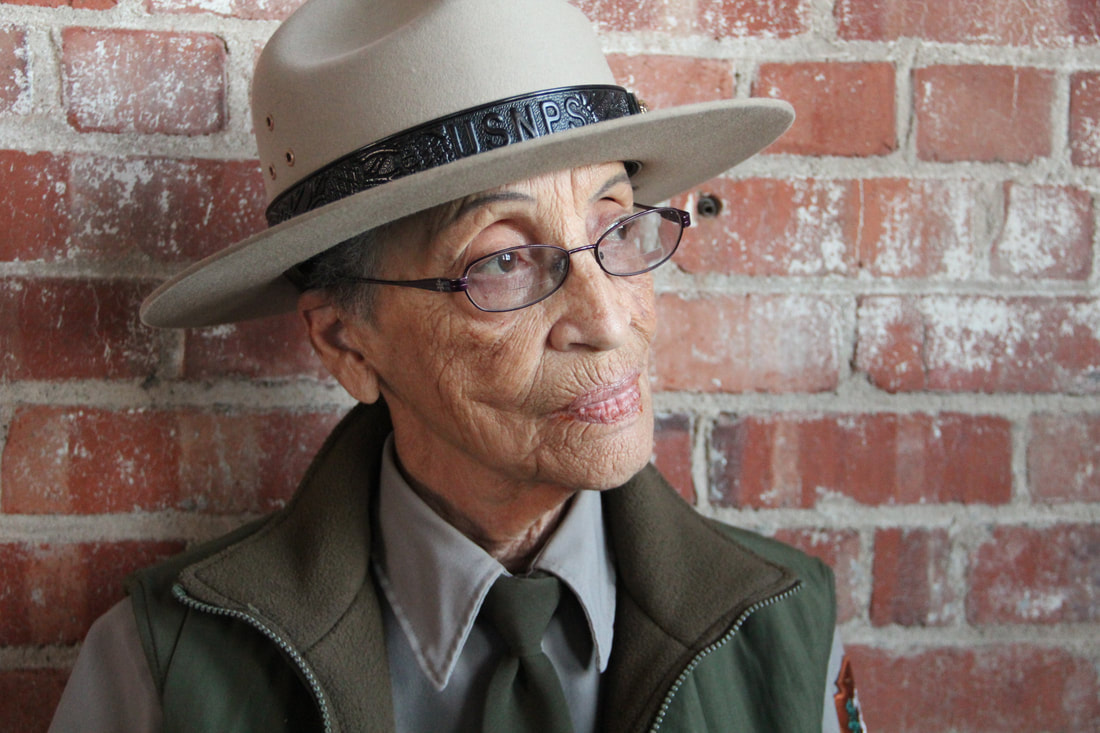
Betty Soskin, now a lively 100, recalls how her boss built WWII Liberty Ships on high-speed assembly lines, hiring people of all colors to work together as never before in this country. “
They accelerated the rate of social change, so that to this day it still radiates out of the Bay Area
into the rest of the nation. It’s where the visionaries come to find constituents for their wildest dreams.” San Franciscans are often said to live in a bubble, but I believe it’s actually an incubator for hatching the next generation of change.
Our anything-goes incubator culture enabled Levi Strauss to create blue jeans, Steve Jobs to develop personal computers, and Harvey Milk to dream of freedoms that are now a reality. And there are countless others. We don’t always get it right (see my previous remarks about the Twinkie defense, which semi-worked) but we keep trying.
It’s fun to be back in my home state, where Rich and I will stay until the end of summer. We’re busy prepping for fire season, restocking our earthquake emergency kits and the Apocalypse Chow food locker, and trying to keep the garden alive during the worst drought in 1200 years. I’m bracing myself for whatever comes to this catastrophe-prone state. So far, California’s never had a sirocco, but with today’s changing climate, who knows? Stay tuned for updates.
YOU MIGHT ALSO ENJOY
WHO IS THE REAL ROSIE THE RIVETER?
THE OSCAR-WINNING MOVIE
MY NEW BOOK’S SECOND EDITION
If you aren’t already subscribed, sign up to receive weekly updates & travel tips.
SIGN UP HERE
Leave a Reply