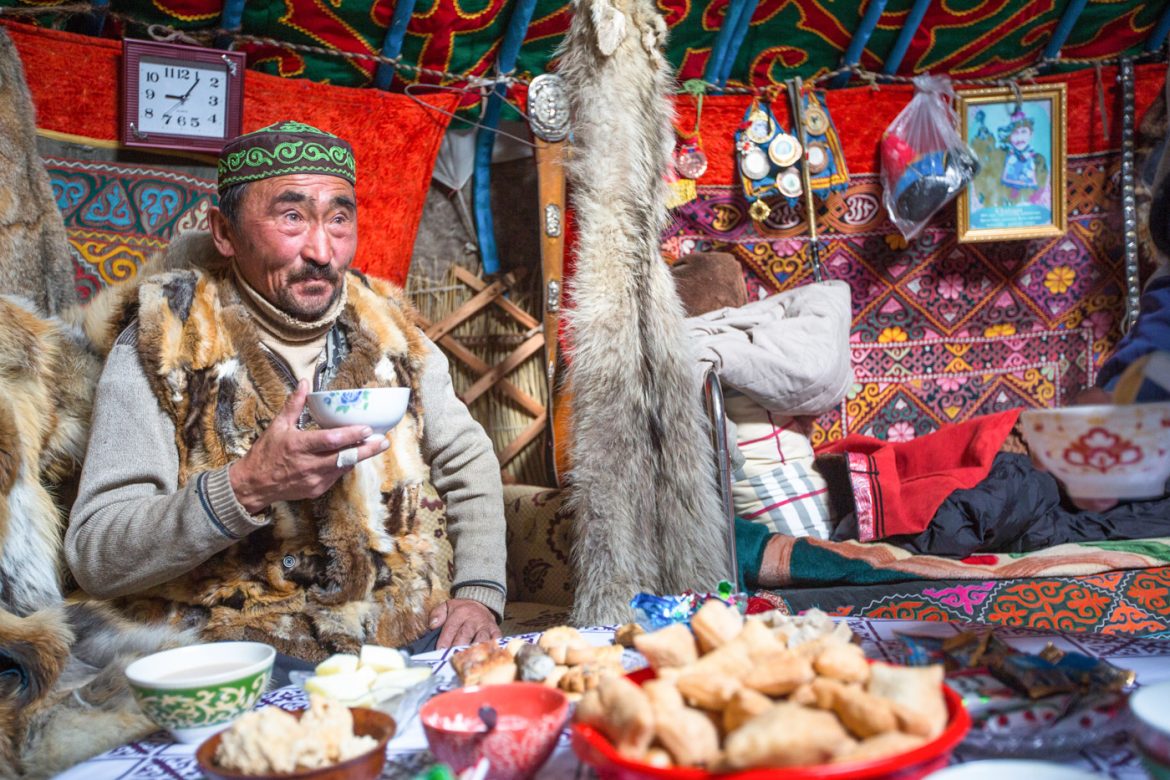
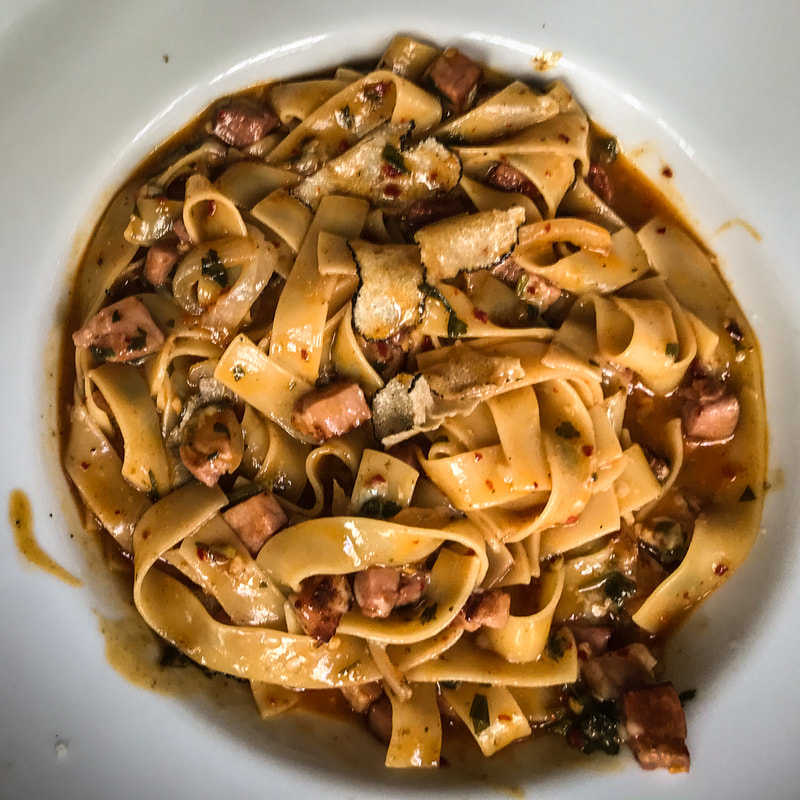
“Congratulations! I think you’ve managed to find the blandest food on the planet,” I remarked to Rich as we hurtled down the highway. “It says here they mostly eat plain boiled mutton, with no seasoning. If they’re feeling frisky they might cook up the bones, fat, organs, and head of the sheep in horse’s milk with root vegetables and salt. Apparently they put salt in everything, including the tea.”
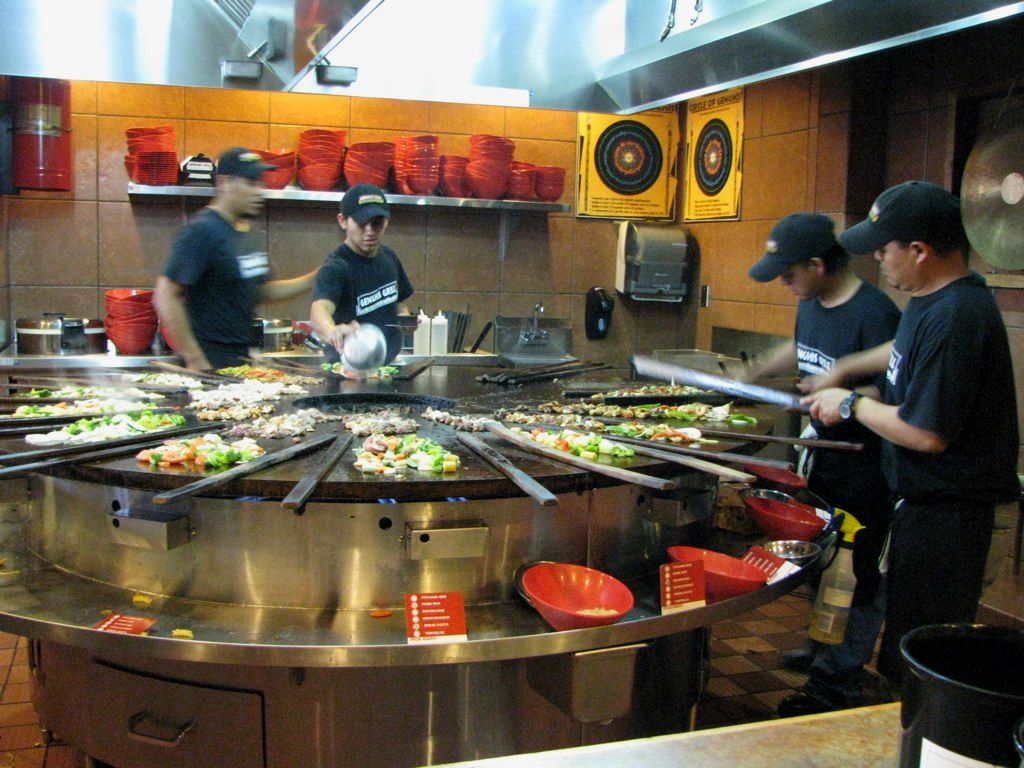
We were heading to a hole-in-the-wall said to serve genuine Mongolian food. “Big deal,” you may be thinking. “I’ve eaten at one of those Mongolian Barbecue Pits — they’re all over America!”
It turns out those slightly kitschy stir-fry palaces have nothing to do with Mongolia — or barbecue, for that matter. The so-called Mongolian BBQ trend started in 1951, when comedian Wu Zhaonan fled from Beijing to Taiwan during the Chinese Civil War. To survive, he opened a food stall and called it Mongolian because he knew his preferred name, Beijing Barbecue, was too politically sensitive; his home town had just been declared the capital of Communist China, Taiwan’s enemy. His food stall was a huge hit until it was wiped out in a typhoon, at which point he gave up cooking to pursue a successful career as a stand-up comedian. Others picked up on the popularity of “Mongolian barbecue” and ran with it.
So it turns out very few people outside of Mongolia itself have actually tasted the real deal. Rich heard about an authentic place in nearby Richmond, and as we drove there, I was skimming
Lonely Planet
’s guide. My first impression? Mongolian food wasn’t going to take the culinary world by storm.
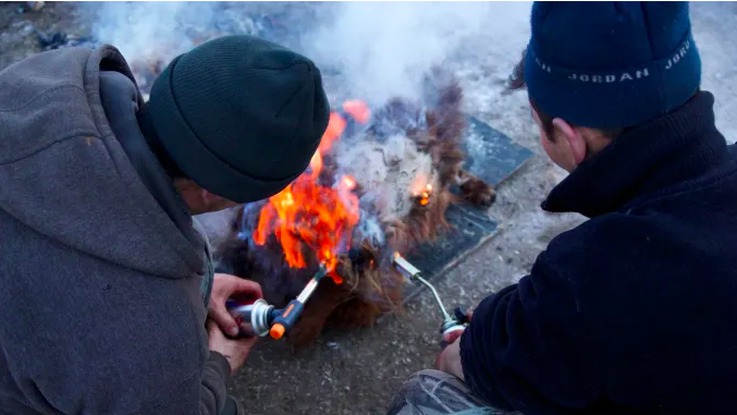
“If you get a chance,” advised the guide, “don’t miss the opportunity to try
boodog
, blowtorched marmot (prairie dog), a delicacy of the steppes.”
“Tell me I’m not going to eat blowtorched prairie dog,” I said to Rich.
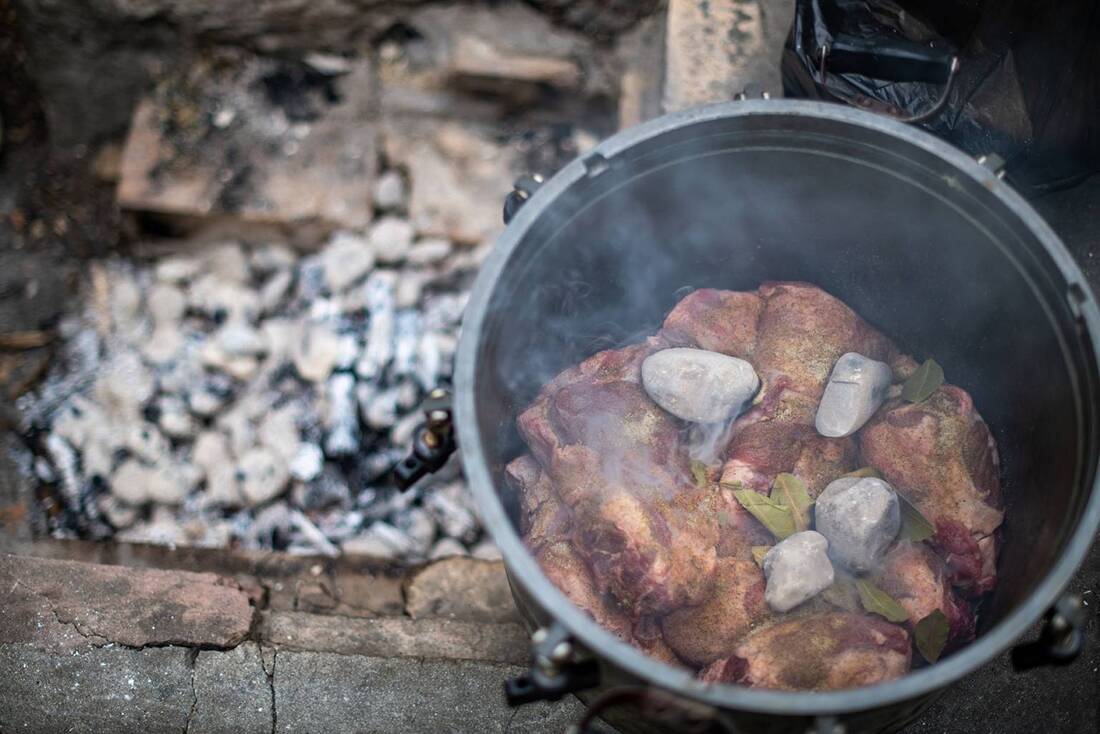
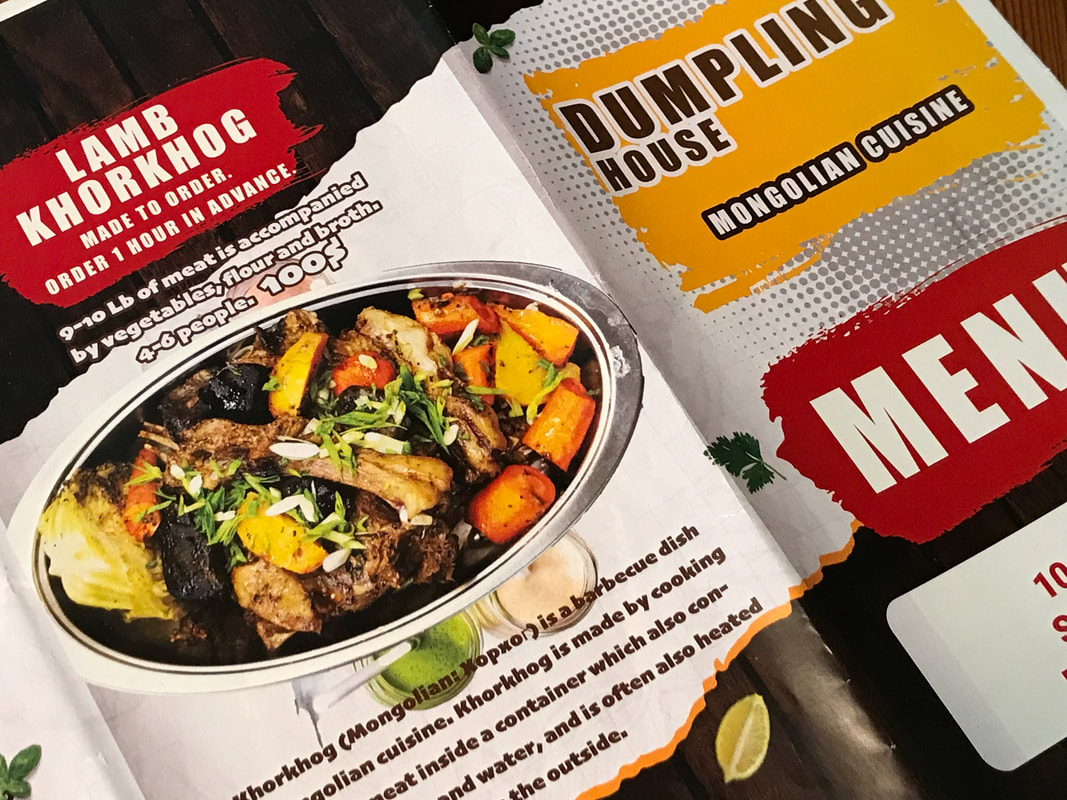
“No, no. This place’s big specialty is
khorkhog
.” It’s pronounced “whore-hog,” which I felt was unlikely to enhance its popularity. “You start,” he continued, “by killing a sheep.”
“Tell me I’m not going to be killing a sheep.”
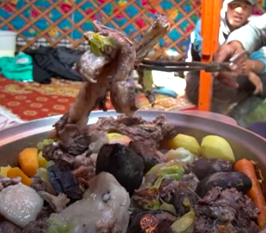
“You put chunks of sheep meat into a pot with horse milk and root vegetables, and cook it a long time. It has to be ordered in advance, so we won’t be having it today.” I managed to contain my disappointment at this news.
“The place we’re going is called Dumpling House,” Rich said.
“I’m always up for dumplings. Will there be vodka?”
“Why?”
“
Lonely Planet
says it’s traditional to interrupt meals for rounds of vodka. Apparently before taking a swig, I’m supposed to dip my left ring finger into the vodka, flick it in the air four times to honor the sky gods in the four cardinal directions, and then wipe my finger across my forehead.”
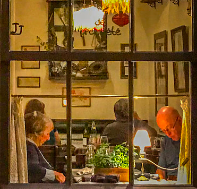
Mongolian eating obvious had its exotic side, and by now I was imagining Dumpling House as a smoky yurt with a colorful door, surrounded by vast open plains and herds of sturdy horses and nervous sheep. This is what I found.
On the positive side, a restaurant in a strip mall was unlikely to require customers to do their own butchering or blowtorching. I climbed out of the car and went inside, only to find the place completely empty.
Eventually a woman appeared, and for a short time confusion reigned. Once I’d gotten the hang of her accent, and she’d gotten over her shock at seeing non-Mongolians on the premises, we got down to business.
I asked about various dumplings, all of which seemed to be deep fat fried. This was unwelcome news, as I was trying to eat a little healthier than usual; my annual physical was looming on the horizon, and I was hoping to avoid awkward conversations about my cholesterol. Finally she said, “
Momo
?” And pointed to a picture of doughy steamed blobs; the description included the world “vegetable.”
“Momo
,” I agreed. “And two beers.” Making a heroic effort not to imply in any way that I was a complete blockhead, she pointed to the drinks list, from which alcohol was conspicuously absent. “OK,” I said, “Ice tea.”
She disappeared back into the kitchen.
“How am I going to honor the sky gods?” I asked Rich. “Somehow finger flicking with iced tea doesn’t feel right.”
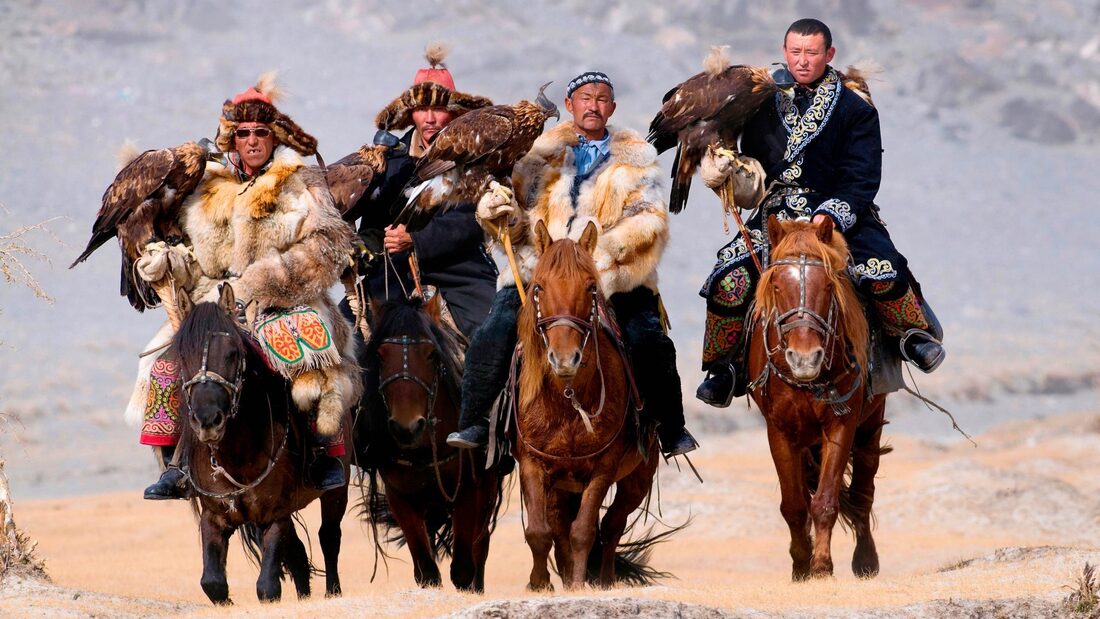
Over the next half hour, the restaurant slowly filled with people, all of whom wore ordinary American clothes but had the kind of rugged faces that suggested they could easily have ridden in across the steppes on horseback with their hunting eagles.
When a middle-aged couple escorted a fragile-looking old man to the corner table, the head cook came out to greet them. She was magnificent, a stocky woman who walked with the ponderous grace of a sumo wrestler and surveyed her queendom with a stern eye. I could easily imagine her gutting a sheep with one hand while blowtorching a meat-stuffed animal skin with the other.
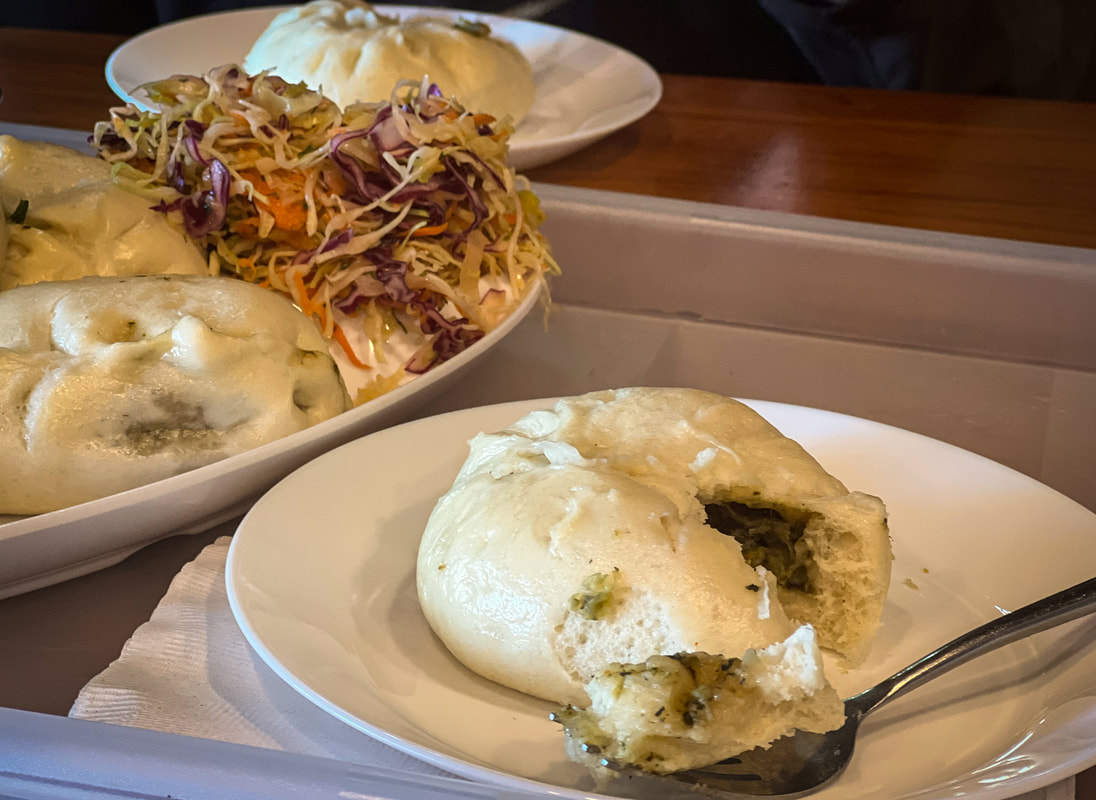
At last the iced tea arrived. I took a sip; it was loaded with sugar and lightly laced with salt. I was still reeling from that flavor sensation when the food showed up. Six giant white blobs squatted on the platter, accompanied by a sort of tangy coleslaw and a little pot of hot sauce. I picked up my fork and carved out a bite of the
momo
‘s dense boiled dough, which somehow managed to be both fluffy and chewy. Eventually I found the filling, a walnut-sized glob of stewed onion, cabbage, and potato.
“Whatever you do,” Rich gasped in the strangled tone of one who has just regained the power of speech, “do not try the hot sauce.”
I would love to be able to tell you that real Mongolian cuisine is marvelous, and it is — for those raised on it. This was hearty fare, skillfully prepared. What it lacked in gourmet seasoning it more than made up for in protein and carbs — a practical diet for the harsh life of the steppes. You need something stronger than
arugula and veggie burgers
when you drive herds across the Gobi Desert on days when it’s twenty below zero. Everyone around me was tucking in to their dinner with enormous enthusiasm.
“We should come back,” Rich said. I stared at him in astonishment. He added, “This is a meat culture. What were we thinking, ordering vegetables? We should try the
khorkhog
.”
“But the menu says it contains nine to ten pounds of meat,” I protested. “I can barely get through one
momo
. Why don’t you bring your Navy buddies here?”
Rich was delighted with the idea and is planning to pitch it to the guys; this manly meal seems right up their alley. As for me, I confess I’ll be happy skipping this particular culinary adventure. Rich has agreed to take photos and provide a full report; I’ll share the highlights in a future blog post. Meanwhile, if you find authentic Mongolian cuisine in your neck of the woods, try it and tell me how you like it — and whether you think it will become America’s next comfort food craze.
Сайхан хооллоорой
(Click to hear this Mongolian version of
bon appétit.)
Well, that was fun! Want more?
Sign up to receive updates when I publish new stuff.
LEARN MORE ABOUT FREE UPDATES HERE
YOU MIGHT ALSO ENJOY
MAKING KHORKHOG IN MONGOLIA (A HOW-TO VIDEO)
THE BEST FOOD IN THE WORLD
WHY YOU WON’T FIND MUCH FRENCH FOOD IN PARIS
Leave a Reply