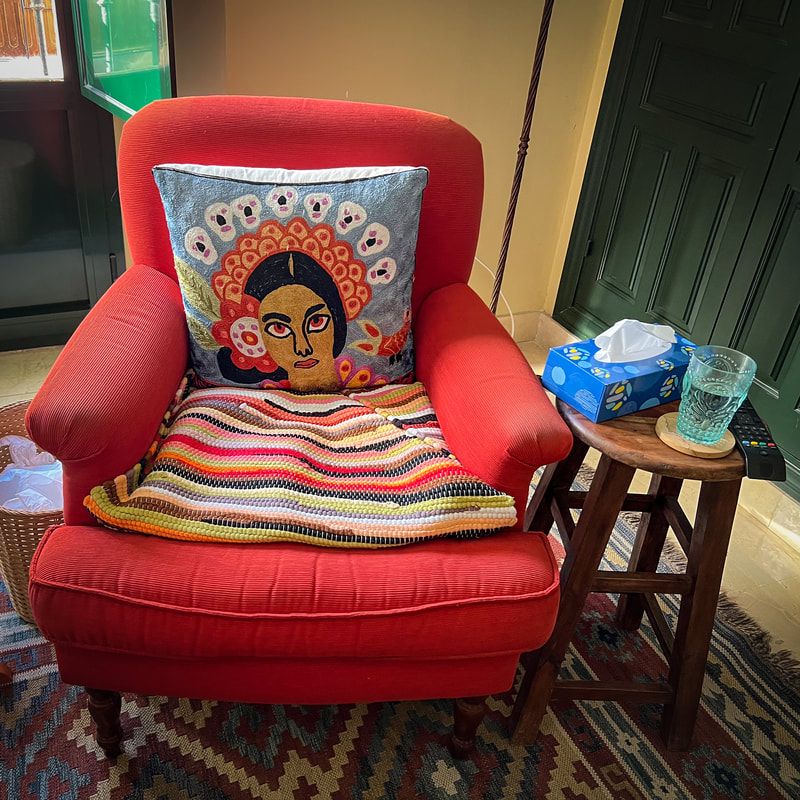


So it’s been a quiet couple of weeks for me, hunkered down in my favorite armchair coming to grips with the fact I’ve contracted this ghastly long-term respiratory illness that’s going around. (Note to self: make a contribution to a reforestation program to compensate for all the Kleenex.)
Luckily the laryngitis phase has worn off, so I’m talking and Zooming again. Rich has been waiting on me hand and foot, propping up my strength with hearty platters of swordfish with capers, chicken in lemon sauce, and salmon pesto. (I could get used to this!) And he’s been meeting amigos in cafés so he can bring me all the latest news and gossip.
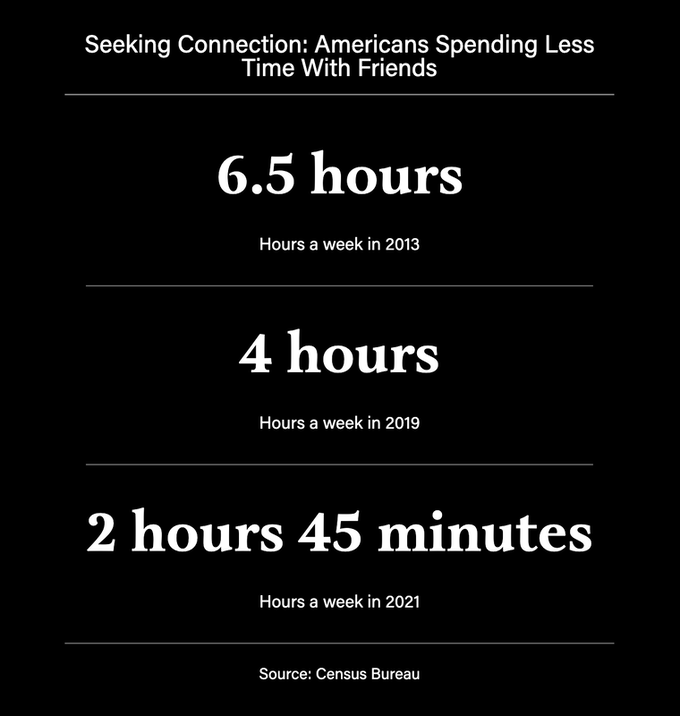
As it turns out, chatting with friends is not only fun, it’s one of the healthiest activities we can pursue, and we all need to do more of it.
“Feeling lonely,” says empathy expert Leanne Butterworth, “is as bad for our health as smoking fifteen cigarettes a day. It increases our chances of dying early by 26 percent.” Yikes! What can we do? “The antidote to loneliness is not the number of people we know but the quality of our interactions. And
the foundation of strong relationships is healthy empathy
.”
My old friend Merriam-Webster says, “empathy involves actively sharing in the emotional experience of the other person.” The key word here is “actively.”
Empathy goes beyond saying, “Our thoughts and prayers are with you.” That’s sympathy, which we use to distance ourselves from the other person’s problem, often trivializing the issue (“At least you don’t have Covid!”) and talking about ourselves (“Wait till you hear how sick I was last month!”). At its best, empathy manifests itself as altruism, leading to everyday heroism such as
Street Veterinarians Treat Pets of LA’s Homeless
. Or the heartwarming
Railway Worker Rescues Raccoon After the Hair on Its Butt Got Frozen to the Tracks
. (Ouch!)
Empathy requires us to recognize another’s misery and connect with it. Sound daunting? You can up your game with a practice session at
The Empathy Museum
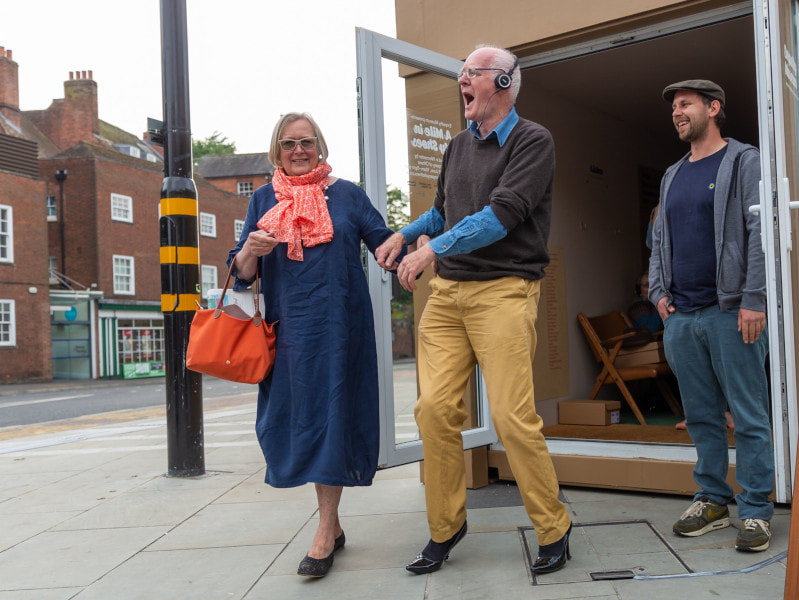
. Their pop-up experiences include “A Mile in My Shoes,” where you literally stroll around in someone else’s footwear while listening to their story on headphones, and “The Human Library,” where instead of borrowing a book, you borrow a “living book” — a person skilled in the art of lively conversation.
Since it began in 2015 the Empathy Museum has popped up in 57 locations around the world. That got me thinking. Are some countries more
empático
than others? The University of Michigan did a massive study about this in 2016, and I found an article outlining the results. As I was floating along on a warm sea of such comforting phrases as “compassion for others” and “form deeper bonds” and “support one another through difficult times,” I was jolted by the appearance of this link.
Read:
The First U.S. Funeral Home That Turns Bodies Into Compost Is Now Open
What a buzzkill! I believe that online magazine’s research bots ought to try to demonstrate a little more empathy for the sensitivities of human readers, don’t you? OK, yes, I did click on it, and I think you’ll share my sentiments about the “ecological deathcare” offered by the company Recompose. However admirable the goal, I just cannot warm to the idea of spending the afterlife moldering in a compost heap.
But back to the study findings. In the survey of 104,000 people, the University of Michigan identified these as the top ten most empathetic nations.
Ecuador
Saudi Arabia
Peru
Denmark
United Arab Emirates
Korea
United States
Taiwan
Costa Rica
Kuwait
Wow, not the list I was expecting. Of course, this information is seven years old. Is the US as chummy today as it was when this data was collected, prior to the 2016 election? Seven of the ten least comradely countries were in Eastern Europe; how might Ukraine, for instance, rank now?
What about boosting our own personal empathy quotient? Roman Krznaric, the Australian public philosopher who founded the Empathy Museum, says it starts with these six habits.
Cultivate curiosity about strangers.
Challenge prejudices and discover commonalities.
Try another person’s life.
Listen hard — and open up.
Inspire mass action and social change.
Develop an ambitious imagination.
About this last habit he says, “We also need to empathize with people whose beliefs we don’t share or who may be ‘enemies’ in some way. If you are a campaigner on global warming, for instance, it may be worth trying to step into the shoes of oil company executives — understanding their thinking and motivations.”
This reminded me of a moment ten years ago in Munich, when I had steeled myself to visit the former concentration camp Dachau. Another American visitor at the camp told me, “I’m here with four other women, but they thought Dachau would be too depressing for their last day of vacation, so they decided to go shopping instead.”
My mind instantly flooded with snarky thoughts about the kind of person who would prioritize buying cheap fake lederhosen and Oktoberfest t-shirts over this life-changing experience. Afterwards, writing about it, I didn’t want to sound like Cruella de Vil so I groped for a kinder (if less sincere) way to frame the moment. And then it hit me: those four women stayed away because they were, like me — like everyone with any sense — terrified of the place. They were simply being more honest about it. I was in no position to judge.
I often think about that moment when I’m confronted with attitudes that seem particularly pig-headed, harebrained, cuckoo, or dumbass (and I say that with no disrespect to the animal kingdom). As a writer, I am blessed with a pretty ambitious imagination, and now I make a special effort to look at news stories from all sides. Like the sad tale of David Riston, found in his Maryland home dead of snakebite, alone except for his 124 pet serpents. As the Darwin Award story “
124 Snakes Seek Less Annoying Housemate
” put it, “Accidental? Did anyone ask the snake about its motives?”
As you can tell, being housebound has its compensations. I’ve had plenty of time to browse through Google’s quirkier tidbits. The long days of peace and quiet are rather soothing after the mad bustle of the holidays. I’m catching up on my reading. And I’m getting plenty of empathy from friends who’ve survived this monster illness and assure me
that yes,
I will get well … eventually. Best of all, people keep sending silly stuff to cheer me up, in keeping with Voltaire’s belief that “The art of medicine consists of amusing the patient while nature cures the disease.” Amen to that!
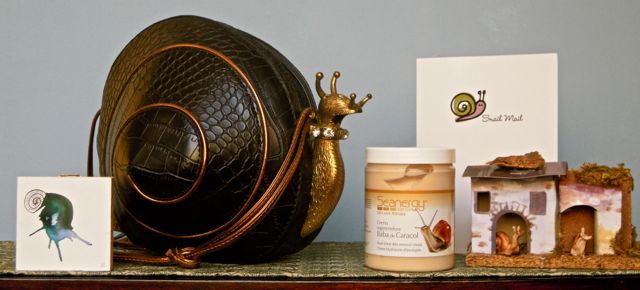
Many thanks to my friend Maer for sharing snails in the slimelight. For more, and the must-see videos:
Snails Paint the Town in Miniature Scenes Crafted by Aleia Murawski and Sam Copeland
THAT WAS FUN. WANT MORE?
Subscribe to receive notices when I publish my weekly posts.
Just send me an email and I’ll take it from there.
[email protected]
YOU MIGHT ALSO ENJOY
WELCOME TO MY SNAIL MUSEUM
THE GOOD SAMARITAN SCAM ARTIST
WHY I LOVED MY (PRE-WAR) VISIT TO UKRAINE
Leave a Reply