“This is it,” said Rich, staring around in awe. “The epicenter of nuttiness.”
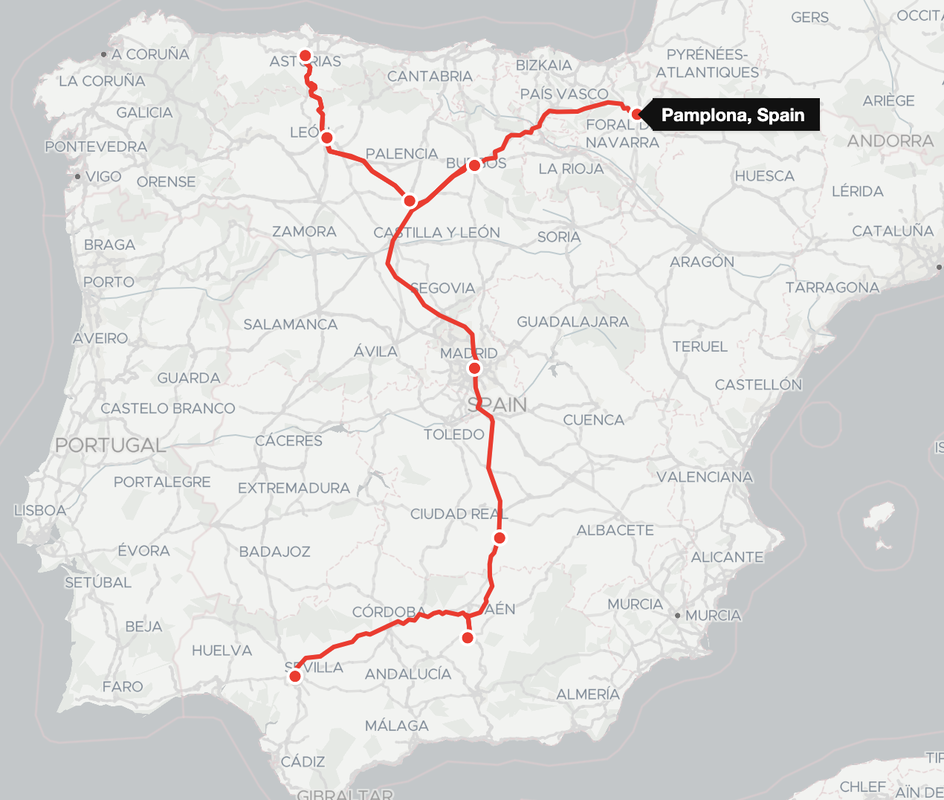
Yep, it truly was. We were in a town I hadn’t even planned to write about; Palencia was meant to be a simple 24-hour stopover to break the convoluted journey from Oviedo to Pamplona. And I’d vowed to skip writing about houses of worship for a while because I didn’t want to give everyone cathedral fatigue. But Palencia’s main church was just so endlessly, inexplicably weird…
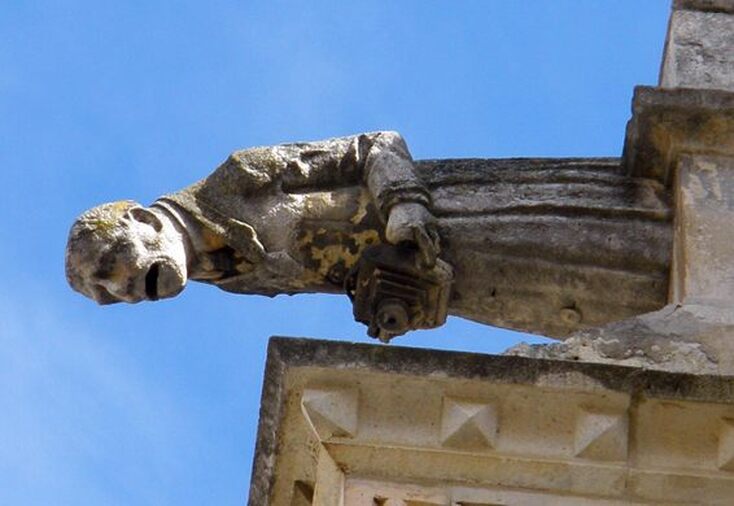
I’d gone there to see the famous gargoyle that’s shown holding a camera. No, it wasn’t an uncanny ancient prophecy, it was added during some repairs in 1910 — a tribute, says local legend, to a photographer killed by a falling stone during the restoration.
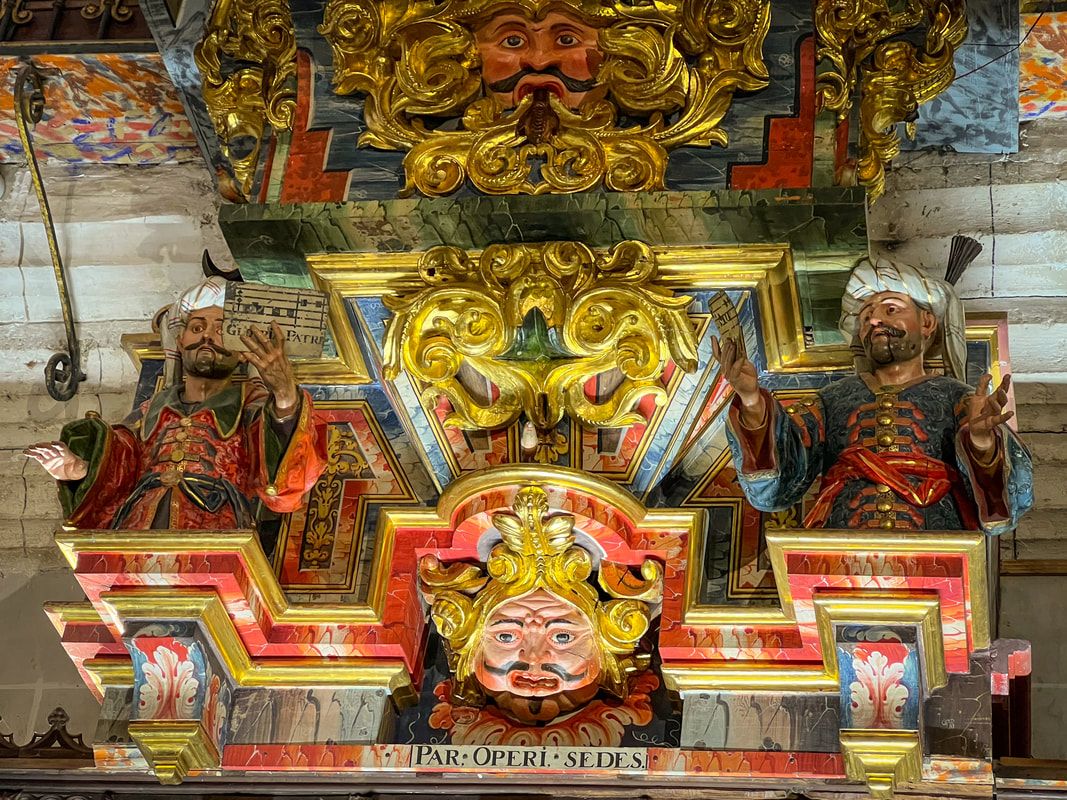
As I glanced around the church — third largest in Spain but so overlooked it’s called “the unknown beauty” — I began to notice all sorts of oddball imagery. The garish organ looked like it belonged to a circus or Coney Island fun fair. Who the heck was that martyr with the sword in his neck? Why was there a grotto filled with surgical masks? Who was the flamboyant character in the turban and earring?
The whole quirky place was built over the crypt of the martyr San Antolín, who is said to have lived in the first, second, fourth, and fifth centuries; probably not all of them, of course, but historians are still struggling to nail down his details. We do know where he was in 1035: right there in Palencia, miraculously appearing to King Sancho in the middle of a wild boar hunt. Naturally the king felt obliged to build a cathedral on the spot. As one does. Ever since then, the good people of Palencia keep adding eye-catching oddities to give themselves plenty to look at while heading to and from mass.
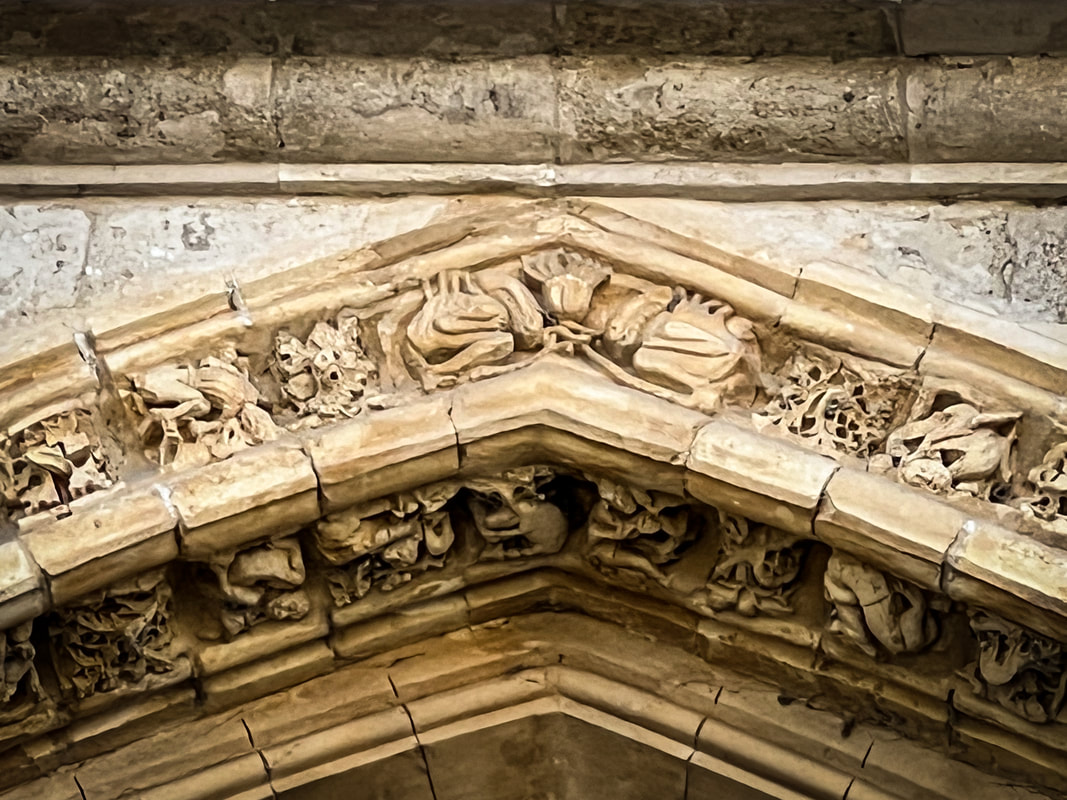
My personal favorite arrived in 1995. While fixing some damage to the King’s Gate, the architect wanted to give the bestiary border a contemporary touch, so he added extraterrestrials based on the creature from
Aliens,
which had just released its third movie. Who says church architecture can’t be fun?
And this is why I’m so smitten with Spain. It never ceases to surprise me.
I happened to catch Palencia’s Palm Sunday procession, and having seen Seville’s world-famous Holy Week celebrations, attended by millions, I expected to be underwhelmed. Instead I was charmed. Nearly all of the city’s 78,629 residents seemed to be in the streets, either marching with the statues of Jesus and Mary or standing along the parade route, clearly enjoying the spectacle and the chance to come together in the sunny spring weather. This cheerful gathering of neighbors was the Spain I first fell in love with, before Andalucía and Barcelona were discovered by the tourist industry and flooded with visitors. I was overjoyed to discover Palencia, and the other cities I’d visited this trip, had avoided that fate.
Would I be able to say the same about my next destination? Pamplona’s a city so famous you can scarcely utter its name without immediately mentioning Hemingway and the running of the bulls.
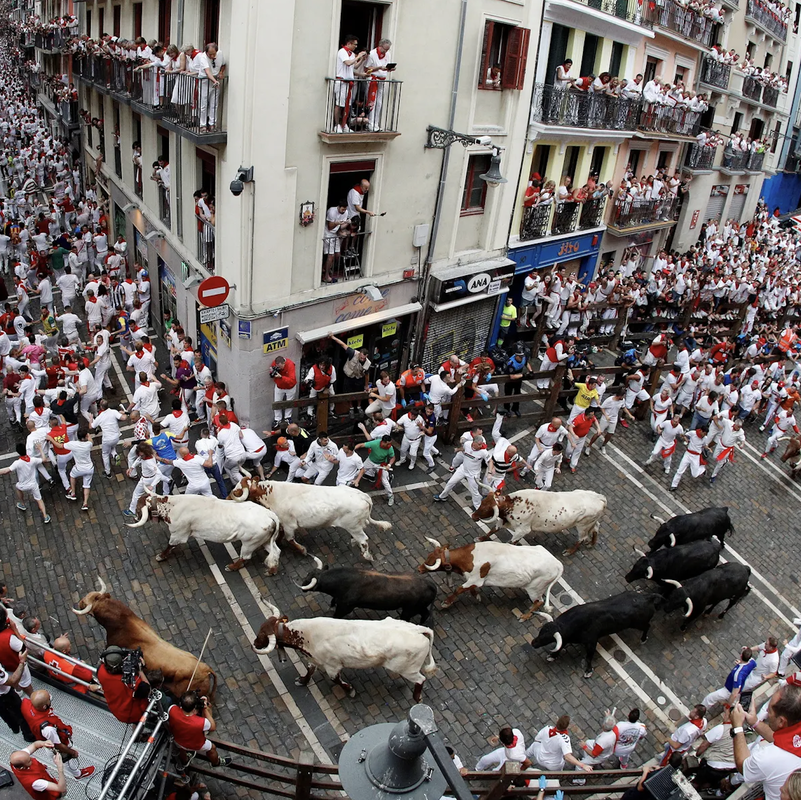
A hundred years ago, it was common practice throughout Spain to move fighting bulls from their pen to the bullring by herding them through city streets. Inevitably a few local sparks would display their bravado by mixing it up with the beasts. In 1925 Hemingway’s first novel,
The
Sun Also Rises
, used running with the bulls to define manhood and courage in the context of the steamy sexuality of the roaring twenties. No wonder bull running became so wildly popular. Now every July, a million people attend the week-long festivities in Pamplona, and thousands run with the bulls. Injuries? A hundred or more per year. Deaths? Not as many as you’d think; a total of 16 since 1910.
I’d seen Pamplona in the movies — the opening scene from
City Slickers
comes to mind — but had no idea that arriving in the offseason I’d find such a vibrant and welcoming city. The old section, where the bulls run, has narrow streets lined with cozy bars, inviting restaurants, and small, family-run shops. Yes, there are souvenir sellers, too, and a short stroll away are the usual big chain stores and high-end boutiques. In the heart of the city I found Plaza del Castillo — nicknamed the
cuarto de estar
(living room) — teaming with kids playing tag around the old bandstand, busy workers hurrying by, others lingering at café tables or sitting on the long benches with their faces turned to the sun.
Knowing almost nothing about Pamplona or the Navarra region, I suggested getting a grip on the backstory by visiting the Museum of Navarra, which covered everything from prehistoric finds to contemporary art. Rich and I got there by hiking along the old Roman wall with a sweeping view of the valley and gale force winds buffeting our faces. When I asked a helpful museum staff member what the most important exhibits were, he promptly directed me to the pre-historic display in the basement.
“
La Mapa de Abauntz
,” he kept repeating.
Stumbling downstairs, I soon learned Abauntz was a nearby cave where recently discovered treasures included the “map” — a rock about the size of a softball with faint lines that to me looked like ordinary nicks and scratches. Luckily alert archeologists realized they represented mountains, rivers, marshes, hunting grounds, and foraging areas, possibly intended to help people navigate future hunting and gathering expeditions. The leap of intelligence and imagination involved in creating this transmission of information was extraordinary, at a time when … Say, just how old was this thing? I let my gaze drift up to the heading on the display case. It indicated the map was 47,000 years old. Yowzer!
In the spirit of full disclosure, I should mention that according to Wikipedia, the rock map is 21,000 years old, while others put the age at around 16,500 or 10,000 years. Maybe someday, after they’ve sorted out San Antolín’s dates, the experts will give the Map of Abauntz a go. Of course, if age really is just a number, who cares?
My point is Spain is full of curiosities, wonders, and ancient mysteries so profound their meaning is beyond the reach even of Google, let alone us mere mortals. Luckily we don’t have to unravel these riddles and conundrums, we just have to stand before them, wide-eyed and openhearted, enjoying their abundant nuttiness.
WHERE ARE WE NOW?
JUST JOINING US? HERE’S THE NUTTERS TOUR SO FAR
Road Warriors: Let the Good Times Roar (Léon & Oviedo)
Travel Alert: You Can’t Always Get What You Want..
.
(Madrid & Burgos)
Gobsmacked at Every Turn but Embracing the Chaos
(Ja
én & Valdepeñas)
All Aboard for the Nutters Tour of Spain (Packing & Organizing)
THAT WAS FUN. WANT MORE?
Subscribe to receive notices when I publish my weekly posts.
Just send me an email and I’ll take it from there.
[email protected]
Curious?
Enter any destination or topic in
the search box
below
. If I’ve written about it, you’ll find it.
And be sure to
check out my
best selling travel memoirs & guide books
here
.
Leave a Reply