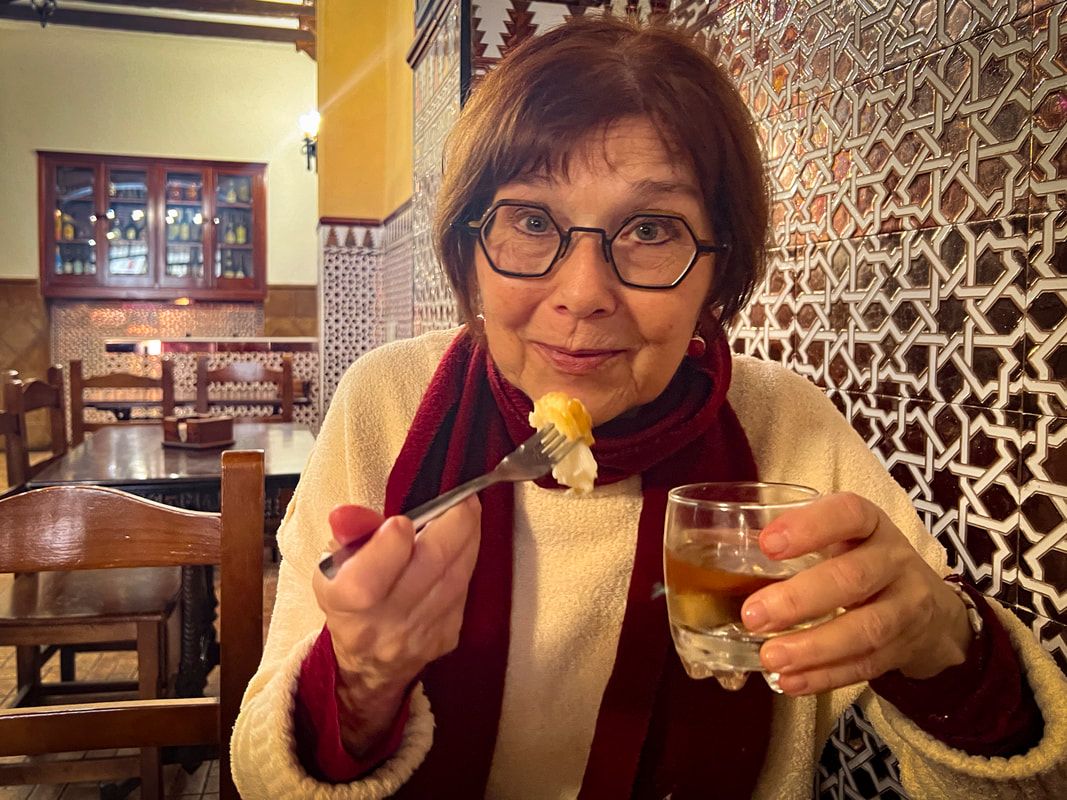
“I took a sip and it practically blew my eyeballs out,” Rich said, glaring at the glass in my hand.
‘It’s not
that
bad,” I said, taking another cautious swallow of the wine. One vlogger had called it “
rough as guts
,” but that seemed a trifle harsh. I shrugged. “It’s no worse than the house whites we drank all through Sicily, the kind sold in two-liter bottles for three euros in the street market.”
Rich just rolled his eyes and drank more beer.
We were paying a long overdue return visit to
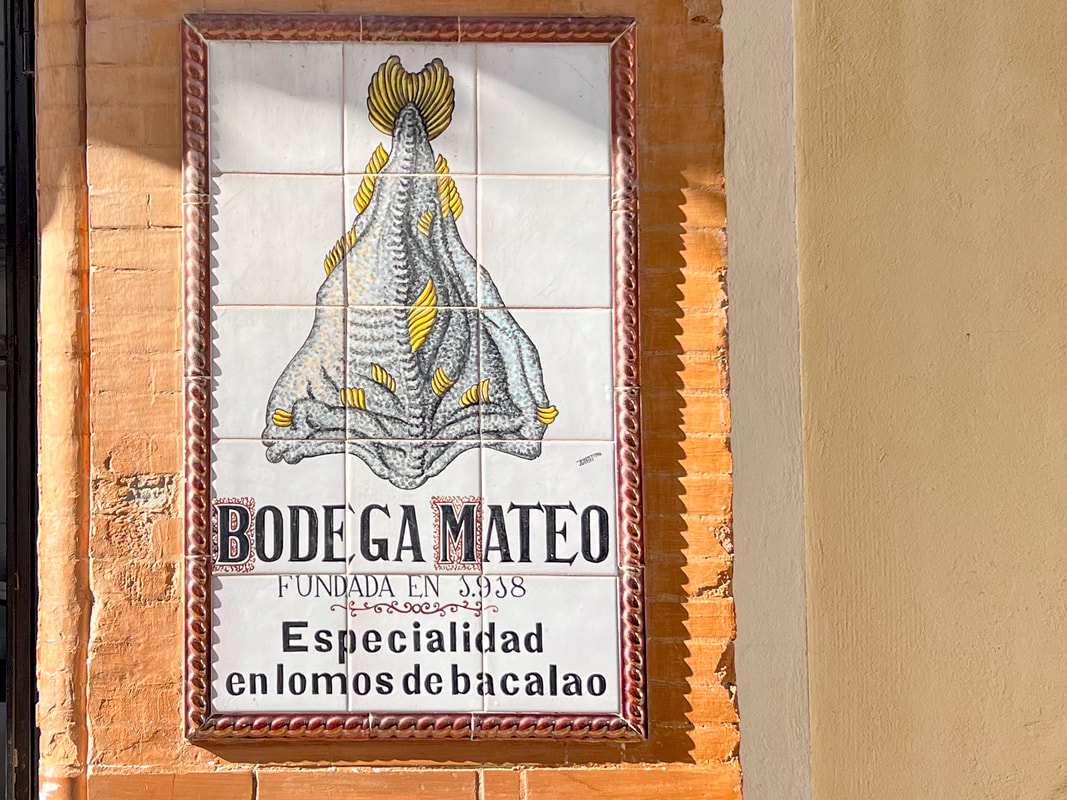
Bodega Mateos Ruíz
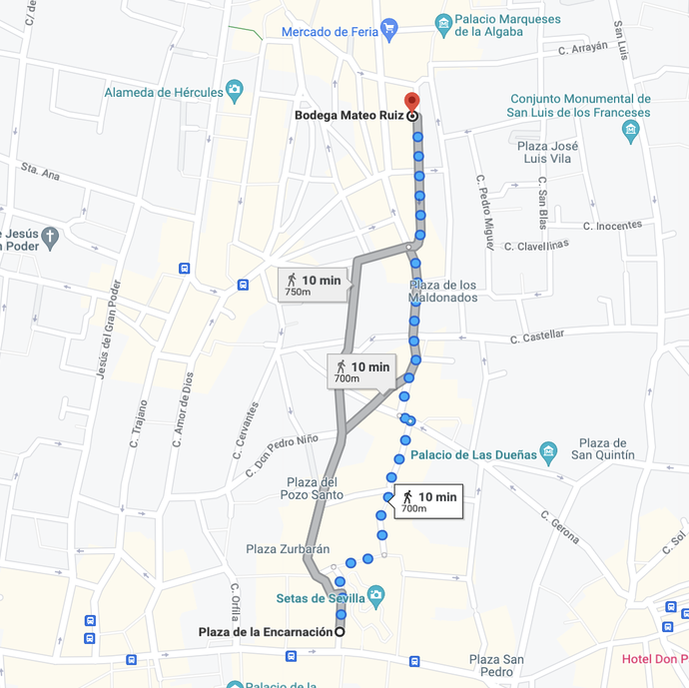
, a tapas bar on a tiny back street near Seville’s
Mercado de Feria
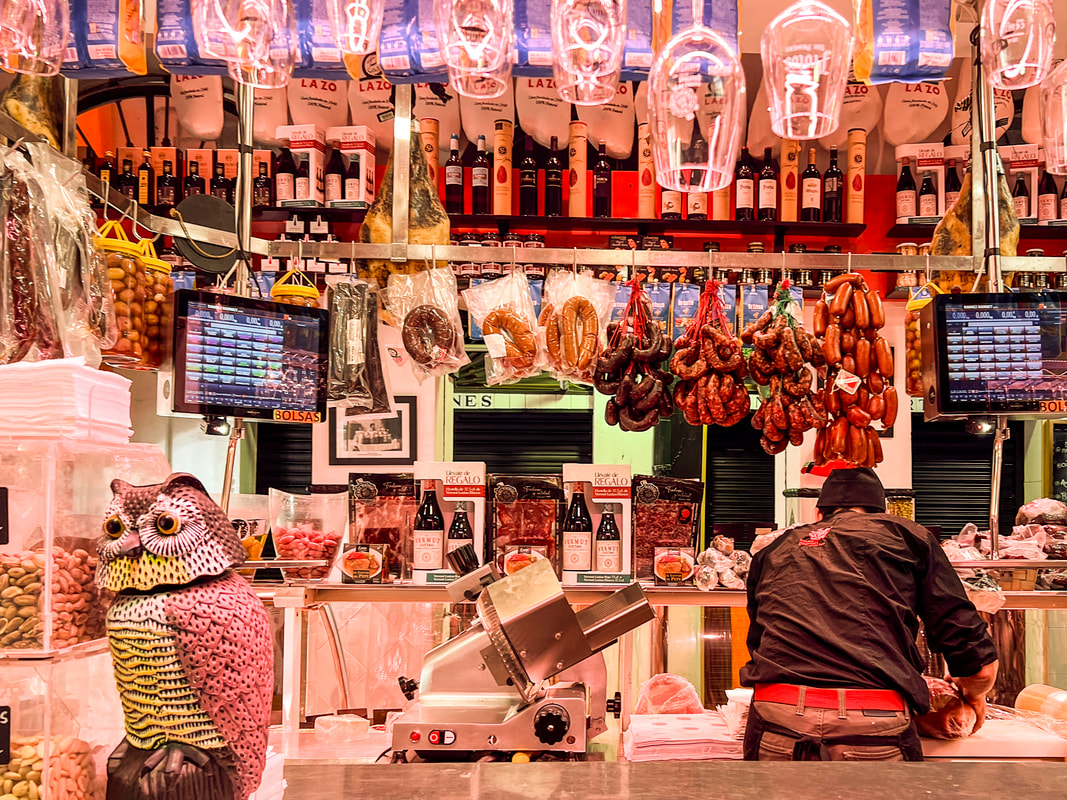
(Feria Market). Three generations of Ruiz men have become famous for their low-cost wine (currently about $1.50 for a generous glass), and their
bacalao frito
, rumored to be the most delectable batter-fried codfish in a city known for its seafood connoisseurs.
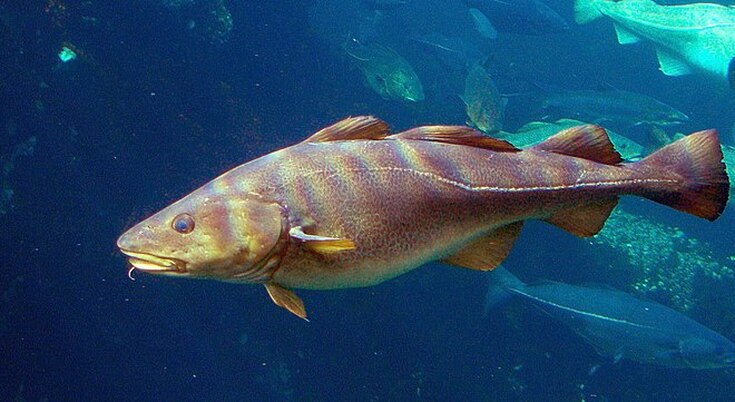
I’d never given cod much thought until I moved to Seville, but Spanish friends soon explained how salt-dried cod had sustained sailors from Vikings to New World explorers and soon found favor with the folks back home as well. By 1550, a hefty 60% of all fish eaten in Europe was cod, and not surprisingly its name morphed into racy Medieval slang.
“
For something that began as food for good Catholics on the days they were to abstain from sex,
”
wrote Mark Kurlansky in
Cod:
A Biography of the Fish That Changed the World
,
“
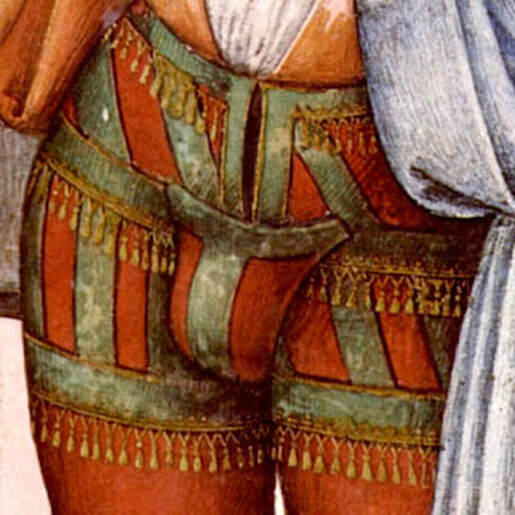
it is not clear why, in several languages, the words for salt cod have come to have sexual connotations … In Middle English, cod meant ‘a bag or sack,’ or by inference, ‘a scrotum,’ which is why the outrageous purse that 16th-century men wore at their crotch to give the appearance of enormous and decorative genitals was called a codpiece.
”
Puritanical New Englanders were equally fond of cod but preferred to present theirs surrounded by a glow of sanctity. They claimed it was the fish Jesus used to feed the multitudes in the miracle of the loaves and fishes, suggesting the markings were imprints of his divine fingers and dubbing it “sacred cod.”
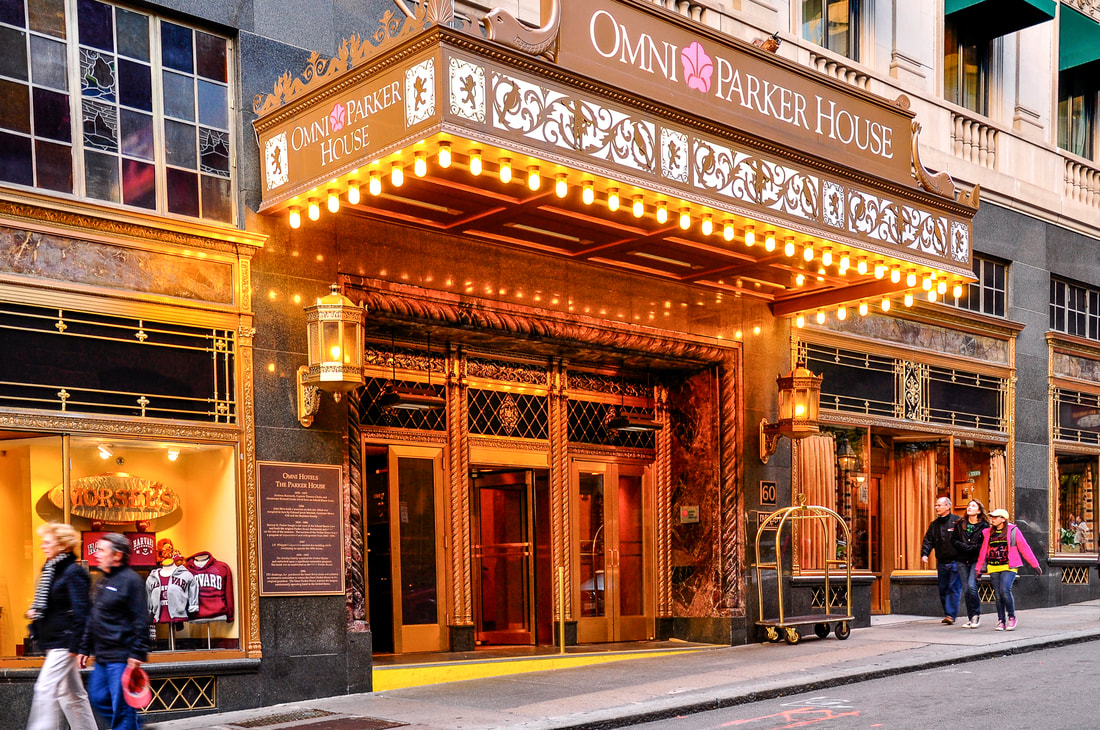
“Sacred cod” is probably the inspiration for the word “scrod,” a totally made-up fish invented by a maître d’ at Boston’s Parker House Hotel because he needed to preprint his menus and couldn’t always predict whether the catch of the day would be cod, haddock, or pollack. Soon scrod was appearing on menus all over town.
And that, of course, gave rise to the grammar joke beloved by writers and English majors throughout New England; when I lived in Boston, I heard it on countless occasions. A guy visits Boston for the first time on a business trip and wants to try some of the local cuisine. He climbs into a taxi at the airport and asks the driver, “Where can I get scrod?” The driver turns to look at him and replies, “You know, I’ve been asked that question many times and in many ways, but never before in the past pluperfect subjunctive.”
(And for those of you who weren’t English majors, he’s referring to the past pluperfect subjunctive of the word “screwed.”)
My point — and I do have one — is that cod has been an important part of the global economy and gastronomy — to say nothing of the humor industry — for more than a thousand years. No doubt there’s one that starts, “These two Vikings walk into a mead hall …” Unfortunately, all those years of planet-wide popularity haven’t done the cod population any favors. I was aghast to learn this week that cod is on the endangered list and may soon become as non-existent as genuine scrod. Clearly I’d be wise get some while I still could. And there’s no place I’d rather get cod — sacred or otherwise — than Bodega Mateo Ruíz.
This small, old-fashioned tapas bar, founded in 1918, is dimly lit and furnished with dark wood and old wine barrels. It fills up fast, so Rich and I went early, arriving shortly after they opened at 12:30. A handful of customers stood at the bar, nursing beers and talking quietly. Such a subdued noise level is highly unusual in Seville, where even two
amigos
can create enough boisterous hullabaloo to fill the typical tavern. Possibly voices were lowered out of respect for Mateos Ruíz,
the founder’s son and current owner,
who is deaf and an expert lip reader, and Mateos’s son, who is partially deaf and takes most of the orders now.
I watched Mateo haul in a large plastic container of cod pieces. (No, not codpieces! Get your minds out of the gutter, people. I am of course talking about chunks of fish.) It looked like salt-cured cod, which is said to have a more robust flavor than fresh with scarcely any loss of nutrients. How nutritious is cod? It’s low in fat, full of protein, and — once you sluice off all the salt — remarkably good for your blood pressure, heart, cardiovascular system, brain, cholesterol, bone, and teeth. So yeah, pretty nutritious.
Getting rid of all the salt requires soaking the cod for 24 to 48 hours, during which you repeatedly drain off the water and replace it with fresh. As I looked on with interest, Mateo poured the water from the tub one last time and set it beside the stove. He then prepared my
bacalao
in the traditional manner: dipping bite-sized chunks into a batter of flour, milk, baking powder, and salt, then deep frying the pieces in olive oil. OK, I’ll admit the deep fat frying may offset some of the healthy properties, but still.
I’m delighted to report that fried cod was every bit as delicious as I remembered it from previous visits.
The
bacalao frito
(also known as
bacalao rebozado,
breaded cod) was golden and crispy on the outside, tender yet toothy inside. They say the secret is medium heat, so it has time to cook thorough
proper
ly.
(Here’s a recipe if you want to try it at home.)
If you’re inspired to make it while in Seville, you can pick up the ingredients at the nearby
Mercado de Feria
This is
Sevilla profunda
, the real deal, the oldest market in the city, which been supplying the neighborhood with cod and other comestibles since the 18th century.
Still worrying about the declining cod population? You might want to pop into the city’s oldest church, conveniently located right next door to the
Mercado de Feria
. Since 1249
Omnium Sanctorum
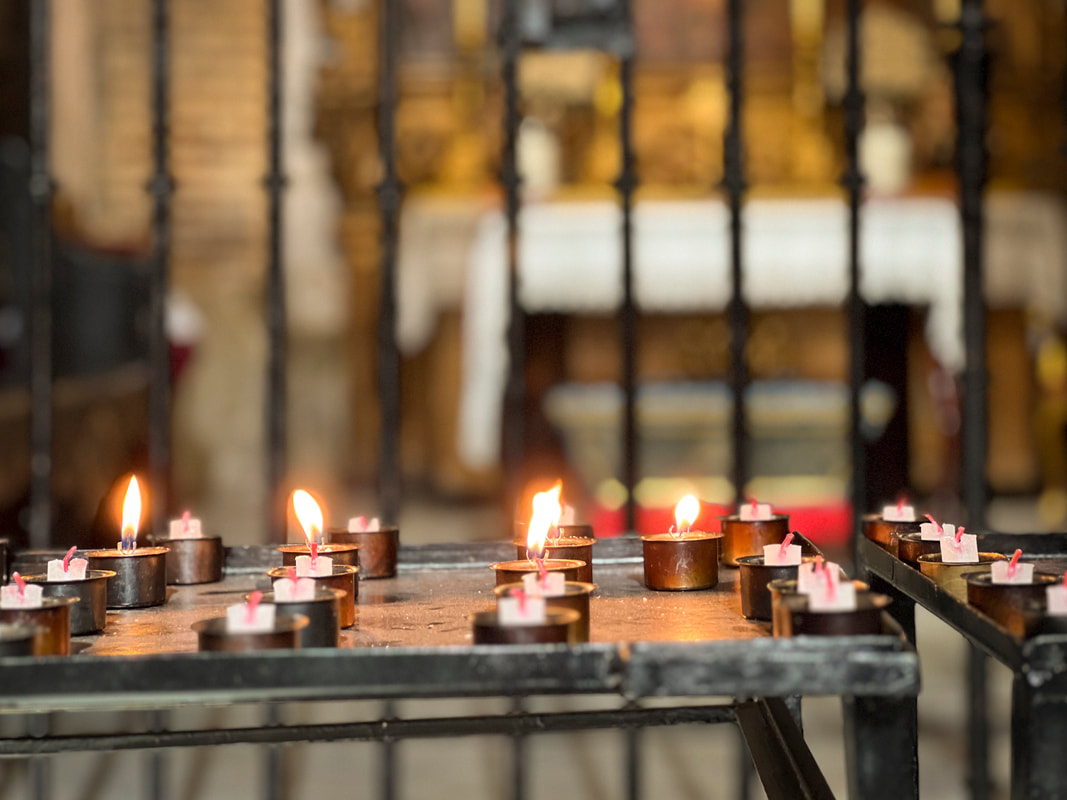
, the Church of All Saints, has been inviting the faithful to drop in, light a candle, and say a prayer for whatever’s on their minds. This might be a good time to give thanks that you were lucky enough to live during an era when people could still go to a local tapas bar and enjoy a plate of
bacalao frito
, a glass of wine costing $1.50, and the quiet companionship of congenial and respectful neighbors.
WANT MORE
OUT TO LUNCH
POSTS?
This story is part of my ongoing series about visiting offbeat towns in the city and province of Seville, seeking cultural curiosities and great food.
DISCOVER MORE PLACES TO EAT IN & AROUND SEVILLE
LEARN MORE ABOUT MY 2023
NUTTERS’ WORLD TOUR
AND DON’T MISS
THE GREAT MEDITERRANEAN COMFORT FOOD TOUR
Now an award-winning Amazon best seller
WANT TO STAY IN THE LOOP?
If you haven’t already, take a moment to subscribe so you’ll receive notices when I publish my weekly posts.
Just send me an email and I’ll take it from there.
[email protected]
Be sure to check out my
best selling travel memoirs & guide books
here
.
PLANNING A TRIP
?
Enter any destination or topic, such as packing light or road food, in
the search box
below
. If I’ve written about it, you’ll find it.

Leave a Reply