I first visited Carmona with an accident-prone friend, the kind of guy who pratfalls his way through life. Once I watched him bend down to pet a puppy while a bull was charging across the field in his direction. Everyone screamed warnings but somehow they went unheard. My friend ambled out of the field, smiling, and shut the gate behind him with seconds to spare.
Other times he wasn’t so fortunate. Once, crossing the street, he plummeted into an open manhole. Another time he crashed through a shower stall, although to be fair, he blamed that on a shove from a poltergeist. He was the kind of guy who, if he said, “What a lovely day,” you instantly looked up to see if an anvil was about to fall on his head. It was like hanging out with the cartoon character Wile E. Coyote.
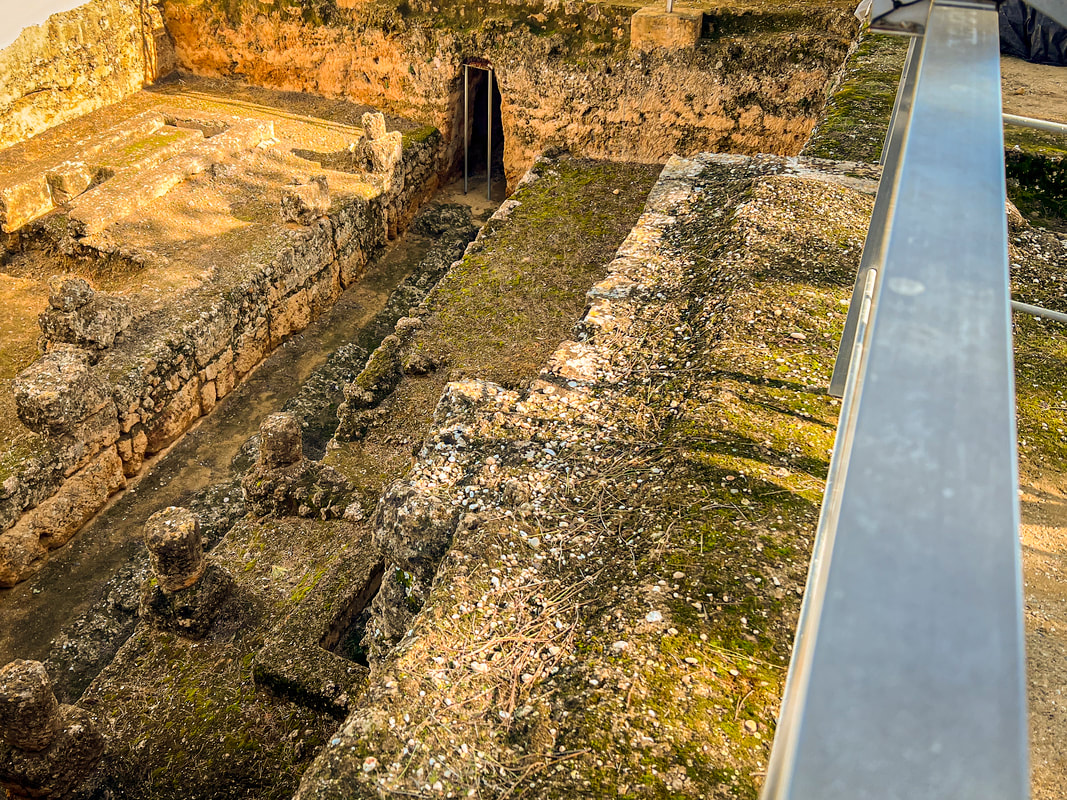
My principle memory of visiting Carmona with him was in the ancient Roman cemetery. My friend jumped out of the car and scampered up a pile of rubble exclaiming happily, “Oye, ¿qué crees que hay aquí?” (Hey, what do you think’s up here?). His wife, Rich, and I all leapt forward and grabbed his coattails to keep him from tumbling into a 2000-year-old tomb.
Of course, 2000 years is a mere a blip on Carmona’s timeline; it’s one of Europe’s oldest settlements, nicknamed “the dawn star of Europe.” Over the past 500,000 years, this broad, flat, easily defended plateau has attracted protohumans, Tartessos, Phoenicians, Romans, Moors, and Spaniards — including our old friend, King Pedro the Cruel (Pedro the Just to his amigos) in the 14th century.
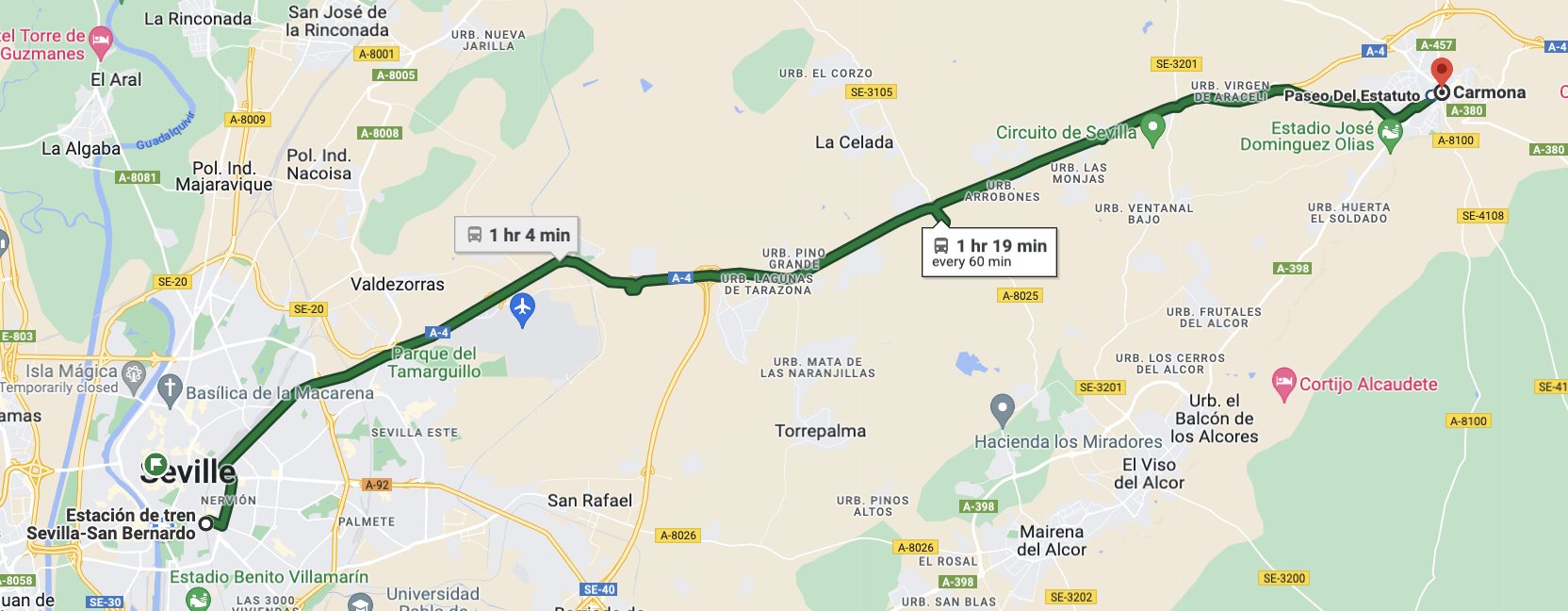
Carmona is only 20 miles from Seville — an easy three hours by horse — and King Pedro visited often. It made a pleasant getaway from the burdens of state, the pomp and circumstance of court, and the hostility of his father’s many noble bastards, who were constantly trying to usurp his power and hoping to slit his throat. Carmona’s congenial setting inspired Pedro to build himself a vacation castle — which was doomed almost from the start.
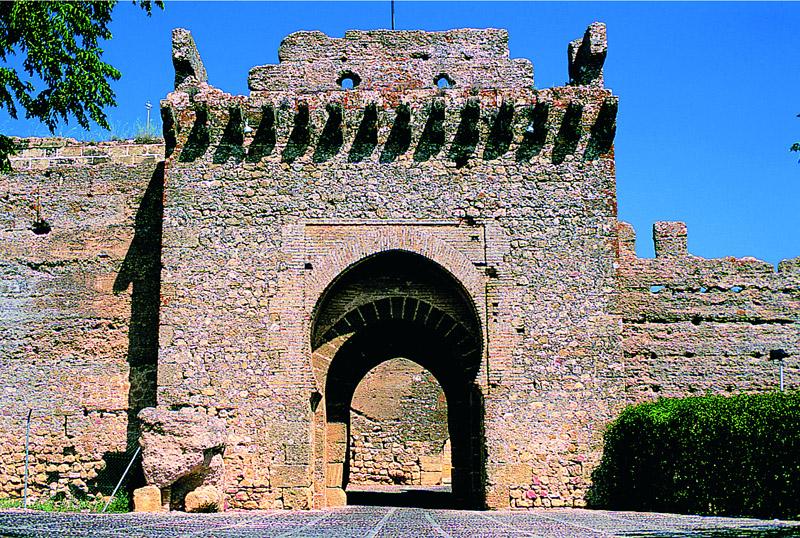
“Talk about bad karma,” I said to Rich, skimming a history of the Alcázar del Rey Don Pedro. “The king imprisoned his father’s old mistress there for a while; no wonder his bastard half-brothers wanted him dead.” Pedro’s half-brother Henry responded by seizing the Carmona castle, taking everything in it, tearing down the castle, and eventually killing the king.
“But wait, there’s more,” I said. “A century later the castle was rebuilt and occupied by various war lords who made Pedro the Cruel look like Mother Teresa. Eventually a mob of irate citizens stormed the castle and demolished it in just four days. The remaining stones were shaken to dust by the earthquake of 1504 and then again in 1755.”
“The Universe sending a message?” suggested Rich.
“Yep. In 1871 it became a bullring, and by 1976 it was a parador.” (These are state-owned luxury hotels.) “They say guests report hearing noises in the walls. It’s got to be haunted. Shall we go take a look? Fancy lunch out in Carmona?”
We went last Friday, and I could see why Pedro wanted a castle-away-from-castle there.
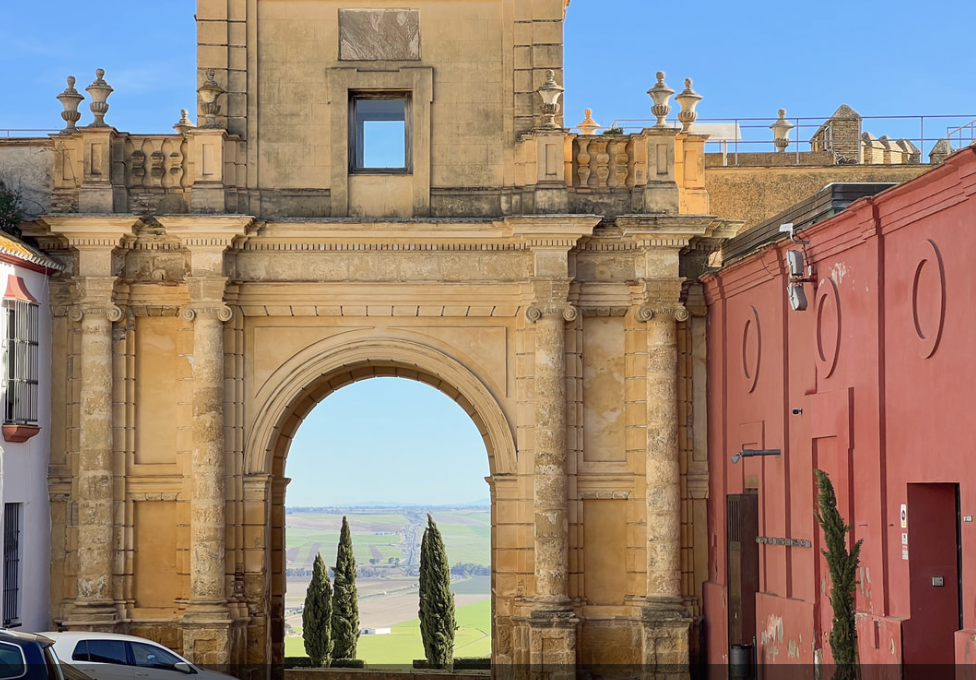
Wandering out of the parador and down through the narrow streets, we happened upon the convent of St Claire. Built in 1460, the sprawling complex now houses just fourteen nuns, who pray and serve as witnesses of hope in the world (something we could all use a little more of today!).
In their spare time the nuns run a famous bakery with a torno, a revolving wooden box that allows sweets and money to be exchanged while keeping the cloistered nuns invisible. In these more progressive times, the nuns usually serve you face to face via a pass-through. To be honest, it took a bit of the romance out of the transaction.
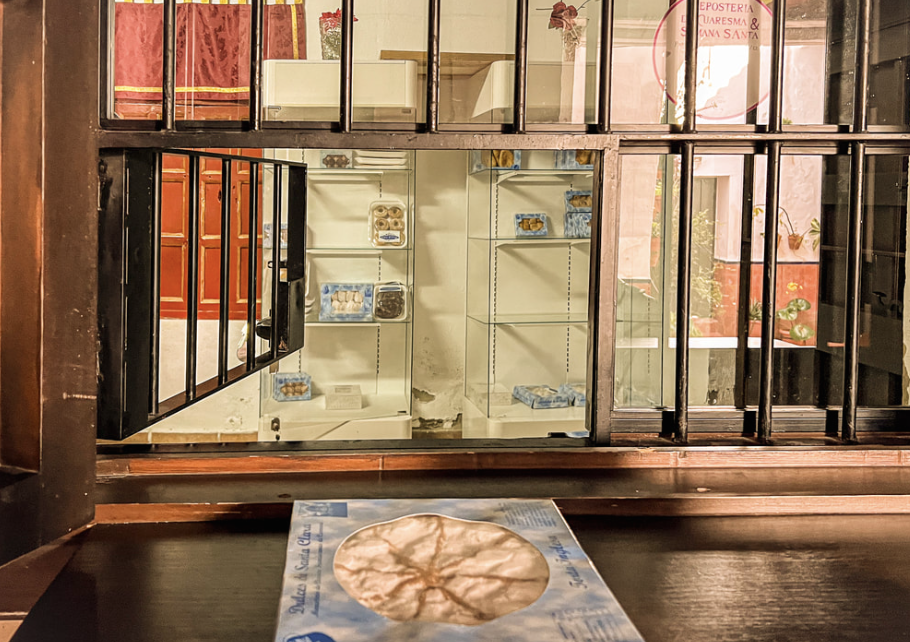
I ordered the city’s signature torta inglesa (English cake), which is a kind of sponge cake with “angel’s hair” (pumpkin jam) topped with powdered sugar marked with lines drawin in cinnamon that are said to reflect the British flag. This was a nod to the cake’s biggest fan, English amateur archologist George Bonsor who, with his partner, Juan Fernández López, excavated Carmona’s Roman Necropolis in the 19th century. Bonsor liked cake for breakfast, and a local baker adapted an old Moorish recipe to suit the archologist’s tastes. The rest is culinary history.
Will it sound ghoulish if I tell you we decided to enjoy our torta inglesa in the Roman Necropolis? I felt George Bonsor would have appreciated the gesture.
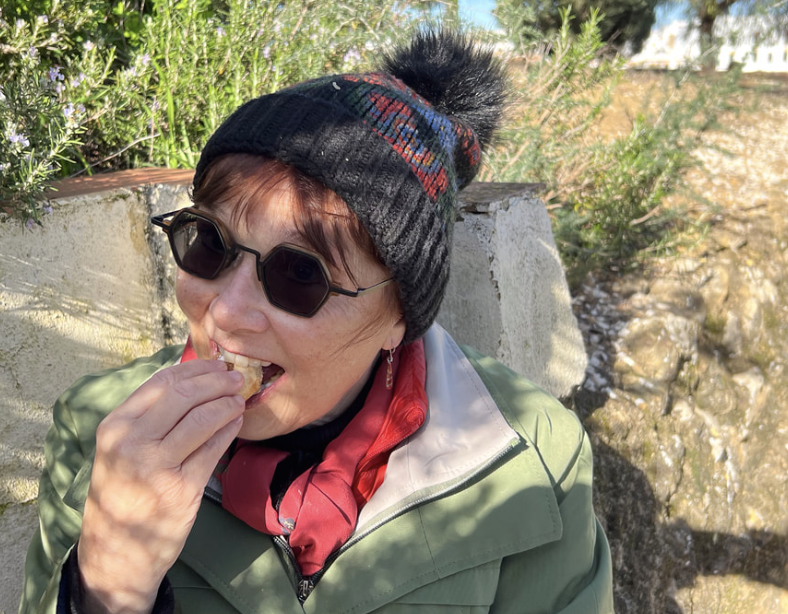
The open tombs and tiny museum were amazing; those old Romans knew how to give someone a proper sendoff. Of course, having seen the movie Poltergeist, I’m well aware that disturbing the dead is never a wise idea, but I didn’t sense any menacing specters hanging around.
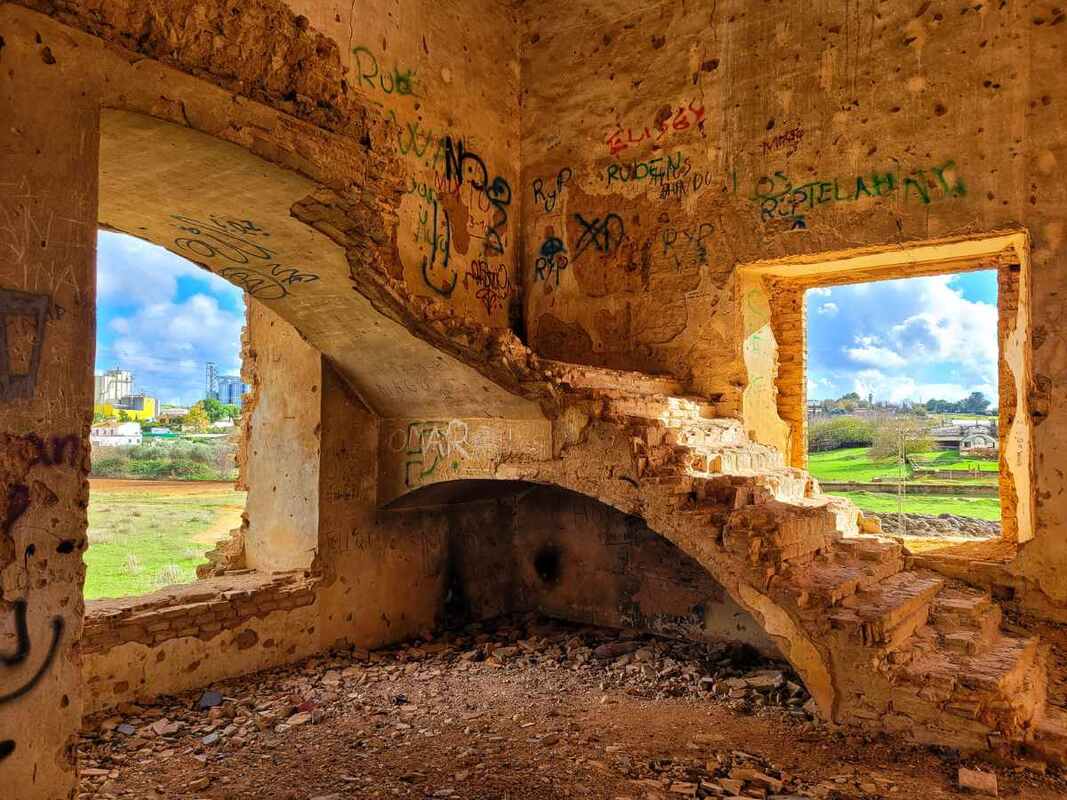
Which is more than can be said for the Devil’s Monastery a few miles outside of town. I knew from the start we wouldn’t have time to visit, and there’s little to see now, but the story still raises goosebumps.
One morning in 1680 a Dominican monk woke to eerie silence, made his way to the kitchen, and discovered all his fellow monks dead, hanging from hooks, and — gruesomely — being eaten by demons and engulfed in flames. Needless to say plenty of additional inexplicable phenomena occurred during the investigations and the monks’ funerals. Incredibly, the monastic community continued there until the 1940s. Today, daredevils visit the ruins to leave graffiti.
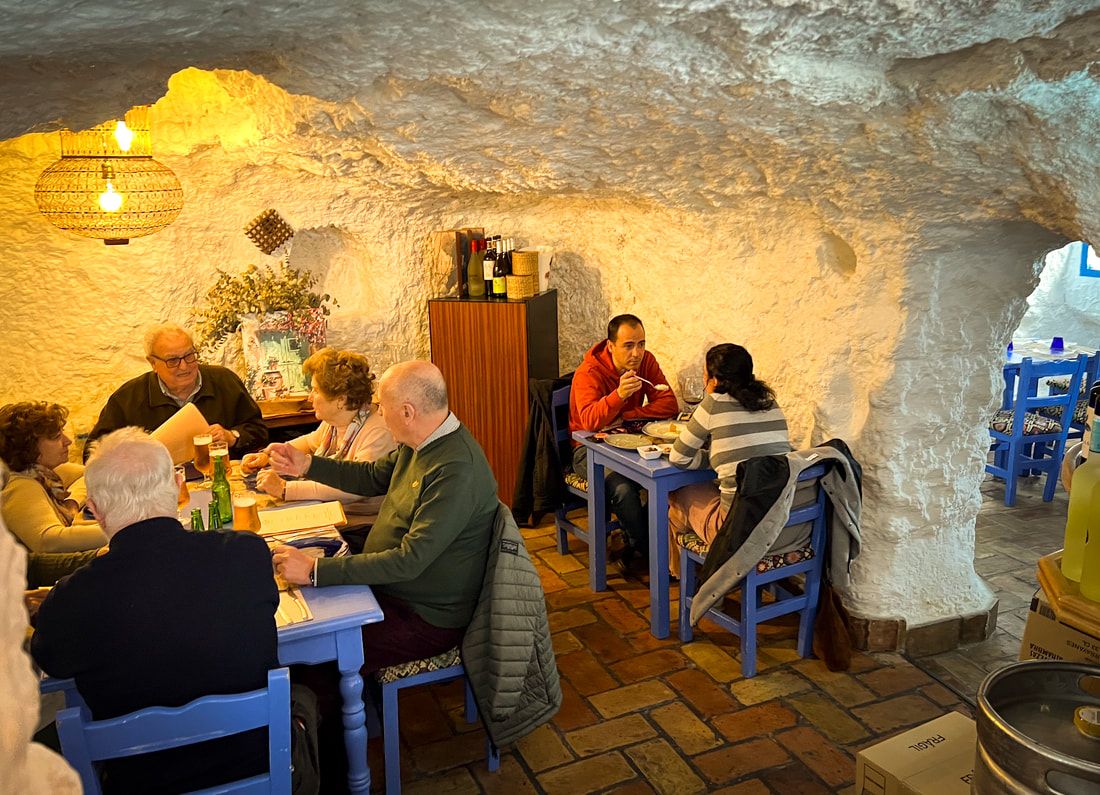
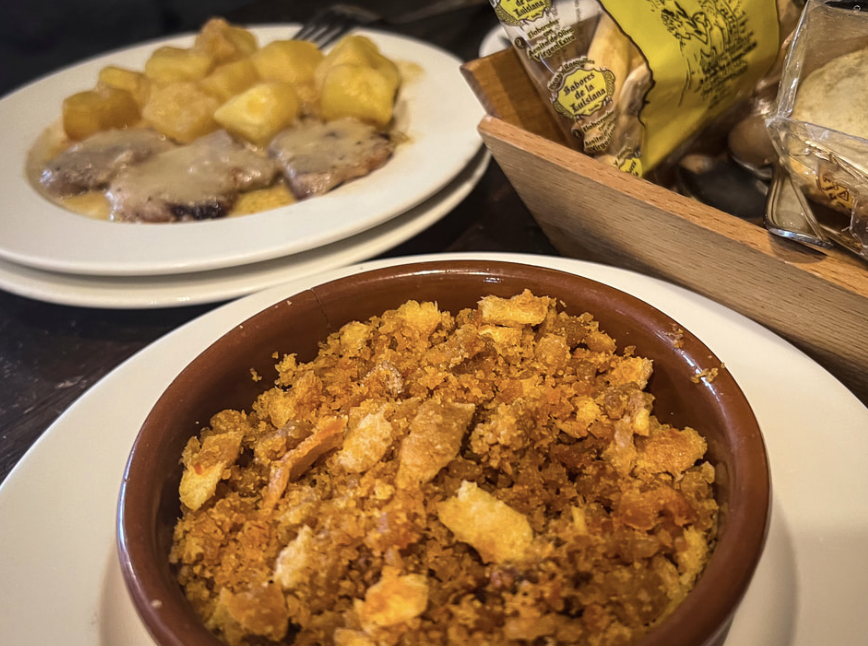
Rich and I felt our time would be better spent in town, enjoying a leisurely lunch at the Antigua tapas bar. The day’s special was migas (breadcrumbs), a dish invented by Spanish shepherds, who fried cubes of stale bread in plenty of fat, adding random leftovers such as chorizo. When villages hold a matanza (communal butchering of a pig, sheep, or goat), migas is served with a stew of curdled blood, liver, kidneys, and worse. Luckily Antigua favored the chorizo version.
Perched on an old wooden chair, I took the first bite. Marvelous. To me, the combination of warm bread and olive oil is always heavenly; chorizo puts it over the top. As the bar filled up with the lunch-hour crowd, I listened to the happy hum of conversations all around me and decided life really was pretty wonderful.
As a new year staggers towards us, I don’t doubt it’ll include moments when, like my accident-prone friend or that monk in 1680, I’ll find myself suddenly catapulted into catastrophe. But with luck, there will also be plenty of times like this one, when I’m warm, well-fed, surrounded by congenial souls, and counting my blessings: Rich, family, friends, my readers, and migas mercifully free of curdled blood, liver, and kidneys. Perfection? No. But it’ll do.
Leave a Reply