Hot news! Time travel is real — and I have proof!
How else would you explain this recent email, asking me to remove a subscriber:
Hello,
I have retired from Washington University as of 5/3/21021.
For assistance with microarray-related research, please contact the following staff …
Observe the facts, Watson. 1) She retired in 21,021, some 18,997 years in the future. 2) She’s a scientist. 3) I couldn’t find her anywhere on my mailing list (maybe she hasn’t subscribed yet?). 4) Her university sponsors a hot air balloon called “Time Traveler.” Coincidence? Oh sure, think that if you want.
Of course, until this former/future reader of mine shares her scientific breakthroughs, my only form of time travel is immersing myself in the past. This week, Rich and I spent many entertaining hours reliving bygone days in the
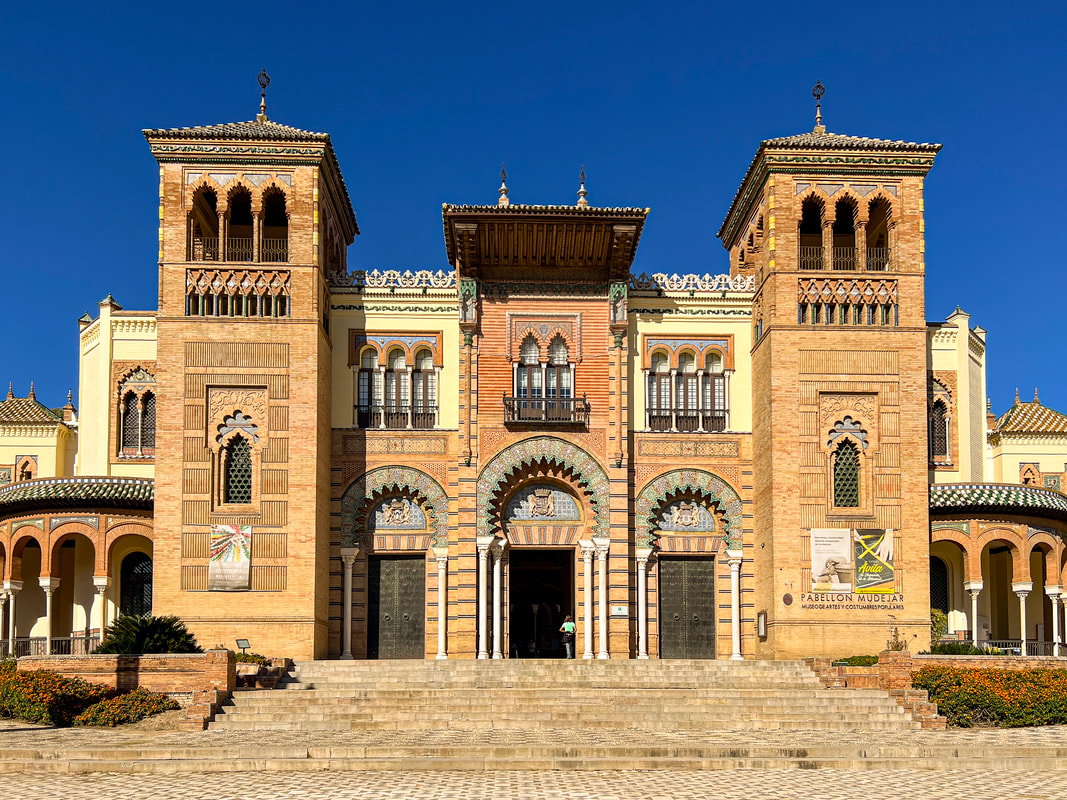
Museo de Artes y Costumbres Populares de Sevilla
(the Museum of Popular Arts and Customs of Seville). Never heard of it? You’re not alone. It’s one of the city’s best-kept secrets.
Housed in a vast, four-story 1914 exhibition hall in Maria Luisa Park, the museum has chosen, inexplicably, to bury its permanent collection in the basement. Wandering the subterranean labyrinth, you get a glimpse of daily life and age-old wisdom that sparks profound, thought-provoking questions, such as: how
do
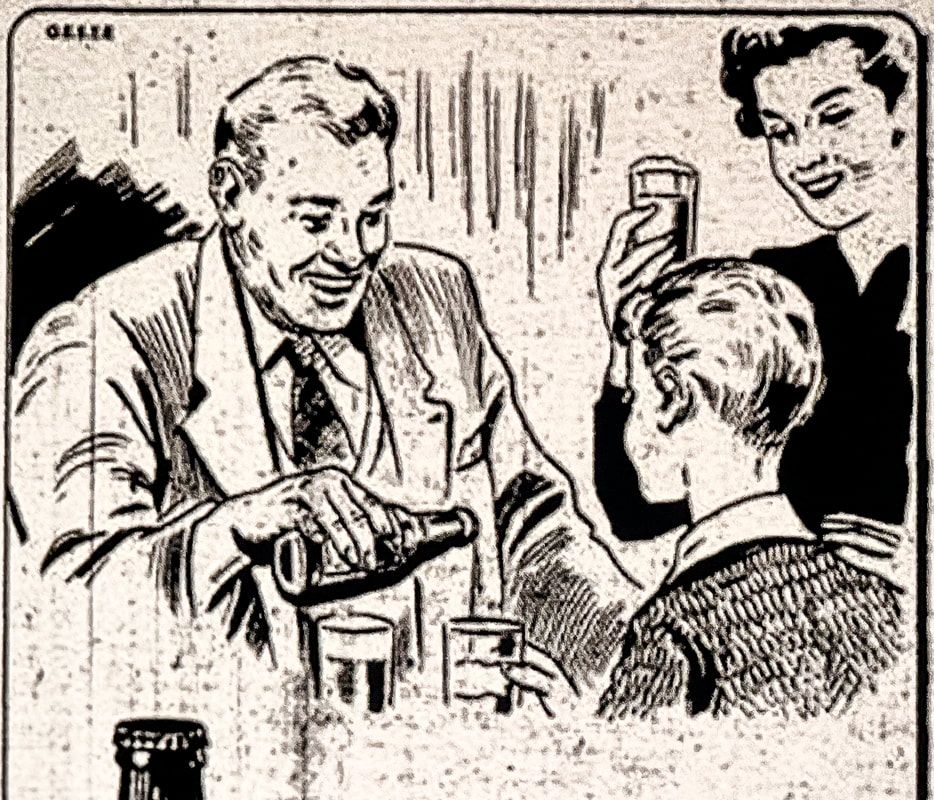
you encourage small children to drink more beer?
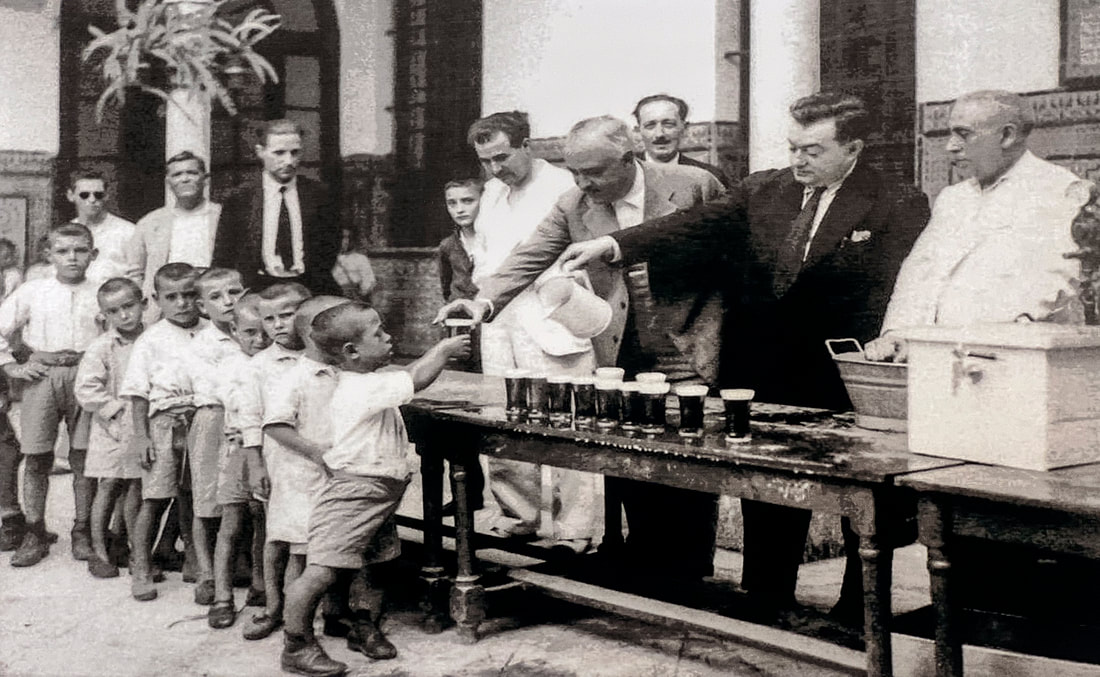
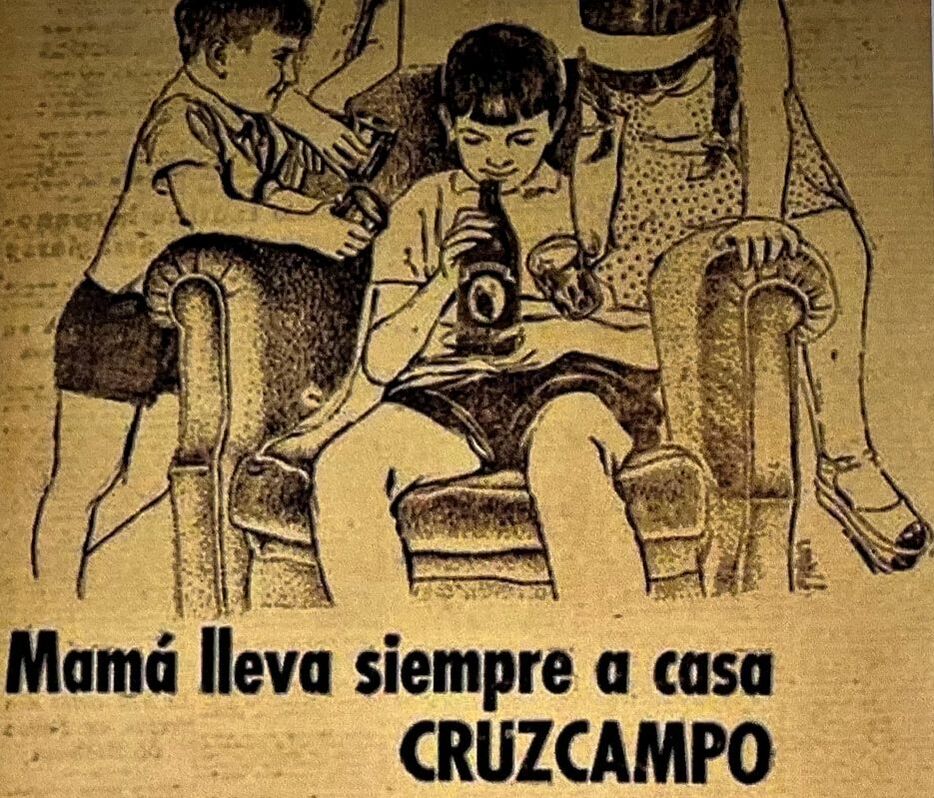
It takes a village. The heartwarming 1933 news photo above shows officials holding a beer tasting session for young orphans at a health center in Seville’s Triana district. Just helping them get their start.
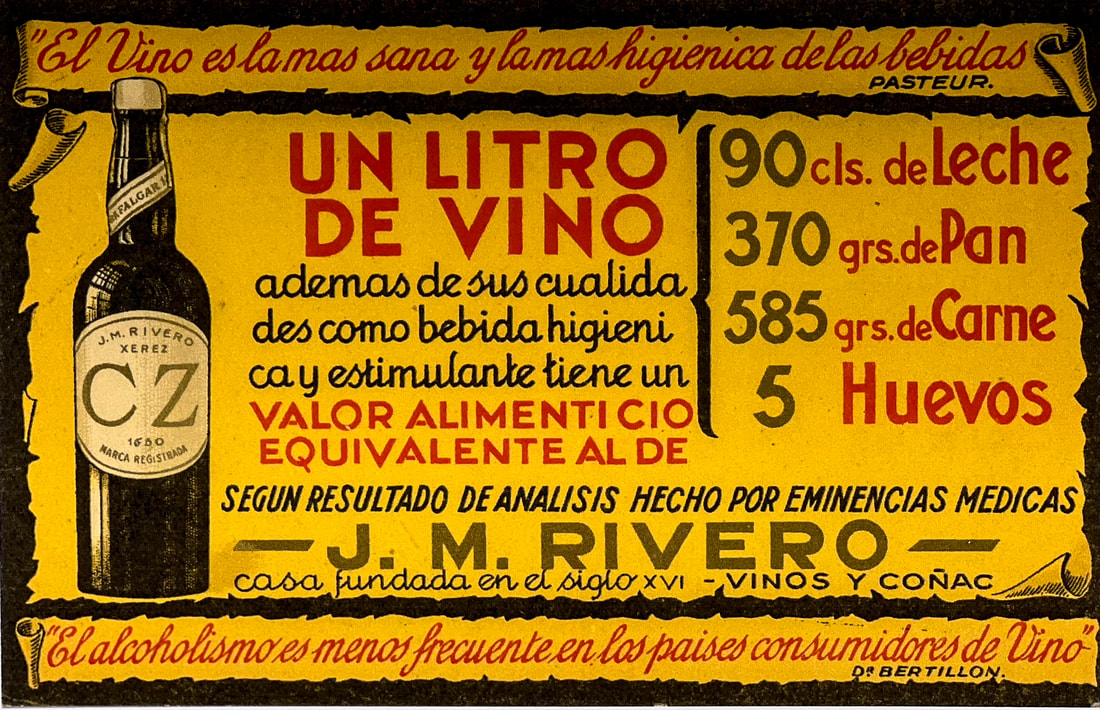
You see, until the 1960s, beer wasn’t all that popular in Spain. For 3,000 years wine had been the beverage of choice, viewed as a vital part of a wholesome diet. The 1850 Trafalgar Wine ad below favorably compares
vino’s
nutritional value to that of bread, milk, meat, and eggs, and quotes Pasteur as saying “Wine is the healthiest and most hygienic of beverages.”
“Until quite recently,” explained a museum display, “men, women, and children drank wine throughout the day. They watered it down, spiced and flavored it, and customarily ate bread dipped in wine for breakfast. Even medical professionals considered it just another form of nutrition, and the calories it provided were deemed essential to the poor diets of the underprivileged classes. Other factors contributed to these ideas and habits: the unpleasant taste and bad reputation of water … and the unpopularity of beer, which was only brewed in northern Europe.”
But as we all learned in college, it’s not very hard to convince people to drink beer. Seville established its brewery, Cruzcampo, in 1904 and spent much of the twentieth century campaigning for young hearts and minds.
But of course, children need more than beer to grow up big and strong, and for a long time the museum presented another exhibit — now removed to keep tourists from fainting — about
la matanza
. This is the winter pig killing, when the entire village gets together to butcher a 500-pound animal, keeping everyone fed until spring.
The museum’s small, grainy, black-and-white video of the
matanza
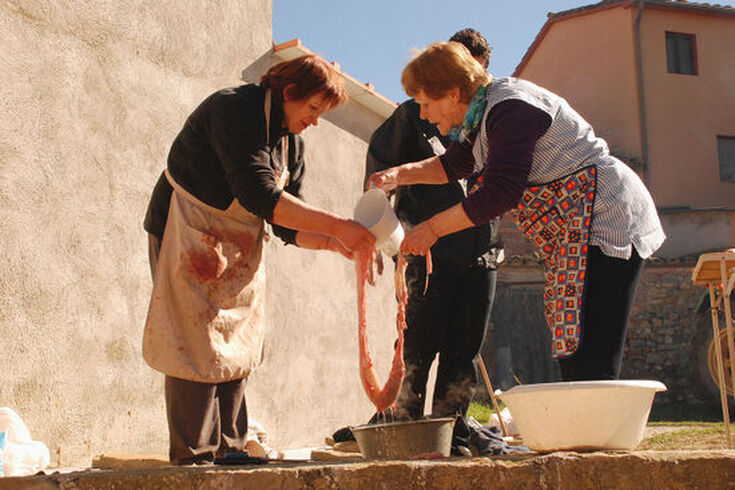
was hair-raising. It showed the killing, the butchering, and the village grandmothers cleaning out the intestines to make sausage casings — a process, I’m told, that is traditionally enlivened by the women’s bawdy jokes. Sadly, the video had no sound, so I can’t share any.
Even without the
matanza
video, there was plenty to see. On display were once-cherished possessions from the last two centuries, including kitchen utensils, toys, and beautifully handcrafted, worn-to-fit-the-palm tools that made Rich drool with envy.
It was unnerving to realize how many of these historical objects I’d seen in daily use. The tailor shop, for instance, was just like one that used to be around the corner from our Seville apartment. Rich often gazed through its window, fantasizing about having a bespoke suit fashioned by the elderly proprietor. It closed years ago, and now Rich stood regarding the tailor display with the same wistful look.
As for me, an old-style coal-heated
brasero
(brazier) sparked recollections of visiting a friend’s country home where she announced after lunch that we’d all siesta at a
mesa camilla
, a round table with a
brasero
underneath. Ensconced in comfy armchairs, a heavy tablecloth draped over our laps, our feet warm in the chilly room, we all began to doze off — until our host began to snore like a freight train.
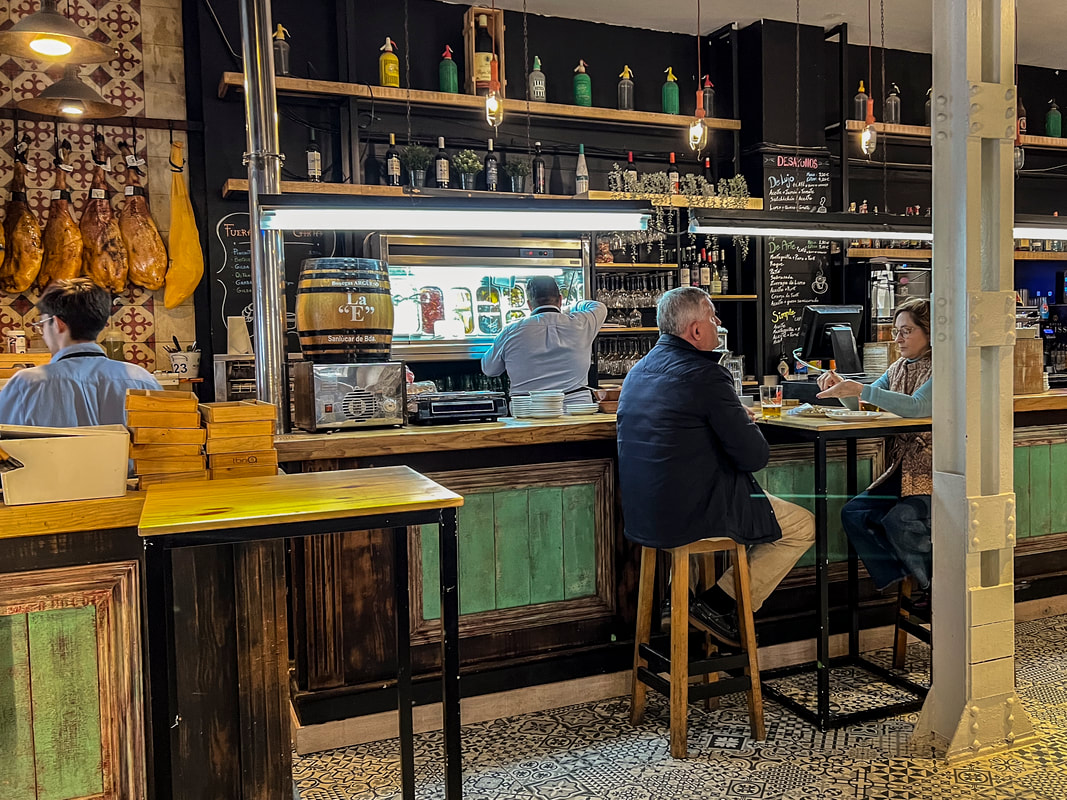
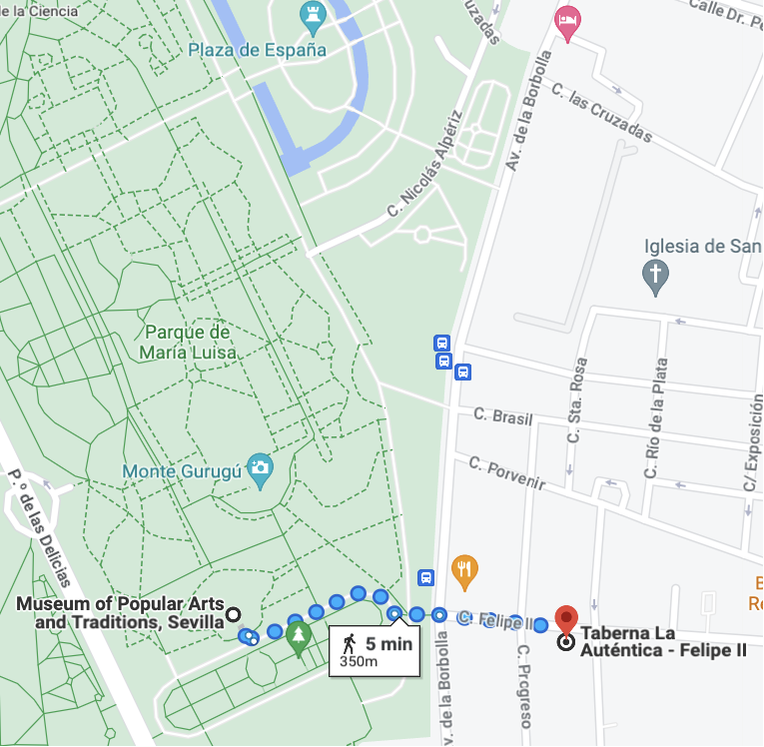
Our long ramble down memory lane left us with a keen appetite for old-fashioned, homesytle cooking. Leaving Maria Luisa Park, we started up Calle Felipe II, a broad street where good neighborhood eateries appear with cheering frequency. We soon settled on Taberna La Auténtica, a roomy tapas bar that’s particularly gifted at crafting
tortillas
.
Decades ago, I was stunned to discover that here, a
tortilla
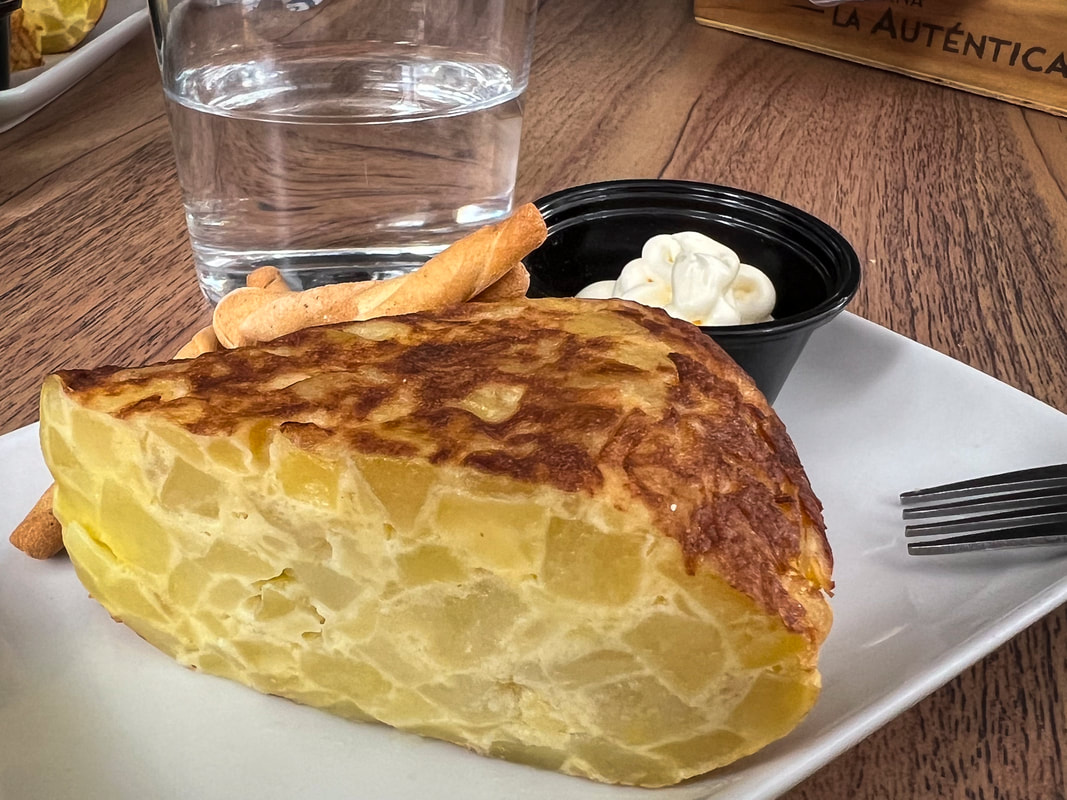
isn’t anything like the flatbread we Californians wrap around our tacos and burritos. The name means “little cake,” and in Spain, it refers to a dense potato omelet, often called
tortilla española
or
tortilla de patatas
to avoid confusion. Debate continues to rage about whether to include onions; fortunately for me, Seville is firmly in favor and so am I.
One bite and
tortilla
became my go-to comfort food, a tapa I can enjoy any hour or the day or night. The secret lies in the texture, dense yet tender; this requires plenty of oil (
dos dedos
, or two fingers deep, is the standard measure) and low-temperature cooking. The real challenge comes when you have to flip it halfway through, either sliding it onto a plate or using one of the newfangled hinged double pans (which many regard as cheating).
My one attempt to make a Spanish tortilla, even with coaching from two local women, resulted in disaster: a burnt exterior and runny interior, although to be fair at least 10% of it was marginally edible. Some cooks are famous for creating
tortillas
five inches thick, and frankly, my
sombrero
is off to them. The customary height is about half that, served in a pie-like wedge, sometimes with a side of mayo or drizzled with whiskey sauce.
Food trends constantly evolve. You’ll be relieved to hear Sevillano kids are no longer raised on beer and wine, although they are allowed the occasional taste from a young age, and teens often gather on weekends to imbibe (hard to imagine, I know). Villages still hold
matanzas
, although some are now turning the job over to professionals, and many say their social life and store of bawdy jokes are the poorer for that. The
tortilla
is as popular as ever and likely to remain so well beyond the year 21,021.
If the past has taught us anything, it’s to take nothing for granted, not even our most cherished beliefs. Just look at all those conscientious parents who gave kids sips of wine all day or told them beer was the breakfast of champions. If we’re lucky, we live and learn from our individual and collective missteps. As the old Spanish proverb puts it, “A wise man changes his mind, a fool never will.”
STORIES ABOUT SOME OF MY OTHER FAVORITE MUSEUMS
Museo de Bellas Artes (Fine Arts Museum), Seville
Bigfoot Discovery Museum, Santa Cruz, CA
Museum of Failure, Traveling Exhibitions
Atomic Bunker Museum, Kaunas, Lithuania
The Empathy Museum, Traveling Exhibitions
OUT TO LUNCH
This story is part of my ongoing series “Out to Lunch.” Each week I write about visiting offbeat places in the city and province of Seville, often by train, seeking cultural curiosities and great eats. (
Learn more
.
)
WANT TO STAY IN THE LOOP?
If you haven’t already, take a moment to subscribe so you’ll receive notices when I publish my weekly posts.
Just send me an email and I’ll take it from there.
[email protected]
LIKE TO READ BOOKS?
Be sure to check out my
best selling travel memoirs & guide books
here
.
PLANNING A TRIP?
Enter any destination or topic, such as packing light or road food, in
the search box
below
. If I’ve written about it, you’ll find it.

Leave a Reply