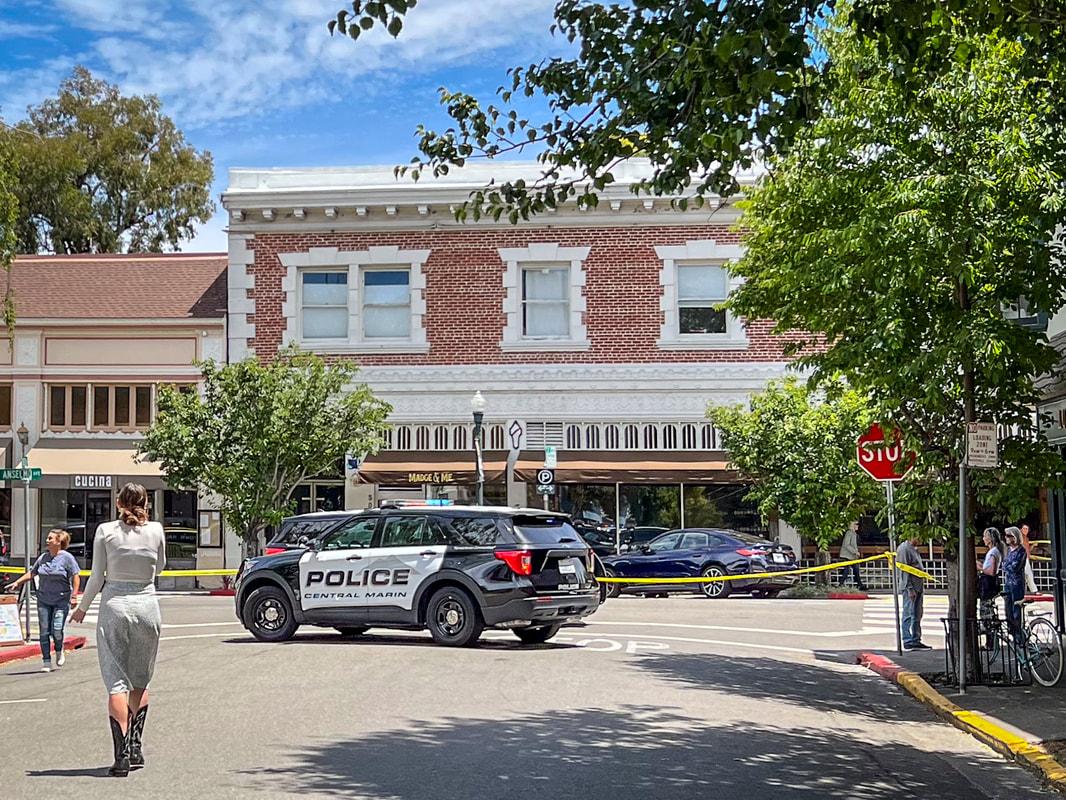
No matter how often you see it on TV, it’s still shocking to come home IRL (in real life) to find your street blocked off by cop cars and crime scene tape. When it happened to us the other day, I craned my neck searching for clues while Rich drove slowly past our street and tried to turn down the next — only to be stopped a fledgling police officer.
“You can’t come this way,” the kid announced importantly.
“Why not?” asked Rich.
“It’s confidential.”
Confidential? Who was he kidding? This is San Anselmo, a town so small that if you sneeze walking out your front door, the first person you see will hand you a Kleenex and the next three will inquire about your allergies.
Rich drew breath to protest, but I said, “Let it go. If he tells you, he may have to kill you. Besides, we’ll find out soon enough.”
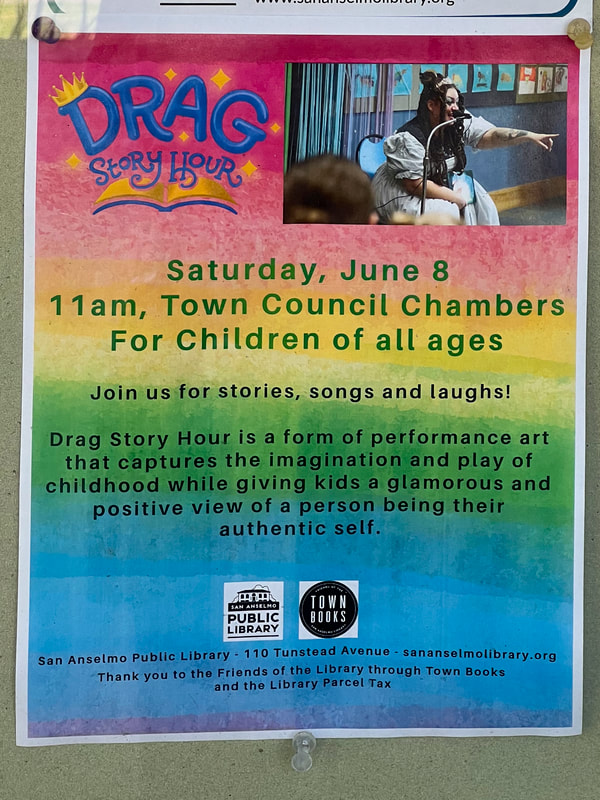
We circled home the back way and discovered, with considerable relief, that our house was not part of the hullaballoo. Neighbors soon filled us in; someone had called in a bomb threat to the nearby public library because of Drag Story Hour.
Now, I realize that Drag Story Hour for kids is not standard Saturday morning fare in all public libraries across this great nation. But here in the San Francisco Bay Area (and many other parts of the US), it’s become a tradition during June’s LGBTQ+ Pride Month.
“Join us for stories, songs, and laughs,” said my town’s website. “Drag Story Hour is a form of performance art that captures the imagination and play of childhood while giving kids a glamorous and positive view of a person being their authentic self.”
For anyone who can’t fully embrace the idea, there’s a simple solution: skip the story hour. But that didn’t satisfy one disgruntled individual, whose sentiments could only be expressed with a bomb threat. Because nothing teaches children about decent behavior like lawless aggression and false statements to the police.
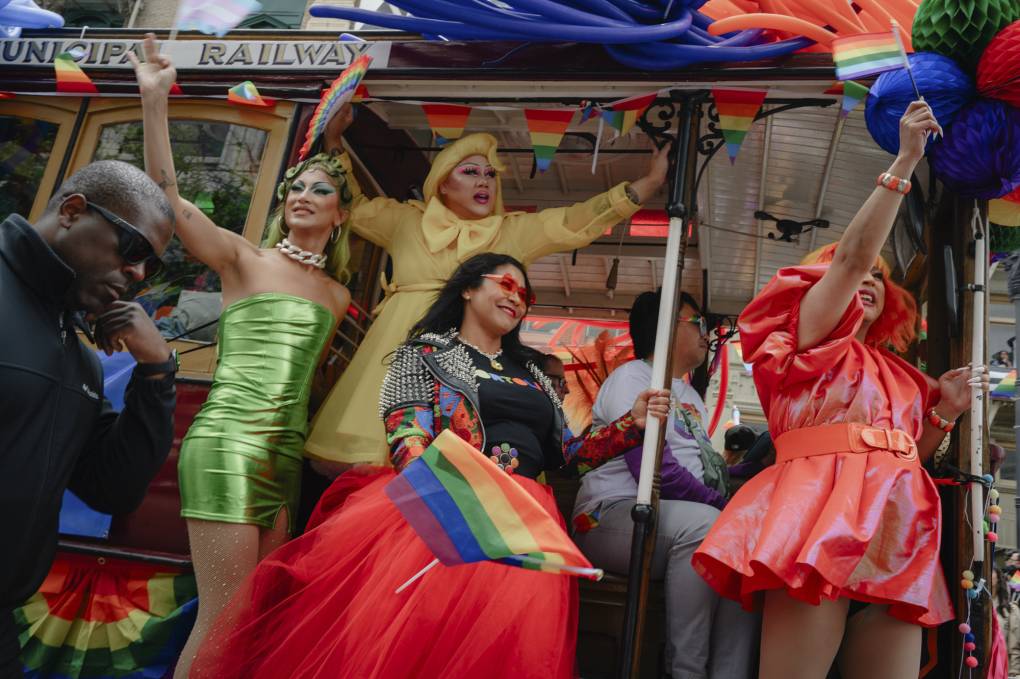
No bomb was found, and the crime scene tape and cop cars soon disappeared. Still visible all over town were rainbow flags and store displays celebrating Pride Month. And this was nothing compared to what was happening in San Francisco, currently gearing up for the June 30th extravaganza known as the Pride Parade.
“Let’s head over to the Castro,” I suggested to Rich. “Show our support.”
The Castro is San Francisco’s famous “gayborhood.” It began gathering strength during WWII, when the US military decided to discharge thousands of trained soldiers in the erroneous belief their sexual preferences somehow made them unfit to fight Nazis. Fortunately this attitude no longer prevails, and these days the US Department of Defense officially honors Pride Month.
“Pride is a celebration of generations of LGBTQ+ people who have fought bravely to live openly and authentically,” Commander-in-Chief Joe Biden said last month. “This country is stronger and more just when America’s leaders reflect the full diversity of our nation.”
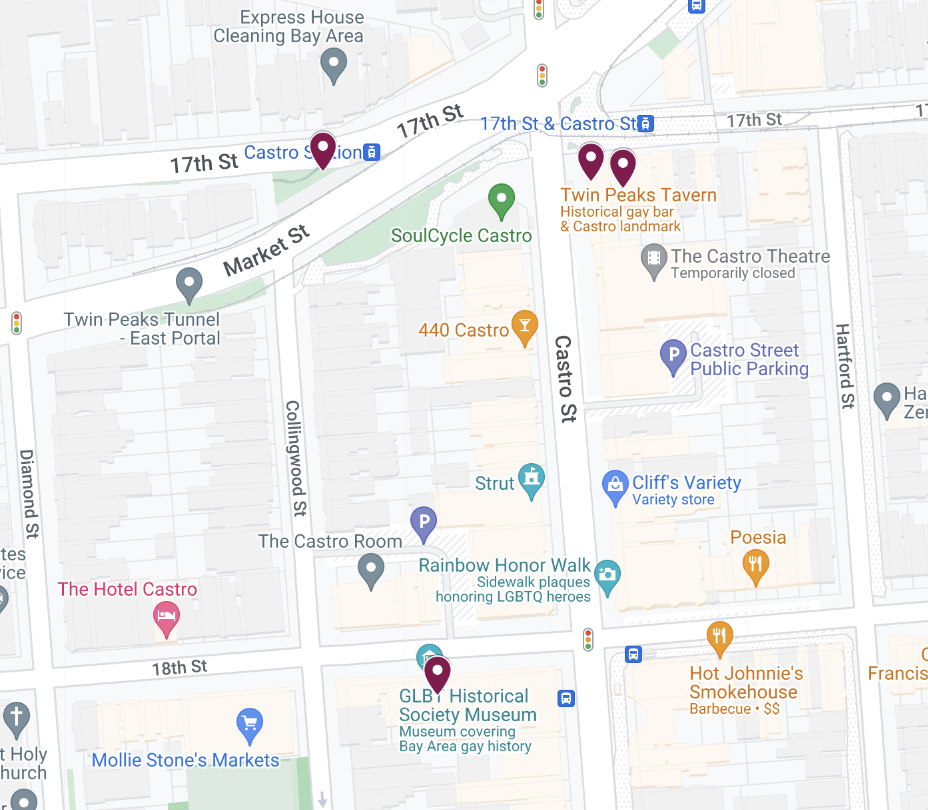
As the Castro lies six miles from the Ferry Terminal, Rich and I hopped on one of the F line’s vintage trollies, bought from other cities, refurbished, and now providing a pleasantly retro ride. We stepped off near the intersection of Market and Castro Streets and found ourselves, as expected, surrounded by rainbows.
The rainbow flag, now flying worldwide, was created here thanks to SF Supervisor Harvey Milk. Arriving from New York in 1972, he became the unofficial mayor of Castro Street, rallied the LGBTQ+ community, and in 1977 became the first openly gay man elected to public office in California. Knowing the community needed a symbol, Milk asked gay activist and artist Gilbert Baker to dream up something for 1978’s San Francisco Gay Freedom Day.
Apparently Gilbert was out on a dance floor when he had an epiphany about a rainbow; historians believe drugs may have been involved, and I’m inclined to believe them. Gilbert’s vision was translated into a 30 x 60 foot flag with eight colors. Later versions eliminated the pink and turquoise because those colors were hard to find in traditional flag fabrics. Go figure.
Since then there have been countless permutations of the rainbow flag, and the original, damaged and thought lost for many years, was rediscovered, repaired, and returned home to San Francisco in 2021. You can see it in the small, deeply moving
GLBT Historical Society Museum
just off Castro Street.
Younger readers may not remember the days when same-sex canoodling was a very serious crime throughout America. Vice squads regularly raided LGBTQ+ hangouts, publishing names and photos in the newspaper, destroying careers, families, reputations, and lifelong friendships overnight. And then came jail. Expressing non-conformist sexuality was not for the faint of heart.
Thanks to activists, laws began to change (slowly) in the 1960s. One magnificent gesture of defiance came in 1973 after lesbians Mary Ellen Cunha and Peggy Forster took over Twin Peaks Tavern, a 1930s Irish pub on Castro Street. Years earlier, the tavern’s huge windows had been painted black so wives couldn’t peer in to see if their husbands were at the bar drinking away their paycheck. The two lesbians had the paint scraped off, sending a message to the community: it was time to stop hiding.
“The bar has come to be a cornerstone within the community,” wrote Petey Barma and Bret Parker, who made the delightful
Through the Windows
documentary about Twin Peaks Tavern. “A place that changed the face of gay bars in the 70’s, a refuge during the AIDS crisis in the 90’s, and throughout it all, a gathering place: our very own ‘Cheers for Queers.’”
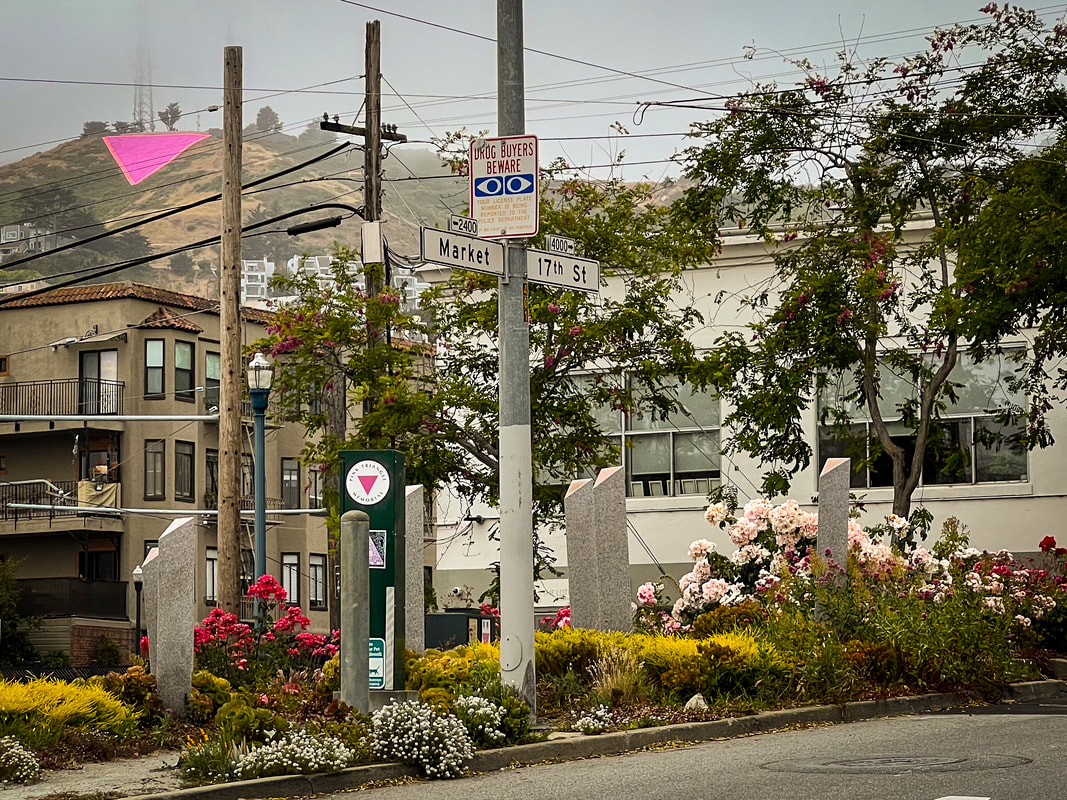
Rich and I promised ourselves beers at Twin Peaks later, but first we visited the museum, which honors the 40 million who died of HIV/AIDS. Then we strolled through the
Pink Triangle Memorial
, America’s first permanent landmark dedicated to LGBTQ+ Europeans persecuted by the Nazis during the Holocaust.
To refresh our spirits after such sobering reflections, we had a hearty lunch in the whimsical 24-hour diner Orphan Andy’s. When the proprietor set down my giant bowl of soup, I said, “Wow, that’s generous!” They grinned. “It’s because we love you.” Awwww…
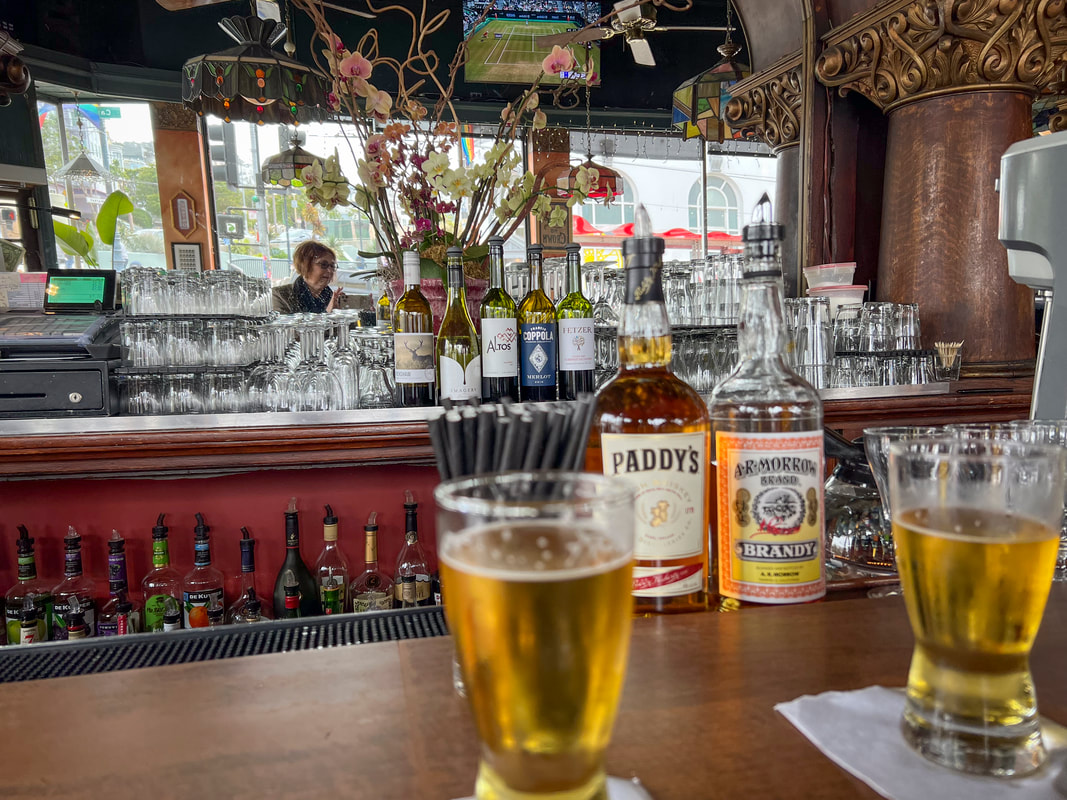
We got an equally warm welcome at nearby Twin Peaks Tavern. I soon learned it was Mike the bartender’s first day, but everyone else looked like they’d been ensconced there since it opened, gazing contentedly out the windows and chatting with old friends.
There and everywhere in the Castro, people were kind and friendly. Nobody seemed to embody the attitude I’d seen on a joking storefront sign, “I don’t mind people being heterosexual as long as they act gay in public.” I felt accepted for who I was. And that’s what the Castro is really all about.
The whole day provided the perfect antidote to the mean-spirited attack on our public library’s Drag Story Hour. Isolating ourselves from those we view as different is not the answer. As Harvey Milk put it, “How can people change their minds about us if they don’t know who we are?” And underneath it all, how different are we, really? “We’re all born naked,” points out cross-dressing performance artist RuPaul, “and the rest is drag.”
For more, check out:
The Ten Best Things to Do in the Castro District
Twin Peaks Tavern Documentary:
Through the Windows
Milk
, the story of Harvey Milk’s work & assassination
Subscribers
If you don’t get a post announcement every week, check your spam folder. Internet security is in a frenzy these days.
This post is part of my ongoing series
OUT TO LUNCH IN
CHEAP & CHEERFUL SAN FRANCISCO
My goal is to discover some of San Francisco’s most colorful neighborhoods so I can check out what’s really going on in this zany town. Are we in a doom loop? Already on the rebound? Still fabulous? And where should we eat afterwards? These and other questions will be explored in upcoming posts.
BROWSE PREVIOUS POSTS HERE
DON’T MISS OUT!
If you haven’t already, take a moment to subscribe so I can let you know when I publish my weekly posts.
Just send me an email and I’ll take it from there.
[email protected]
And check out my
best selling travel memoirs & guide books
here
.
PLANNING A TRIP
?
Enter any destination or topic, such as packing light or road food, in
the search box
below
. If I’ve written about it, you’ll find it.
Leave a Reply