Do you ever have days when your tech devices gang up on you, taking fiendish delight in frustrating your efforts to perform the simplest task? I’ll take that as a yes. When that happened to me Friday, along with the teeth-grinding exasperation came the nagging feeling of familiarity. What did this convoluted, time-devouring, mind-numbing quagmire remind me of?
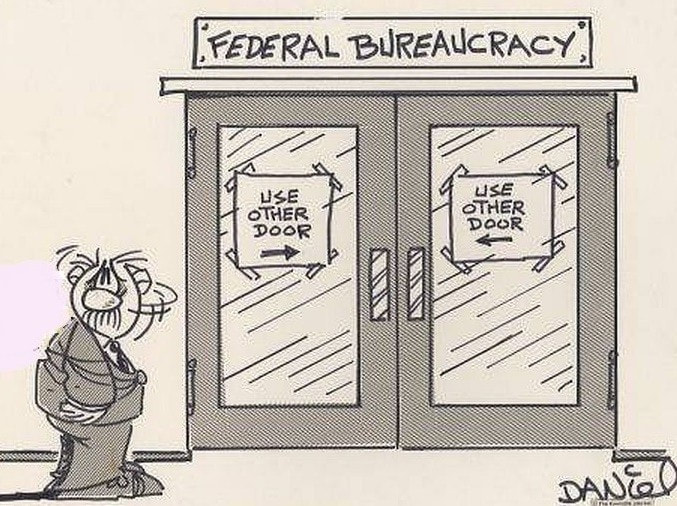
And then I had it. Spanish bureaucracy.
Here in Seville, Rich and I once had to close a couple of moribund bank accounts, one with a balance of 10€, the other with 20€. To terminate, the clerk explained, required a zero balance.
“Fine,” I said. “We’ll take the cash now.”
She looked at me as if I’d requested a dodgy sexual favor. “No. We do not keep money here.”
But … this was a bank! Where the hell did they keep the money? In a shoebox under the bed?
Rich asked soothingly, “What would you suggest?”
After furious tapping and screen-scowling, she said, “I could transfer the 10€ to a charity. Perhaps …” more furious tapping. “UNICEF?”
“Fine.” The transfer took twenty minutes. First account: closed.
Fool that I was, I said, “Now we send the 20€ to UNICEF?”
She gave me her trademark dodgy-sexual-favor look. “Impossible.”
Naturally I asked why, but the answer was so long-winded my eyes soon glazed over; it’s possible my ears may have been bleeding slightly. All I can tell you is that there are two types of accounts, and this was the other kind. Forty minutes later, we agreed the bank would keep the money, the account would never be closed, and Rich and I would never darken their door again.
Opening a Spanish bank account isn’t any easier.
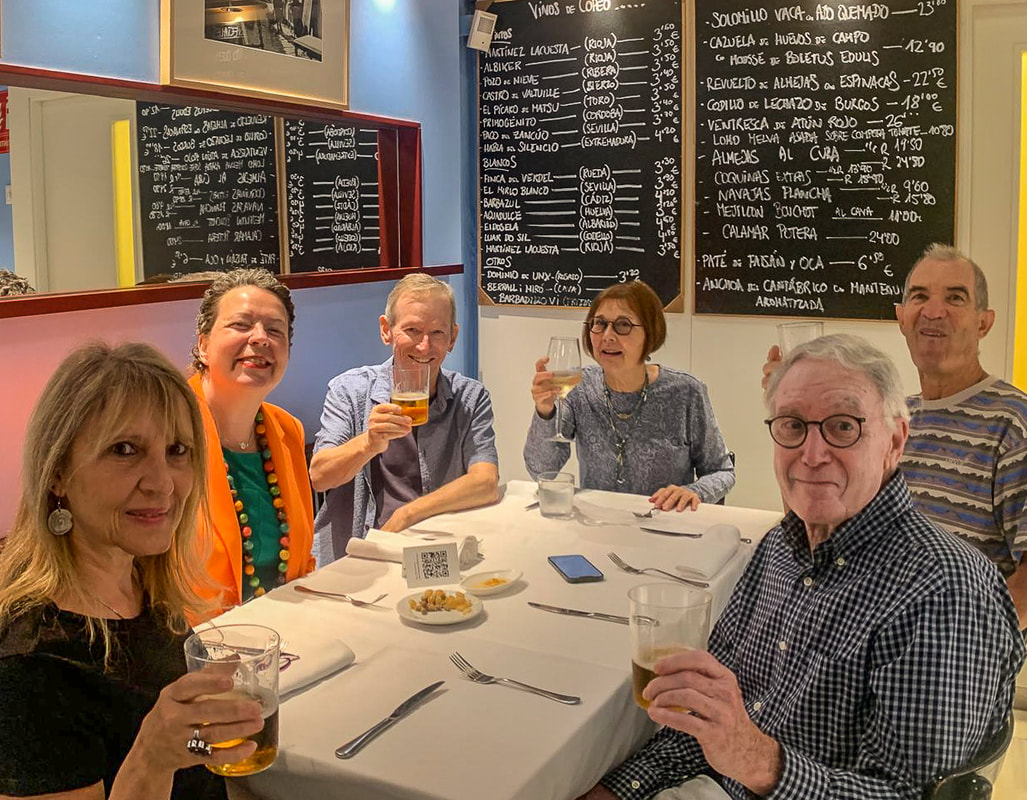
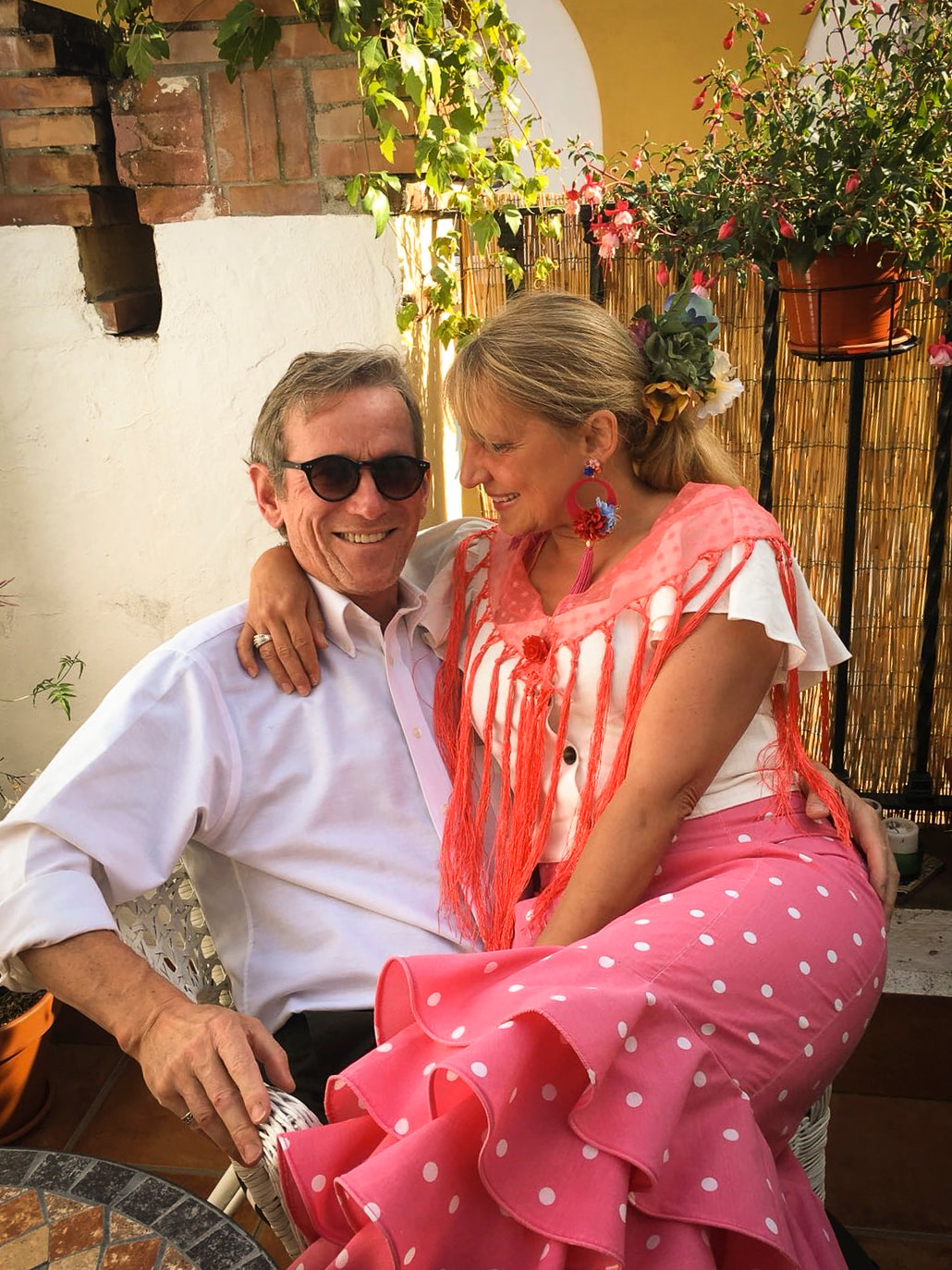
“I didn’t realize it at the beginning,” my Romanian friend Cristina told me Friday, “but here someone has to introduce you to your banker.”
“At first, we couldn’t get anything done,”Cristina recalled. “We had found a place to buy, and needed to put down a deposit. To do that we needed a bank account. But to open a bank account we needed a fixed address. And an NIE.” That’s the
Número de Identificación de Extranjero
(Foreigner Identification Number) the Spanish authorities give you.
“And to get an NIE,” she continued, “we needed a bank account. And a fixed address. We went around and around. Finally our lawyer intervened. He knew someone who worked at the bank, introduced us to them, and somehow it all got arranged.”
“Patience and persistence,” said Cristina’s husband, Jimmy. “That’s what you need.” And Jimmy should know; he’s an American who has lived all over the US and Eastern Europe, including Romania, where he met Cristina in 1999.
“I was born in Bucharest and lived there all my life,” Cristina said. “In 2004 Jim had a job in Jordan and I went with him. I left everything behind: my job, which was great; my cats which I loved with all my heart; my dad; my friends; my language.”
“In Jordan we learned a few words of Arabic, to get around,” said Jimmy. “But it was complicated. There were lunar aspects and sun aspects of the language. Egyptian Arabic was different from Jordanian Arabic. Of course, it’s not Roman characters, and it reads from right to left.” After that job and a stint in the US, they retired to Seville in 2016, where learning Spanish proved less daunting than Arabic but was still no cakewalk.
“Take language classes,” Jimmy advised, “but be careful. We went to one school, and they assured us that there was a wide age range of students. There was not a person there older than 24. I felt like everybody’s grandfather.” (Jimmy is 75, Cristina 62.)
Everyone asks them about Spain’s medical care. “Don’t be afraid of it,” Jimmy said. “The health system is wonderful.”
Cristina nodded. “Last year I had a small foot fracture. The doctor said I needed an MRI. I talked to the clerk and she said, ‘Yes, you can have one in half an hour, just wait here.’” You’ve gotta love the service.
Taxes are always a delicate subject, but I felt I owed it to my readers to inquire. In years that they spend more than 180 days in Seville, Cristina and Jimmy qualify as tax residents of Spain. “There’s a huge difference,” Jimmy said. “Our non-resident tax is about 100€ to 200€. As tax residents, we pay 6,000€ to 7,000€. My advice: Get a tax lawyer.”
Professional advice is also essential, he said, for getting your Spanish drivers’ license, which is required after six months of residency. (Unless, like me, you never drive here.) Jimmy passed the written test — now available in English — on his own but wisely worked with an instructor to get insider tips for the driving test. “Everything you think you know, it’s totally the opposite,” Cristina said.
Jimmy summed it up: “If you are thinking of relocating, remember it’s not the same as a vacation. And it’s not the same as the US. You’ve got to be open.”
Being open to new ways of doing things isn’t always easy, and some newcomers crash and burn. CNN recently published
an interview with Joanna McIsaac-Kierklo
who retired to France with her husband in October 2023. Now they’re back in San Francisco, saying their dream life had become a nightmare.
“I honestly don’t think we could have put in any more effort to acclimatize to the French way of life,” said Joanna.
Really?
She avoided her fellow expats — “that’s not exactly why we came on this adventure” — but never learned any French. “I have been so busy packing, unpacking, assembling furniture etc. that I haven’t really found time to hunker down and start.” Small wonder that she eventually told her husband, “I haven’t talked to one person here in three months.” Was she waiting for
les Français
to learn English and show up at her apartment?
Joanna complained that procedures for setting up a bank account and finding a doctor were annoyingly different from those she knew in America. “You talk to the French, and they just shrug their shoulders. And they go, ‘Well, this is France. That’s how it is.’” Yes, and isn’t that the whole point of moving abroad? To try new ways of doing things ?
Even the food disappointed her. “People go, ‘Oh my God, the French food is so fabulous. Yeah, if you want to eat brie, pâté, pastries, and French bread all day long. But who eats like that?” Well, yes, that does sound like a nightmare.
As the Buddhists remind us, wherever you go, there you are. So much of how we experience the world depends on our attitude and the narrative we wrap around our experiences.
The French like to say,
En tout pays, il y a une lieue de mauvais chemin
(In every country there is a stretch of bad road). The question is whether we’re going to spend every minute searching for bumps and potholes or roll down the windows, step on the gas, and lean forward to see what adventure awaits us around the next bend.
The Five Things Cristina & Jimmy Learned
Cultivate patience and persistence.
Take language classes but choose wisely.
Trust the health care system.
Work with a tax lawyer.
Hire a driving instructor.
Bonus tip: Be open to everything.
THE
AMIGOS
PROJECT
This post is part of my ongoing exploration of how living and traveling abroad can enrich our lives and help us find fellowship, avoiding the isolation that’s become a global epidemic.
See all my Amigos Project posts here.
DON’T MISS OUT!
If you haven’t already, take a moment to subscribe so I can let you know when I publish my weekly posts.
Just send me an email and I’ll take it from there.
[email protected]
SUBSCRIBED BUT NOT GETTING POSTS?
Check your spam folder
.
Internet security is in a frenzy these days. If you still can’t find it, please let me know.
WANT MORE?
My best selling travel memoirs & guide books
Best of Cheap & Cheerful San Francisco
Cozy Places to Eat in Seville
GOING SOMEWHERE?
Enter any destination or topic, such as packing light or road food, in
the search box
below
. If I’ve written about it, you’ll find it.
Leave a Reply