“Any group that feels obligated to include ‘Are you a sex cult?’ on its frequently asked questions page probably has something of a public relations problem, even when the answer is, ‘No,’” observes journalist Jon Brooks. You can see his point.
He was writing about Lafayette Morehouse, a commune founded in 1968 whose residents still embrace a “responsible hedonism” philosophy. “Seriously,” says their website, “we are in many ways fairly traditional, suburban families and individuals, but we’re also a group exploring pleasurable living, which qualifies us as an alternative lifestyle.”
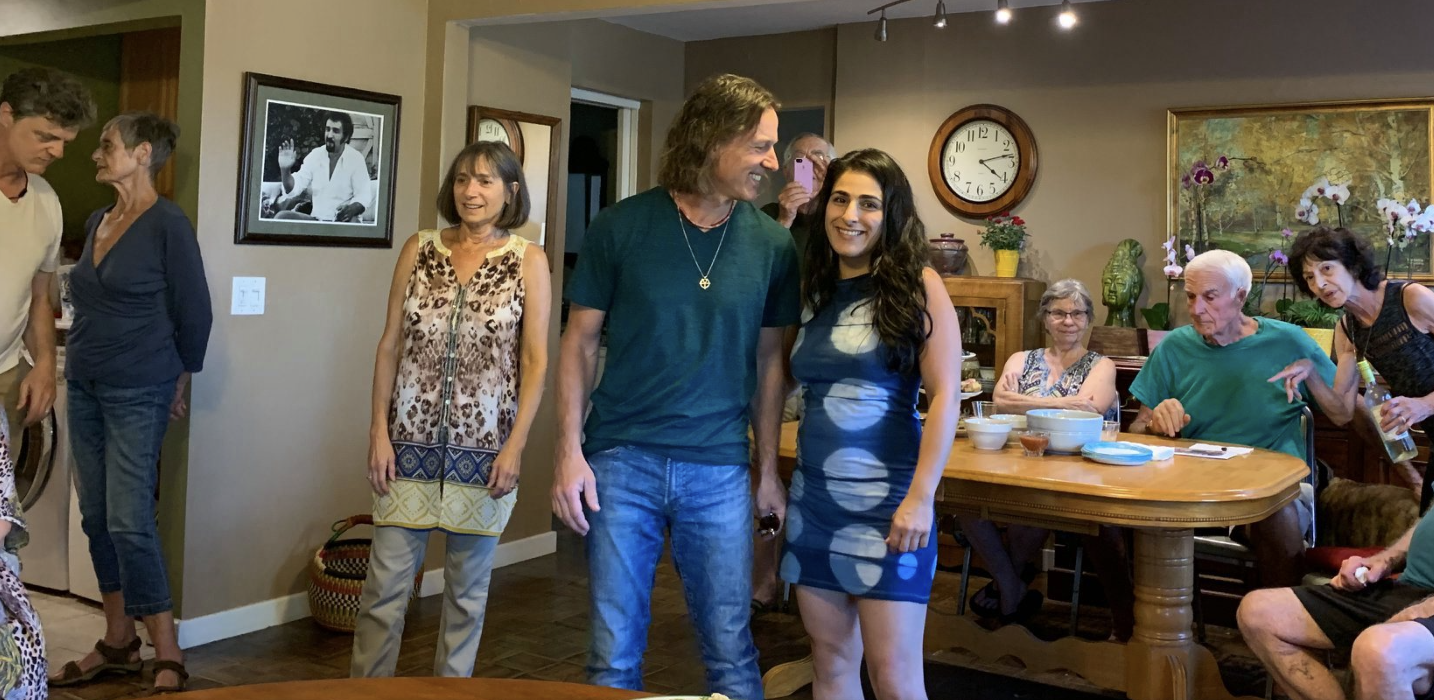
On their 20-acre plot in Lafayette, CA, members paint their houses purple because “We think it only fair to let people know that they are entering an unusual situation.” For the curious there are courses such as “Saying Yes to Pleasure.” Friskier members of the public are invited to games nights during which “Playing the structured games often affords an experience of surprising intimacy, insight, and laughter.” What games? I don’t know, but I suspect we’re not talking about Scrabble and Parcheesi…
So while they wouldn’t define themselves as a sex cult, clearly Lafayette Morehouse is a “fairly traditional, suburban family” — with benefits.
But that’s us humans for you. We cannot resist experimenting with our living conditions. Since the dawn of civilization we’ve attempted to bring about Utopia — or at least provide a more efficient way to organize meals, share tools, and avoid the existential angst of loneliness. From Plato’s ideal of a family-free society to Medieval monasteries to the celibate Shakers to the free love and organic vegetable Mother Goddess hippie farms, every generation has had a go at redefining how humans should live together.

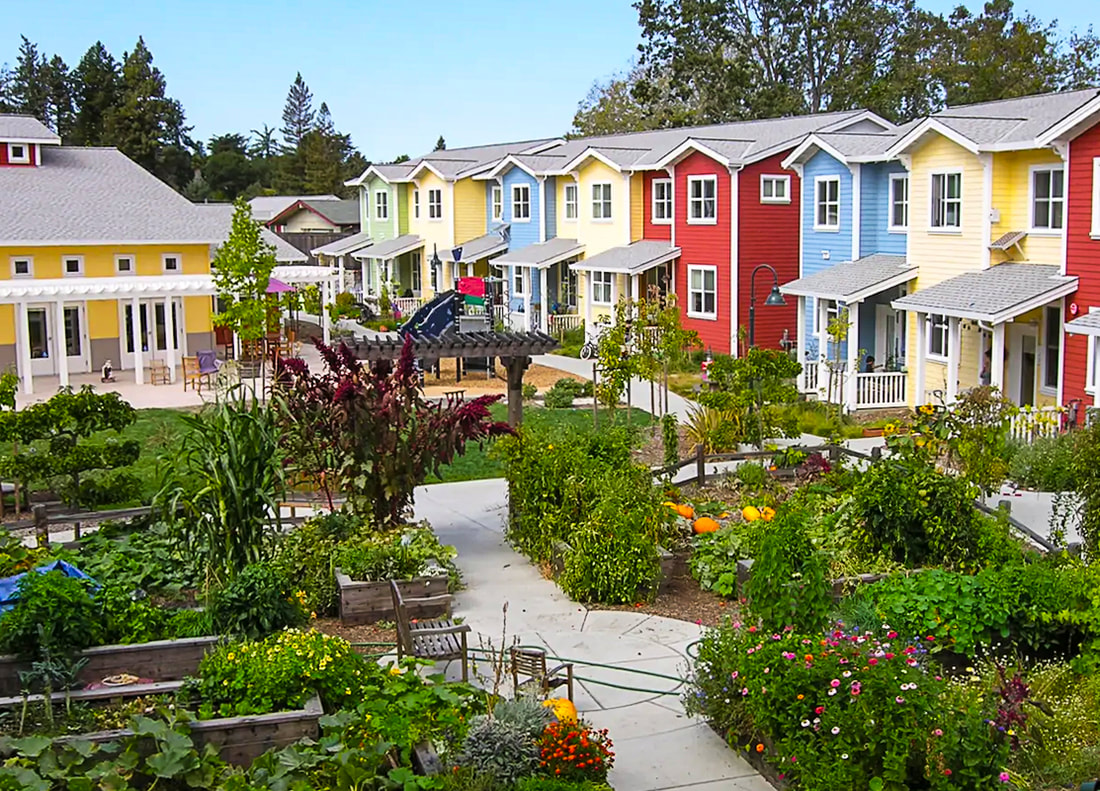
What’s the latest? And just how eccentric do you have to be to participate? Incredibly, the twenty-first century has come up with something rarely seen in modern times: a practical model that works for ordinary people. It’s about grouping slightly smaller homes and apartments to create natural opportunities for social interaction.
For anyone contemplating a move these days, they’re something to consider. The three main styles are cohousing, pocket neighborhoods, and co-living spaces.
Cohousing is the most sociable; everyone has their own home but gathers regularly for meals, work, and recreation. Pocket neighborhoods are clusters of homes and townhouses, rather like the charming, old-fashioned villages you see in Agatha Christie movies, only without the dead body. Interaction is less structured. Co-living is much like a traditional boarding house, with private accommodations and shared kitchens and workspaces.
Every community has its own rules and terminology because hey, original thinking is the whole point.
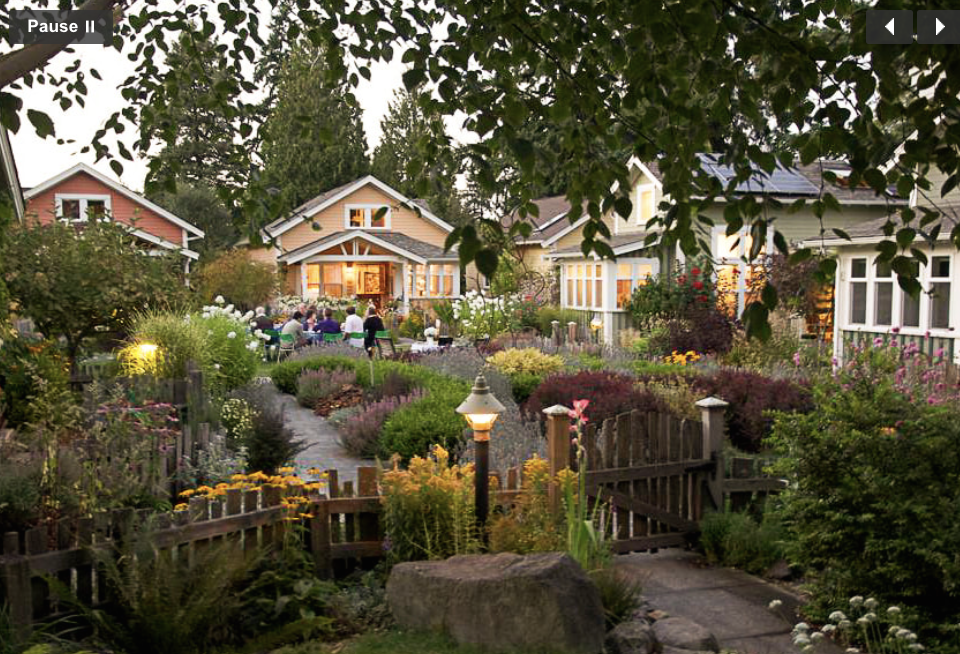
“The growth of co-living arrangements is predicted to significantly increase, with estimates suggesting the market will grow from $13.3 billion to $63.8 billion by 2028,” reports the Lincoln Institute of Land Management. “As housing in urban areas becomes more expensive, co-living offers an affordable alternative, especially for young professionals and students. By sharing living spaces and communal facilities, residents can significantly reduce expenses such as rent, utilities, and maintenance.”
Most of us grew up in housing designed for the post WWII nuclear family. In 1950, nearly all Americans — 87% — were married. By 2022, it was just 47%.
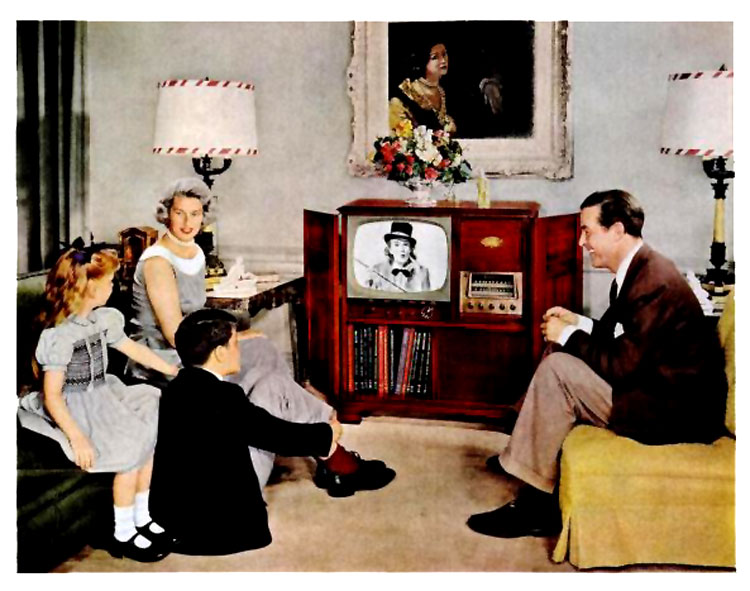
Our households are increasingly non-nuclear: single parent, multi-generational, solo seniors, roommates, and other configurations abound. Living in non-traditional households can make it easier than ever to feel adrift in a global society.
“As a species, we apparently evolved genetically and culturally to live in groups of 50 to 150 people,” says professor of population studies Paul Ehrlich. “It is, of course, still not clear whether any sustainable social system can be devised for a small-group animal like Homo sapiens, struggling to live in groups of millions and even billions.”

Today people are exploring all sorts of alternatives to single family homes set on separate plots of land. Would you be happier with dozens of close neighbors, regular communal meals, and shared workshops? Is the lifestyle sustainable over time among a mixed group of I-gotta-be-me Americans?
“Oh, yeah,” says Richard Senghas. “It’s like an oasis.”
And he should know. As a newly hired linguistic anthropology professor at Sonoma State University, Richard helped found the cohousing community in Cotati, CA, where he and his family have lived for more than two decades.
Called FrogSong for the croaking chorus arising from the site’s marshy areas, the 2.34-acre development is designed on the condominium model. The 62 residents buy their own apartments or townhouses and share common work and play areas. Residents have no direct control over who may join, but with bylaws requiring decisions by consensus and a commitment to pitch in preparing frequent shared meals, it tends to attract people with the same outlook.
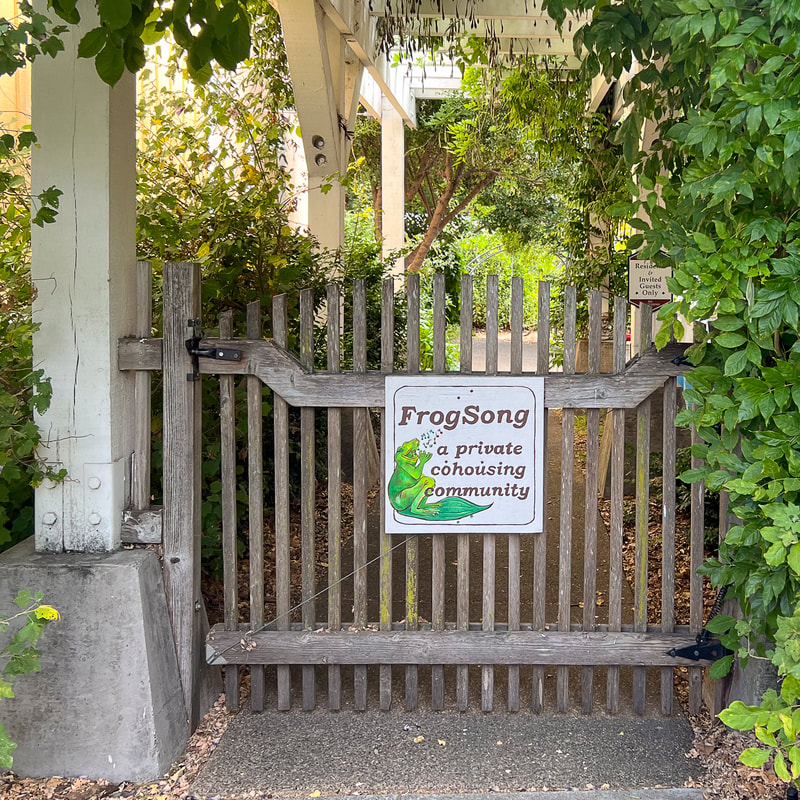
FrogSong’s Common House officially opened October 10, 2003, a date commemorated every year as Hearth Day. “It’s a non-moving holiday,” says Richard. “But then the most adjacent weekend, we have a whole weekend of things: we have a breakfast together, and a pajama contest, and a no talent show….”
It’s small wonder that half the units are still occupied by their original 2003 owners. Everyone parks at the periphery and walks home via community pathways, passing other units. There are communal meals at least twice a week, and everyone takes turns with the shopping, cooking, and cleanup.
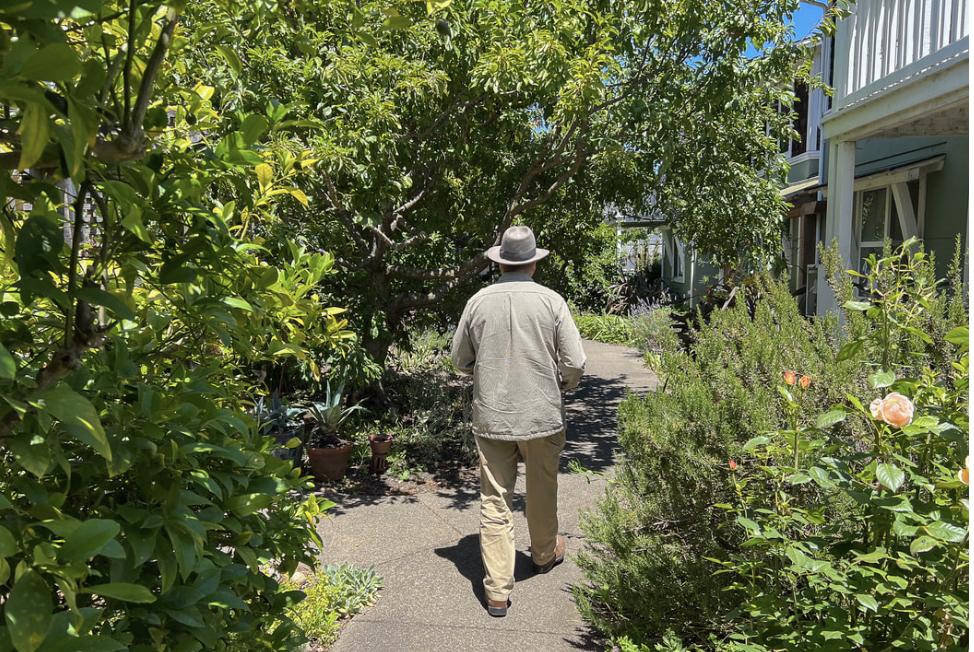
In an emergency, you don’t have to look far for help.
“I can speak personally about that.” Richard’s eyes welled up. “I always get emotional….” He took a deep breath and told me about his wife’s illness.
“Tina got really sick. She had double pneumonia so she had to go into the emergency department. And we had this kid in kindergarten. I called [my neighbor] Heather, and I said, ‘Hey, Heather, could I bring Ursula to you until we figure out what’s happening?’ And she said, ‘Sure.’ And she called the network, and they coordinated for the next ten days taking care of Ursula. She always had clean clothes. She always had meals. She was brought to school. I saw her whenever I could, but I was a new, junior faculty member trying to get all my courses going. People helped. And it made such a difference.”
(Tina’s fine now. Thanks for asking.)

This is how Homo sapiens has survived so long in a frequently hostile world: cooperation. And that happens through community. We are small-group animals, happiest in packs, like dogs and dolphins. It’s no coincidence that we find loneliness worrying; loneliness is nature’s way of sending a signal to our brain that something needs to change.
That doesn’t necessarily mean moving to an organic farm or embracing the mantra (or practitioners) of “responsible hedonism.” Nor does it require more technology; I was aghast at how many apps are flooding the market offering conversations with AI that will give you “emotional support to ease your feelings of loneliness.”
The cure for loneliness isn’t more time with clever machines, it’s more time with congenial people. That can happen in many, many ways, and thanks to these collective housing enterprises, we’ve added all sorts of interesting new options to the human repertoire.

Leave a Reply