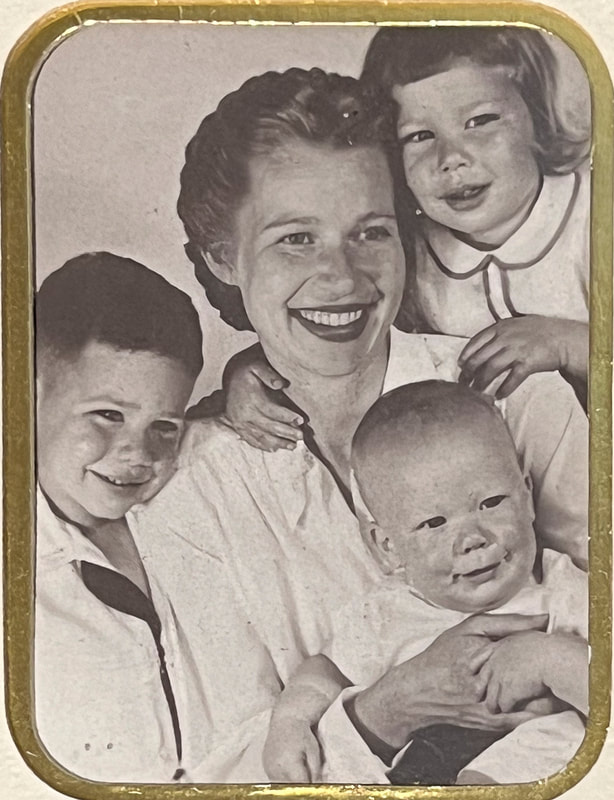
My mom raised so many kids (6) that she got it fixed in her head a normal evening meal was, for instance, a single lamb chop, a spoonful of mashed potatoes, and a few broccoli flowerettes. More than one relative has told me, “We always used to leave dinners at your mom’s house saying, ‘Well, that was fun. Where shall we go to eat?’”
What my Mom saw as a well-balanced diet, our visitors saw subsistence rations — yet another example of how slippery and individualistic our perceptions can be. We live much of our lives in our imaginations; studies show we daydream 25% to 50% of our waking hours, exploring new ways of thinking and being in the world. These fantasies may become rehearsals for real-world activities or launch us into uncharted corners of the universe.
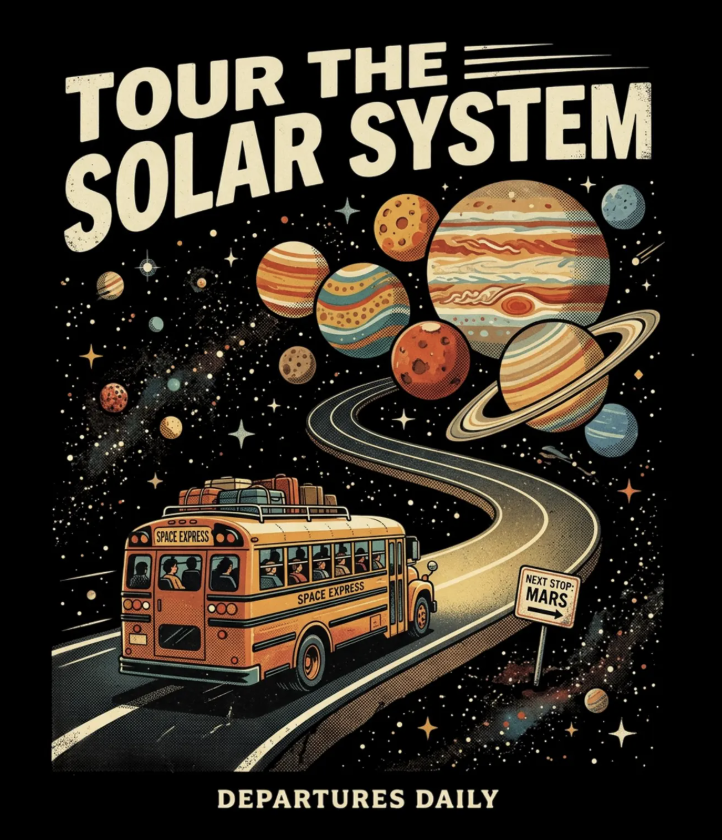
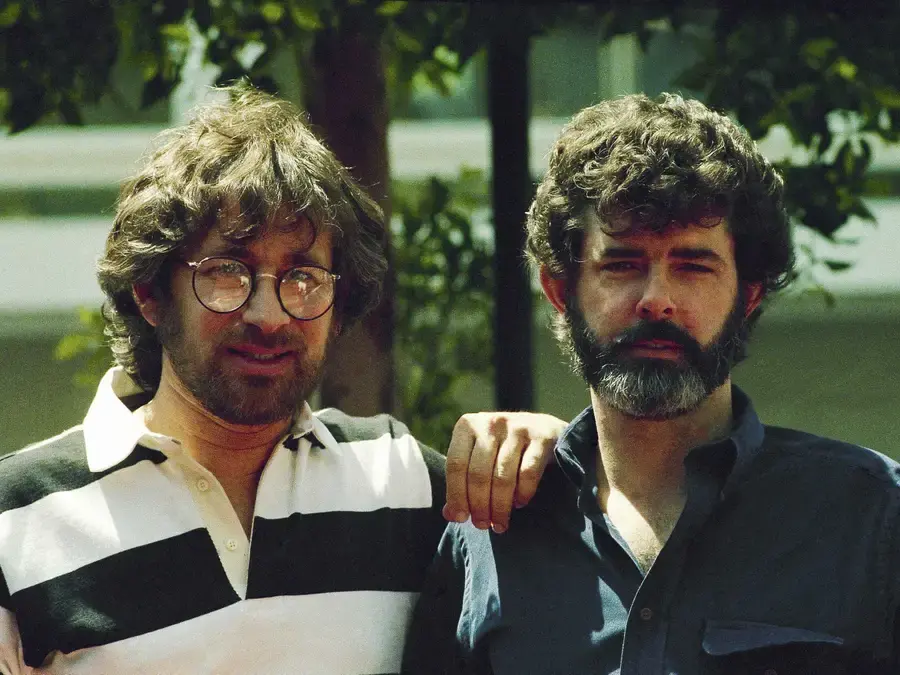
Some years ago a young filmmaker in my village was releasing his third movie, a sci-fi action epic. He was so convinced it would be a humiliating flop he took off to Hawaii with a pal to avoid the critics’ scorn. The pal was also a young filmmaker wrapping up his own movie, and the two came to a gentleman’s agreement that they’d swap 2.5% of the profits (if any) from their respective films.
The next day my neighbor, George Lucas, learned his film Star Wars was breaking all box office records. Since that opening weekend in 1977, roughly 1 billion people — 15% of the world’s population — have seen something from the Star Wars franchise, and with the latest installment, The Mandalorian and Grogu, opening this weekend, that number is likely to keep rising.
The pal in Hawaii, Stephen Spielberg, was finishing Close Encounters of the Third Kind at the time. Since then he’s pocketed millions from that gentleman’s agreement.
My point is this: imagination is a valuable commodity. It enriches our culture, sparks new innovation, offers tremendous fun, and if we’re really lucky, lands solidly in our bank accounts with a resounding ca-ching! George Lucas is the world’s wealthiest film celebrity, and among his many philanthropies, he gave our village Imagination Park, presided over by statutes of Yoda and Indiana Jones.
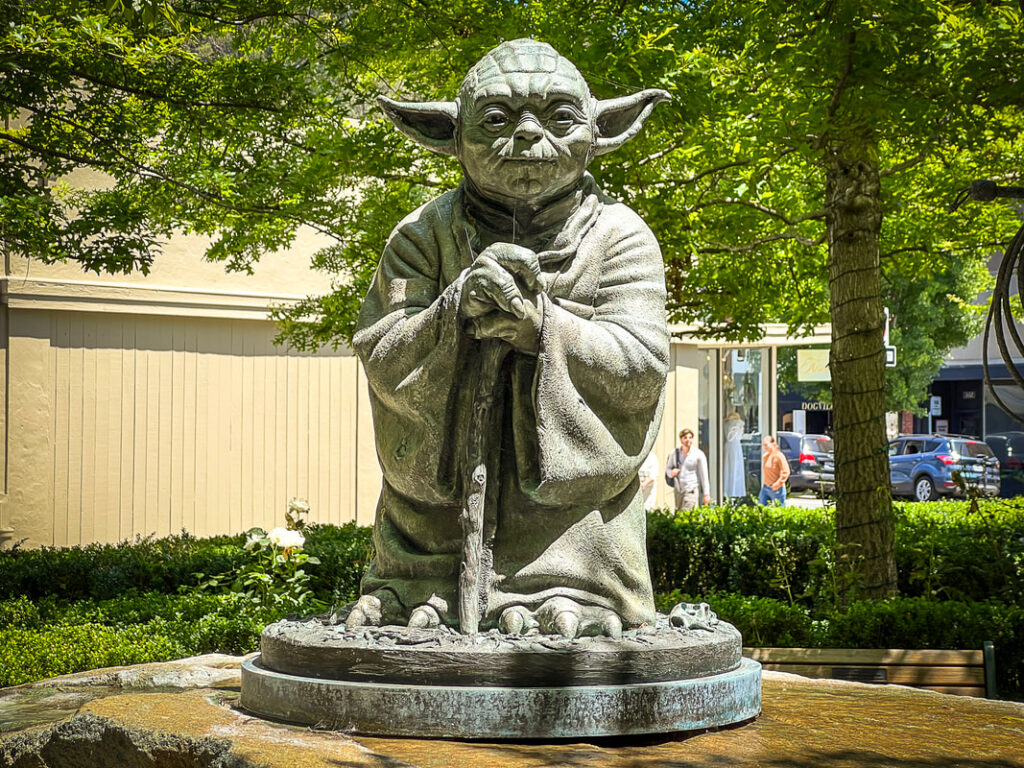
George’s characters have become part of village lore. The local ice cream shop sells scoops of Darth Chocolate and Wookie Cookie. Characters from Star Wars routinely show up at local parades and pose for pictures.
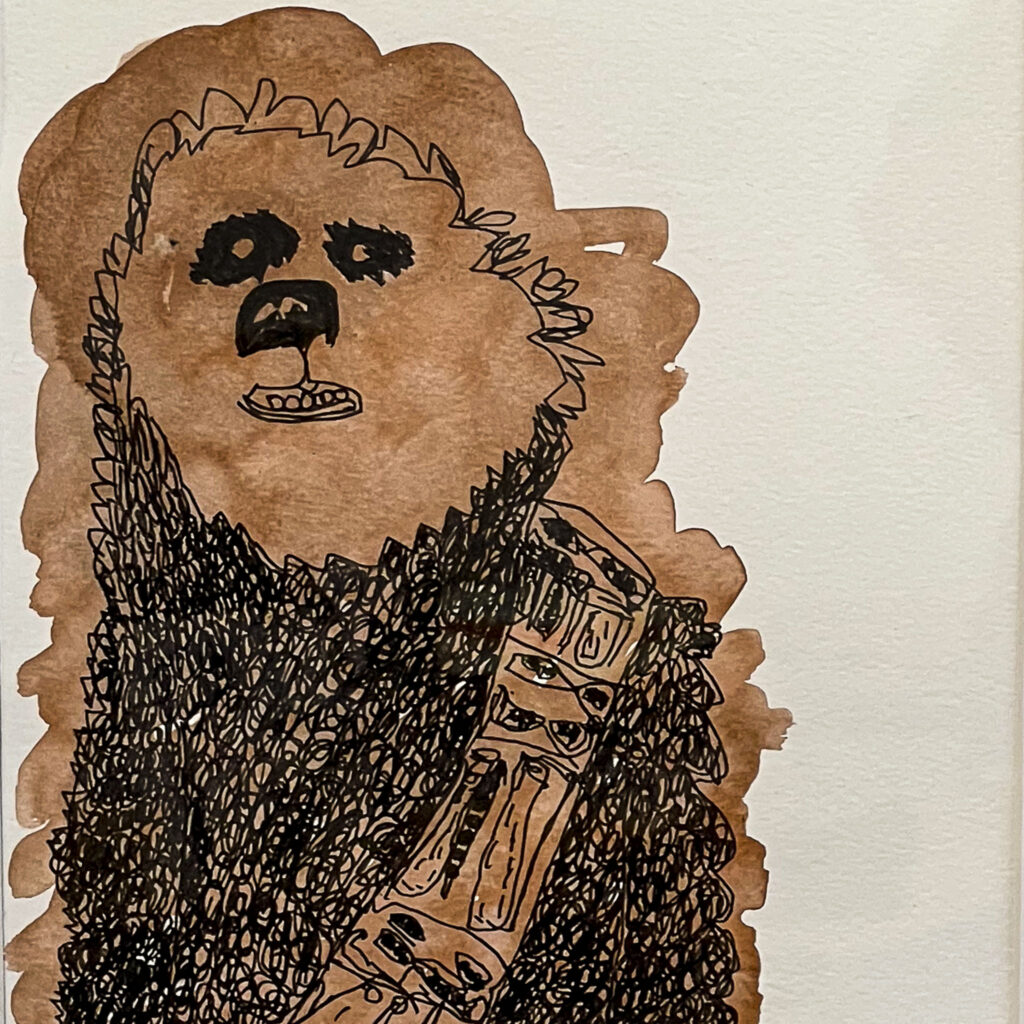
And half a block from Imagination Park, Cedars of Marin, which has been a pioneer in nurturing neurodiverse individuality for more than a century, currently has an art exhibition that includes Princess Leah, Chewbacca, and a whole lot of fantastical creatures that soared from the artists’ own vivid imaginations. An alligator with a halo? Green goat unicorns? Sure, why not?
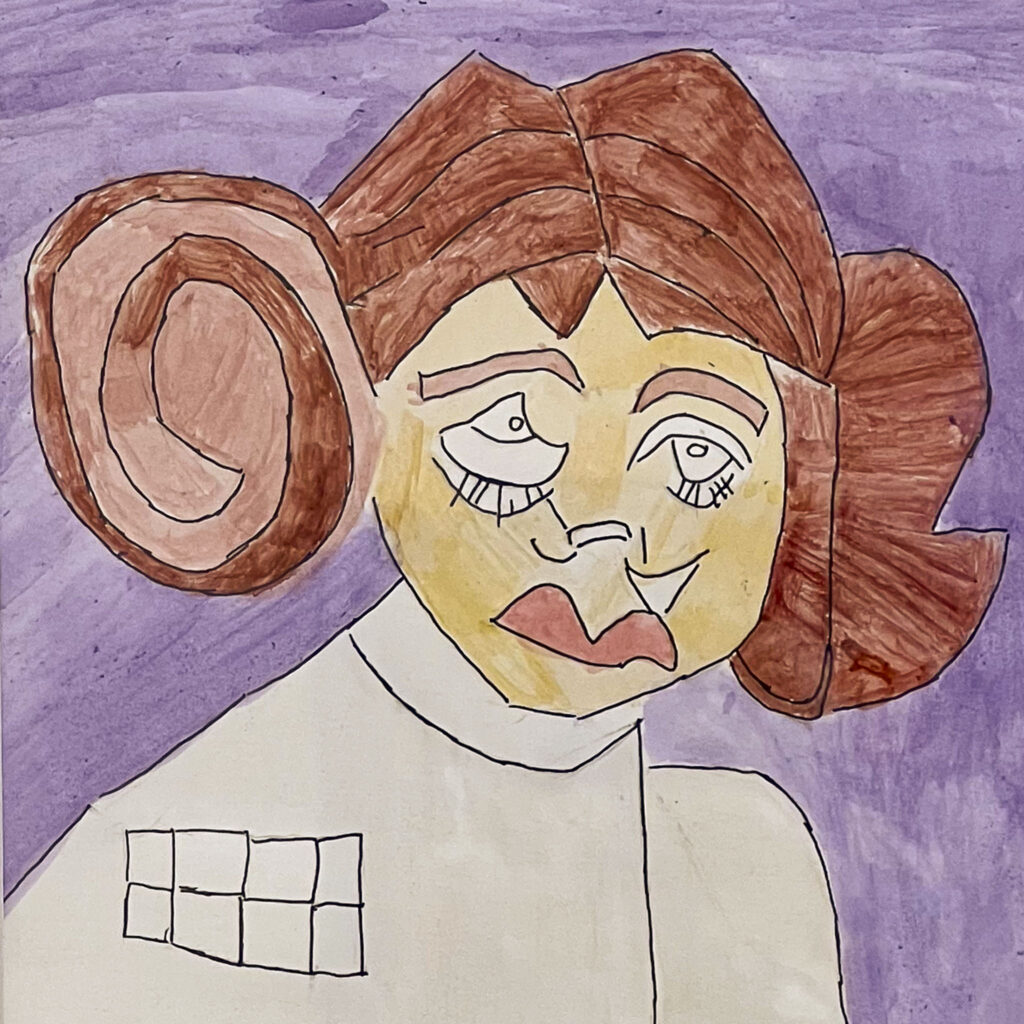
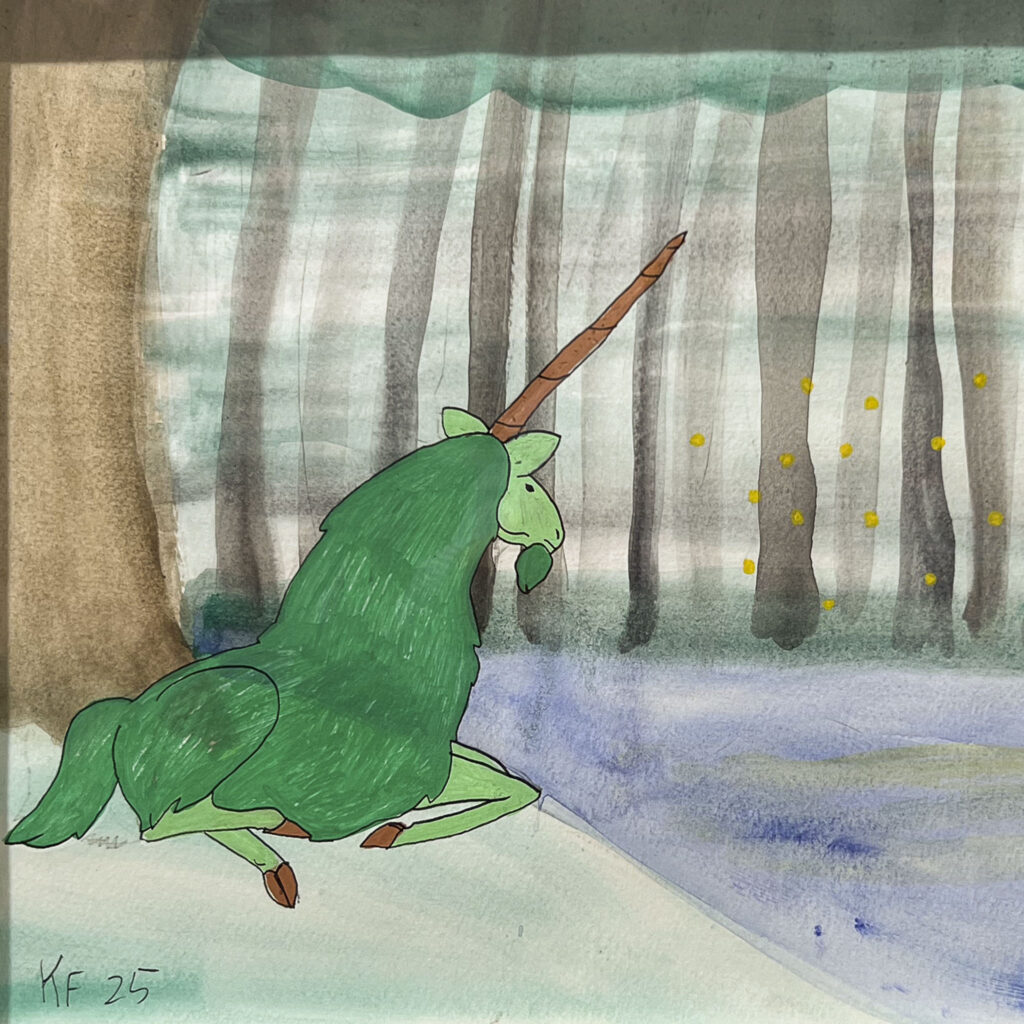
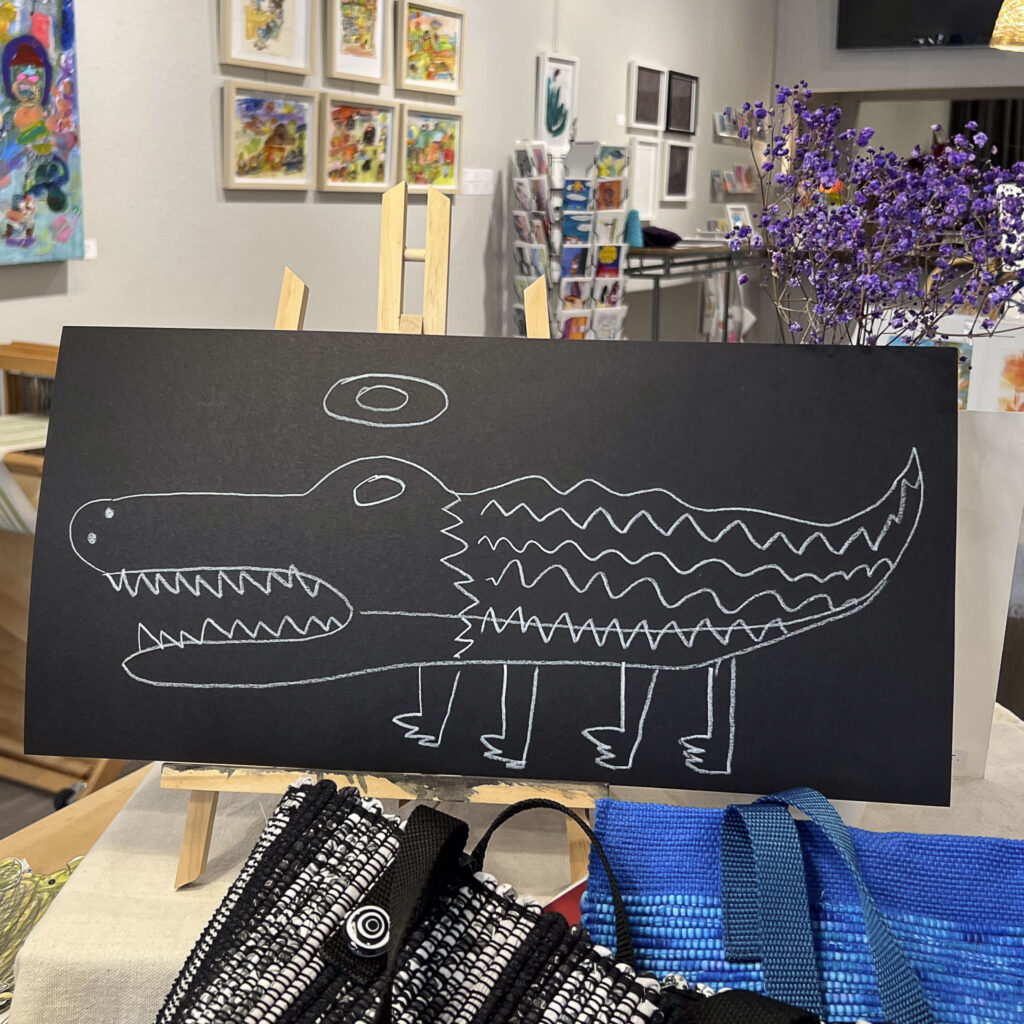
“Every possibility begins with the courage to imagine,” said author and artist Mary Anne Radmacher.
On Wednesday we honor that kind of courage; it’s Nothing to Fear Day, which commemorates President Franklin D. Roosevelt’s famous words, “The only thing we have to fear is fear itself.” A bold statement in 1941, with the Blitz beginning in Liverpool, Hitler poised to invade Russia, and the war spreading to the Mediterranean. The idea feels equally audacious in our own challenging times.
To be fair, Nothing to Fear Day is one of those incredibly obscure observances nobody pays much attention to; so far I haven’t found a single greeting card, mug, or t-shirt about it, although although the plaque below captures the general spirit.
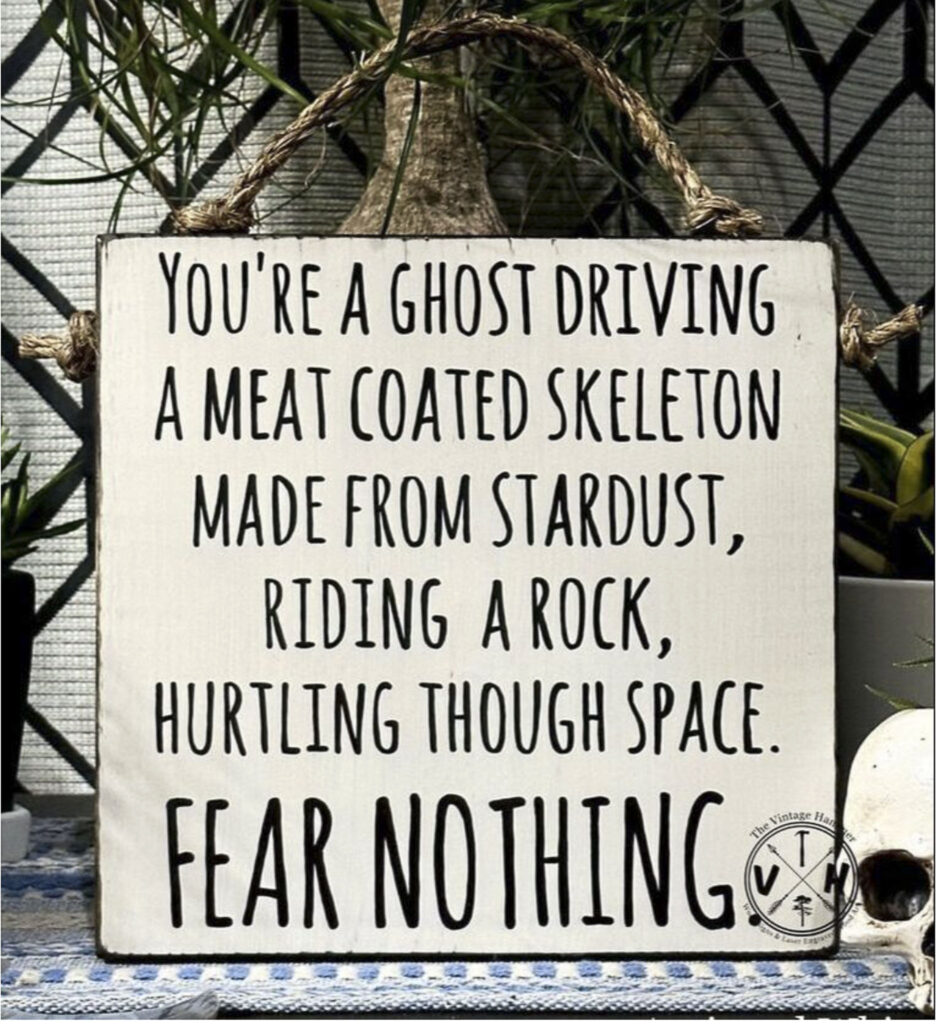
According to Google’s AI, “People celebrate Nothing to Fear Day (observed annually on May 27) by stepping out of their comfort zones, challenging personal anxieties, and tackling intimidating goals.” Are people actually doing all that on May 27? I suspect that’s more aspirational than real, but OK, let’s run with that idea. Maybe Wednesday is a good time to gather our courage and do something, however modest, to make the world a better place.
“Everybody has the choice of being a hero or not being a hero every day of their lives … you can either help somebody, you can be compassionate toward people, you can treat some people with dignity — or not,” said George Lucas. “You don’t have to get into a giant laser-sword fight and blow up three spaceships to become a hero. I mean — it’s a very small thing that happens every day of your life.”
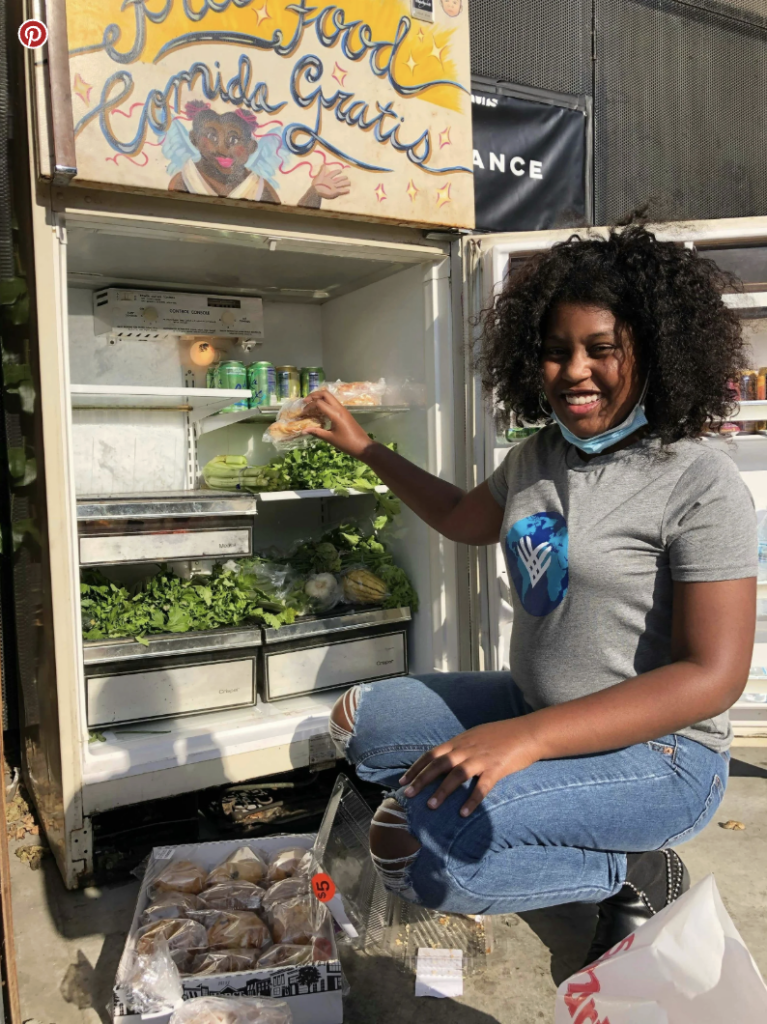
George is right. It can start with a small kindness, like dropping off a few groceries at a Little Free Pantry. (Google “Little Free Pantry near me” to find one.) “The test of our progress,” said Franklin D. Roosevelt, “is not whether we add more abundance to those who have much; it is whether we provide enough for those who have little.” A sentiment that seems obvious when FDR says it but is clearly not shared by everyone.
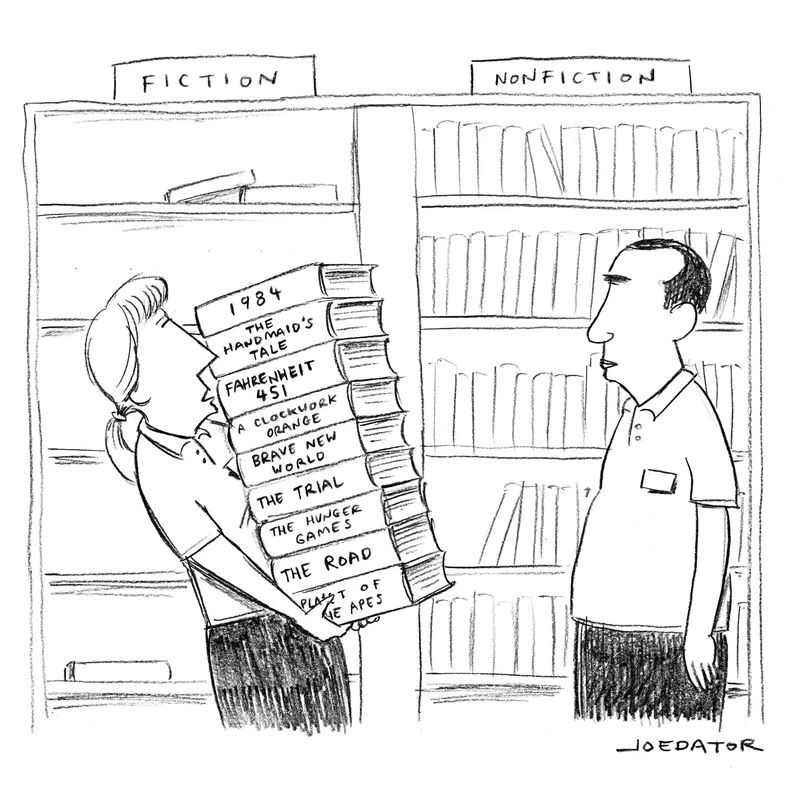
Right now, a lot of us are struggling to find the courage to envision a better world. How do we see past the dystopian narratives bombarding us and embrace what some call “civic imagination,” finding ways to make our local communities more collaborative, resilient, and engaged?
For me, talking with good neighbors is a great place to start. No, not George Lucas; so far, we’ve never met, and I am sure he regrets this as much as I do. But one of the reasons Rich and I started the Ideas Club is to provide an opportunity to gather local friends around us, so we can form the kind of community capable of exercising civic imagination.
This month the Ideas Club discussed freedom and the choices it demands of us. How do we navigate conflicts between our own interests and the needs and norms of society? Do we have an obligation to work for the common good or is it enough simply to do no harm?
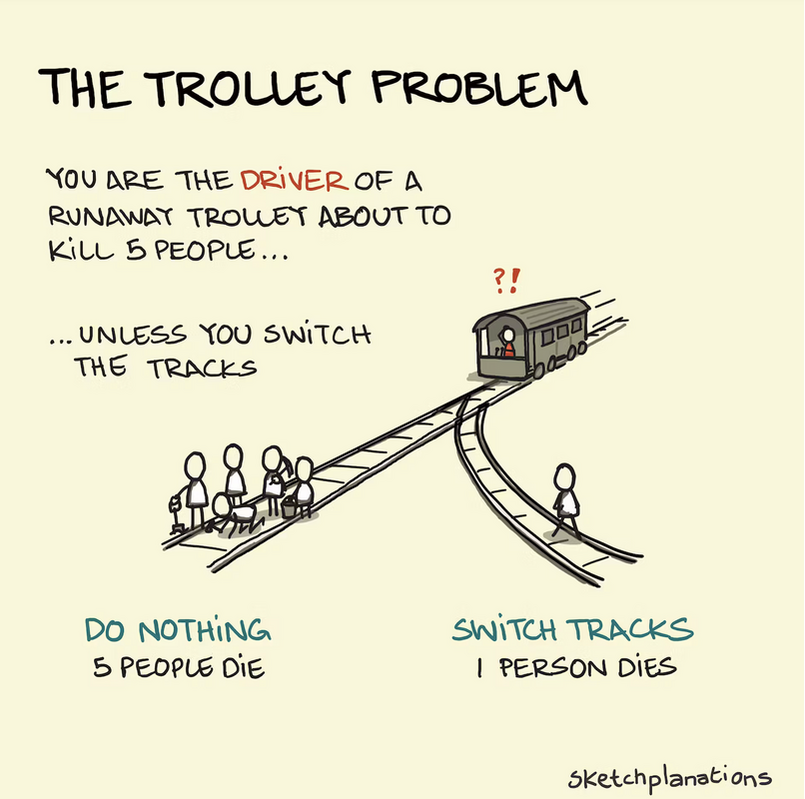
We discussed the famous thought experiment known as the Trolly Problem. Say you’re driving a trolly and realize there are five people standing on the tracks, too close for you to stop in time to avoid killing them. You can switch to a side track, but there is one person on it who would then be killed. We asked:
- Would you choose to pull the lever and switch tracks? Why or why not?
- Are you free do nothing, even though your hand is on the controls at the critical moment? If you choose not to act, are you still morally responsible for the outcome?
I’ve posed this questions to lots of people in the US and Europe and found that almost everyone would pull the lever. The exceptions? A few, always under the age of forty, insist that if they do nothing they are not responsible for the outcome. Yes, even standing there with their hand on the lever. I’m always astounded by this attitude.
My mom may have had a certain myopia about food portions, but she was very clear that it was our job to look out for one another. No exceptions. In those days, I couldn’t walk out the door until everyone had on their boots and mittens. Still can’t. But that’s me.
Leave a Reply