So far I’ve never been called a “shapeshifting reptilian alien ushering humanity towards enslavement,” but if it ever happens, I hope my response would be as good-natured as that of then-Prime Minister John Key of New Zealand.
If you don’t follow the loonier fringe conspiracy theories (and why should you?) you may not be aware that 12 million Americans and uncounted millions more worldwide are convinced that we clueless humans (aka “sheeple”) have been infiltrated by a crafty bunch of lizard-folk from the Alpha Draconis star system.
Yes, I know, that explains a lot!
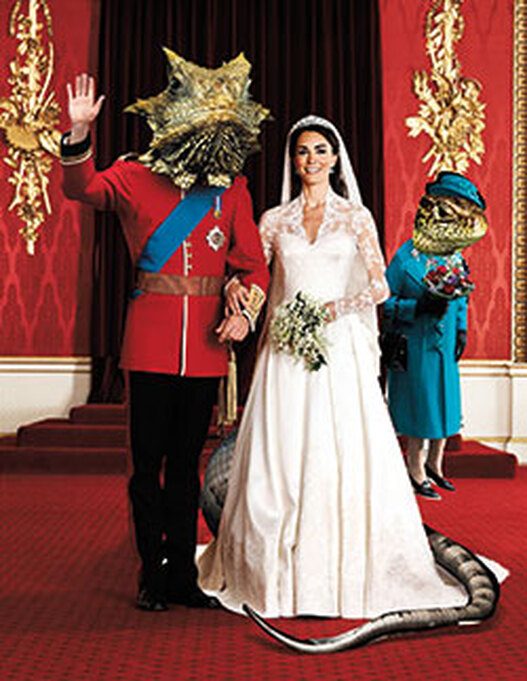
Photographic “proof” that no government or royal family is safe from the reptilian infiltrators.
Eleven years ago, during the peak of online frenzy over this startling “news”, a New Zealander called Shane Warbrooke invoked the Official Information Act to demand proof that his Prime Minister was not a reptoid.
Key took the inquiry sportingly. “To the best of my knowledge, no,” he told reporters. “Having been asked that question directly, I’ve taken the unusual step of not only seeing a doctor but a vet, and both have confirmed I’m not a reptile.” He added, “I’ve never been in a spaceship, never been in outer space, and my tongue’s not overly long either. I’m just an ordinary Kiwi bloke.”
I wonder how America’s top officials would respond to a similar allegation. Would Shane Warbrooke still be languishing in a Salvadorian prison today?
But that’s New Zealand for you: easygoing, practical, and with a tendency to keep things in perspective.
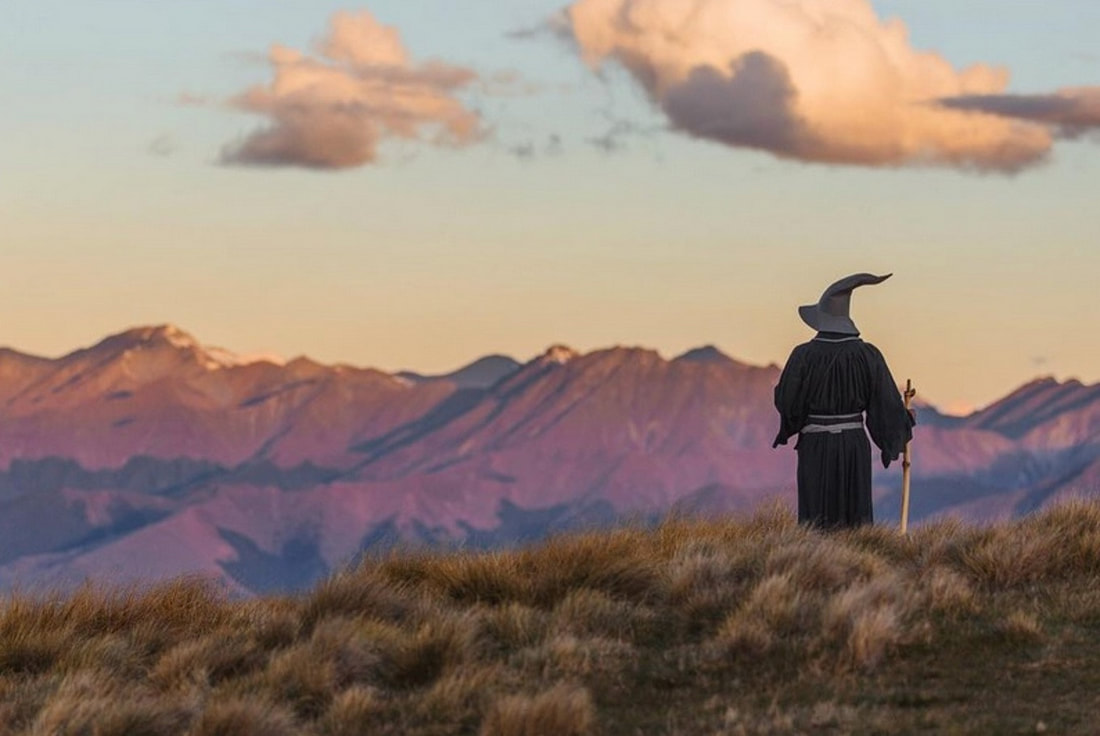
Gandalf, the wizard in Lord of the Rings, at Isthmus Peak, New Zealand. Photo: Akhilsuhas
Like many Americans, I thought of New Zealand mainly in images from the scenery in Lord of the Rings plus a few stray factoids: they invented bungee jumping, were the first nation to give women the vote (1893), and got their nickname from the native Kiwi bird, not the fruit.
I figured there had to be more. This week I had a visit from my American friend Lindsay, who moved to NZ in 2012 with her husband Ross. I asked her to fill me in.
“We first went to New Zealand with the sole purpose of having a child. I was pregnant, and some great friends of ours said, ‘Look, a really good place to have a baby is New Zealand. They have a quite strong culture of midwifery, very down to Earth, as opposed to medicalized.’ So we said, ‘Okay!’”
Moving to another country to have a baby was a classic Lindsay and Ross decision. At that point they’d been rambling about the world continuously for four years.
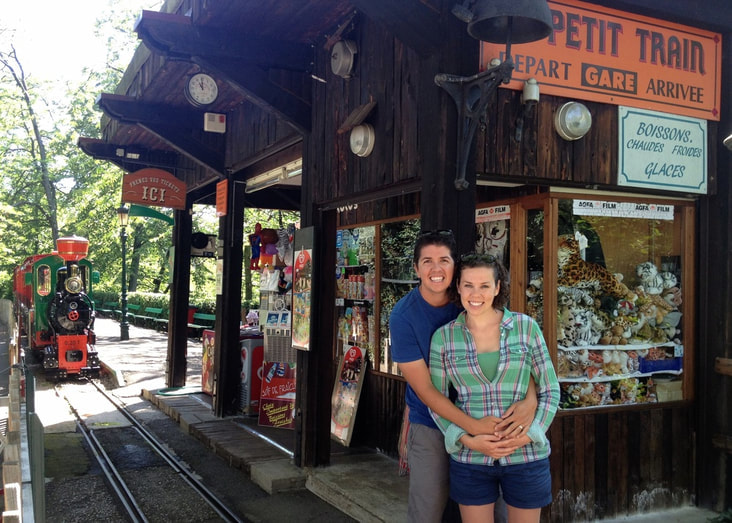
Ross and Lindsay took this photo at a French railway station to announce their family was expecting a new arrival.
Their digital nomad jobs let them satisfy their wanderlust by moving to another country every 90 days when their tourist visas expired. By 2012 they had lived in Seville, Prague, Berlin, Amsterdam, British Columbia, Buenos Aires, Phuket, Paris, Barcelona, Budapest, and various parts of Mexico.
When Lindsay told me she was pregnant, she said they had no plans to return to the US or settle permanently anywhere; her goal was to raise their child “in an environment bigger than their own back yard.”
When they arrived in Queenstown, on New Zealand’s South Island, “We fell in love with it,” she said. “We joined several prenatal classes and met an incredible group of humans, many of whom were also from overseas. We all had babies within a five-week period and went through the new-baby phase together, so we built a really strong bond.”
New Zealand makes it fairly easy to extend the usual 90 day tourist visa for another three months. “We thought, ‘We’ll have the baby, wait three months, and then we’ll be off again,’” Lindsay said. “Which is exactly what happened. But then we came back to celebrate the babies’ first birthdays together.” That’s when Lindsay and Ross decided to live half the year in New Zealand and spend the rest on the road. Their son, Everett, now 12, has more stamps in his passport than I do.
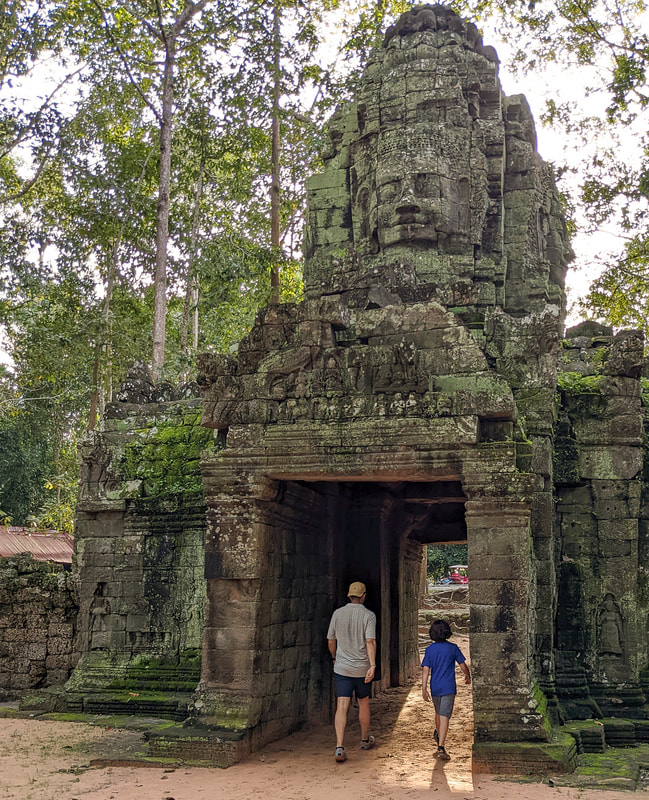
Ross and Everett exploring Angkor Wat, Cambodia in 2022
Eventually Lindsay and Ross applied for residency cards and work permits, and while the paperwork was in process, Covid hit. New Zealand instantly closed its borders and announced a lockdown. After two months, the island nation was entirely Covid-free, lockdown was lifted, and life returned to something resembling normal, although the borders would remain closed for two years.
Every day at one o’clock the Department of Health held a broadcast updating the nation.
“Psychologically, it was very much a shared experience,” Lindsay told me. “The language used was always, ‘We are a team of 5 million. We’re in this together. We’re working together to make sure we can all stay safe.’ We didn’t really ever have fear, or the experience of having to be segregated for long periods of time. We never got into a state where we got comfortable being by ourselves, or feeling like other people could endanger us.”

Once you’ve lived with the unnerving sensation that everyone around you has the potential to kill you, it’s easy to spend more time home alone, living life online. What begins as a sensible precaution in a medical emergency can become an ingrained habit and then a compulsion.
We know that continual social isolation is extremely hazardous. Not only can it lead to depression, anxiety, and illness, but it makes your brain atrophy; your hippocampus shrinks, your cortical thickness is reduced, and your cognitive function dwindles.
Hmmm. Could social isolation — not shapeshifters from Alpha Draconis — be the real reason for the state of our nation today?
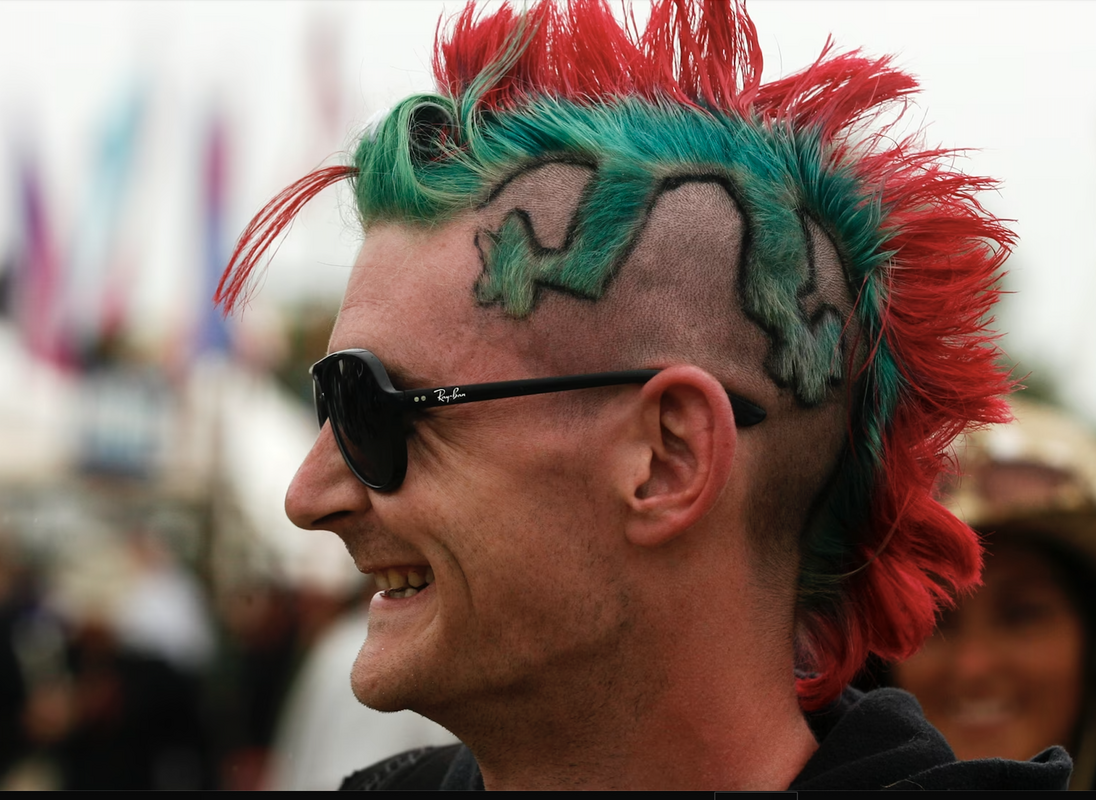
Warning: fully embracing the lizard lifestyle can lead to more social isolation.
No place is paradise; New Zealand has its share of economic woes, security issues, and climate worries. And there are pockets of isolation and loneliness.
But there are also places like the semi-rural area Lindsay and Ross chose, where neighbors spend as much time as possible outdoors together, hiking, skiing, planting common areas, prepping for emergencies, and taking groups of kids on bike rides. They support each other in difficult times and celebrate joyful moments.
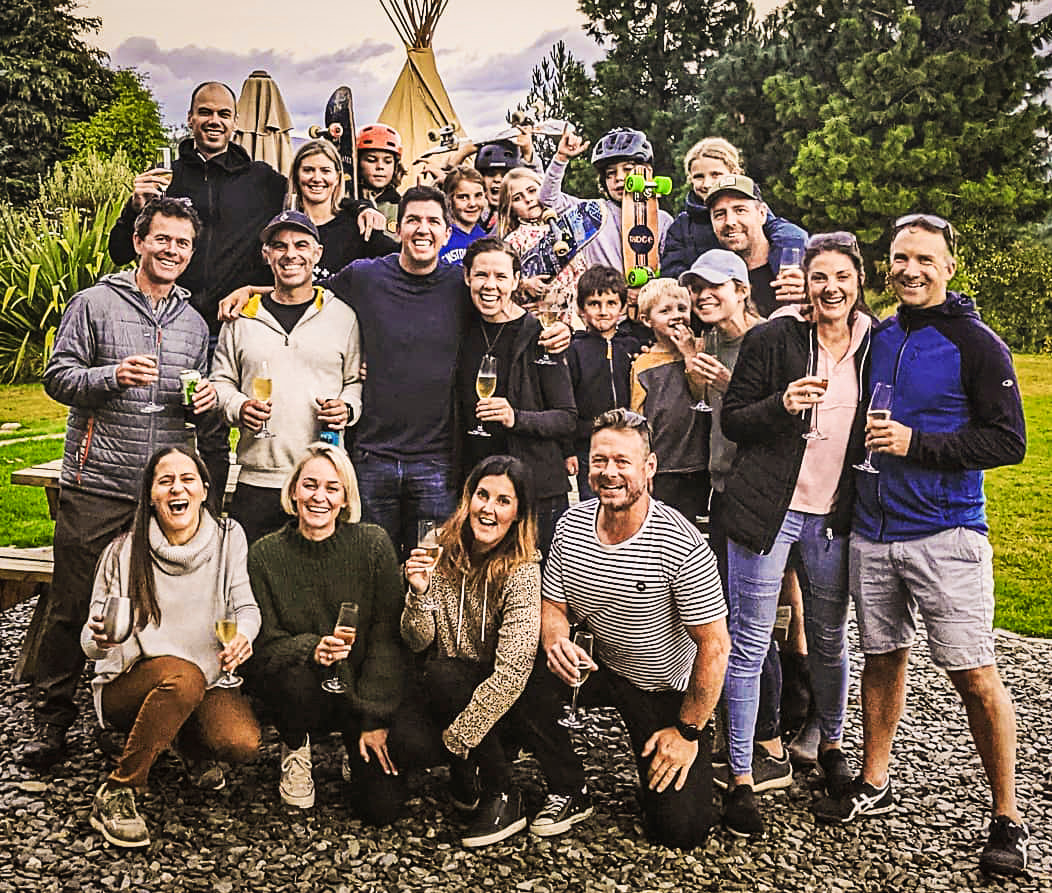
Lindsay and Ross celebrating the day they got their NZ residency in 2021. “Thanks to everyone here who welcomed us,” Lindsay wrote on Facebook. “You’ve all made this place a dream come true.”
“In America,” said Lindsay, “we have a tendency to be all about our own selves and our own family, as opposed to being about the betterment of all.” In New Zealand, she explained, the response to the pandemic was similar to the way they viewed turning in their guns when new legislation followed the 2019 Christchurch shooting that left 50 dead.
“Amazingly, it isn’t very controversial,” she told me. “They’re like, ‘I don’t really love it, but it’s for the good of the country. We don’t want this kind of thing to happen again. So I’m happy to do this on their behalf.’”
Lindsay’s son Everett can roam his neighborhood freely, knocking on any door to invite other children out to play. “He’s learning how to be active and social,” she says. “He’s learning the way of the world and how to be part of a community.”
So far Everett hasn’t encountered any shapeshifting reptoids among his neighbors, just a lot of ordinary folks doing their best for themselves, their families, and everyone around them. They are living the Māori proverb that says, “He waka eke noa” (We are all in this canoe together).
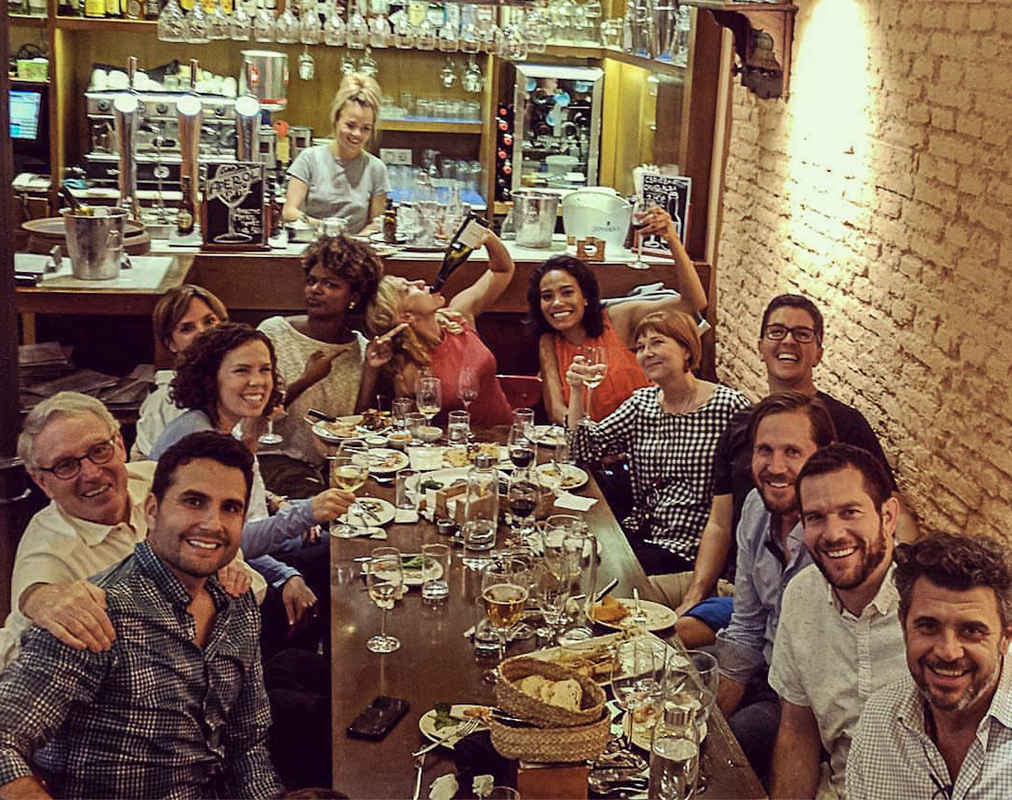
In 2017, we gathered in Seville’s Vineria San Telmo to celebrate a visit from former neighbors who found their Home 2.0 in New Zealand.
Leave a Reply