Breaking news from outer space: UFOs are real and aliens are among us. The US government (and I am not making this up) is holding secret, closed sessions to discuss the latest sightings, and Rep. Tim Burchett (R-Tenn.) emerged from official briefings ready to shout the truth from the rooftops.
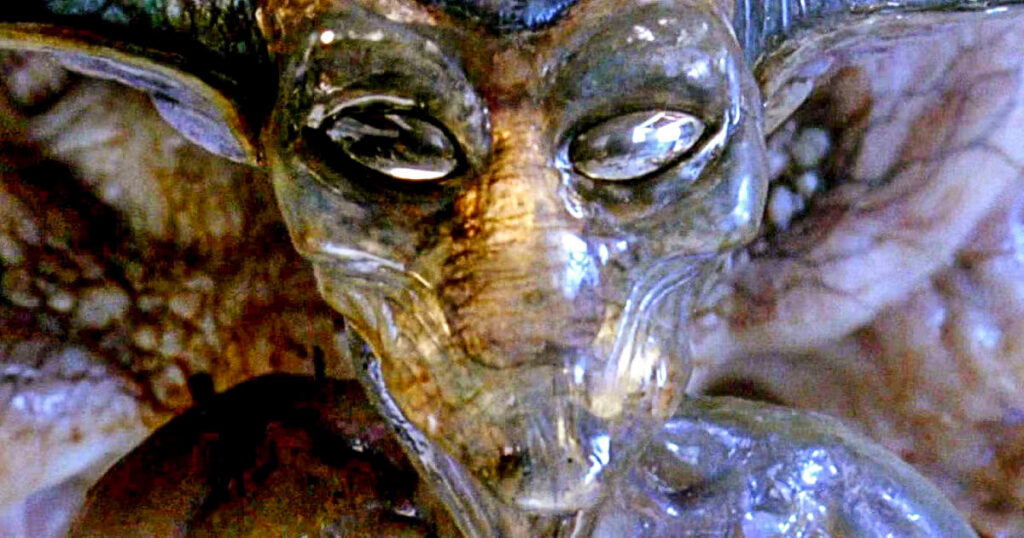
“I was briefed last week on an issue — or excuse me, two weeks ago — and it would’ve set the earth on — this country would’ve come unglued, I think, if they would’ve heard all that I’d heard,” he babbled to journalists. “Aliens are real.” Asked what our extraterrestrial visitors look like, Burchett said, “Well, it’s not Independence Day, I’ll tell you that.”
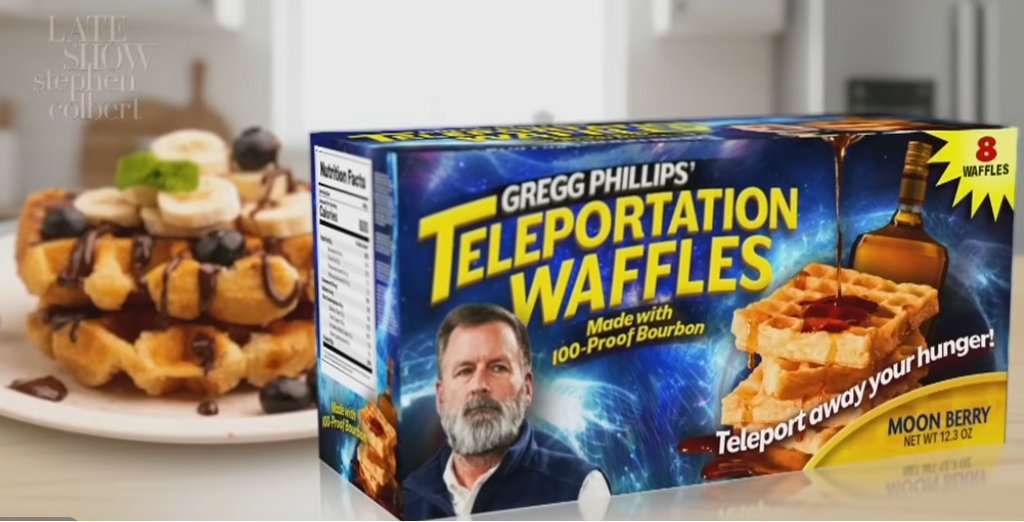
Speaking of government officials coming unglued (admittedly a long list), there’s Gregg Phillips, FEMA’s #2 official in charge of America’s response to floods, fires, and possibly UFO landings. He’s been on TV claiming he teleported 50 miles to a Waffle House in Rome, Georgia by paranormal means.
Nobody at that Waffle House recalls ever seeing Phillips, but customer Austin Spears said something similar happened to him. “I can say I’ve been drunk and ended up in a Waffle House. Don’t know how I got there. But I was there.”
As you can imagine, the media is having a field day with the story.
The outlandish claims go on and on. Former Florida Rep. Matt Gaetz said a U.S. Army official told him about “hybrid breeding programs, where captured aliens were breeding with humans to create some hybrid race that could engage in intergalactic communication.” I know, right? It would explain a lot of the headlines coming out of Washington, DC these days.
But don’t worry, you do not need to be a high-level government official to see flying saucers. California tops the world with 36,000 reported sightings so far, hundreds of them right here in San Francisco. We’re so proud.
Of course, with the abundance of drones, satellites, space research facilities, military bases, and mind-altering drugs around here, it’s possible some of these may not be legitimate UFOs — or UAPs (unidentified anomalous phenomena) as the government insists on calling them now. As if a new moniker makes the claims more plausible.
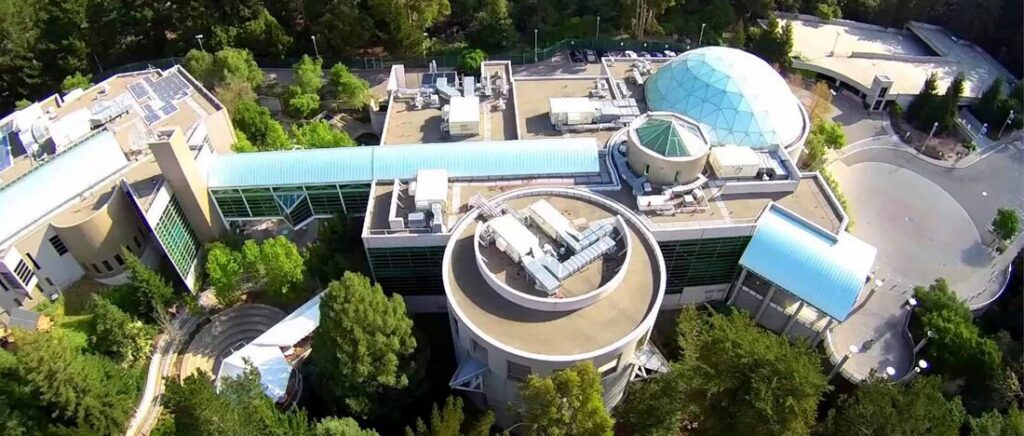
Thousands reportedly saw a bright speck in the sky over southern California on Friday, and this time it was the real deal: a space capsule entering Earth’s atmosphere, returning the Artemis II astronauts to Earth. Rich and I were watching from a Splashdown Party thrown by Chabot Space & Science Center and their NASA pals at the observatory in Oakland.
I figured it would be Rich, myself, a few dozen kids earning extra credit for middle school science classes, and their bored, eye-rolling parents.
My first clue that I was totally wrong? The parking lot was jammed, as were the walkways heading toward the entrance, with people of all ages. These days Chabot is firing up imaginations and making learning look cool. “We believe all children are born scientists,” says their website, “all children are born creative, all children are born with a love of experimentation and a joy of discovery.”
That Friday afternoon, you could feel the delight of discovery and buzz of excited anticipation vibrating through the crowd. Four astronauts had flown further from earth — some 252,756 miles — than any human in history, on a journey totaling 695,000 miles, including a swing around the dark side of the moon. Now they were coming home with spectacular photos, important scientific data, and a kind of rapture they called “moon joy.”
And what was the media excited about? The malfunctioning toilet. The crew kept fixing it, but from time to time it would back up again, requiring them to go with Plan B: plastic bags.
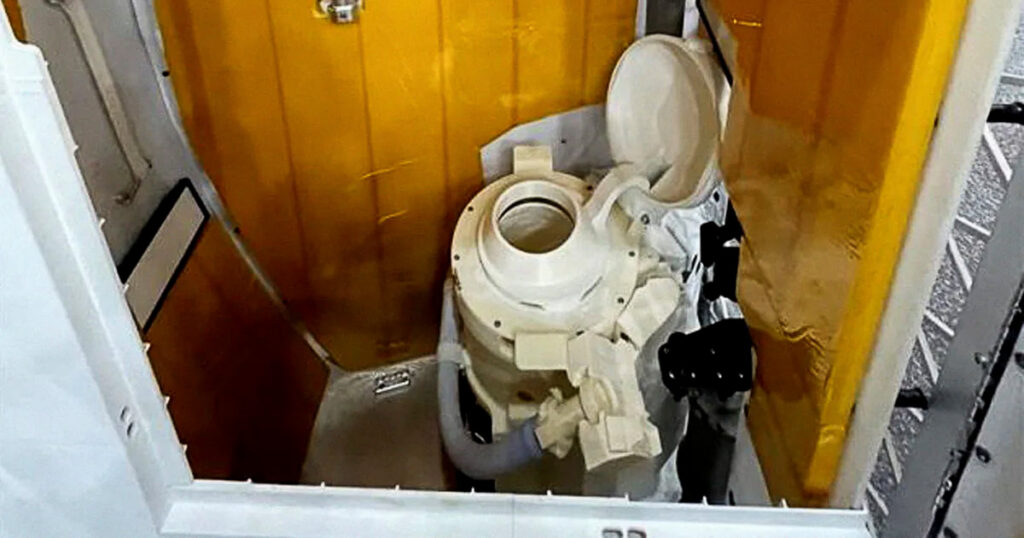
I really sympathized — and never more so than when I arrived at the Chabot rest rooms and discovered they were closed for repairs.
“Just like the astronauts,” Rich exclaimed. “Chabot is really providing the full Artemis II experience!”
We were directed upstairs to an all-gender restroom with multi-gender stalls, a novel experience that gave me added appreciation for the lack of privacy the astronauts had to put up with in space. Boy, you had to give it to Chabot for knowing how to work a theme! A few minutes later, when I saw the toilet designed for the Mir Space Station, I was really glad Chabot hadn’t gone the extra lightyear to provide a similar experience for us.

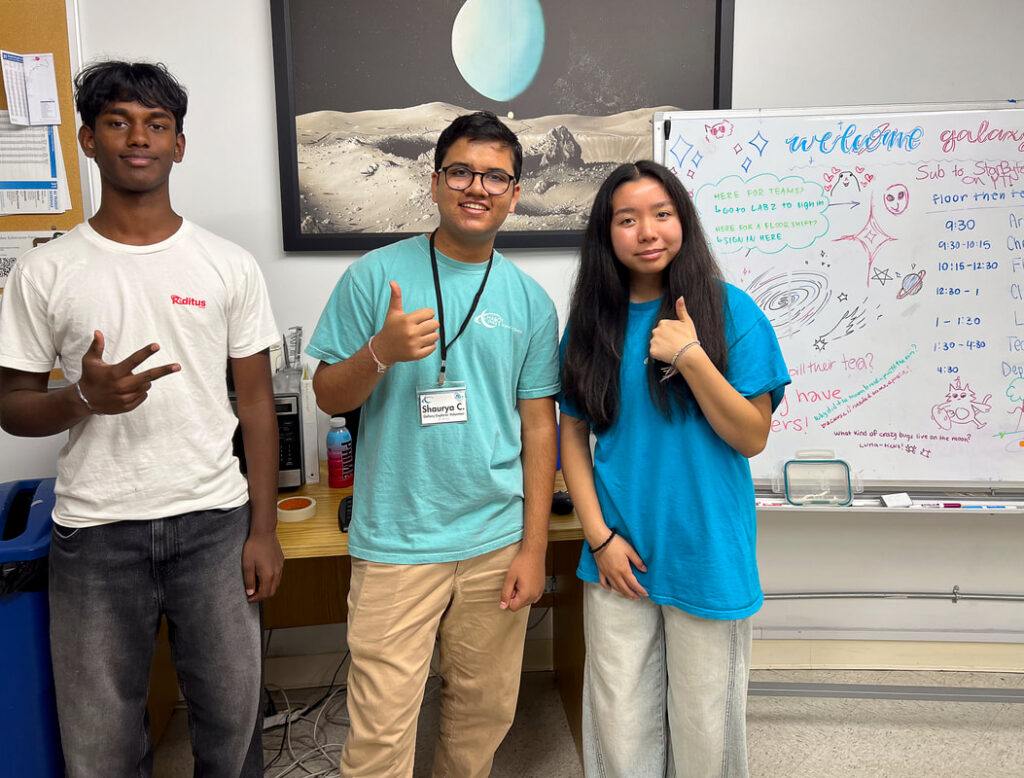
By now I’d learned savvy visitors had arrived early to claim all of the Planetarium’s comfy seating beneath a vast dome with crisp visuals and an excellent sound system. I was trying to sneak in to take a photo of the crowd under the dome when I accidentally wound up in the staff break room and met three teenage volunteers.
They politely explained that no, they weren’t planning to become astronauts; they were considering careers in aerospace engineering, physics, and climate research. “I think Artemis II has taught us we should be happy,” said Jessica, “not just for advancing science but that we can all be celebrating together.”
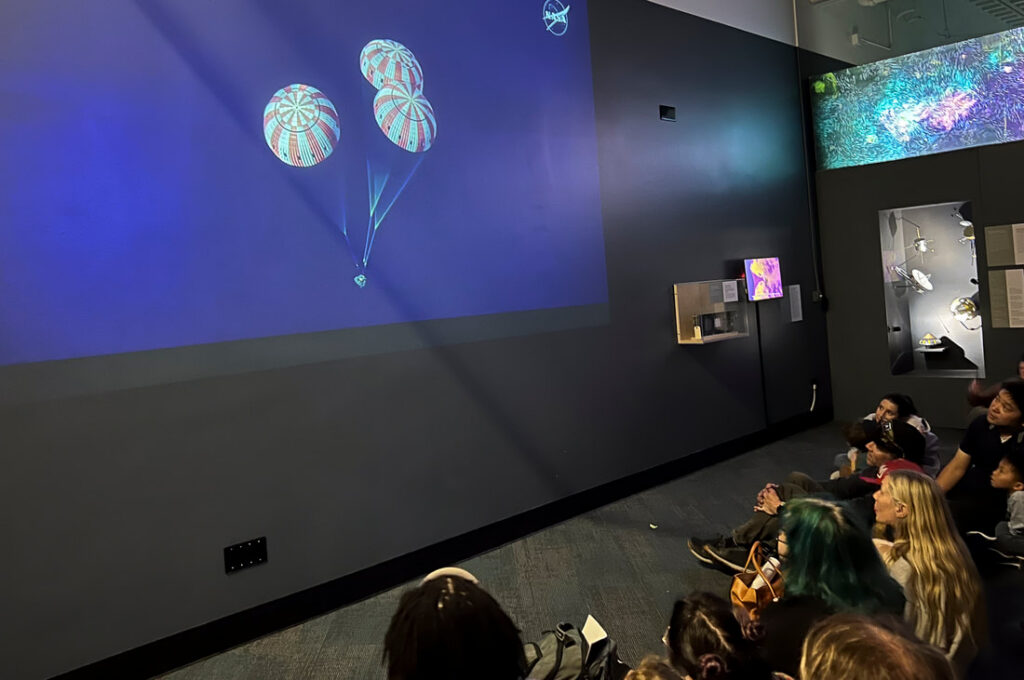
In the end, Rich and I celebrated the occasion with 40 or 50 convivial latecomers jammed into a small room with a big screen, floorspace seating, and an abysmal sound system. But none of that mattered. I was as excited as the little kids who had dressed up for the occasion as Darth Vader and Spiderman and were now bouncing around the room.
When the splashdown finally came, everyone shouted wildly, applauded the astronauts, and hugged their kids and one another. It was communal “moon joy” mingled with the kind of pride in America I’d felt in my teens, watching the first moon landing and knowing we could accomplish great things in the universe. Jessica was right; celebrating together was a rare and precious gift. Especially these days.
Next year, the crew of Artemis III will practice docking with lunar landers, and in 2028 Artemis IV will carry humans up to walk on the moon again. After that, will we head ever deeper into space, to play among the stars? What are the odds we’ll connect with our intergalactic hybrid cousins? Will they turn out to be reptilian humanoids, little green men, or something far more interesting? Will they prove to be good neighbors? Will we?
It’s clear the US government isn’t telling us all they know, but they are dropping a few breadcrumbs. For instance, they just registered the domain name aliens.gov. To me that suggests they believe we’re not alone in the cosmos. Are they right? If so, this could mean Calvin and Hobbes cartoonist Bill Watterson hit the nail on the head when he said, “I think the surest sign that there is intelligent life out there in the universe is that none of it has tried to contact us.”

Leave a Reply