In my defense, the bar was dark, the menu’s lettering was minuscule, and my brain was fried. I’d been walking all morning, and the last leg of the journey had required pushing through the dense crowds thronging downtown Málaga, where every tourist currently visiting Spain seemed to be jockeying for the most Instagram-worthy place to pose over lunch.
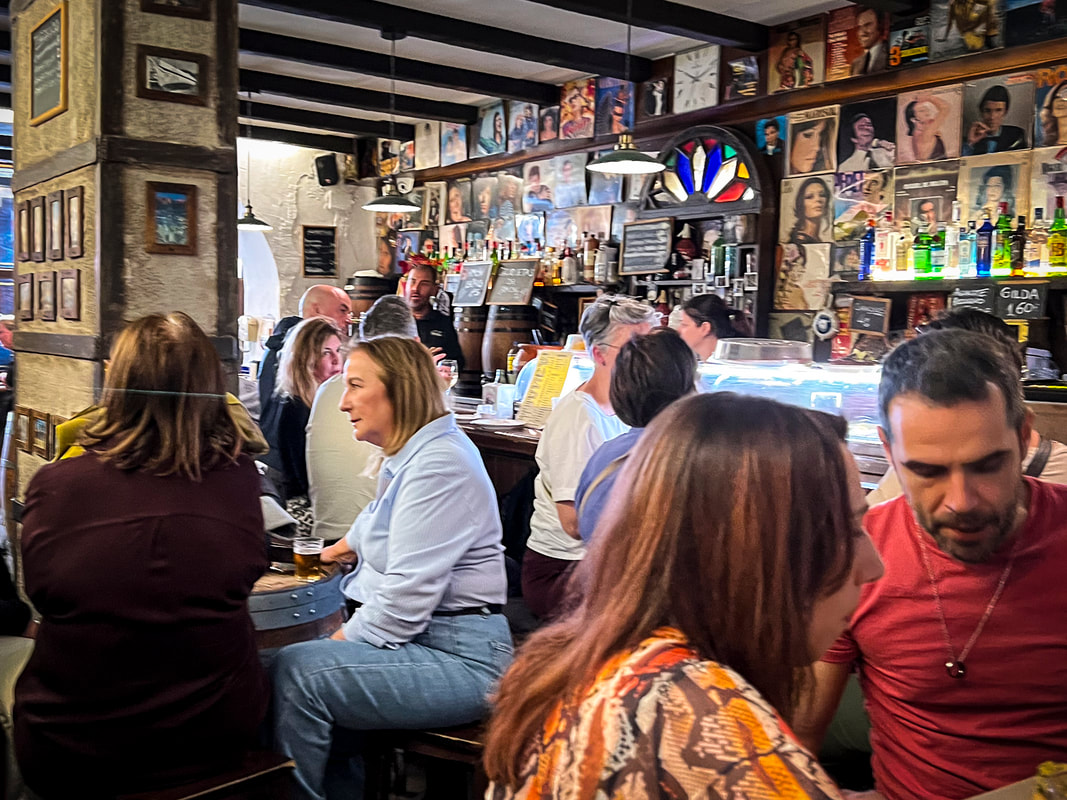
Cheerful hubbub drew us to La Tranca on a quiet residential street in Málaga.
Leaving the brouhaha behind, Rich and I found a quiet street with a small café-bar where the host was singing snatches of old Spanish songs, holding his grandson on one hip, and tallying tabs on the bar in chalk. I ordered some tapas, including the slightly unusual option I’d spotted: montadito de pato (mini-sandwich of duck). Then we heard our host call to the cook, “Montadito de pata” (mini-sandwich of foot).
“Wait, what?” I said. “A foot? Whose foot?”
But our host had already disappeared, so I was left to speculate. This being Spain, where the average citizen consumes 125 pounds of cerdo a year, pork seemed probable. Having spent decades idly gazing at hams hanging above tapas bars, I was well aware how little meat surrounded pig’s trotter. Was I about to be served a whole greasy hoof between two slices of bread?
To my relief, when the mini-baguette arrived, it was hoof-free; instead, the inside was stuffed with the fatty bits of meat that bulge around the pig’s ankles. Tasty, but somehow I don’t think I’ll be ordering it again
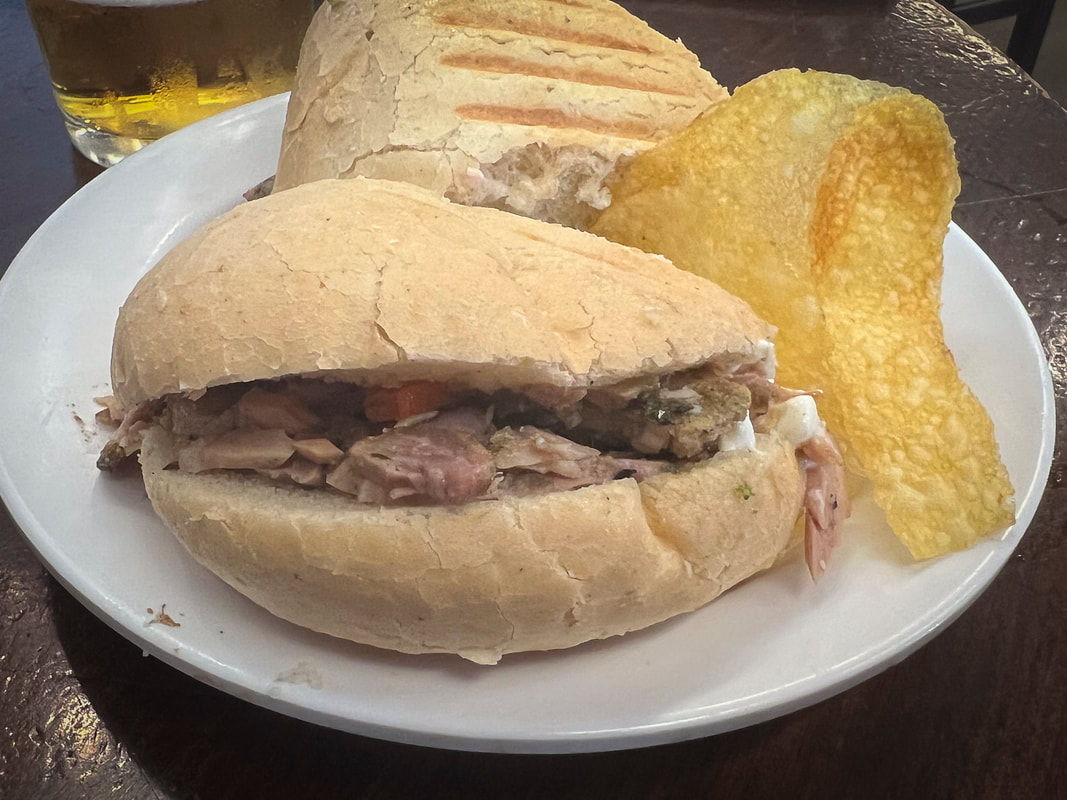
My foot sandwich
Málaga is one of those cities that changes radically from barrio to barrio, often from street to street. As on prior visits, I made a huge effort to avoid downtown’s Touristville, but that day I’d soldiered through to pay homage to a true hero in the fight against absolutism.
What’s absolutism? The ancient claim of some monarchs and dictators that their supremacy is all-encompassing and unfettered by any need to respect law, church, social norms, or the rights of anyone but themselves. (I know, right? Aren’t we lucky to be living in more enlightened times?) Historians view Louis XIV, the famous Sun King of France, as the archetypal absolutist. He certainly dressed for the part.
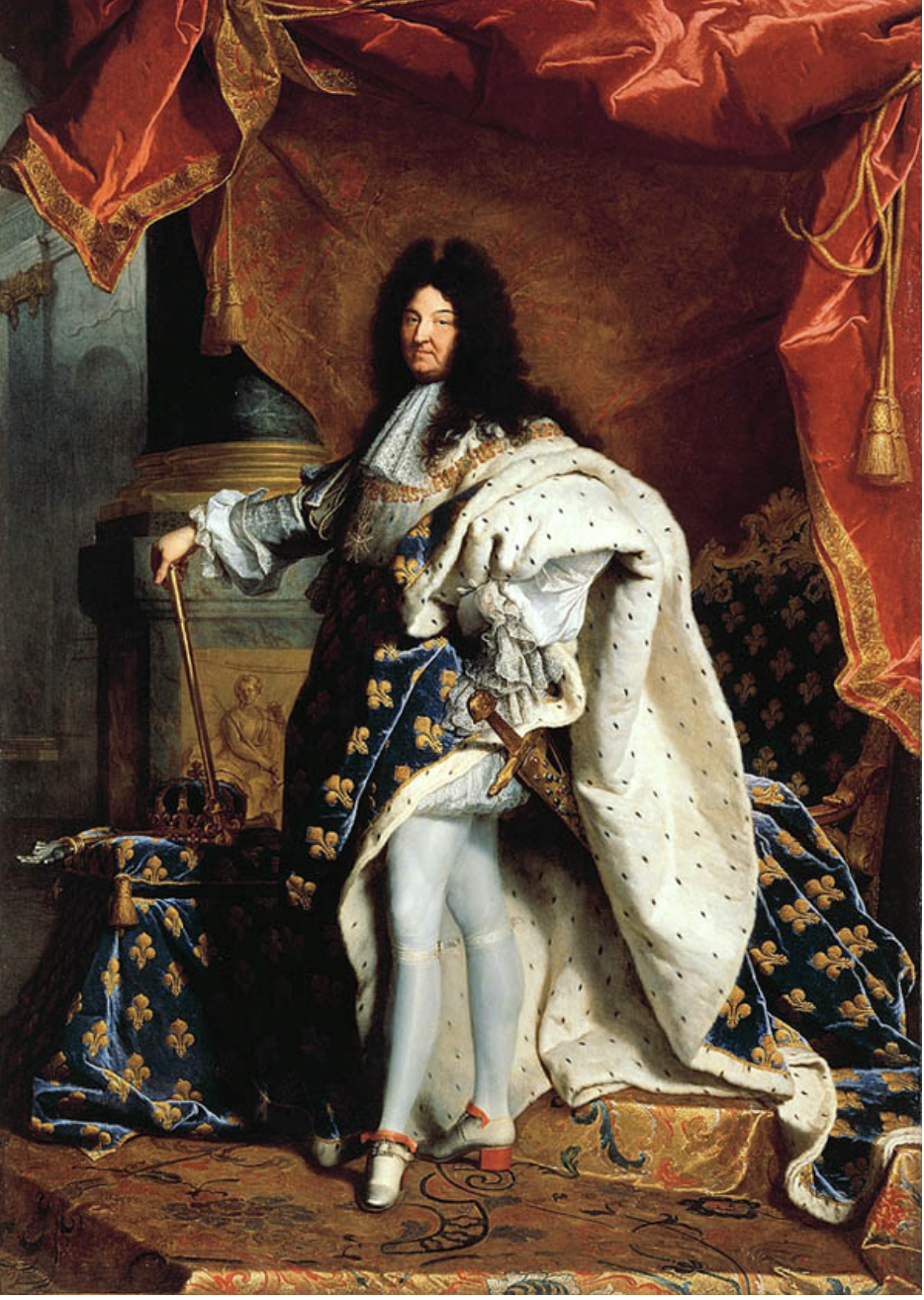
Louis XIV was King of France from 1643 until his death in 1715 — 72 years and 110 days, the longest running monarch in history.
Spain’s most emblematic absolutist was King Ferdinand VII, who overturned the new liberal constitutional government of 1812 and retook the throne with the help of the French army. One of Ferdinand’s fiercest opponents was young General Torrijos, who sought to spark an uprising in 1831 by landing on Málaga’s coast with 60 men. But it turned out he’d been lured into a trap by the absolutists, and Torrijos and his soldiers were captured and shot without the lawfully required trial.
“This tragic end to his life explains why he has gone down in history, quite rightly, as a great symbol of the struggle against despotism and tyranny,” wrote historian Irene Castells.
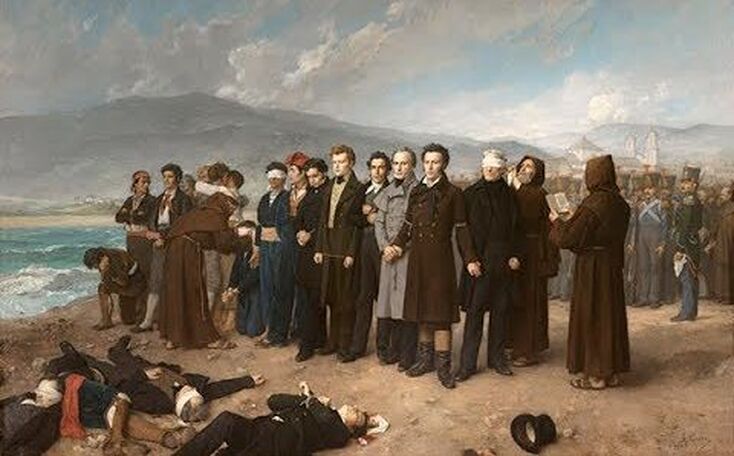
The Execution of Torrijos and his Companions on the Beach at Málaga by Antonio Gisbert Pérez is considered one of Spain’s finest historic paintings.
When the absolutists weren’t looking, Málaga laid Torres and his men to rest in their fanciest cemetery, San Miguel. Later, feeling even more glory was needed, they re-buried them downtown under a monument covered with frou-frou and well-deserved praise for their bravery.
I never did find Torrijos’ original resting place during my visit to San Miguel Cemetery. My plan to ask the caretaker about it got completely derailed when he began sharing grisly tales of ghostly inhabitants.
It seems a previous caretaker, the monk Brother Pepe, reported he’d heard a child crying, “Mama, Mama” and traced it to the grave of Antoñito, who died from leukemia at 14 months. Naturally Brother Pepe consulted a psychic about the phenomena, and she told him Antoñito was bitter about his suffering and needed candy to sweeten his soul. So the monk started leaving candy and small toys at the grave; later he’d find the candy half eaten, the toys gone.
“Just local kids, eating the candy, taking the toys,” said today’s caretaker. “Mere legend.”
“So you haven’t heard his ghostly cries?” I asked.
“No,” he said. “Besides, Antoñito isn’t even in this cemetery anymore.”
Before I could ask why, the caretaker launched into the story of the Corpse Bride, Carolina, who was jilted at the altar and supposedly died there from lovesickness. Her faithless fiancé died a week later. Coincidence? Fate? A vengeful ghost? Who can say?
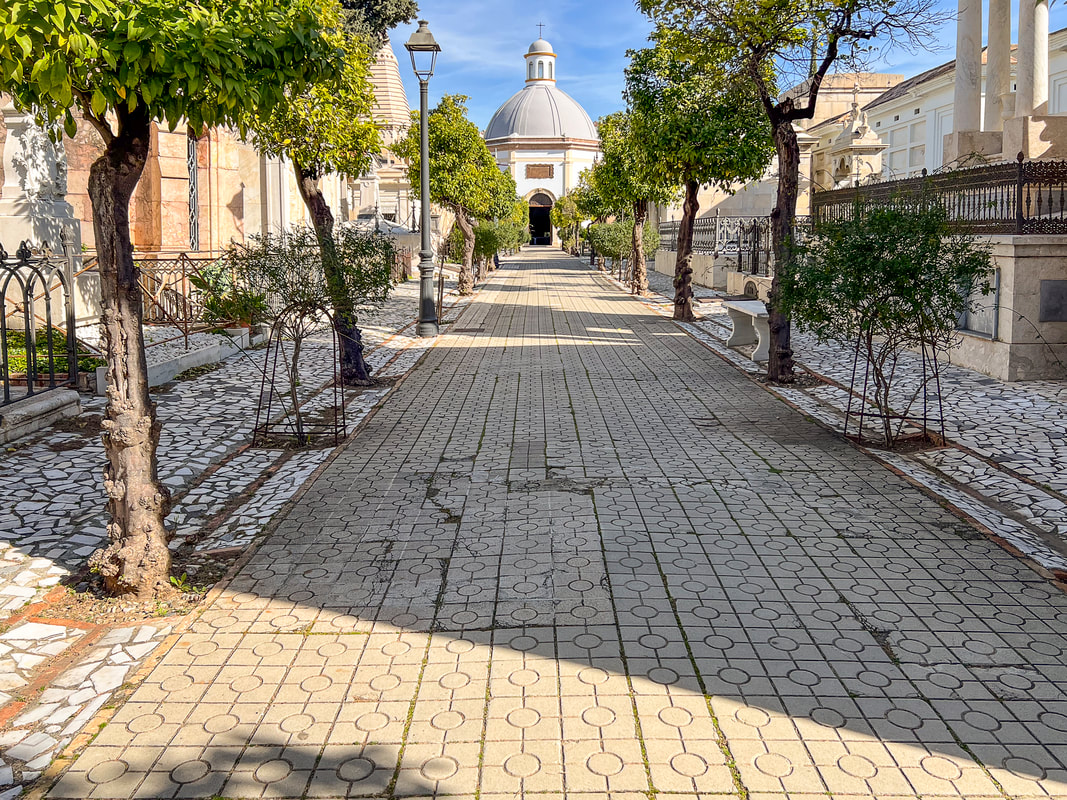
San Miguel Cemetery
In case our time in Málaga didn’t cover enough ghoulish ground, we also visited the city’s other famous cemetery, San Rafael. “Every day during the Civil War,” said a woman who stopped to chat with us there, “they brought in townspeople by the truckload and lined them up against that wall.” She gestured to an old stone wall, 100 yards long, crumbling and riddled with bullet holes. “They shot them and dumped them into pits.”
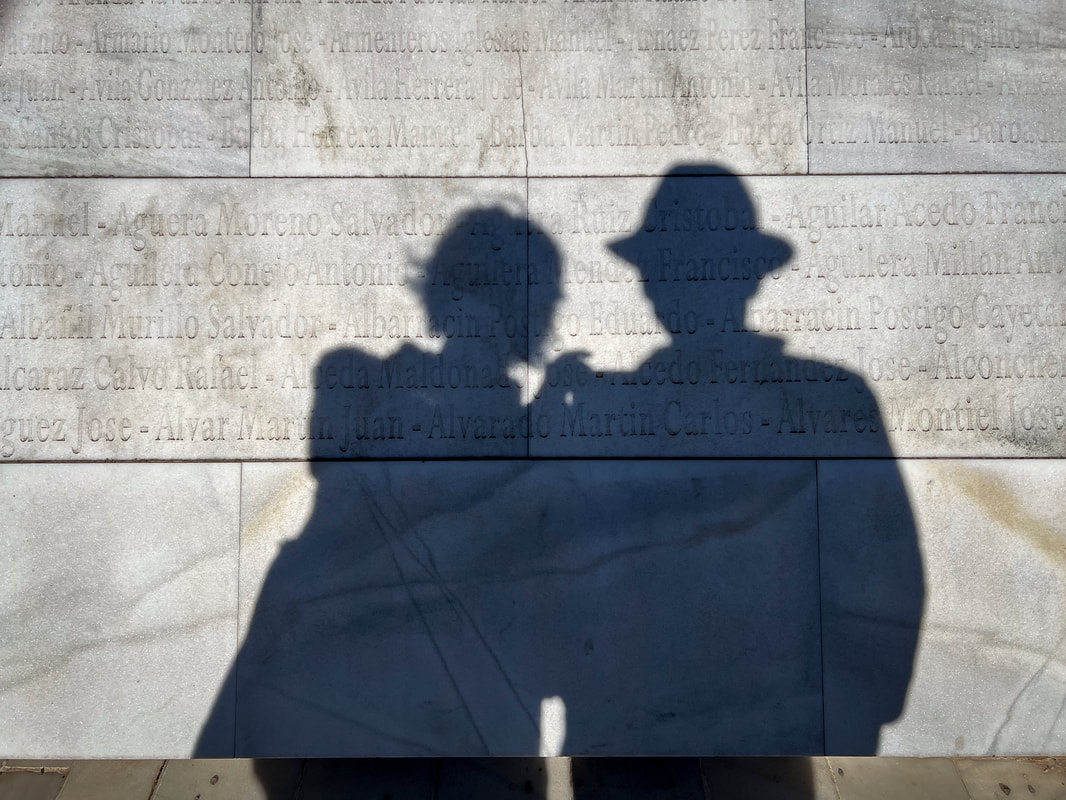
Paying our respects to the 4471 people shot against the wall in San Rafael Cemetery.
Left-leaning Málaga was subject to some of the harshest repression of Spain’s White Terror; some historians say the total killed throughout the city was 20,000 — 10% of the population at the time. Records show 4471 townspeople were shot in San Rafael cemetery; their names are inscribed on a memorial pyramid. Lest we forget.
And before I tell the next story, no, I didn’t risk getting shot, or even arrested, but I did run afoul of authorities at the cathedral.
Begun in 1528, Málaga’s cathedral was designed to have two towers, but only one was completed, causing the building to be nicknamed La Manquita (the one-armed lady). At the base of the unfinished tower there’s a plaque telling how funds raised to complete the tower were diverted to help the American colonies free themselves from Great Britain in the War of Independence.
Unfortunately for me, the plaque can only be viewed from the cathedral garden, which was currently closed for repairs. Standing behind the barricade tape, I could just glimpse the bronze rectangle.
I glanced around; there was no one but a busy maintenance worker between me and my goal. Slipping past the barricade tape, I took off at a brisk, professional trot. The maintenance man shouted something, and I called back that I was a travel writer who needed a photo. I picked up speed — arrived at the plaque — got the shot! Whew!
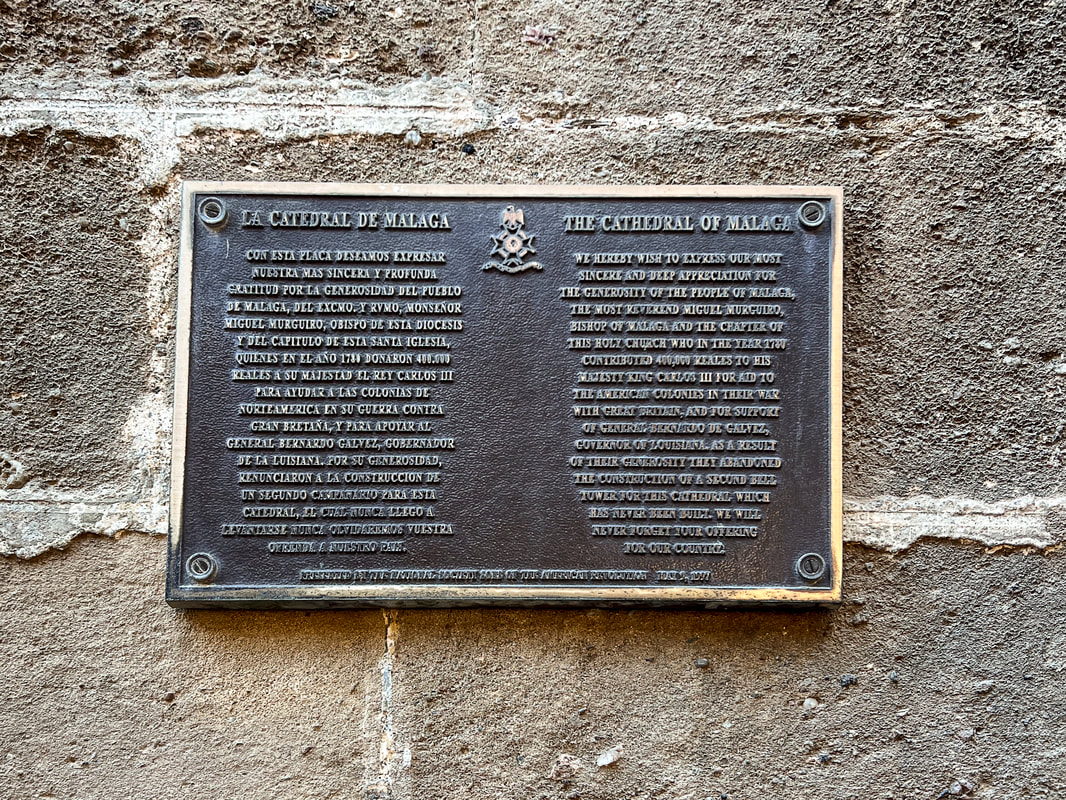
Three security guards materialized and politely but firmly escorted me out of the grounds. I explained my mission, and they seemed more amused than concerned. What I did not tell them was why I was so interested. Wikipedia says the part about helping America is quite likely a complete urban legend. According to the parish registers, that money was actually spent renovating a roadway.
What? Bearing false witness on a church wall? Somebody is going to have a lot of explaining to do at the Pearly Gates.

One of the trip highlights was the night some kind Scots invited us to share their table at a crowded restaurant. The two adolescent boys were wide-eyed as I regaled them with tales of criminal trespass, ghosts, my foot sandwich, and as a grand finale, my famous snake-in-our-bed story.
And I thought about how lucky I am to have this blog to keep me perpetually inspired to take detours to lesser-known locales. It helps me embrace the world as my Home 2.0 and feel my connection with the human family, loony as it is. Not all my adventures are Instagram-worthy, but they sure give me plenty to talk about over dinner.


Leave a Reply