When I went to the railway office and tried to buy tickets, the clerk looked at me oddly, as if I’d asked to be strapped to the top of a locomotive for a trip through Siberia. In winter. Naked.
“Are the trains running?” I asked. There had been massive disruption of service following the recent tragic accidents near Córdoba and Barcelona, but I wanted to travel west, away from those areas.
“Yes, trains are running.” Long pause. “I could sell you tickets.” Longer pause. “But with the bus, you will have fewer delays, fewer cancellations; you will get there much quicker. Take the bus.”
Which is how Rich and I found ourselves spending Friday morning jammed into the cramped seats of an intercity autobús, lurching over 55 miles of potholes on our way to the Spanish seacoast town of Huelva, the final resting place of The Man Who Never Was.
.
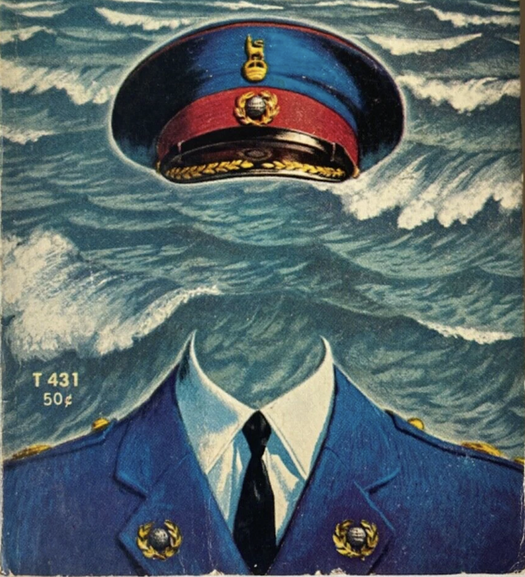
Detail from the original cover of The Man Who Never Was, about one of the greatest deceptions of WWII.
Fans of the book and movie Operation Mincemeat will recall that in 1943, the British were desperate to mislead the Nazis about the location of the upcoming invasion. “If the enemy is waiting for us on those beaches,” Churchill warned, “History herself will avert her eyes from the slaughter.”
British Intelligence came up with a daring, high-risk ruse that required dressing a corpse as a British military officer, giving him false invasion plans, and slipping his body into the sea. They calculated the body would wash ashore somewhere around Huelva, where the area’s active network of Nazi spies would, with luck, manage to steal the papers from the Spanish authorities, copy them, and send the misinformation to Berlin, where it just might fool Hitler.
What could possibly go wrong?
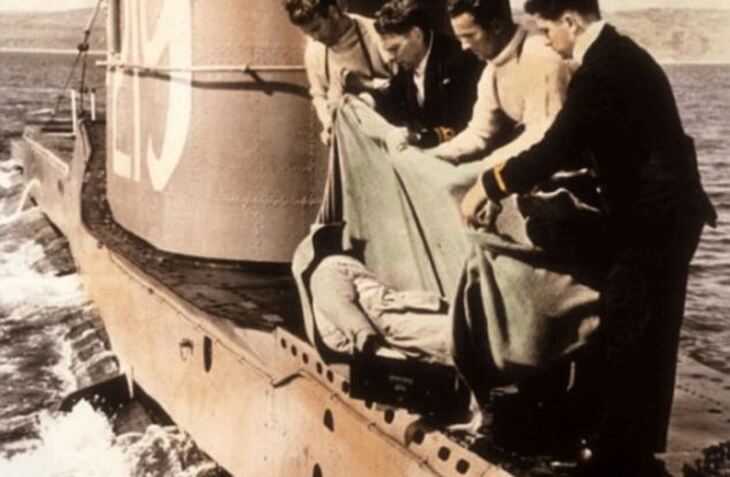
Naval officers sliding “Major William Martin” into the sea off the coast of Huelva in 1943.
Yes, I know it sounds like the plot of a lurid spy novel, and no wonder; the concept sprang from a memo drafted by Ian Fleming, a young Navy officer serving under Rear Admiral Godfrey.
The deception worked so well that for weeks after the invasion, the Germans remained convinced the landing was a feint and the real assault was still to come. Thousands of Allied lives were saved, and — spoiler alert! — we went on to win the war.
In 1953 one of the plot’s leaders, Ewen Montagu, spent a weekend dashing off a history of his team’s exploits; his book, The Man Who Never Was, sold two million copies. Montagu never revealed the true identity of the corpse, which was laid to rest in Huelva’s Soledad Cemetery under his false identity, Major William Martin.
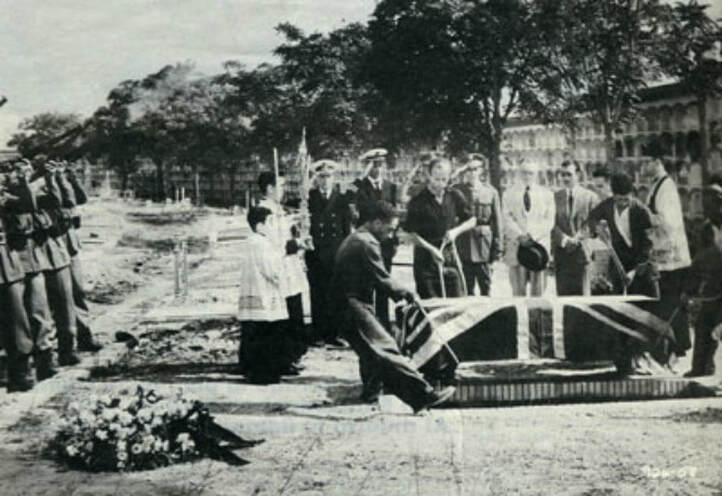
“Major William Martin” is interred in Huelva’s Soledad Cemetery with full military honors.
Then in 1996, amateur historian Roger Morgan turned up evidence that the body was Glyndwr Michael, a Welshman down on his luck in London, who’d died from eating rat poison. His name eventually went on the tombstone. Rich and I decided to go pay our respects and incidentally discover for ourselves whether Huelva was as underwhelming as everyone said.
Huelva’s bus station did nothing to dispel its lackluster reputation. It was vast and empty, with flickering lights and cracked flooring. Our hotel, a short walk away in a cluster of slightly shabby high-rises, had a façade so self-effacing we had a hard time finding it, even when we were standing on the doorstep.
But the staff welcomed us warmly, and our room was great: big, clean, comfortable, entirely bed-bug-free, and — as Rich frequently pointed out — just €57 ($67.50) a night. It was one of the top hotels in town.
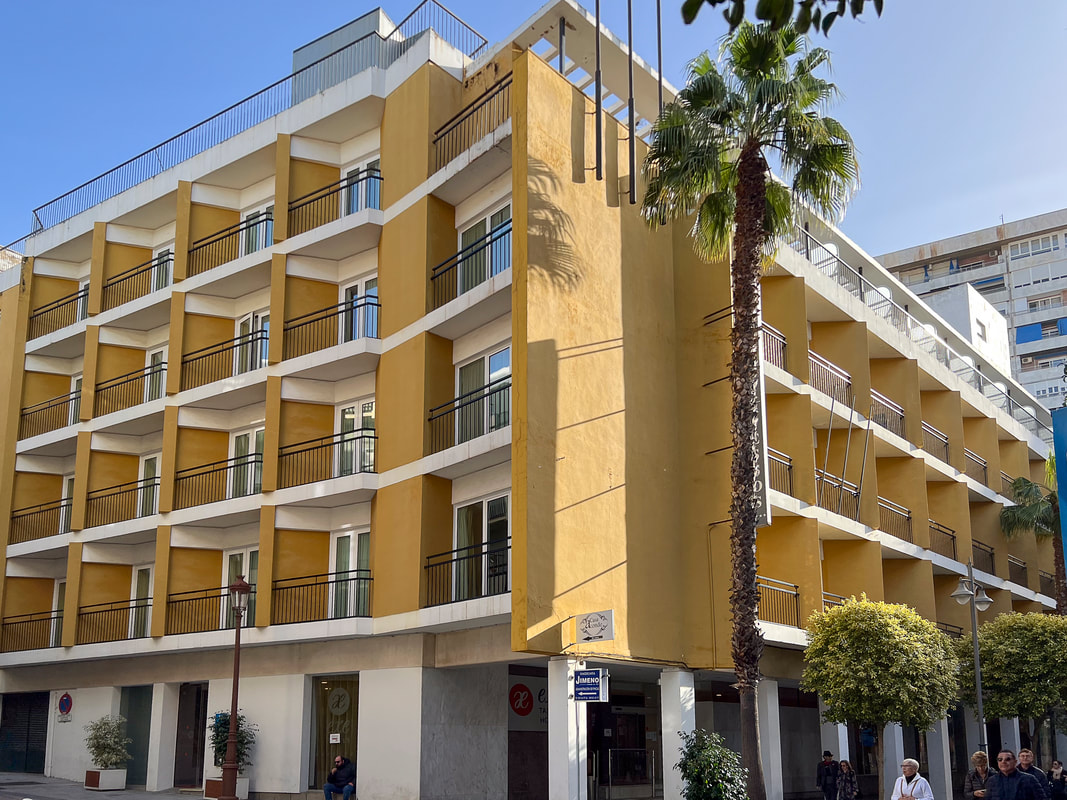
OK, so Huelva isn’t as picturesque as my Home 2.0, Seville. On the upside, our room in this hotel cost just $67.50 a night.
The staff called a taxi to take us to the cemetery, and our driver, Adriano, turned out to be a knowledgeable and engaging onubense (as locals are called, from the old Phoenician name for Huelva). He was proud of his city and immediately began filling us in on what had been happening around there for the past few thousand years.
He explained that Huelva sits between two rivers, the beautiful Odiel and the Tinto, one of the most toxic bodies of water on the planet. A hundred kilometers upstream lie the oldest mines in the world; humans have been working them for 5000 years, since the days when metal was extracted using a rock lashed to a stick.
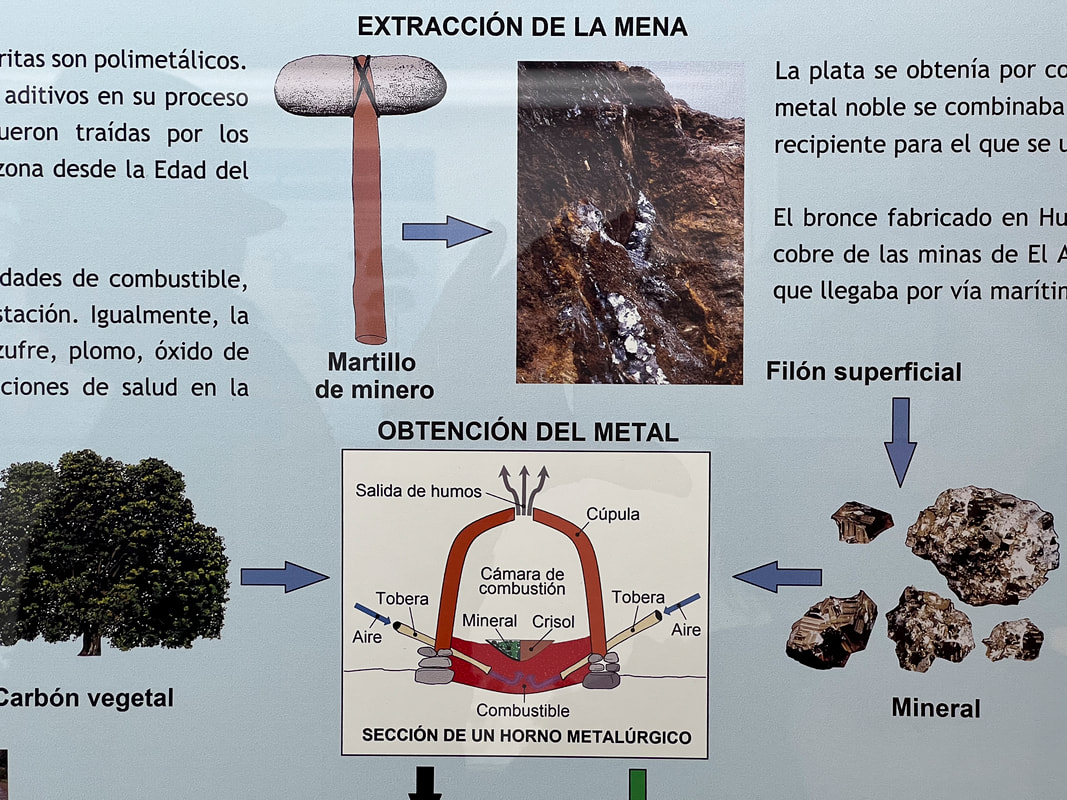
The Museum of Huelva’s outstanding archeological collection demonstrates how they did it back in the day.
In 1874, a British firm bought the Rio Tinto mines and made Huelva their base of operations, building a clever railway and pier system. In their spare time they taught locals the game Americans call soccer and launched Spain’s oldest football club, Recreativo de Huelva. A century ago they built Barrio Queen Victoria, a cluster of disconcertingly English-looking houses on a hill near our hotel. And a few years back, some long-term British residents formed a society to maintain the grave and the memory of “Major William Martin.”
Arriving at the cemetery, Adriano jumped out and escorted us to the famous tomb. We all stood for a moment over the body of the man who had helped save an earlier generation from Nazis and fascists bent on world domination. I silently thanked Glyndwr Michael for his service and thought of those who have lost their lives in a similar cause in modern times.
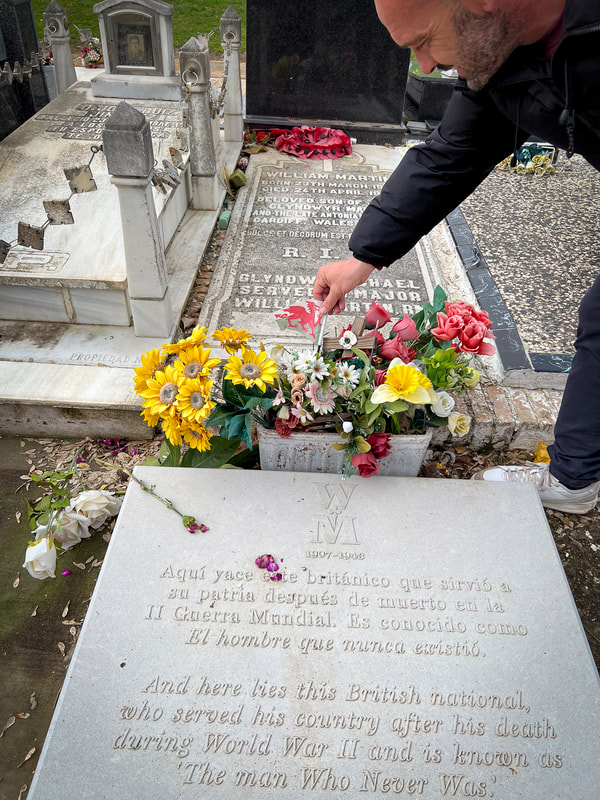
Adriano helpfully adjusts the Welsh flag on Glyndwr Michael’s grave, which now includes Michael’s true name, his parents’ names, and a large inscription about The Man Who Never Was, courtesy of the Major William Martin Association.
Rich and I spent two days in Huelva strolling around visiting sights Adriano had mentioned and sampling local bistros. The best meal of the trip — possibly of our lives, we agreed — was our post-cemetery lunch at Zancoli. All the tables were reserved but they kindly managed to squeeze us in at a miniscule table behind a pillar. The bullia — convivial noise — washed over us like a blessing.
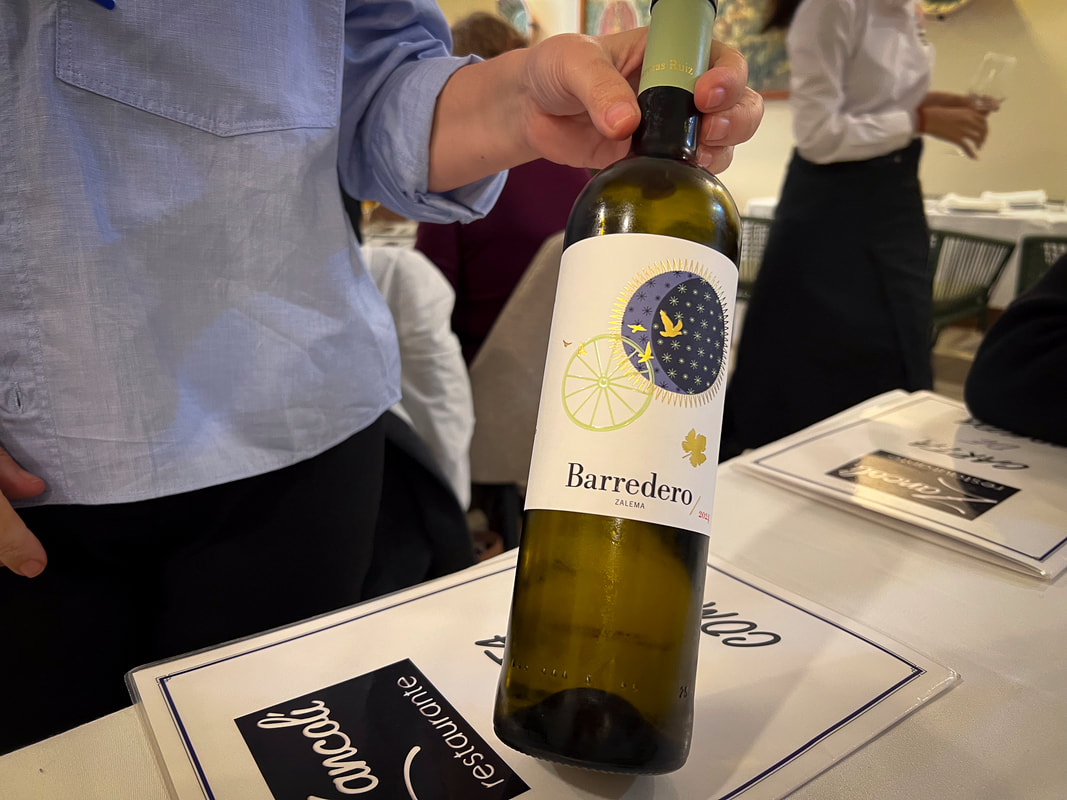
We ordered a lovely local wine and were given an amuse-bouche of gorgeous little sausages called chosco de tineo made from (and thankfully I did not know this at the time) a mix of pork and tongue, seasoned with garlic and paprika, stuffed into pig intestines, and smoked over a wood fire. There followed a dazzling plate of artichokes with ham and shrimp, and fresh-from-the-sea merluza (similar to American hake or whiting) baked in wine sauce.
As you can imagine, we slept well at siesta. Huelva is a great place to take siestas, because — as Adriano pointed out — it is tranquilo. Tranquil. By Friday lunchtime, the restaurants were filled with large congenial groups, seemingly ready to let go of the cares of the week and relax into the weekend. By Saturday afternoon, everyone was strolling lazily in the sun or lifting a cold beer in a warm circle of laughing friends. It was like a poster for Life As It Is Meant To Be Lived.
Whenever someone tells me “you don’t want to go there,” the contrary part of my nature senses adventure and starts reaching for maps and train schedules. “There are deeper reasons to travel — itches and tickles on the underbelly of the unconscious mind,” wrote author Jeff Greenwald. “We go where we need to go, and then try to figure out what we’re doing there.” Words to live and travel by.
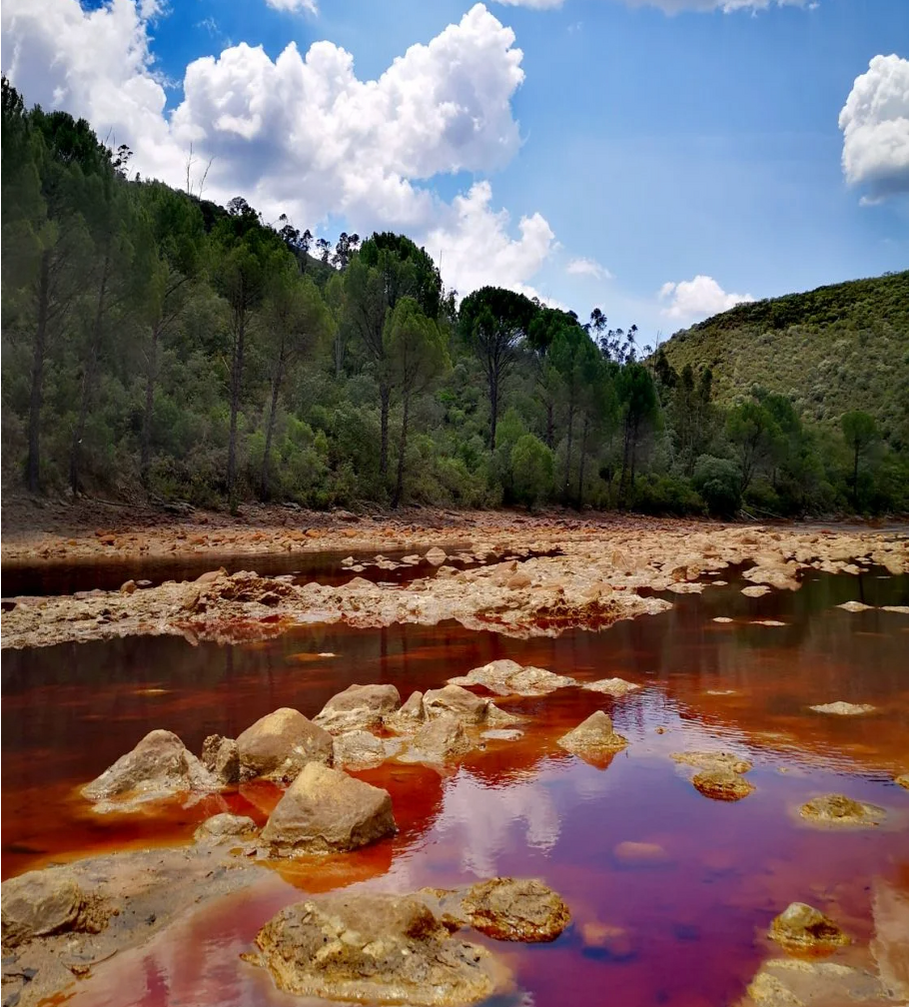
One place I’m not itching to go: the Rio Tinto, near the mines, photographed in all its technicolor pollution by blogger Caracol Viajero.

Leave a Reply