So we get off the train at the station – more of a shed, really – in the dark, in a small village deep in the Carpathian Mountains of Romania, and despite email promises, no one is there to meet us. The unpaved road holds no taxis, cars, or even the horse-drawn carts we’ve been seeing in villages along the way.
Part of the reason I love train travel is that it makes me feel like I’m living in the 19th century. An era, I now recall, that has some pretty dark chapters, including a few set in this very region. “Are those bats?” Rich asks, as something flutters by at the edge of my vision.
A smiling man appears suddenly out of the gloom. “I take you!”
“Did George send you?” I ask.
The man seizes our bags. “I take you!” And off we go in his car.
There are moments when you simply have to trust your instincts, your luck, and whatever saint watches over travelers now that St. Christopher’s been debunked.
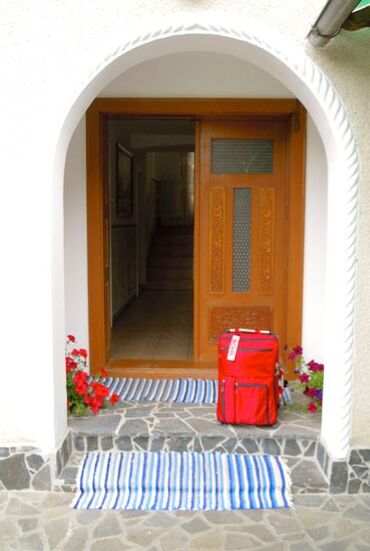
Some 30 km later, we arrive at his snug wood and cement house, where his wife and a hot meal await us.
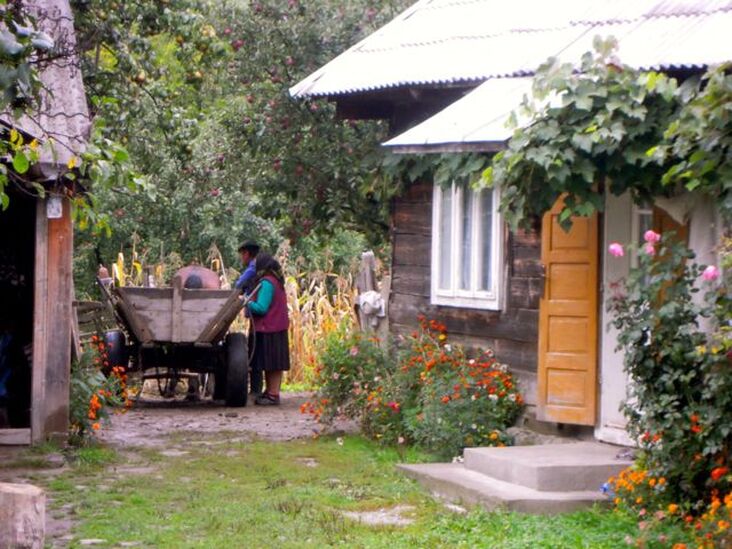
And in the morning, we look out our window to discover that we have gone back 700 years and are in the midst of the medieval village of Botiza. Despite evidence of various modern conveniences – electricity, indoor plumbing, a cell phone tower – most of the villagers still live in much the way their ancestors did back when Vlad the Impaler was a boy.
We are charmed and dazzled by the opportunity to hang about the village, exchanging polite greetings with the locals, who seem utterly unfazed by the presence of a couple of foreigners – who might as well be time travelers, given the differences in our lives. This is no Disney version of ye goode olde days, but a place where things change very, very, very slowly.
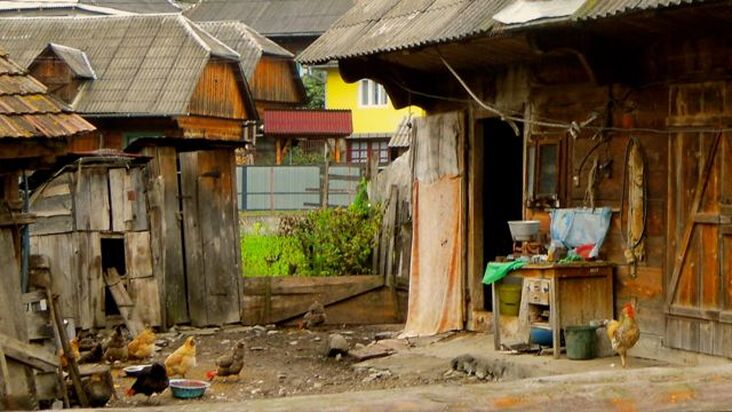
Most families build houses and barns by hand from wooden planks cut from trees in the nearby forest. They raise chickens and may own a cow for milk and/or a horse for transportation and labor.
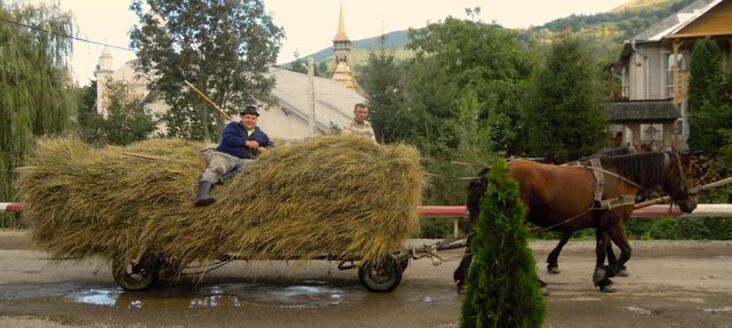
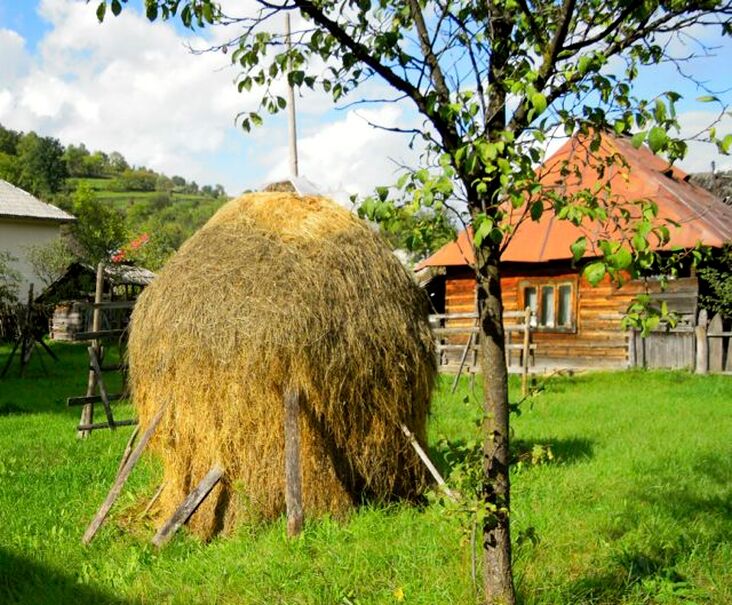
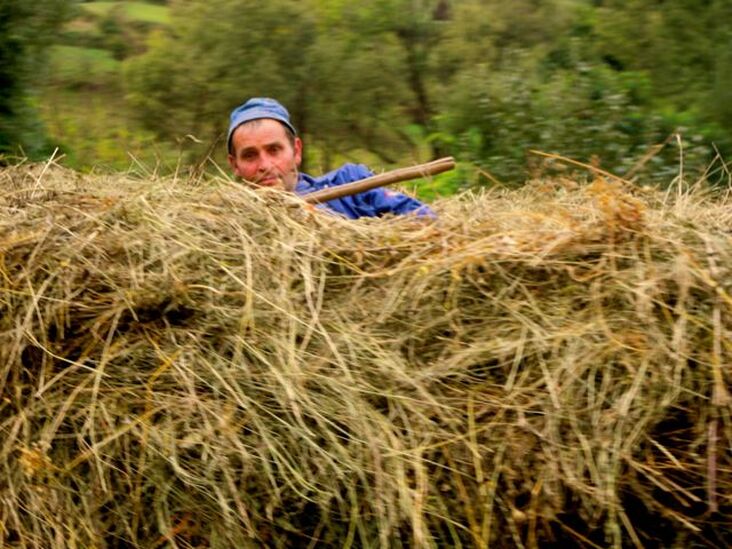
In September, they scythe the hay, haul it back in a horse-drawn cart, dry it on racks made from saplings, then pile it into haystacks handy to the barn.
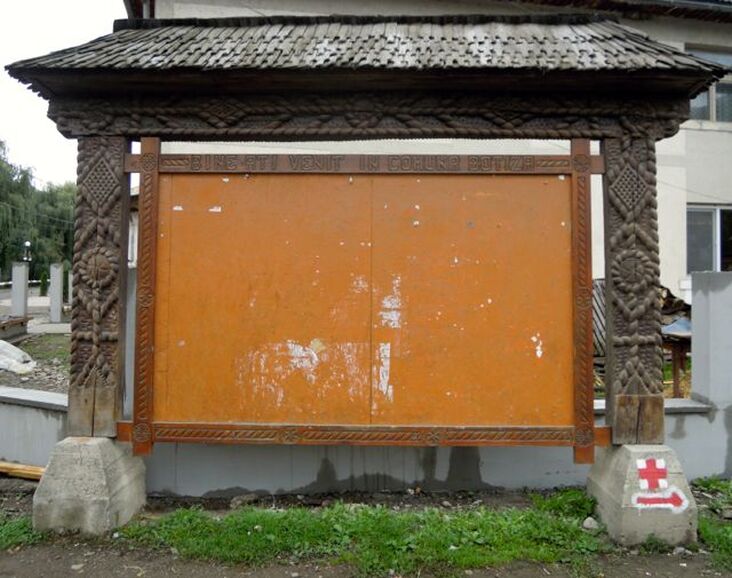
They work long and hard every day and go to church on Sunday. When I asked what they did for fun, I was told that some Saturday nights there are weddings, with music and dancing, and the whole village attends. Other than that, once in a great while someone might stop by for a beer. This is the central bulletin board that lists all present and upcoming activities in the village.
Not surprisingly, most of the teens are counting the days until they can head to the nearest city, dye their hair, get tattoos and piercings, join a rock band, find a desk job, and forget they ever came from this nowheresville. As for their elders, some have part-time jobs in town, but mostly they’re hanging on to the old ways.
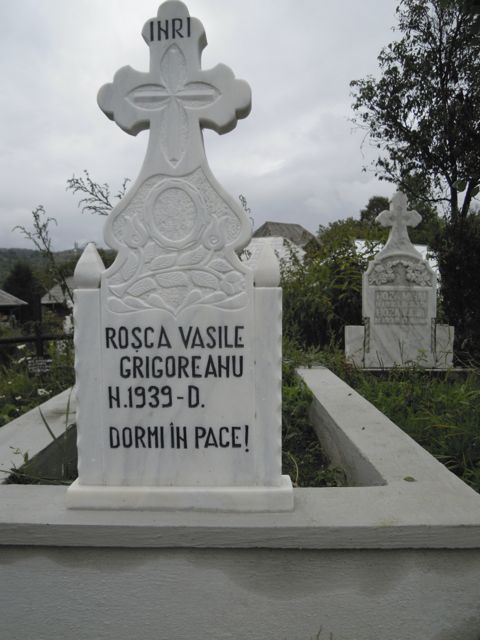
Looking to the future, many have already bought their coffins, tombstones, and burial plots in the village cemetery. But modernity
is
creeping in. Their ancestors would never have used an exclamation point on a gravestone, but thanks to Facebook and other social media, punctuation standards have changed!
What
is
the afterlife coming to?
See more of my photos of Romania.
Leave a Reply