MARCH 29 to APRIL 5, 2015
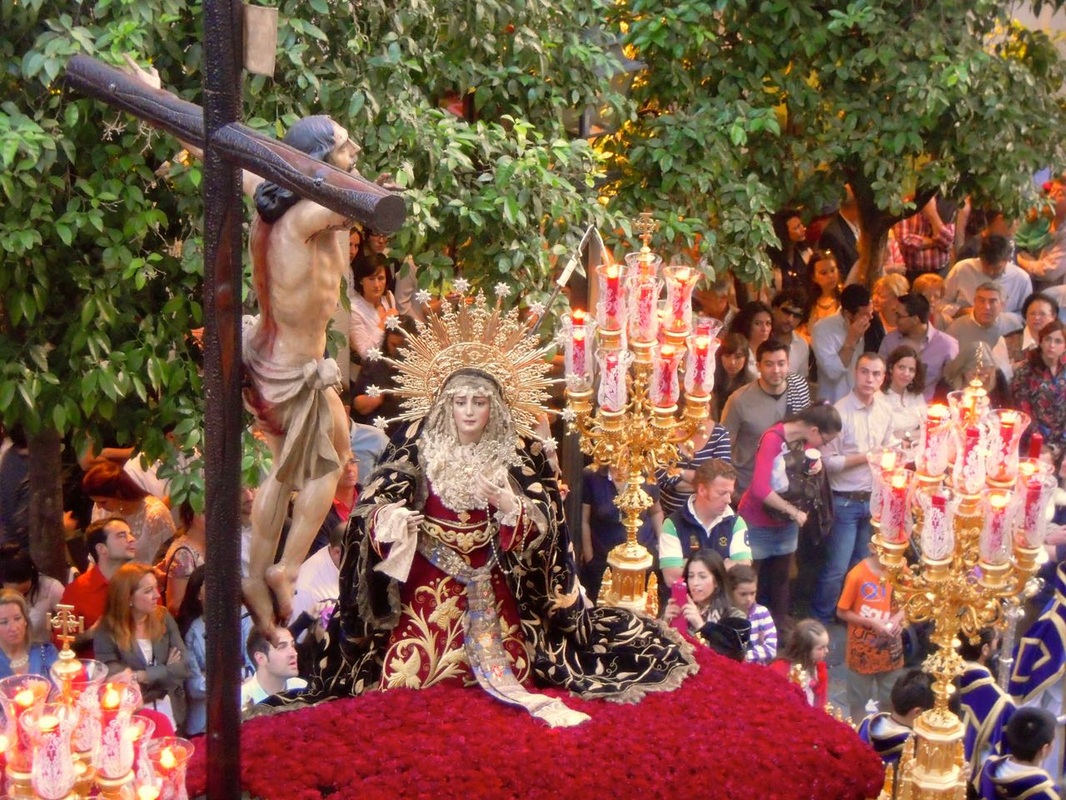
It is the best of times, it is the worst of times. You may have heard about Seville’s spectacular celebration of Holy Week, the run-up to Easter during which dozens of ancient statues of the suffering Jesus and weeping Mary are carried through the streets day and night, surrounded by massive entourages, throngs of locals, and a million out-of-town visitors.
It’s exhilarating to be part of something so vast and so magnificent. And although it’s a solemn religious tradition observed in the strictest form, it also has its festive side, with parties and celebrations throughout the week.
But what they don’t tell you about Semana Santa is that underneath it all, it’s meant to be an ordeal. The theme is suffering, and we are all invited to join in.
Take the
costaleros
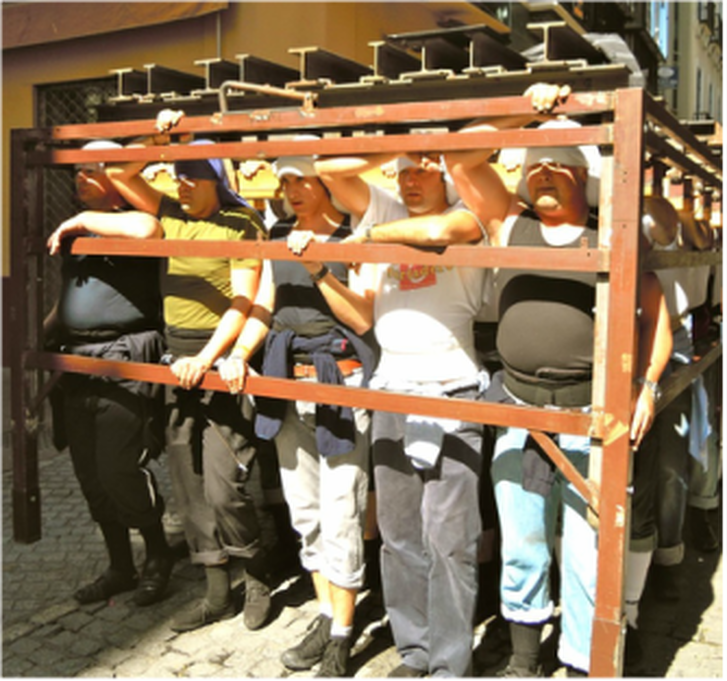
, for instance, the brawny guys who volunteer to carry the platforms holding the statues. Those platforms typically weigh about
2,400 kilos (5,300 pounds) and are supported by 40 men, each bearing 60 kilos (132 pounds)
on his neck
. Ouch! It makes my spine spasm just to watch them, particularly when they add special flourishes, such as making the platform sway in a sort of dance or coming out of the church doorway on their knees. It can take 12 hours for a procession to leave its home church, wend its way to the cathedral to pay homage, then make the return journey. Teams of
costaleros
rotate with relief crews, and those coming off duty usually head to the nearest bar, where they are given instant service and free beer. They’ve earned it.
Each procession has an entourage of 500 to 2500
Nazarenos
dressed in robes and cone-shaped headdresses that look eerily like those of the Ku Klux Klan. It’s not a coincidence; KKK members saw the outfits and adopted them, liking their creepy atmosphere and absolute anonymity. Some
Nazarenos
dress all in black and march through night in silence, like a stealth battalion of Darth Vaders.
Just being a spectator requires considerable stamina. With more than 60 processions crisscrossing the city day and night for an entire week, you can spend hours sprinting through the streets, struggling to decipher route maps on the fly in an effort to catch the next breathtaking statue and avoid getting caught in a human traffic jam with nothing to see but endless lines of identical
Nazarenos
.
As the week progresses, the streets become impassable, all ordinary business stops, and most downtown cafés block off their entrances and set up a bar selling sandwiches and canned drinks to the passing mobs. It’s hard to find anyplace offering a sit-down meal and a rest room. As a substitute for the latter, the little alleyway I live on is often pressed into service, adding another small layer of suffering to the week.
Semana Santa can become overwhelming, and even retreating to your apartment or hotel and barricading the door isn’t enough to keep it entirely at bay. The relentless soundtrack of the bands — part funeral dirge, part military march — wafts in through the windows at all hours.
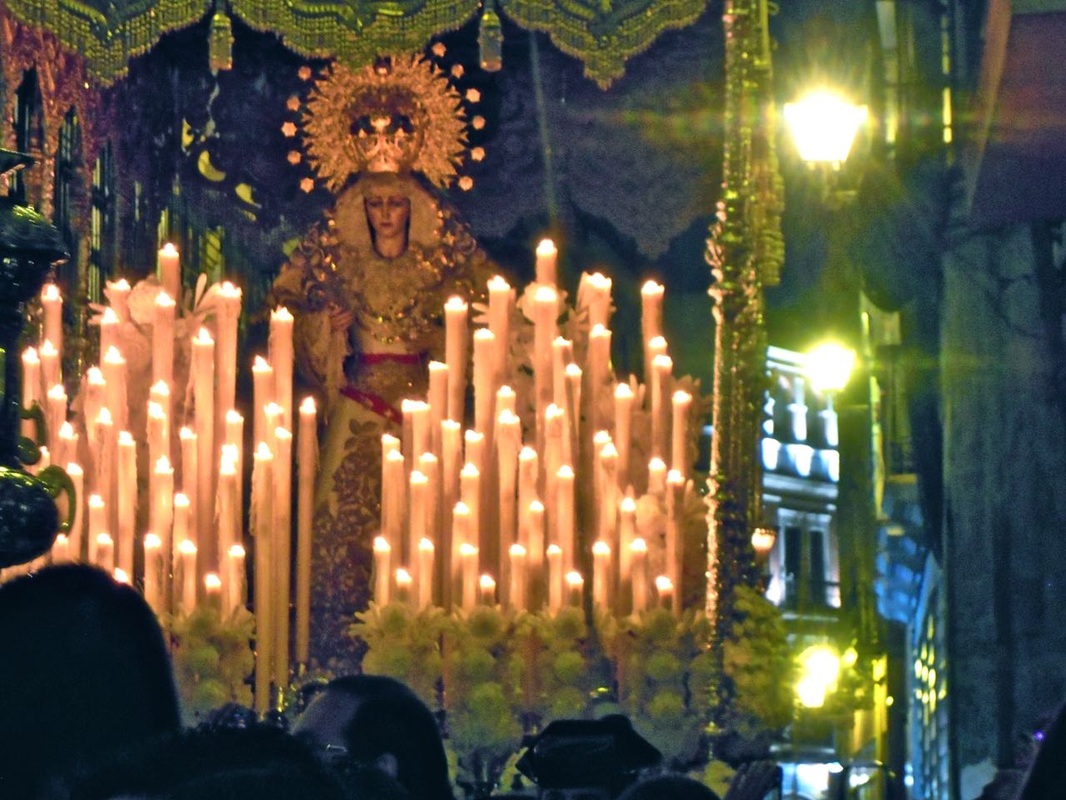
In spite of myself, I find the music of approaching bands begins to stir my blood, and before I know it I’m dropping whatever I’m doing and running downstairs for a look. To step outside and discover the Virgin swaying into view, her face glowing in the light of dozens of tall white candles, is magical. People lean over balcony railings to toss rose petals onto the lacy canopy swaying over her head, and occasionally someone will break out into one of the “arrows of song” known as a
saeta
to praise her and thank her for keeping Seville safe during another year. My neighbors stand in the street, weeping.
This is what I love about Semana Santa: the reminder that while suffering is only too common in this world, every once in a while, we also have the chance to feel touched by glory.
YOU MIGHT ALSO ENJOY

Leave a Reply