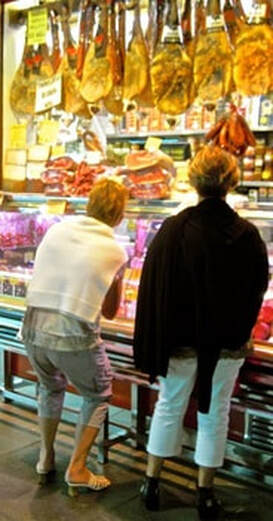

Visiting Seville’s butcher stalls can be a real eye-opener.
When I first moved to Seville, I was taken aback to see whole rabbits, fur intact, hanging by their heels in the butcher’s stall.
“Are you supposed to skin them yourself?” I asked incredulously of an American friend married to a Spaniard.
“No, they do it for you,” she reassured me. “My mother-in-law says they leave the fur on to make sure you know that it’s not a cat.” In the lean years following the Spanish Civil War, she explained, straying pets were considered fair game by hungry neighbors struggling to feed their family.
Since then I’ve learned a lot about the way Spanish food reflects local culture and history. For instance,
salmorejo
(a denser cold soup similar to
gazpacho
) and
espinacas con garbanzos
(spinach with chickpeas) are thickened with day-old bread because in the lean years a stale baguette was far too precious to throw away.
And then there’s
paella
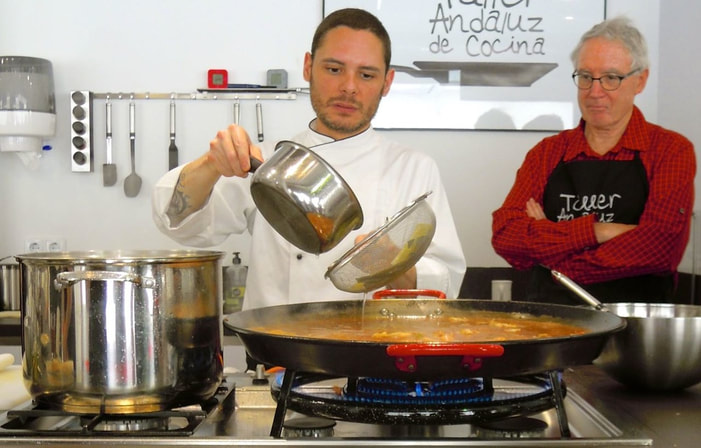
, which got its start in the rice fields of 18th century Valencia. “These were agricultural people, and they used whatever they had around,” Chef Victor told me during a cooking workshop last week. “Snails, rabbit, chicken.” Water voles and eels were popular then, too, I’ve heard. Ingredients may have evolved over the years, but one tradition is still honored, at least here in Spain;
paella
is prepared by men. And this totally works for me. My husband, Rich, makes terrific
paella
and is much in demand for potluck gatherings. Last week, discovering that Victor’s hot new cooking school,
Taller Andaluz de Cocina
, was offering a half-day
paella
workshop, Rich and I gathered up some visiting friends and enrolled.
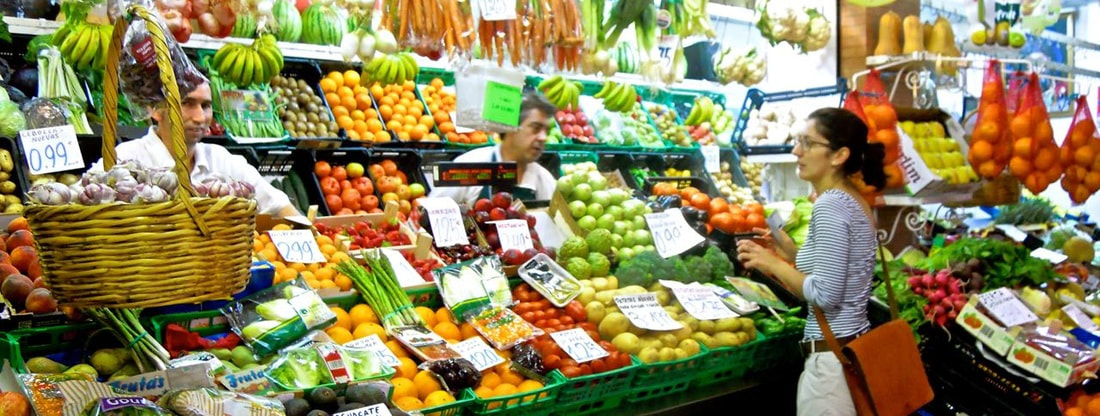
“Spanish cooking,” Victor told the eleven eager faces around his worktable, “isn’t about fancy techniques. It’s about good ingredients . . . and patience.” Our class was held inside Triana Market, where generations of locals have shopped for fresh produce, meat, and fish.
Victor showed us how to prepare
salmorejo
and
espinacas con garbanzos
as well as
paella
(and with his permission, I’m
sharing his recipes here
). He
assigned us enough tasks to make us feel part of the process while wisely reserving the tricky, critical bits for himself. The pace was leisurely, allowing ample time to chat with other students, all vacationers from distant countries. By the time we sat down to eat, Rich had acquired several tricks for upping his
paella
game, and I’d learned a lot about food tourism.
Ten years ago, food was a relatively minor consideration in planning vacations. Today, thanks in large part to popular cooking shows and the desire to post mouthwatering photos on social media, food tourism has become a $150 billion a year industry. At first it was all about dining on trendier fare in unusual places, such as pop-up restaurants and food trucks. Then diners invaded the kitchen to watch the magic happen and rub shoulders with the chef. Now travelers are visiting farms and markets to see edibles at their source, and spending time in the kitchen wearing an apron and wielding a paring knife.
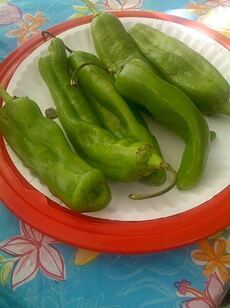
Beware of green peppers in a Mexican kitchen.
Naturally a whole new industry has sprung up to feed this demand. Websites such as
EatWith
(where we booked Victor’s class),
VizEat
, and
MealSharing
enable you to arrange to dine in a local home in hundreds of cities around the world. Add “cooking class” to your search criteria, and you can often spend hands-on time in the kitchen as well. Not all are created equal, and you’ll want to read listings carefully and notice what’s said – and
not
said – in the reviews. For instance, is the chef fluent in a language you happen to speak? Are there gluten-free options? Is wine included?
Whether you’re in a foodie mecca or a culinary backwater, chances are a cooking class can provide an affordable, unique experience with great food, lively socializing, and a vivid taste of local culture. I’ll never forget de-seeding hot peppers in a Mexican kitchen some years ago; my fingers stung for hours, and I learned my first Spanish swear words. Sore fingers seemed a small price to pay for a great meal and rich cultural experience. However, there are limits. I’d do hot peppers again, but I definitely draw the line at skinning rabbits.
YOU MIGHT ALSO ENJOY
BEER REHYDRATES BETTER THAN WATER
CHOCOLATE MAKES YOU SMARTER.
REALLY!
EAT MORE OFTEN SO YOU DON’T GET FAT

Leave a Reply