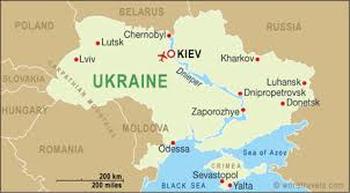
Midnight had come and gone but our bus had not. So there Rich and I sat, in the dimly lit bus station of Lublin, Poland, wondering if our Ukrainian adventure was over before it even began.
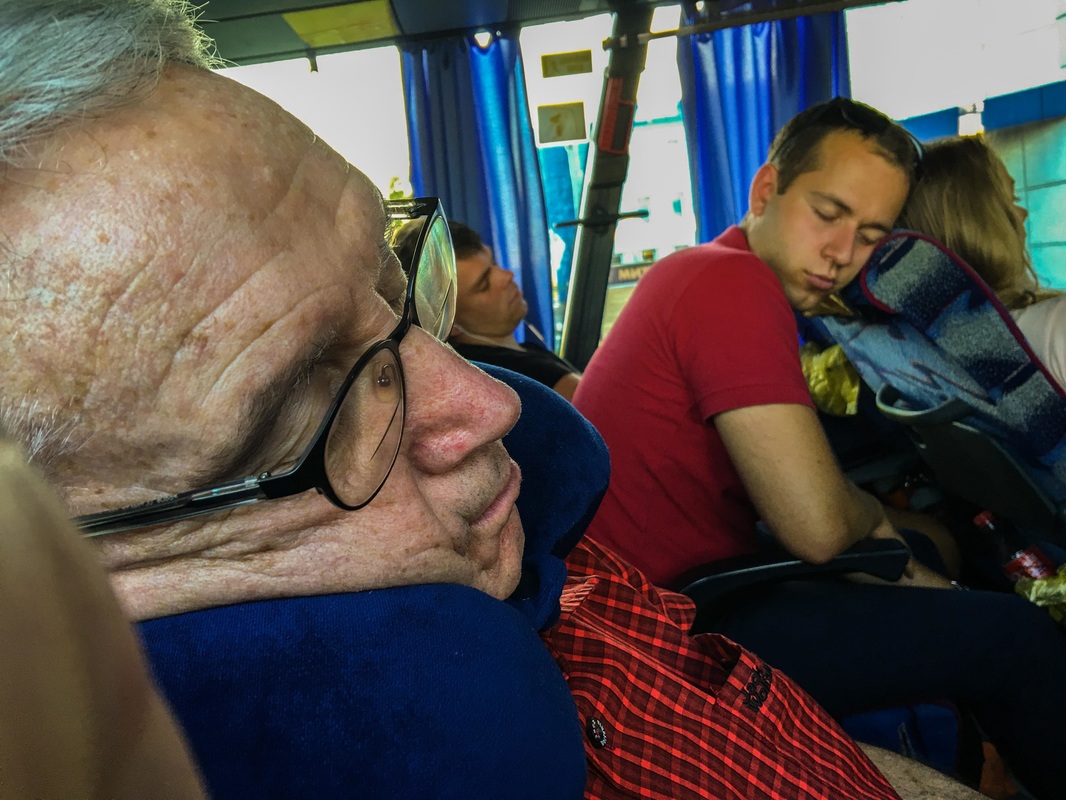
All through Poland we’d seen ads for glamorous new buses going directly to Lviv, Ukraine instead of following the convoluted railway route that entailed many extra hours of travel and a 3:40 AM train change with just 18 minutes to make the connection (and good luck with that!). The ads showed plush seats, individual video screens, food service, and a stewardess. Of course, the fine print noted that not all buses in the fleet met these standards. Needless to say, ours — when it finally lumbered in some 40 minutes late — proved to be one of the old models, jammed with groggy young Polish and Ukrainian backpackers.
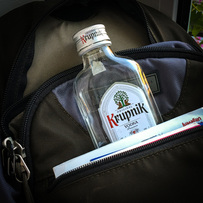
“Here,” said Rich as we wedged ourselves into our places. “Have some Vitamin V.” Unable to purchase a small bottle of gin, his usual remedy in such situations, Rich had settled for some rather dubious Polish vodka. We each took a swig to brace ourselves for the long night of fitful sleep and endless border crossings.
Now that I’ve gotten to know Ukraine a bit better, I realize that this was the perfect introduction to a country that has a positive genius for clandestine drama. I’d heard a lot about Lviv’s magnificent architecture, great restaurants, and lovely parks, but no one had mentioned its love of mystery or the inspired lunacy of its underground bars.
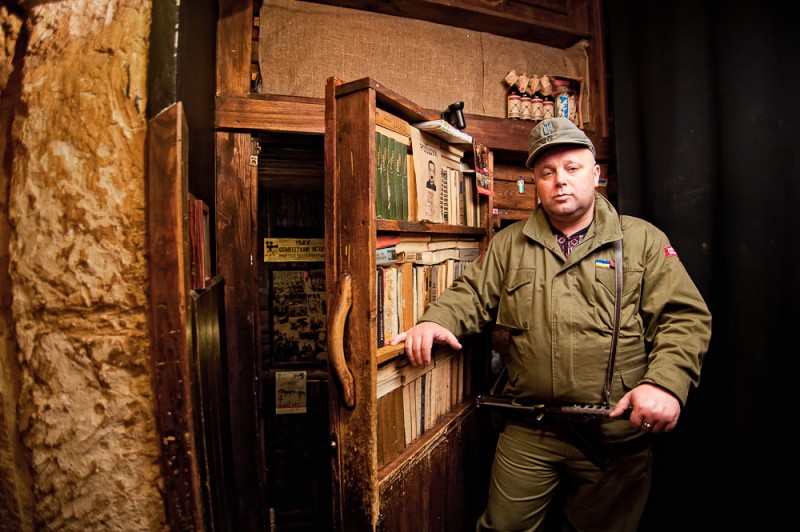
One night our Ukrainian friend Tania led us down an unmarked passage and pounded on an anonymous wooden door. The door opened a crack, revealing a scowling guard in combat fatigues, a gun slung over his shoulder.
Guard: “
Slava Ukraini!
” (“Glory to Ukraine!”)
Tania: “
Geroyam slava!
” (“Glory to its heroes!”)
Guard: “
Moskal’ee Ye?
” (“Are there any Russians among you?”)
Tania: “
Nee-ma!
” (“None!”)
“Dva Amerykantsya.”
(Two Americans.)
The guard shrugged, opened the door, and handed around thimble-sized metal cups, into which he sloshed
medovukha
(a sweet, mead-like cousin of vodka). We drank up and he let us pass.
Stumbling down twisting stairs, we entered Kryjivka, a labyrinthine underground bunker decorated with old military paraphernalia, a tribute to the Ukrainian Insurgent Army that fought the Nazis, Poles, and Soviets. A very young uniformed soldier sat nearby drinking his way steadily through an enormous vat of beer; I wondered if he’d be on his way soon to real battles on the Eastern Front. “More
medovukh?”
Tania asked me. You bet.
Quirky theme establishments abound in downtown Lviv. Tania pointed out the coffee house with the underground caverns made into a “coffee mine,” the masochists café (Leopold Von Sacher-Masoch, for whom masochism is named, is a native son of Lviv), the restaurant you enter through what appears to be some guy’s apartment, the one where you’re presented with an outrageous bill and have to negotiate your way out of it, and a new bar selling nothing but a blood-red a cherry liqueur with the motto “And she will say ‘yes.’”
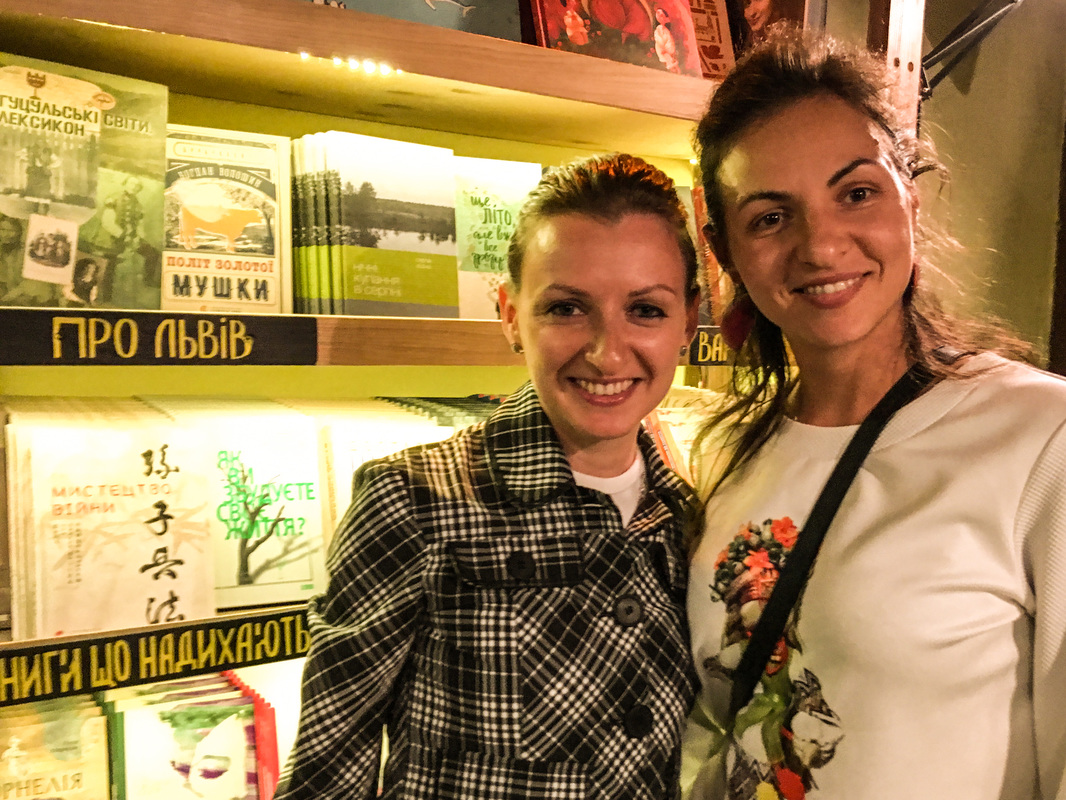
The next night we had dinner with Tania and her cousin Marya, and the conversation ranged over Lviv’s vibrant street life, the tremendous outpouring of creativity in local art, the burgeoning food and coffee culture, and music. Aida was kicking off the fall opera season on Friday, and at Tania’s urging we’d bought tickets. In fact, we had splurged on the most expensive seats: $15 each. Naturally the talk also turned to the economy, politics, and the nation’s future.
“Are Ukrainians optimists or pessimists?” I asked them.
“They are realists,” said Tania.
“They are
survivors
,” said Marya.
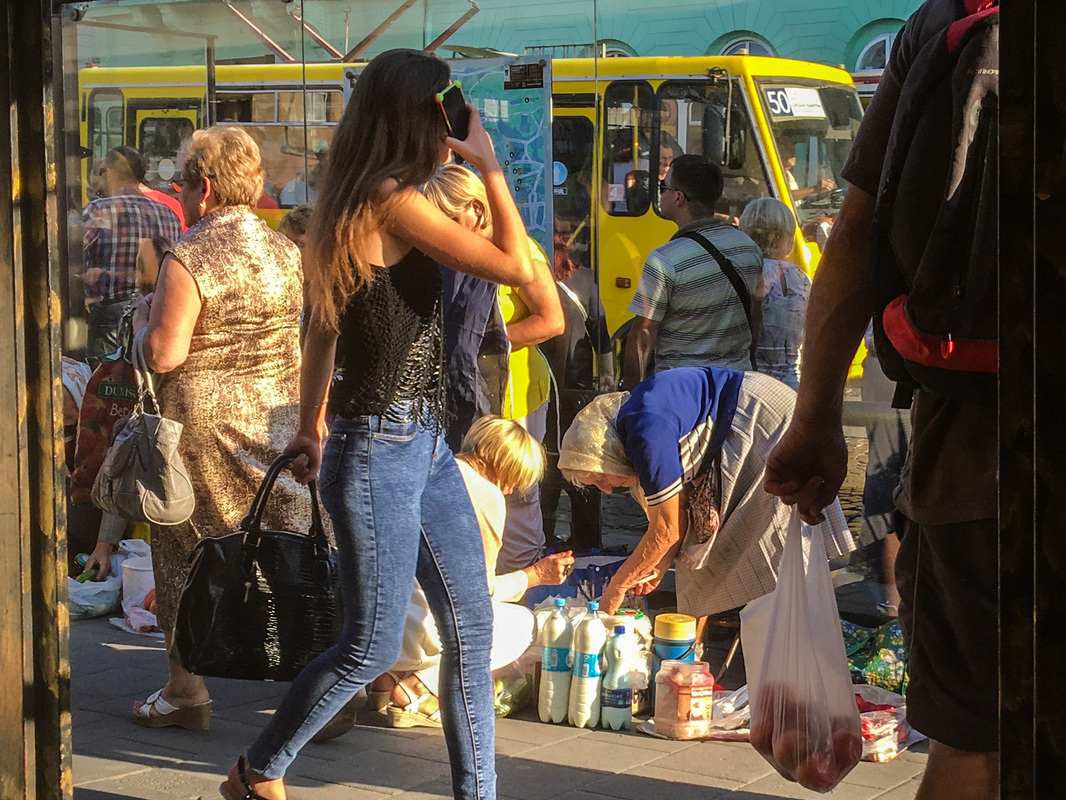
I instantly recalled the tiny street market at the city’s central bus stop. Every day two dozen or so women, many quite advanced in years, arrived just ahead of the evening commuters and set out their wares on tiny patches of sidewalk: a kilo of carrots, two dozen cucumbers, a gallon jar of raspberries, a few round white lumps of homemade cheese. I remembered one who had nothing to offer but a dozen eggs. How did she survive?
“How much would a woman make selling a dozen eggs?” I asked.
“She will have a pension equal to fifty dollars a month,” Marya said. “She probably has a garden and chickens who peck their own food from the ground, so producing the eggs costs nothing. She will sell them for maybe ten cents each; twice what you’d pay in a supermarket. But the quality is so much better; the yokes are really yellow!”
“Do you find people in other countries have a lot of misconceptions about Ukraine?” I asked.
Both cousins rolled their eyes.
“People think we are Russian,” said Tania in exasperation.
“To many Americans, we’re just ‘Europe,’” Marya added.
“Or they say, ‘Ukraine?’” Tania mimed a sympathetic shoulder pat. “So sorry.”
And we all laughed. Because despite the country’s rough past and uncertain future, Lviv today is clearly a place you’d be lucky to call home.
By now we’ve been on the road just over two months and have c
over
ed
3760 km / 2336 miles
.
Highlights have included zany
Amsterdam
, the German city of
Lübeck
on the edge of the Baltic Sea,
the Stockholm disaster
, the new foodie mecca of
Helsinki
, Finland, futuristic
Estonia
, and a kookie visit to
Riga
, Latvia. We
headed south to
Šiauliai, Lithuania
, where history — and great chocolate — were made.
Vilnius — and the tiny Republic of
Užupis
—
taught me about miracles; I learned about devils in
southern Lithuania and northern Poland
. In
Warsaw
, we learned that nothing is what it seems. We are currently enjoying Lviv, Ukraine.
To follow our adventures as they unfold,
subscribe to my blog
, like
my Facebook page
,
and keep checking this page for updates of the map.
Leave a Reply