Hosting dinner parties in a foreign country provides abundant opportunities for pitfalls, pratfalls, and faux pas. I often recall with a shudder one particular night, shortly after we moved to Seville, when I passed around a cheese platter only to have my Spanish guests throw back their heads and howl with laughter. I stared at the platter, which contained an apparently innocent collection of Manchego and cheddar, crackers, and one of the cheese knives that came with the cutting board I’d bought the day before. The farmer next to me was among the first to recover his equanimity, and as he sat wiping his eyes with a cocktail napkin, I asked what the fuss was all about.
“This,” he said, holding up my new cheese knife, “is what we use for castrating the pigs.” And off he went into even greater paroxysms of merriment.
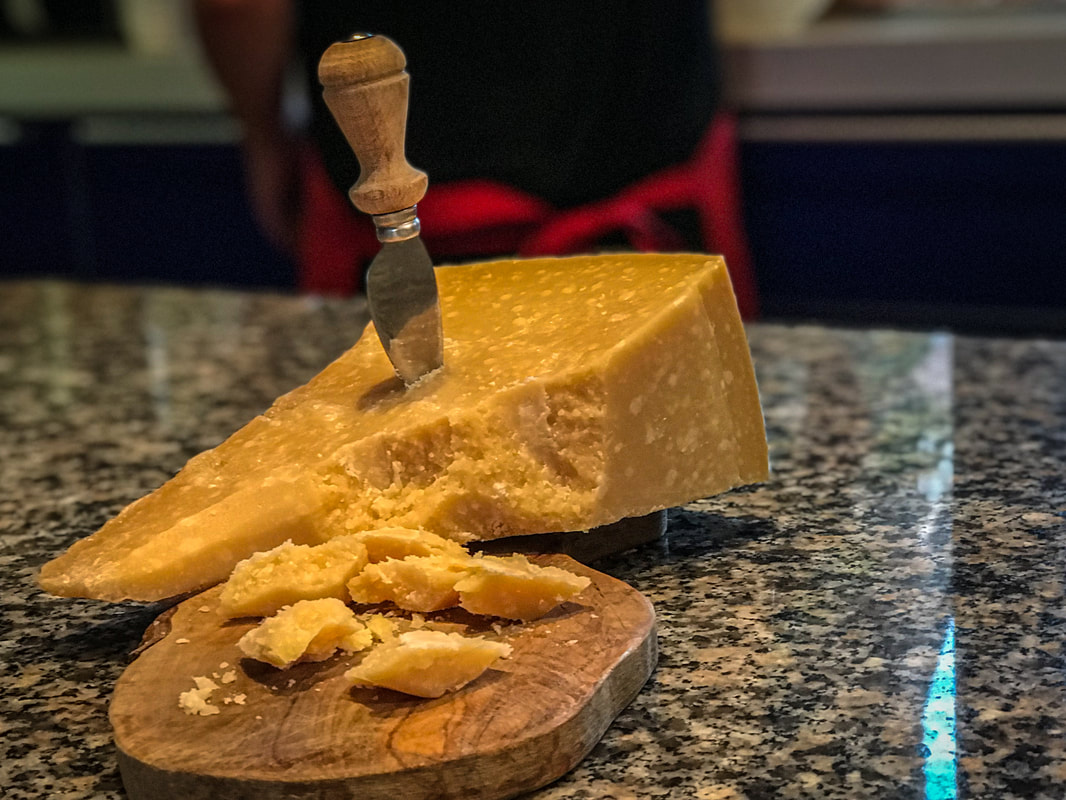
I offered to fetch another knife, but my guests wouldn’t hear of it, chortling softly and exchanging amused glances every time they passed the platter. Needless to say, that knife was retired to the back of the drawer, never to be seen again. Until last Wednesday evening, when its twin showed up in the hand of my hostess at a dinner in Parma, Italy. This, I soon learned, was a
tagliagrana,
whose drop-shaped blade is perfectly designed to break hard cheeses into shards — ideal for serving the region’s most famous product, Parmigiano-Reggiano.
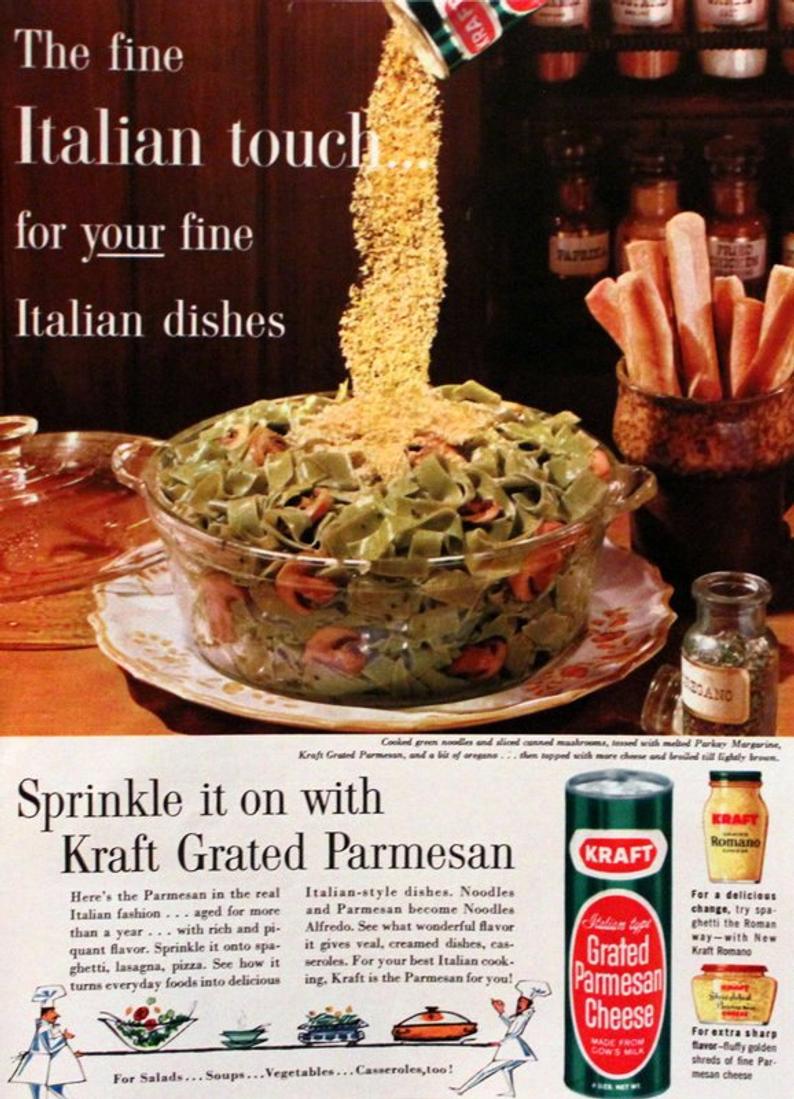
Having grown up shaking pre-grated parmesan out of a green tube, I had never seen anyone use a
tagliagrana
. As an adult I’ve had plenty of genuine Parmigiano-Reggiano cheese
in
stuff and
on
stuff, but I’d never thought of it as a stand-alone appetizer. So it wasn’t until Wednesday’s dinner — when my hostess,
Stefania
,
cut off small chunks and drizzled them with her homemade balsamic vinegar — that I realized what I’d been missing.
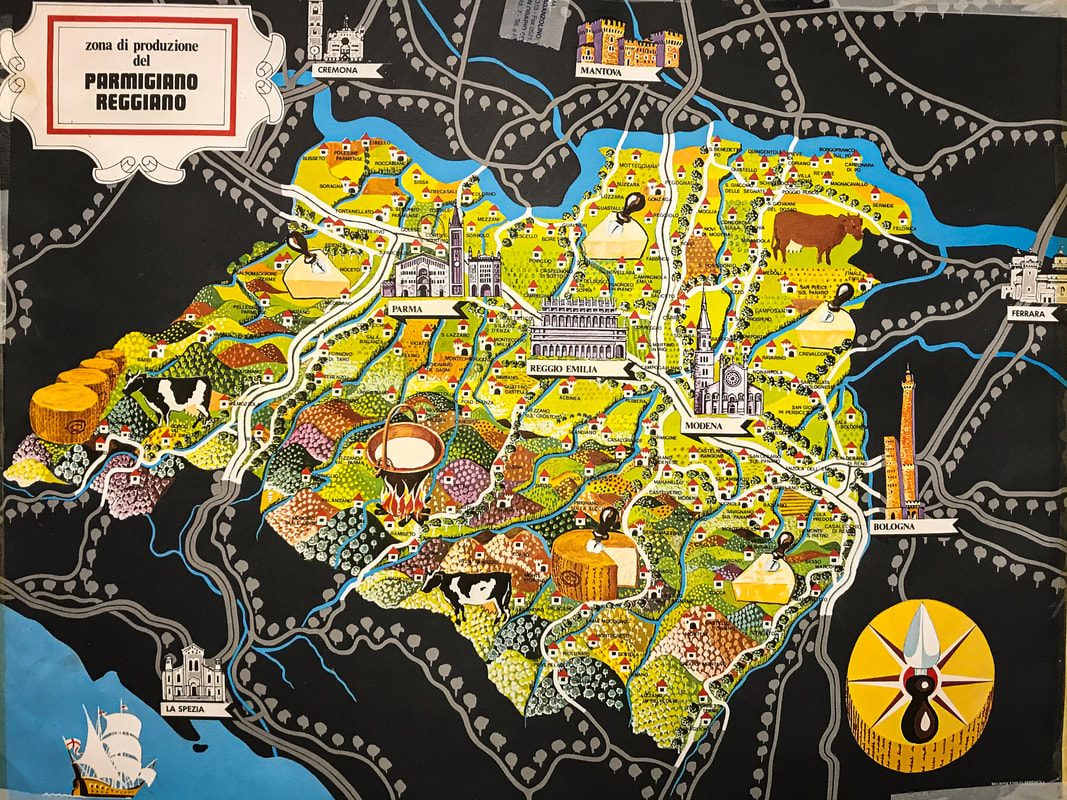
Parmigiano-Reggiano, “the king of cheeses,” is the pride of Parma, the neighboring city of Reggio Emilia, and the surrounding region of northern Italy. European law protects the name and strictly defines the region where it can legitimately be produced. Other areas of the world (yes, USA, I’m thinking of you) aren’t bound by these laws, and they can — and do —call just about anything “parmesan.” Production and quality vary wildly, and cheap cheddar, Swiss, or mozzarella are often added for bulk. A scandal erupted a few years ago when authorities finally noticed that Castle Cheese and others major producers were adding hefty amounts of cellulose — that’s
powdered wood pulp
, in plain English — to their so-called parmesan. That’s not the way to add fiber to your diet!
Over dinner, Stefania described how true Parmigiano-Reggiano is produced, a process that has remained essentially unchanged for more than 800 years. There are only three ingredients: milk from cows raised in the designated region on local fodder, salt, and calf rennet (a natural bovine enzyme that helps curds form). The milk must be used fresh, within hours of milking. Cheese is produced in 37-kilo (81.5-pound) wheels that are soaked in a salt bath to aid preservation, then stacked in aging rooms for one to three years.
“But you and Rich should see this for yourselves,” Stefania said. As it happened she was taking house guests to a local cheese producer called
Consorzio Produttori Latte
the very next morning. It didn’t take much persuasion to get us to join the party.
After the tour, we stopped in a small village to see Stefania’s country home and sample more of her homemade balsamic vinegar, which is aging gracefully in the airy attic in the customary manner. Italian law protects the most famous labels such as
Aceto Balsamico Tradizionale di Modena
(
Traditional Balsamic Vinegar of Modena
), enforcing such restrictions as age (at least 12 years) and additives (none). You probably won’t be surprised to learn that American brands labeled “balsamic vinegar,” even those specifying “barrel aged in Modena, Italy,” are often juvenile liquids containing corn syrup, guar gum, and/or worse. Stefania’s nine-year-old vinegar-in-training was an explosion of brash flavor in the mouth, where the 21-year-old vintage was nearly as thick, dark, and tangy-sweet as molasses.
The real highlight of our time with Stefania was dinner in her Parma home. After the
Parmigiano-Reggiano, we enjoyed the famous
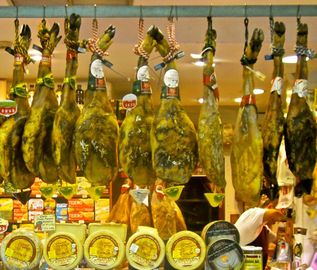
Prosciutto di Parma, cured ham sliced so thin you could see through it, with flavor slightly sweeter and less salty than prosciutto from other regions.
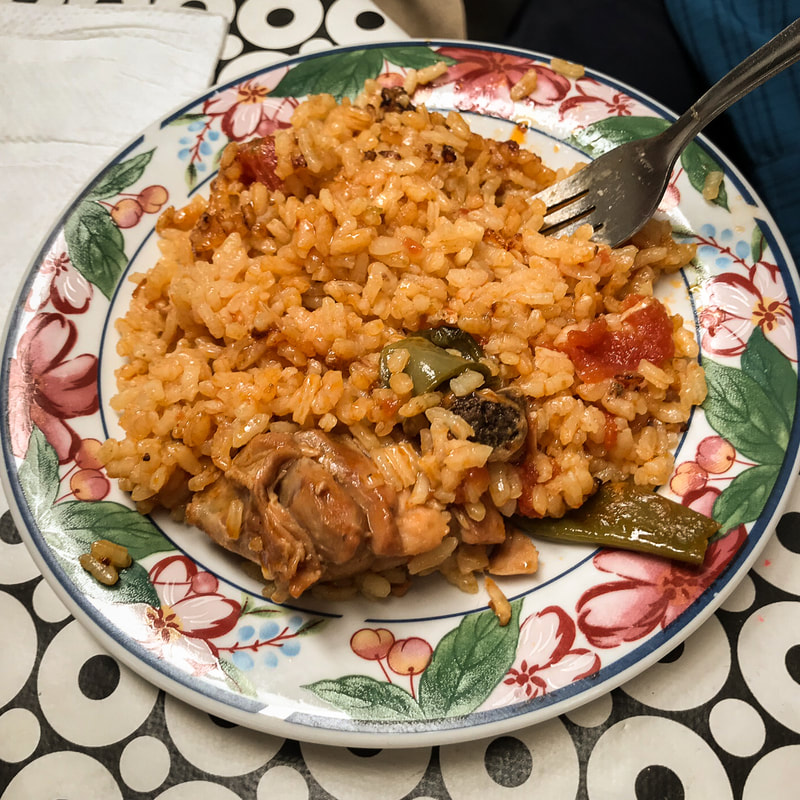
Dinner included local tomatoes, eggplant, and borettana onions, a squat, sweet variety that’s been grown in the nearby town of Boretto since the 15th century. There was creamy veal scallopini in lemon sauce. But the absolute star of the show was the succulent
Coniglio alla Cacciatora
(Hunter-style Rabbit).
[See recipe for Coniglio alla Cacciatora (Hunter-style Rabbit).]
Rabbit is popular on dinner tables in Seville, too. When I first moved there, I was horrified to see the furry bodies of lifeless bunnies hanging by their paws in the local butcher shops. When I asked a friend why they didn’t prepare them for sale in the ordinary way, skinned and trimmed, she explained the custom dated back to the Hunger, the lean years after the Spanish Civil War when nobody had enough to eat. “It’s so you know it’s not cat,” she told me. Enough said.
I’ve vowed to learn to cook rabbit someday, and now that I have Stefania’s recipe, I’m ready to give it a try. Those of you who can’t warm to the idea of rabbit for supper will be happy to hear the recipe works just as well with chicken. (Or you can make it with rabbit and tell the kids it’s chicken.) Whatever you bring to the table, be sure to preface the meal with a few chunks of genuine Parmigiano-Reggiano, chopped with a
tagliagrana
— which with any luck at all, your friends and family won’t associate with anything but the pleasures of perfectly delicious cheese at a homemade Italian dinner.
Unlike some of my better-organized and more practical blogger friends, I never accept free goods or services in return for promoting anything on this blog. Everything I write about is included solely because I believe you might find it interesting and useful for planning your own adventures.
YOU MIGHT ALSO ENJOY
MYSTERIES OF MOUSSAKA, REVEALED
EAT MORE HAM, DOCTOR ADVISES
MEDITERRANEAN WEIGHT LOSS SECRET
Our
Mediterranean Comfort Food Tour
Continues!
Don’t miss a single loony adventure or mouthwatering recipe. Sign up to receive updates.
YES! I WANT TO JOIN YOU ON THE JOURNEY

Leave a Reply